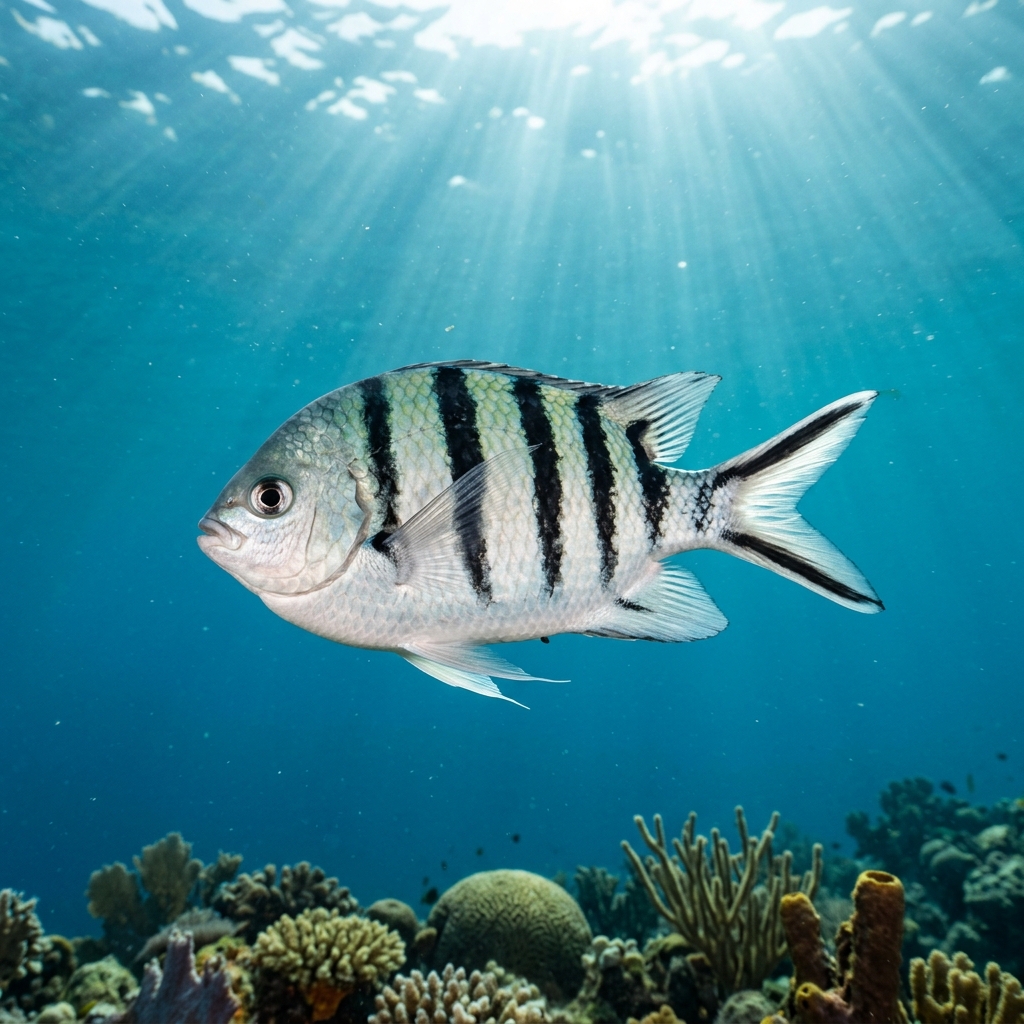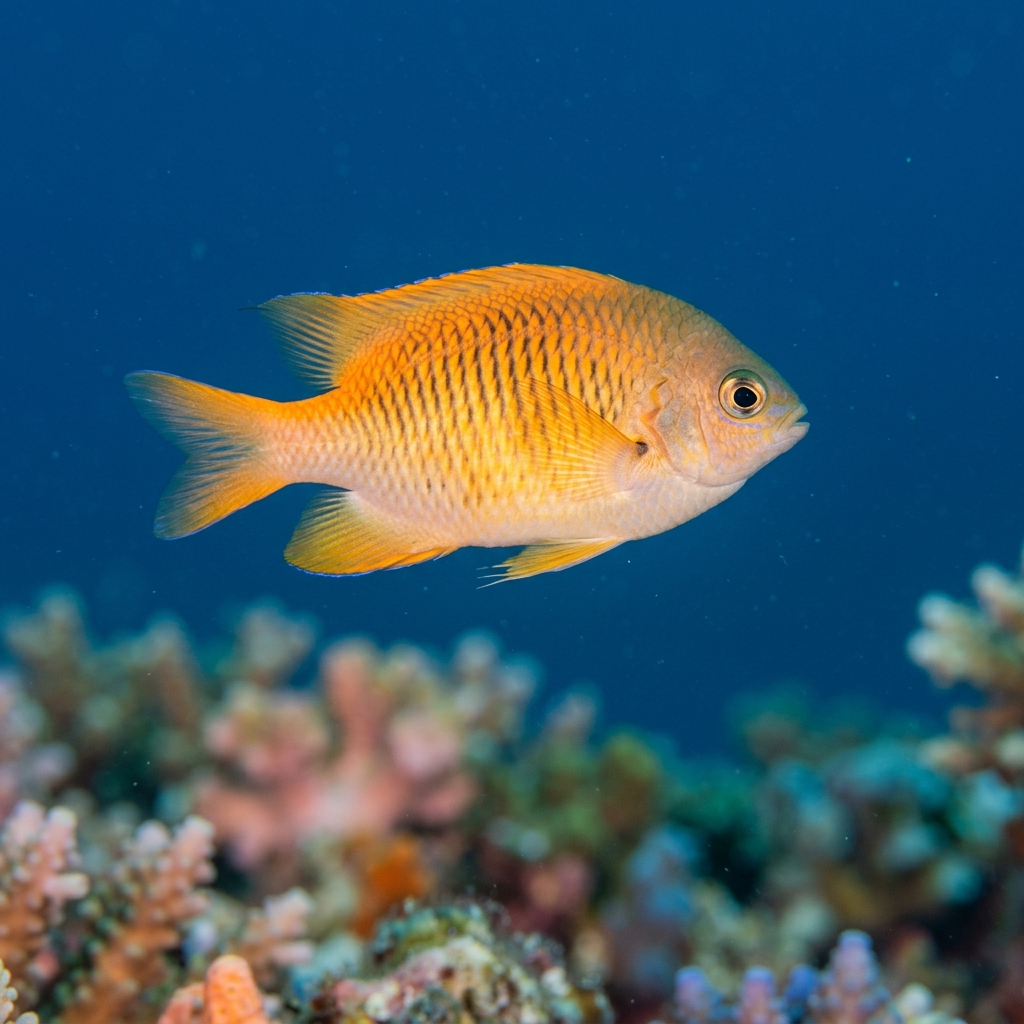
Amblyglyphidodon curacao
Spot the Staghorn Damsel around Bali, Palawan and the Philippines' Visayas in waters from 24-29°C. Tips on ID, behaviour and best dive seasons.
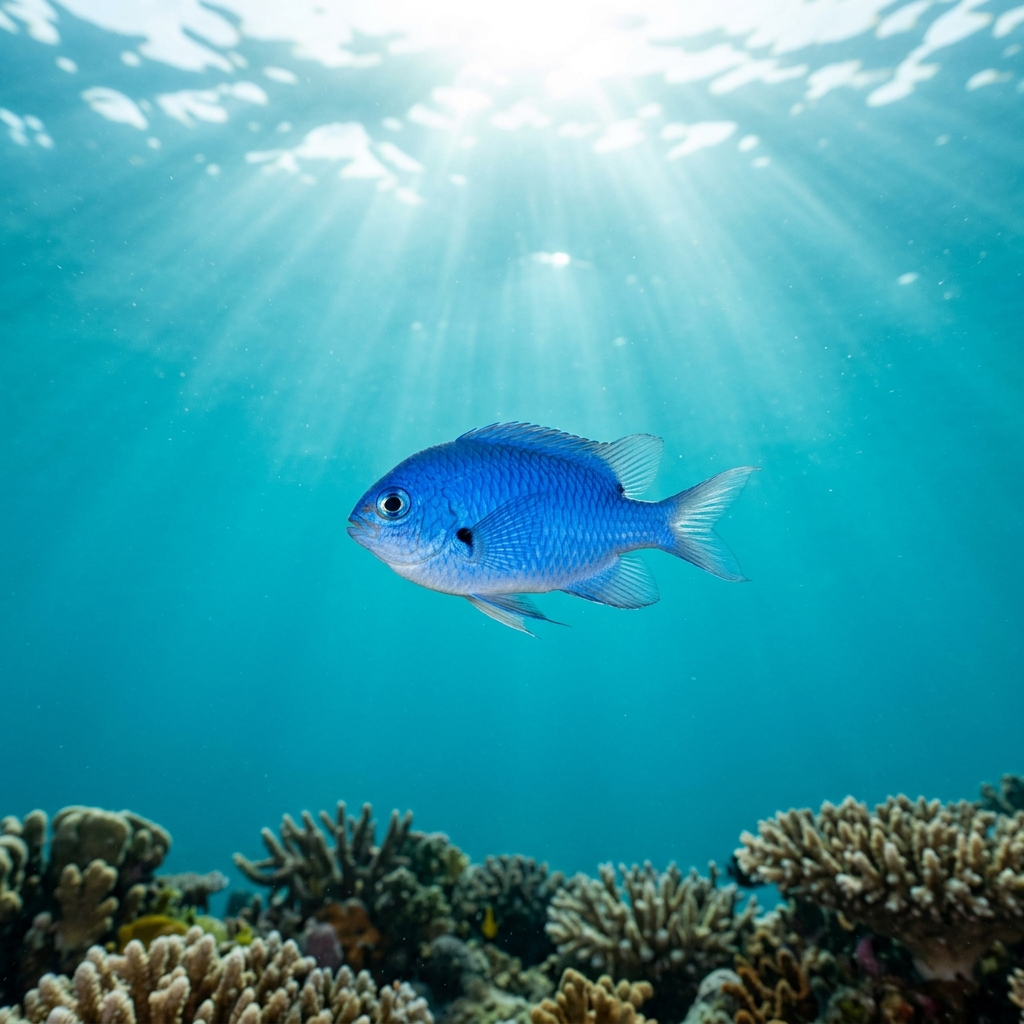
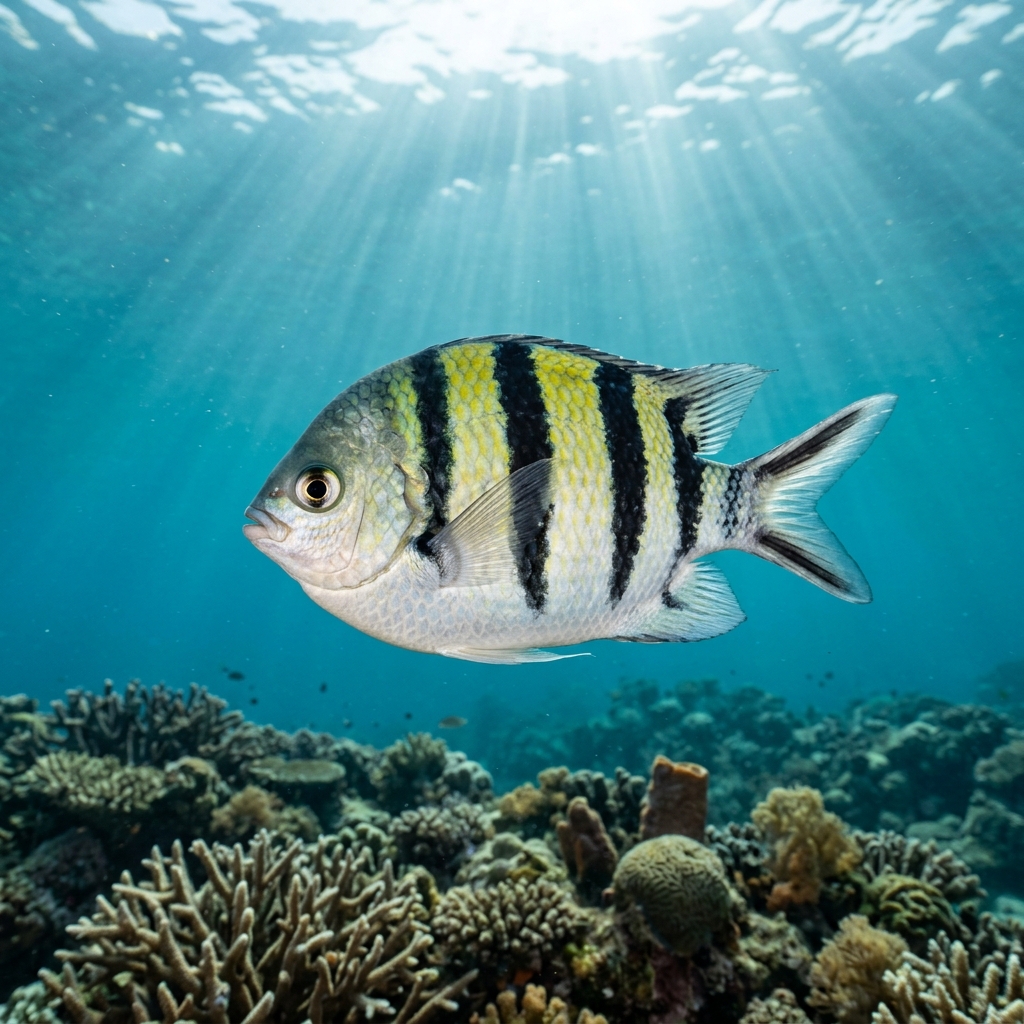
A small fish, roughly 7 cm, with a pale olive-yellow to greenish-white body that appears almost translucent in good light. The body is moderately deep and laterally compressed, typical of damselfishes, but the colouring is noticeably subdued compared to most reef damsels. Look for a clean, unmarked flank with a subtle yellowish tinge on the belly and a slightly forked tail. No bold stripes or eye-catching spots make it easy to overlook among similarly sized reef fish.
You'll typically find staghorn damsels in mid-water just above or around branching coral heads, actively picking tiny invertebrates from the water column during daylight. They're not particularly wary of divers and will often let you approach within a metre or two before drifting back into the coral. They do hold small territories around specific coral branches, and you may see brief darting chases as they see off rival fish.
Like many damselfishes, staghorn damsels are dedicated egg guarders. Males prepare a flat surface near their coral territory, then actively fan and defend the clutch until the eggs hatch, making nesting males noticeably more bold and assertive than usual.
In the Northern Hemisphere, sightings concentrate from May through March, covering most of the year. In the Southern Hemisphere, the best windows run from April through January, broadly tracking the warmer months when reef activity peaks across its preferred 24-29 °C temperature range.
Most commonly logged across the Indo-Pacific triangle, with the strongest presence in the Philippines, Indonesia, and Malaysia. Top regions include Palawan and Apo Reef, the Central and East-North Visayas, Bali and Lombok, and West Sabah in Malaysian Borneo. Australia's Queensland coastline also holds reliable populations, and it turns up regularly in Thailand and Japan.
Mapping where Staghorn Damsel is logged…
The staghorn damsel is most reliably encountered across the Philippines, Indonesia, and Malaysia. Standout regions include the Visayas, Palawan and Apo Reef, Bali and Lombok, and West Sabah in Borneo. Queensland, Thailand, and Japan also have strong records.
In the Northern Hemisphere, sightings are recorded across most of the year, from May through March. In the Southern Hemisphere, April to January offers the most consistent sightings. Because the species prefers warm tropical water in the 24-29 °C range, it is present year-round at stable equatorial reefs.
Look for a small, roughly 7 cm fish with a pale olive-yellow to greenish-white body and no strong markings. It tends to hover near branching corals in open water rather than hiding inside them. The clean, unmarked flanks and subdued colouring distinguish it from the more boldly patterned damsels sharing the same reef.
Staghorn damsels typically reach around 7 cm as adults, making them a small, palm-sized reef fish. Their modest size means they are easy to miss among the coral, so a slow, patient approach pays off.
No. Staghorn damsels pose no threat to divers. Males guarding eggs may make short mock-charge dashes, but this is purely defensive display behaviour and they are far too small to cause any harm.
They are carnivores that feed primarily on small zooplankton and tiny invertebrates, picking items from the water column close to their coral territory. You will often see them making short upward darts to snatch passing prey before dropping back to their perch.
Site and sighting data is aggregated from diver logs, iNaturalist and GBIF. For taxonomy and conservation status:
Dascyllus
3,697 sites