Spurilla sargassicola
A small aeolid nudibranch turning up uncommonly across Basse-Terre and Grande-Terre reefs in Guadeloupe, year-round in warm water.
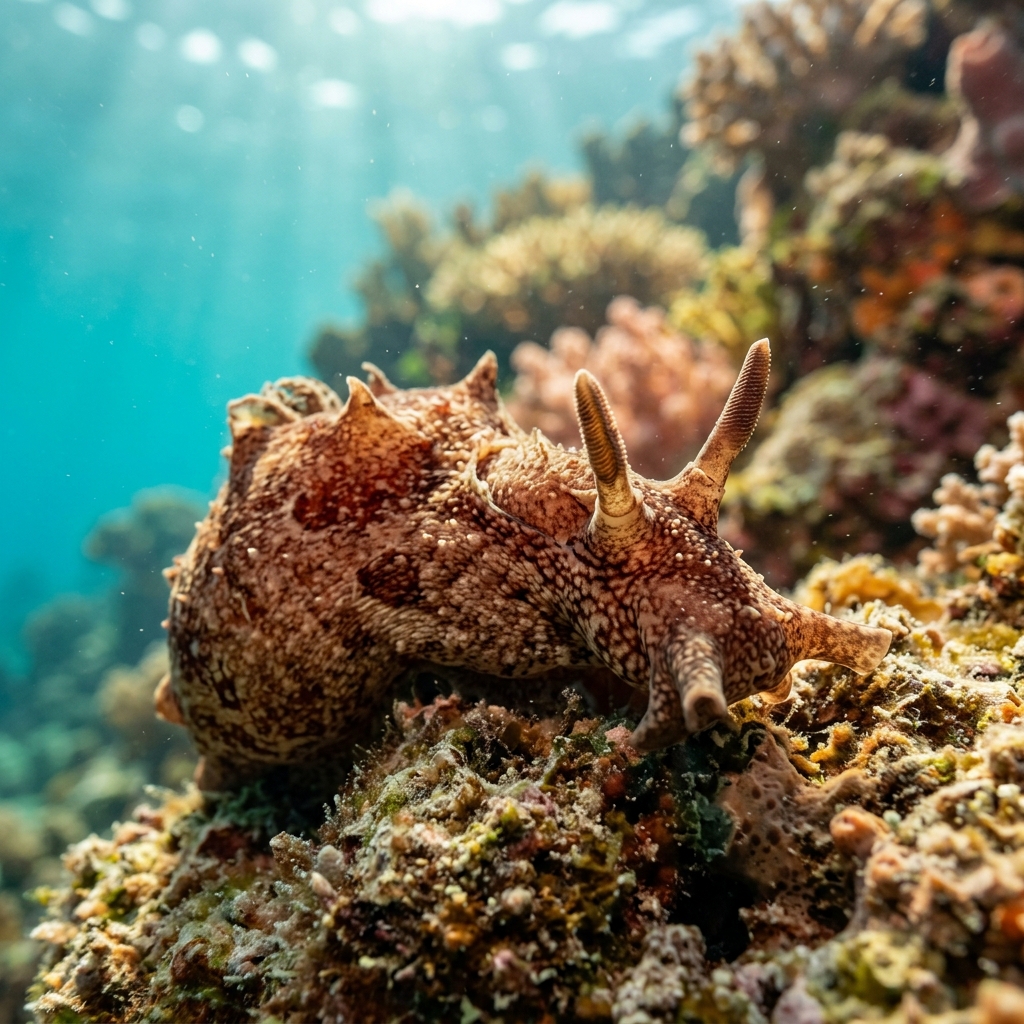
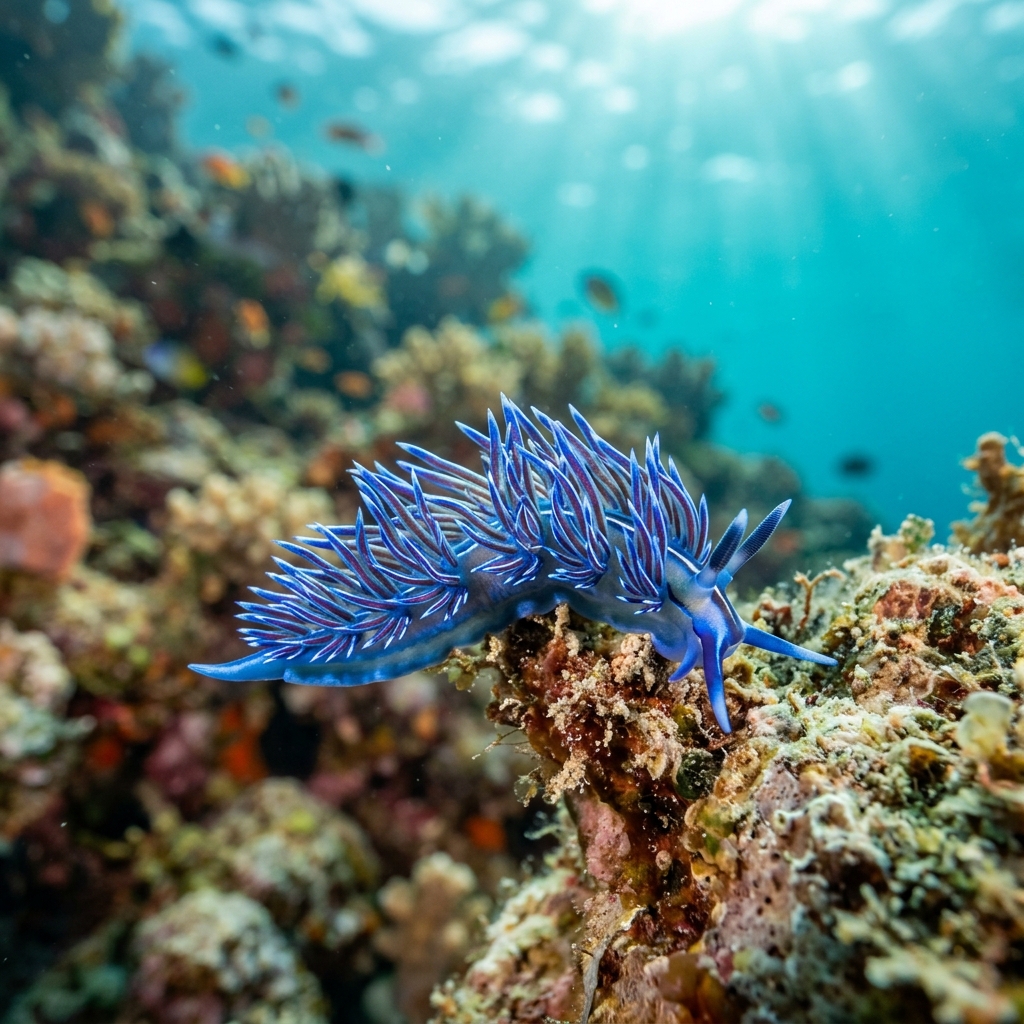
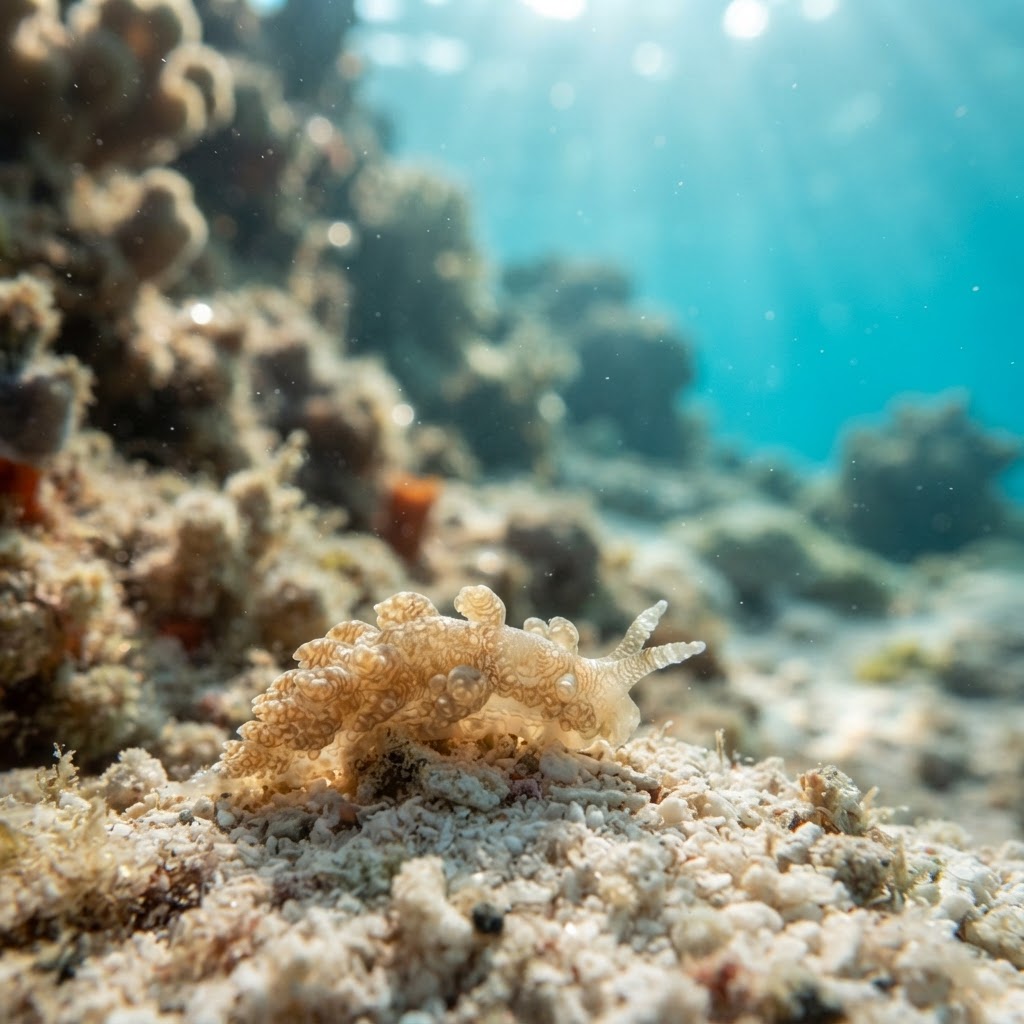
Look for a slug barely 3 cm long, its back covered in tightly packed finger-like projections called cerata, usually pale orange to brownish with lighter tips that give it a slightly furry, bristled outline. The body itself is translucent to pale, so the cerata do most of the visual work, and a pair of rhinophores (sensory tentacles) sit forward on the head, often ringed or banded. There is no dramatic colour flash here, so divers tend to find it by scanning slowly rather than spotting it from a distance.
This is a slow, deliberate crawler usually found tucked into rubble, algae, or low reef structure rather than out in the open, which is part of why it reads as uncommon even where it lives. It shows no reaction to divers beyond retracting slightly if directly disturbed, and most sightings come from divers moving slowly and checking small patches of substrate rather than cruising past. Like other aeolid nudibranchs, it likely spends much of its time feeding on cnidarians such as anemones, so look near those hosts.
Aeolid nudibranchs in this group can store stinging cells from the anemones they eat and repurpose them in their own cerata as a defence, a trick called kleptocnidae.
There's no clear seasonal pattern in the sightings data, and with a comfortable temperature range of roughly 24.7 to 30.7 C, conditions stay suitable year-round on these Caribbean reefs. Plan around good visibility and calm search conditions rather than a particular month.
Guadeloupe is by far the strongest place to look, with sightings spread widely across Basse-Terre and Grande-Terre reef sites. It also turns up, less frequently, off Florida in the United States, but Guadeloupe is where most divers actually log it.
Mapping where Sargassum Spurilla is logged…
Guadeloupe is the most reliable place to find it, with sightings spread across both Basse-Terre and Grande-Terre. It has also been logged off Florida in the United States, though far less often.
There isn't a distinct season in the sighting data, and the water it's found in stays warm year-round, between about 24.7 and 30.7 C, so it can turn up on any dive.
Check for a tiny slug, about 3 cm, with a pale translucent body covered in clustered, finger-like cerata in orange to brownish tones. It has banded rhinophores on the head and no bold colour pattern, so it takes a close, slow look to spot.
It's a small species, typically reaching about 3 cm in length, so divers need to search closely at rubble and low reef structure to find one.
As an aeolid nudibranch, it likely feeds on anemones and can store their stinging cells in its own cerata, reusing them for its own defence rather than digesting them.
No, it poses no threat to divers. It's a small, slow-moving slug that reacts to disturbance by simply retracting rather than any active defence toward people.
Site and sighting data is aggregated from diver logs, iNaturalist and GBIF. For taxonomy and conservation status:
Light-spotted Aegires
3,168 sites