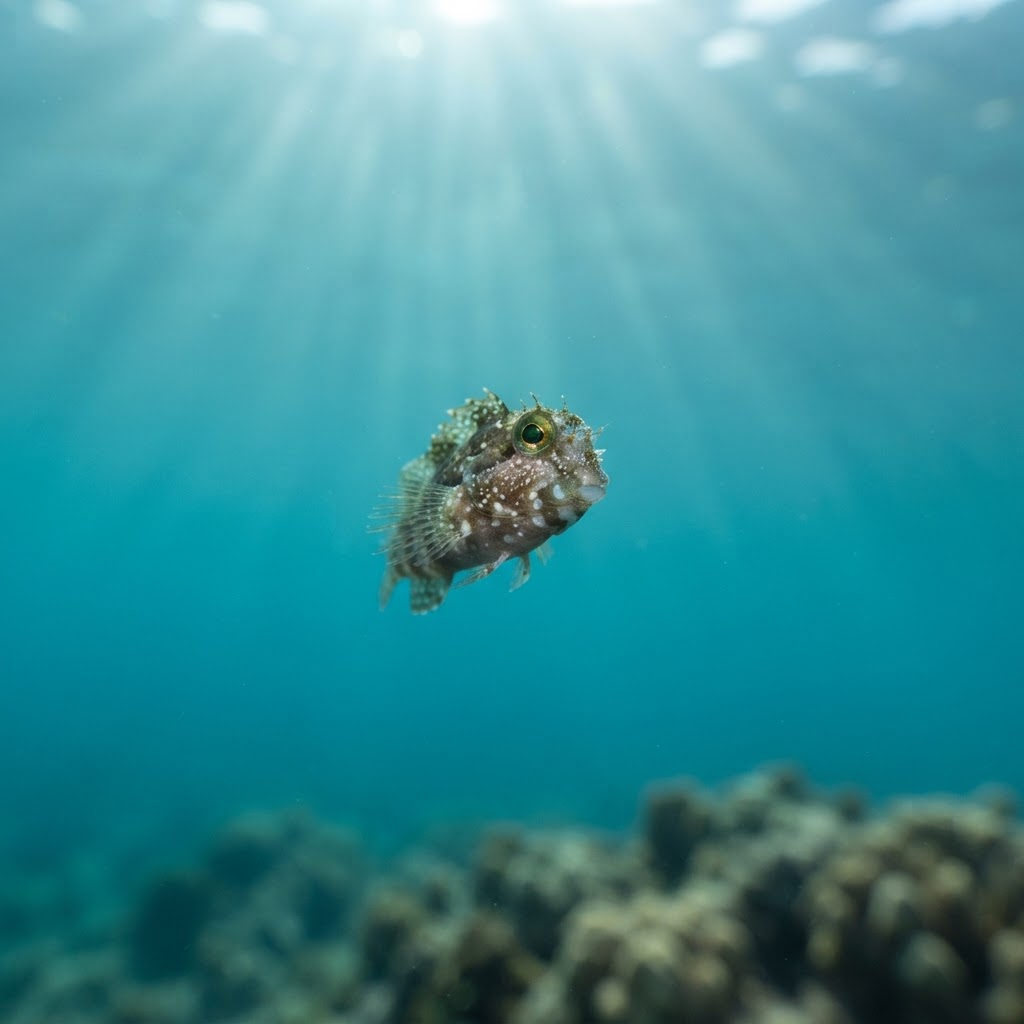
Acanthemblemaria spinosa
A pinhead-sized face poking from a worm hole on Bonaire's Leeward Coast or Grand Cayman reefs, in water near 27-28C, year-round.
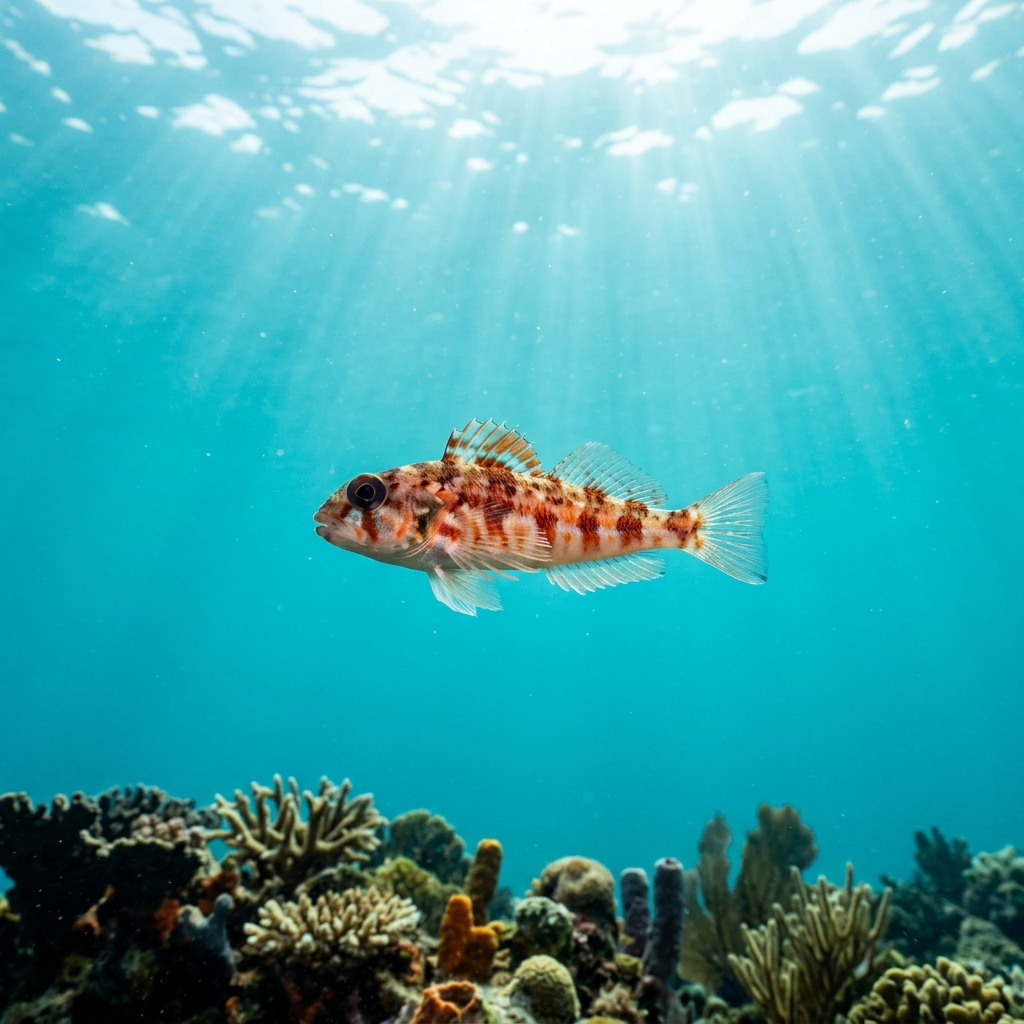
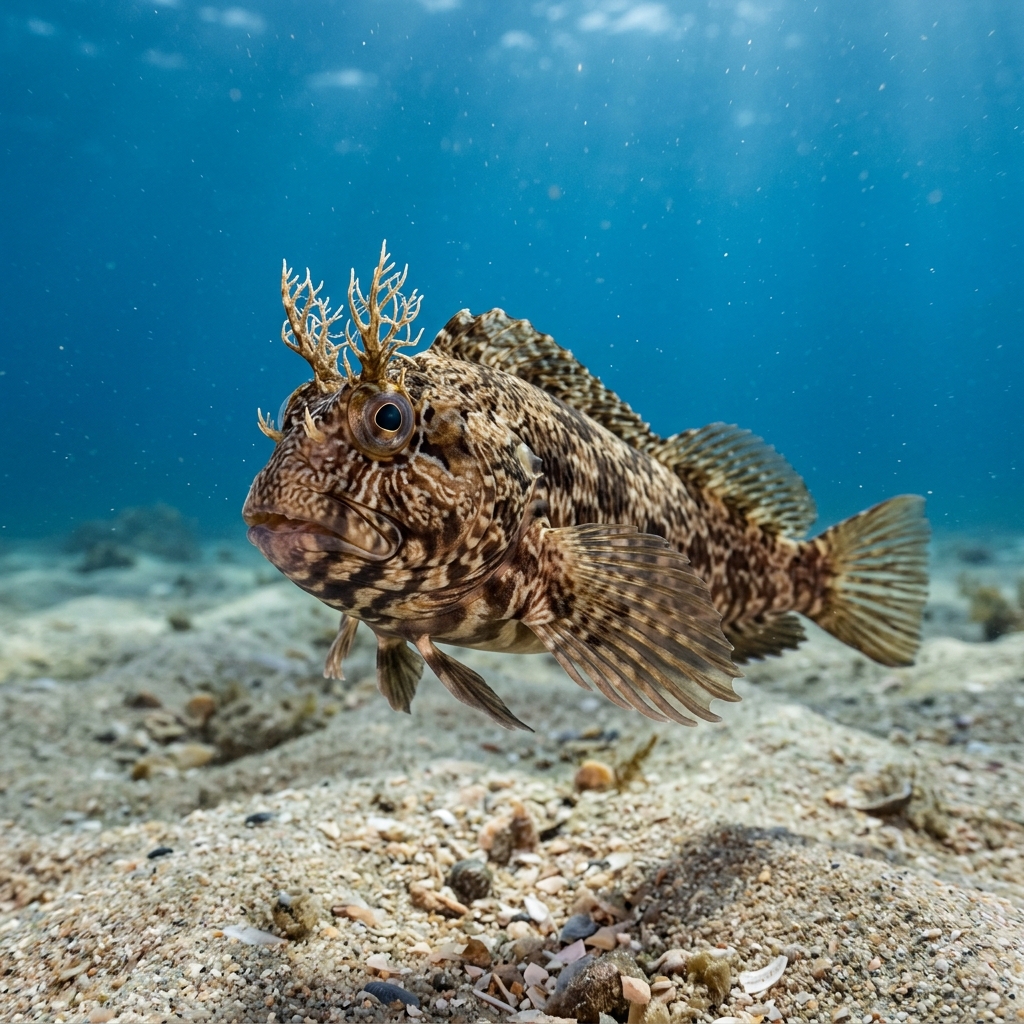
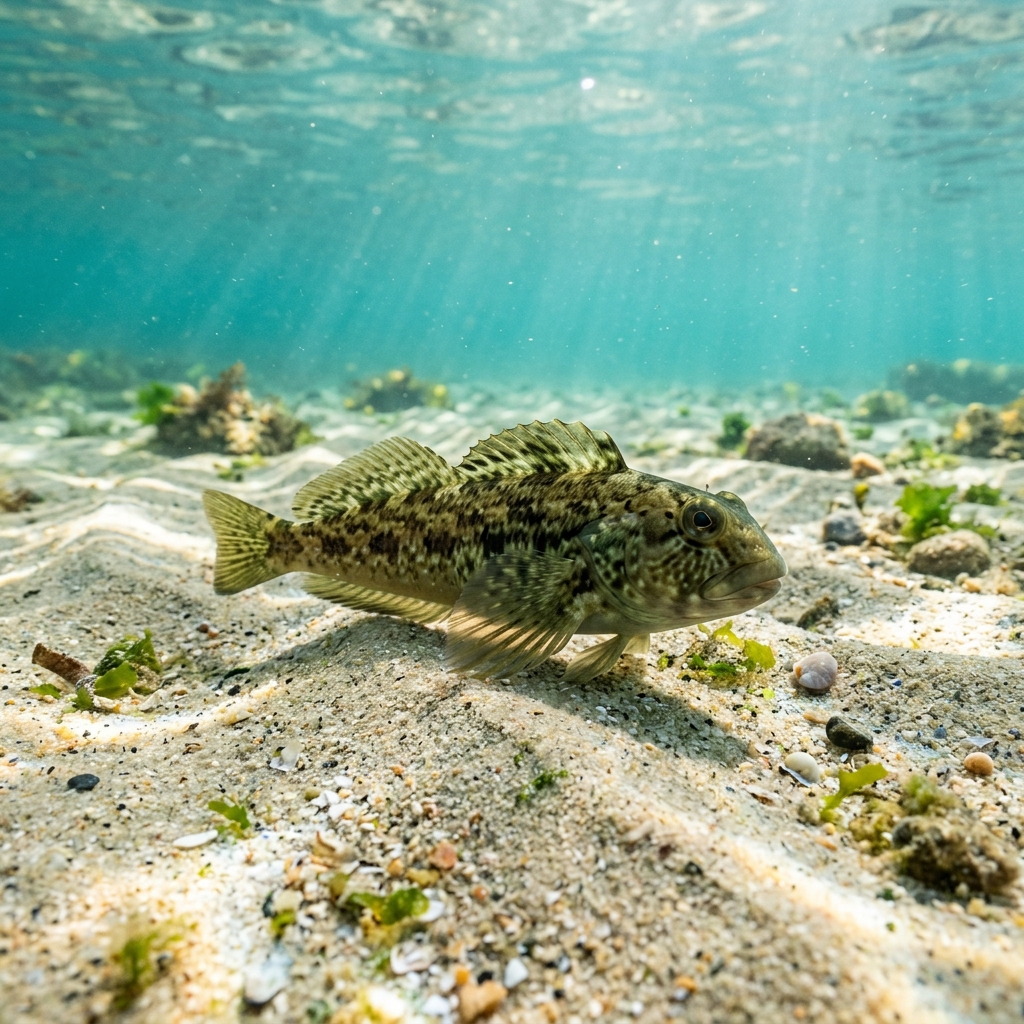
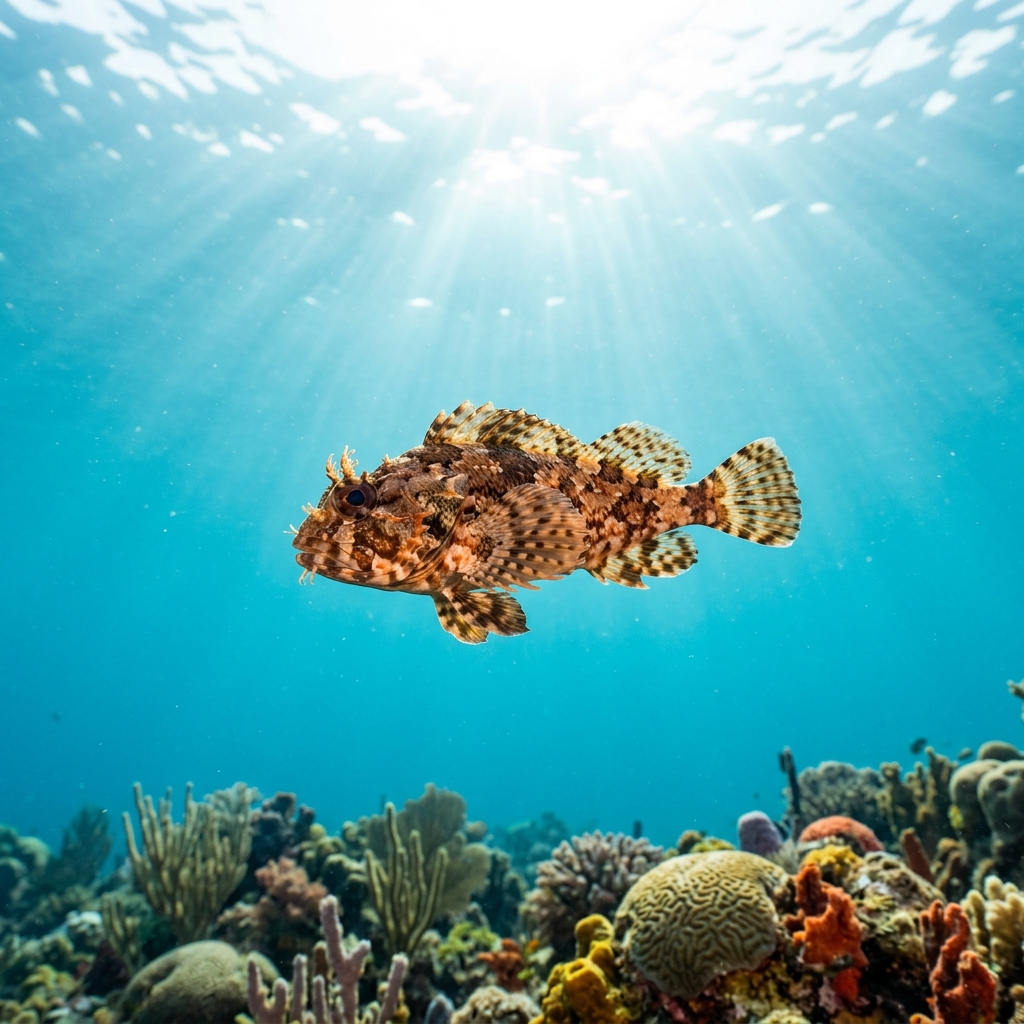
Barely 2 cm long and almost never seen out in the open, it lives head-first in an abandoned worm hole, so all you actually see is a small speckled face with two prominent, spiky-looking eye tufts (cirri). Colouring runs orange to reddish-brown with fine pale speckling, and the head looks oversized for the body it's hiding. Look for the tube-shaped burrow entrance in dead coral or rock, at eye level with the reef surface, rather than searching open water.
Expect to find it holding station in the mouth of its burrow, usually an old worm tube in dead coral or rubble, watching the reef and occasionally darting out to snap at passing plankton before retreating. It reacts to divers by pulling back into its hole rather than fleeing, so a slow, still approach with a torch or macro lens gets the best look. Shallow rubble patches and dead coral heads in the 1-12 m range are the places to check, day or night.
Its whole visible life happens in a borrowed tube: it never leaves the hole voluntarily, defending that single burrow against rivals and retreating tail-first the instant anything looms too close.
No clear seasonal pattern shows up in sightings, and water in its niche sits a steady 27.1 to 28.4C year-round, so any month works for a dive trip built around finding it.
Most reliably found in the Caribbean, with strong numbers logged in Bonaire's Leeward Coast, Grand Cayman, and Tortola and the Southern Islands in the British Virgin Islands. It also turns up consistently in the Bay Islands of Honduras and on Saint John in the US Virgin Islands, plus sites in Martinique, Grenada, and Guadeloupe.
Mapping where Spinyhead Blenny is logged…
Bonaire's Leeward Coast, Grand Cayman, and the British Virgin Islands around Tortola are among the most reliable spots, with good numbers also logged in Honduras's Bay Islands and the US Virgin Islands.
There's no strong season in the data. Water stays around 27 to 28C year-round across its Caribbean range, so it's a fair bet on any dive trip.
Look for a tiny speckled orange-brown face with spiky eye tufts poking out of a small tube-shaped hole in dead coral or rock, rather than a fish swimming in the open.
Around 2 cm long, making it one of the smallest fish you'll try to photograph on a Caribbean reef.
No. It's a harmless, burrow-dwelling fish that retreats into its hole if approached and poses no risk to divers.
It spends essentially its whole life in a single abandoned worm-tube burrow, darting out only briefly to feed on plankton before backing straight back in.
Site and sighting data is aggregated from diver logs, iNaturalist and GBIF. For taxonomy and conservation status:
Rusty Blenny
2,605 sites