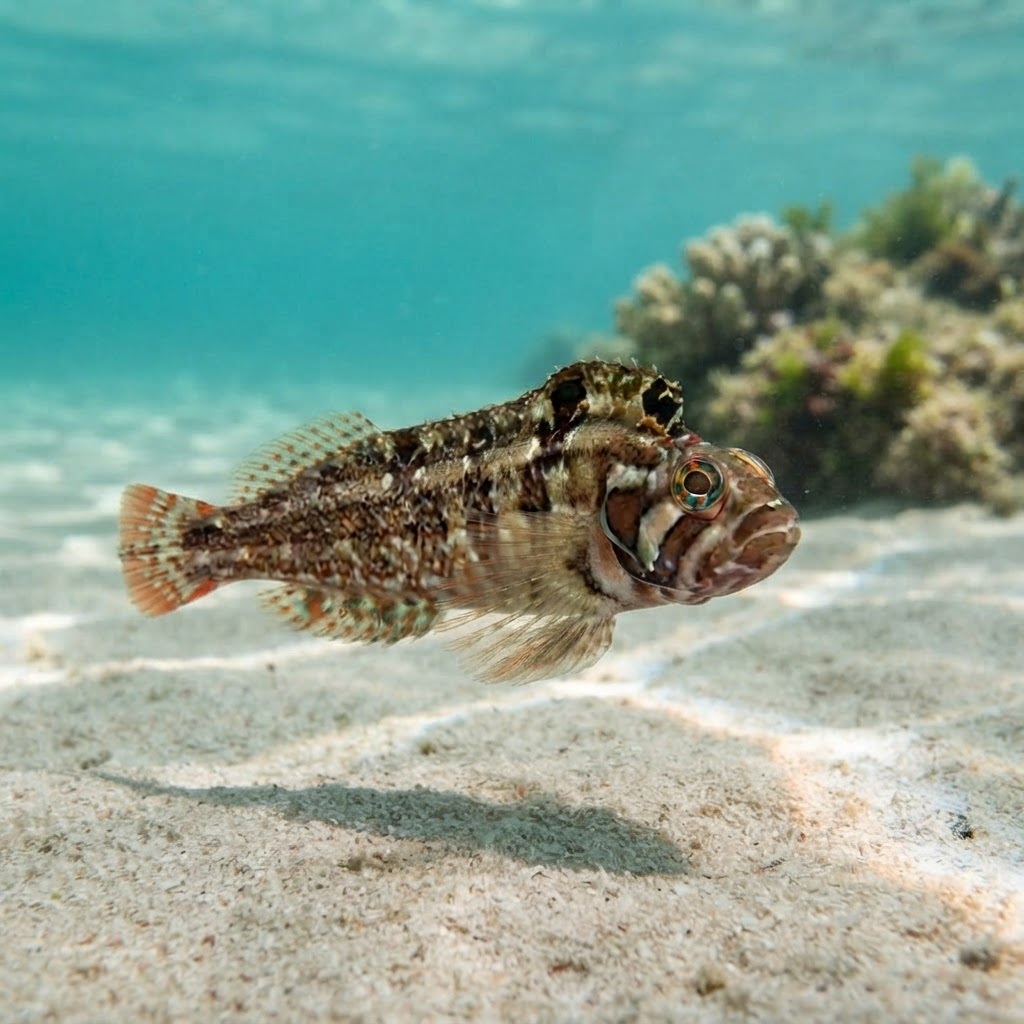
Clinus venustris
Spot this small rockpool dweller on Western Cape dives in 16-23C water, most often logged as an uncommon find.
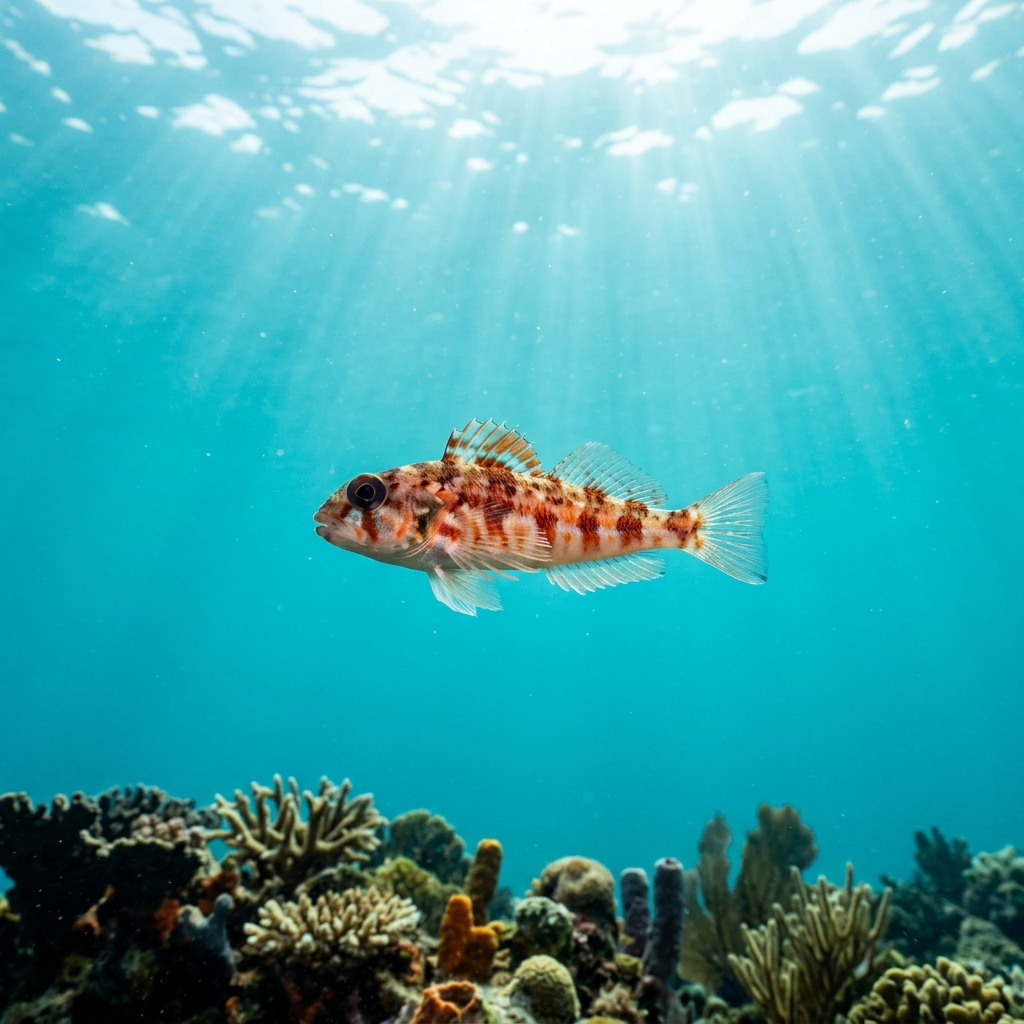
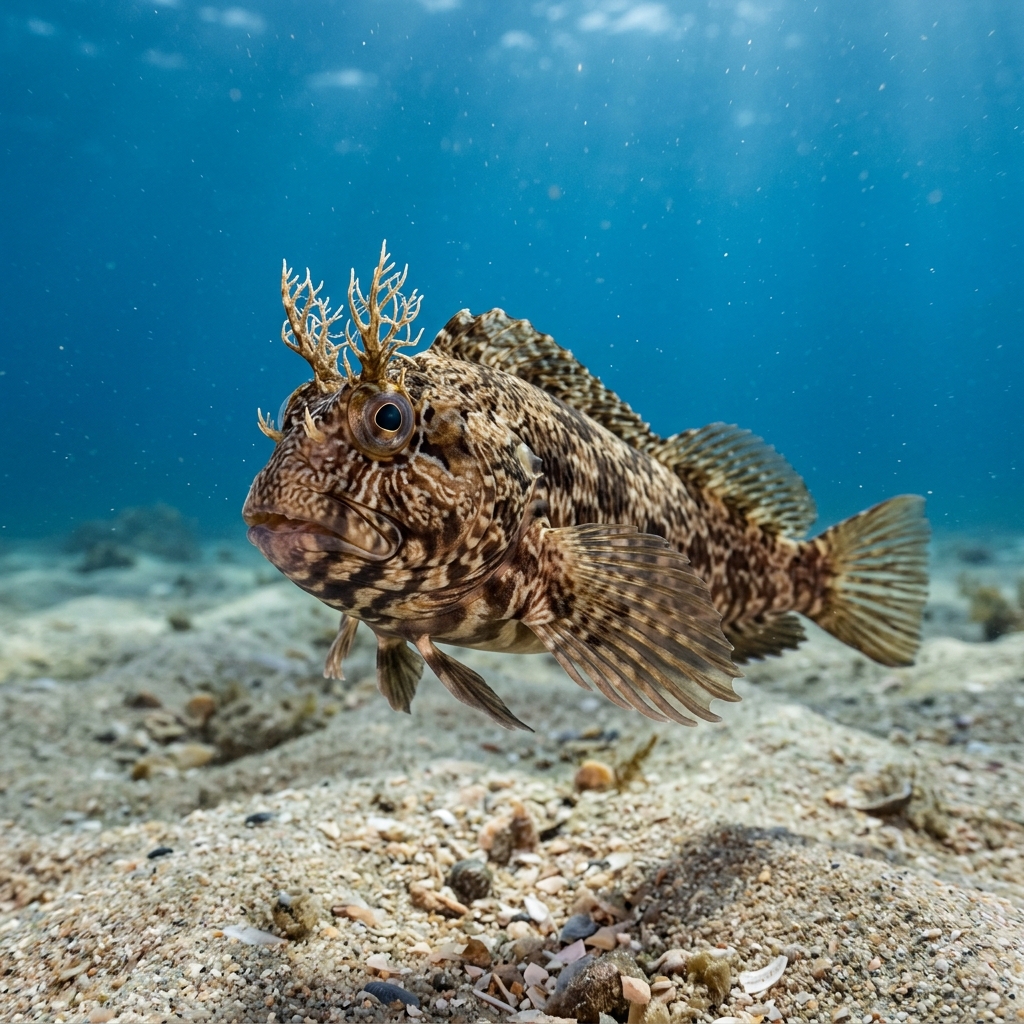
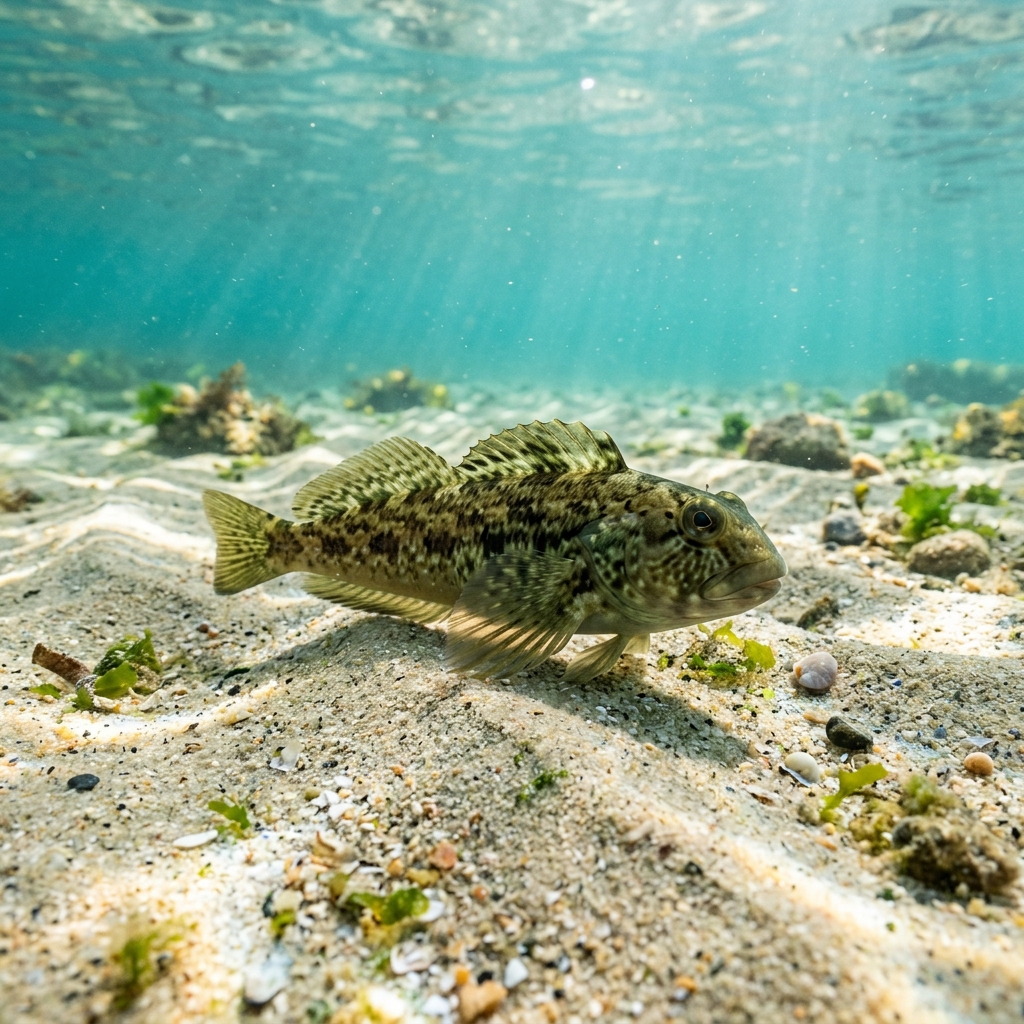
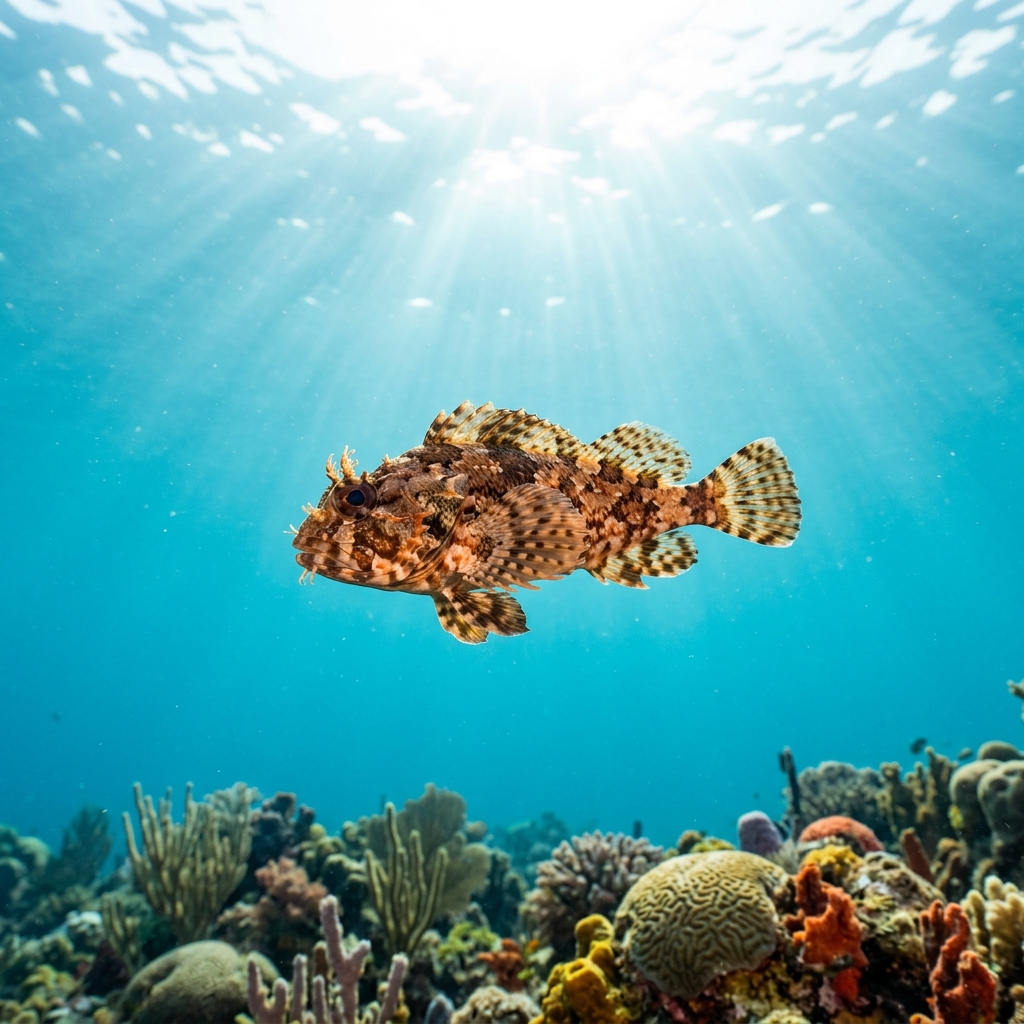
A small, elongate fish topping out around 8 cm, with a mottled brown-and-cream speckled pattern that breaks up its outline against rock and weed. It has the soft, blunt-headed look typical of klipfish, with no obvious fins held erect, and it tends to sit still on or near the substrate rather than swim in open water. Look closely at cracks and ledges rather than the open reef, since its camouflage makes it easy to swim straight past.
Divers most often find this klipfish tucked against rock faces, in crevices, or resting motionless among kelp holdfasts, relying on its speckled camouflage rather than fleeing. It is logged as uncommon at most sites, so spotting one usually takes a slow, close look rather than a casual reef swim. Being demersal, it stays low, hugging the bottom rather than venturing into midwater.
Klipfish in this family are known for giving birth to live young rather than laying eggs, an unusual trait among reef-associated fish that divers rarely get to witness directly.
Sightings show no detectable seasonal pattern, and with a comfortable range of 16.1 to 22.6C it seems to be present through the Western Cape's diving calendar year-round. Plan around good Cape Town visibility windows rather than around this fish's presence.
Every logged sighting of this species comes from South Africa, and specifically the Western Cape, making it a Cape-specific find rather than something you will encounter elsewhere. Sites across the Western Cape's rocky reefs and kelp forests are where divers consistently record it.
Mapping where Speckled Klipfish is logged…
They are a Western Cape speciality, logged exclusively at rocky reef and kelp forest sites around South Africa's Cape coastline. Look for them tucked into crevices rather than swimming in open water.
There is no strong season for this species, and it tolerates a wide temperature range from about 16 to 23C, so it turns up year-round on Cape Town area dives. Time your trip around good local visibility rather than a particular month.
Look for a small fish, around 8 cm, with a mottled brown and cream speckled pattern that camouflages it against rock and kelp. It sits still near the substrate rather than swimming, so a slow close look at crevices is the best way to spot one.
They stay small, reaching only around 8 cm in length, which along with their camouflage pattern makes them easy to overlook on a reef.
Like other klipfish, this species gives birth to live young instead of laying eggs, a reproductive strategy that is uncommon among reef fish and rarely observed firsthand by divers.
Site and sighting data is aggregated from diver logs, iNaturalist and GBIF. For taxonomy and conservation status:
Rusty Blenny
2,605 sites