Lobiger souverbii
A pinhead-sized sea slug with leaf-like wings, logged uncommonly across Grande-Terre, Guadeloupe in warm 25-30C water year-round.
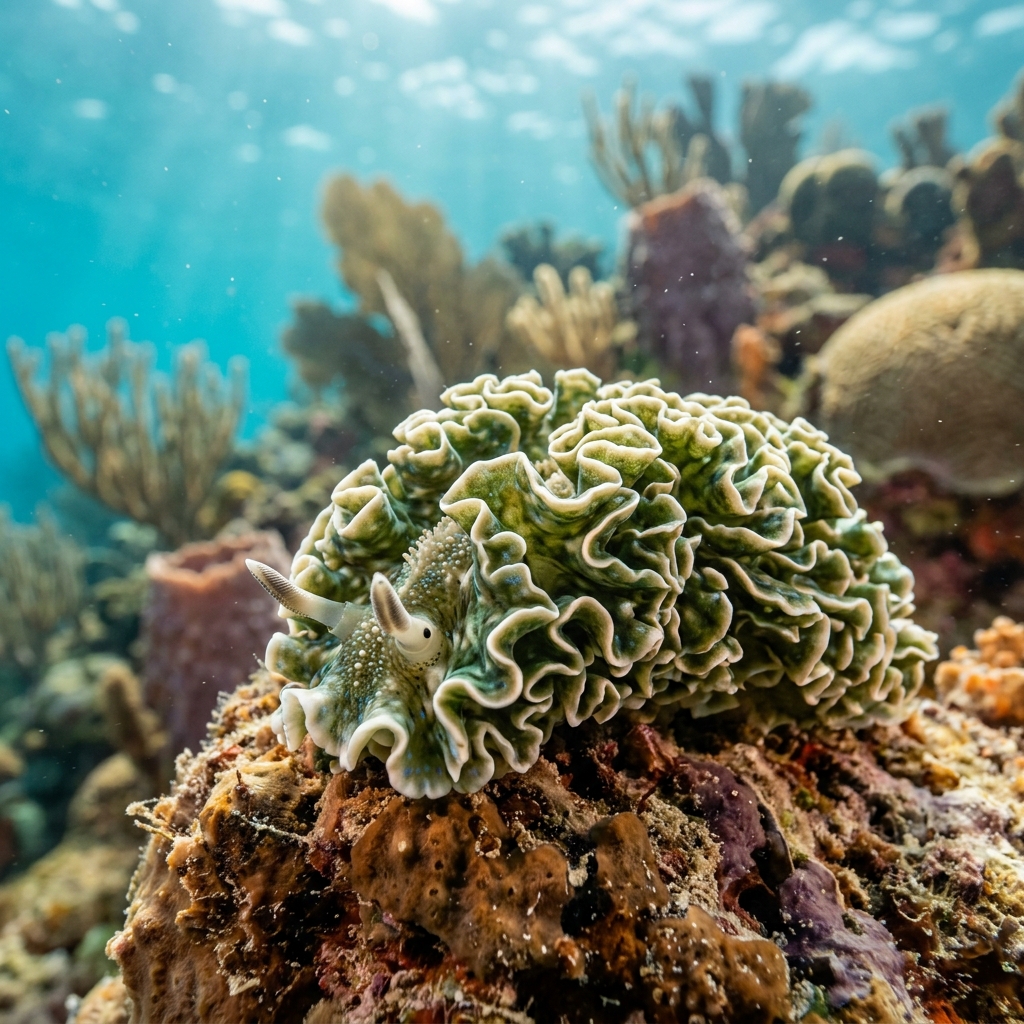
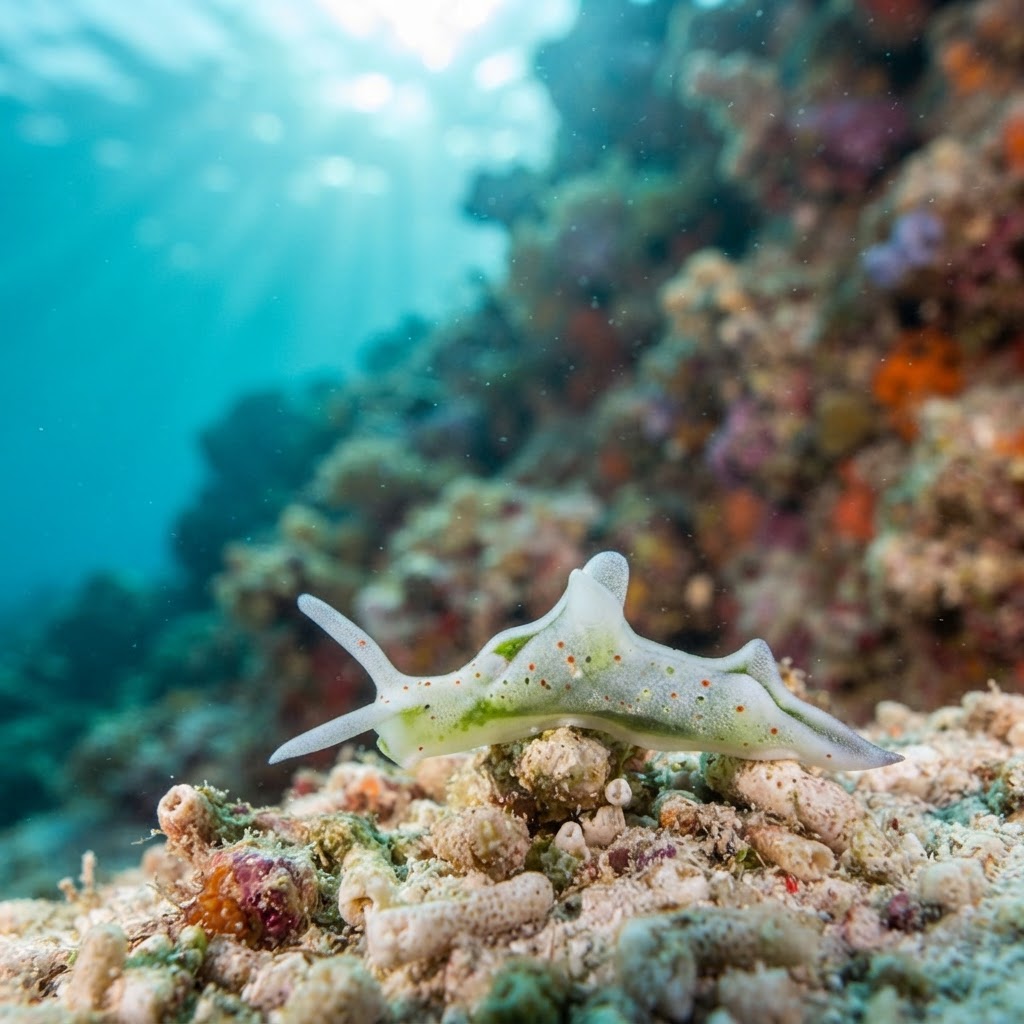
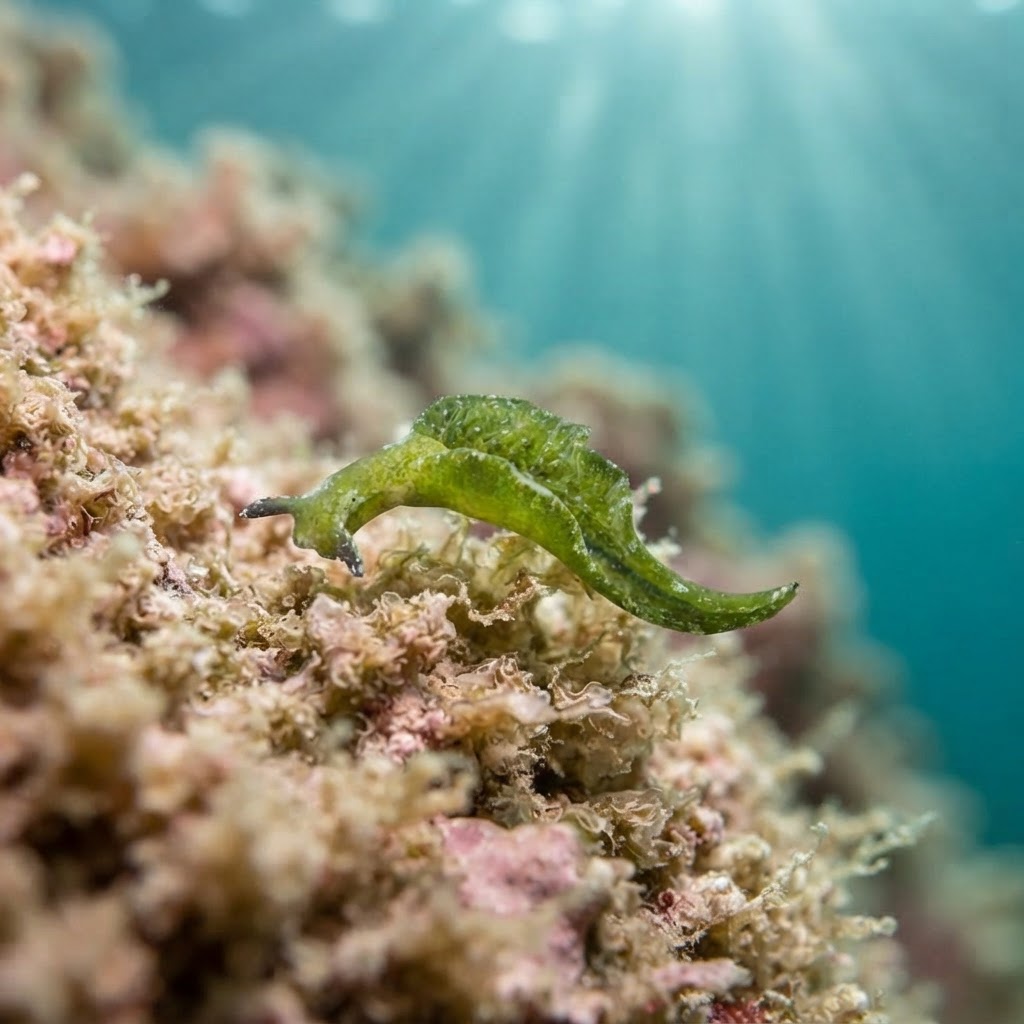
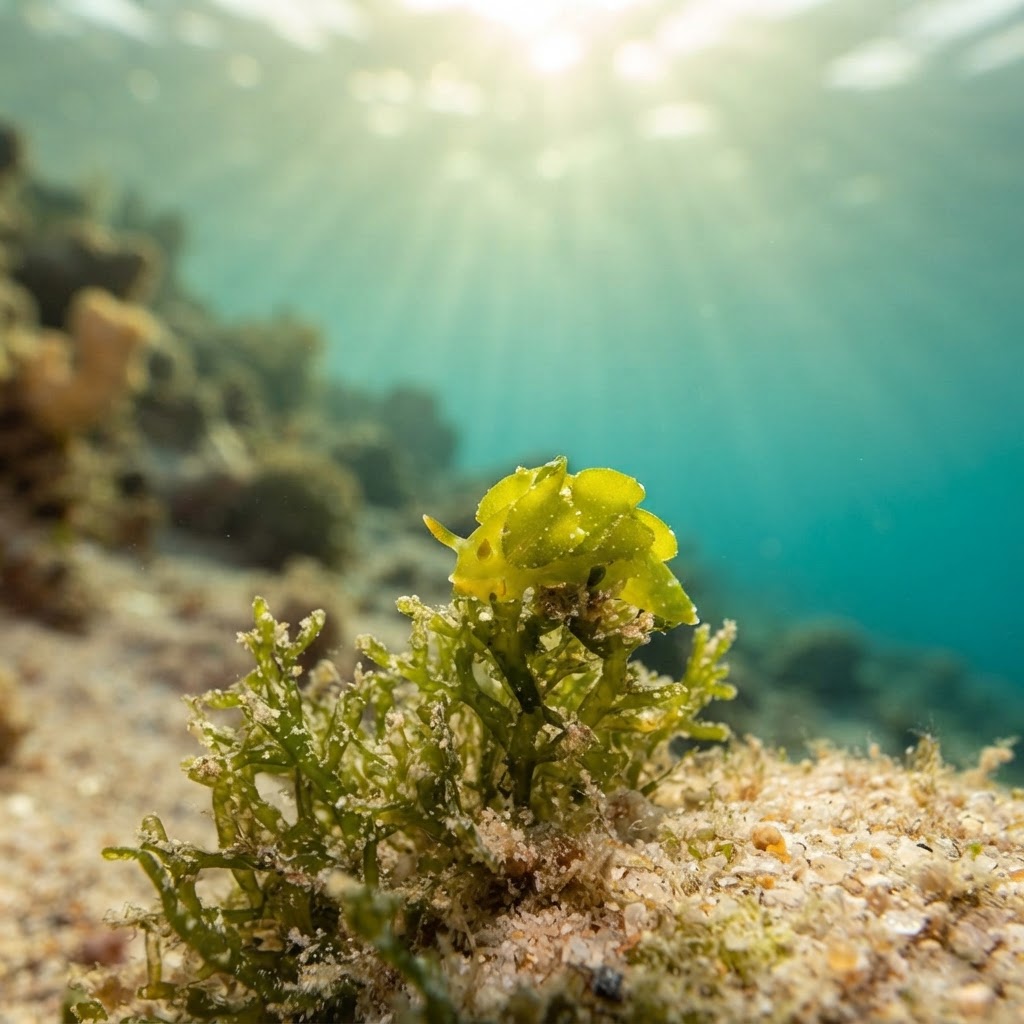
Barely 1 cm long, this sea slug is easy to swim past unless you are already scanning algae close-up. Look for a small, elongated green to olive body with two pairs of flattened, leaf-like wing appendages (parapodia) that give it a plant-like silhouette rather than a typical slug shape. Its colour and texture blend closely with the fine green algae it sits on, so a slow, deliberate search of algal turf is the only way to spot one.
Divers find it clinging motionless to fine algal turf, grazing slowly and relying on its camouflage rather than movement to avoid notice. It shows little reaction to divers, mostly because at this size and speed a torch and a macro lens are the only things that will ever get its attention. Best found during unhurried, close-focus searches of algae-covered substrate rather than open swimming.
Like other sacoglossan slugs, it likely feeds by piercing algal cells and drawing out their contents, and some relatives in this group can even retain functioning algal chloroplasts in their own tissue for a time, a trick called kleptoplasty.
Water temperatures at logged sites range from 24.6 to 30.6C, comfortable year-round on these reefs, and there is no detected seasonal pattern in sightings, so any month is a fair bet.
Every logged sighting in the data comes from Guadeloupe, making it the place to look for this species, with Grande-Terre standing out as the most reliable region. Divers searching algae-covered rock and rubble patches around Grande-Terre have the best documented track record for finding it.
Mapping where Souverbie's Lobiger is logged…
All confirmed sightings come from Guadeloupe, with Grande-Terre the strongest region on record. Look on algae-covered rock and rubble rather than open reef.
There is no clear season in the sighting data. Water stays between about 24.6 and 30.6C year-round on the reefs where it is found, so any month can work.
It is a tiny, roughly 1 cm sea slug with a green to olive body and two pairs of flat, leaf-shaped wing appendages that make it look almost like a scrap of algae. Its camouflage against algal turf is the main reason it goes unnoticed.
Around 1 cm, making it one of the smaller sea slugs a diver could hope to spot without a magnifying lens.
No. It poses no threat to divers and is far too small to interact with beyond careful observation.
As a member of the sacoglossan slug group, it feeds by piercing algal cells, and some relatives in this family can keep stolen algal chloroplasts alive inside their own tissue for a while afterwards.
Site and sighting data is aggregated from diver logs, iNaturalist and GBIF. For taxonomy and conservation status:
Elysia Timida
573 sites