Baeolidia australis
A rare 3cm nudibranch found in Victoria and North Island, NZ waters between 13 to 22C, year-round if you know where to look.
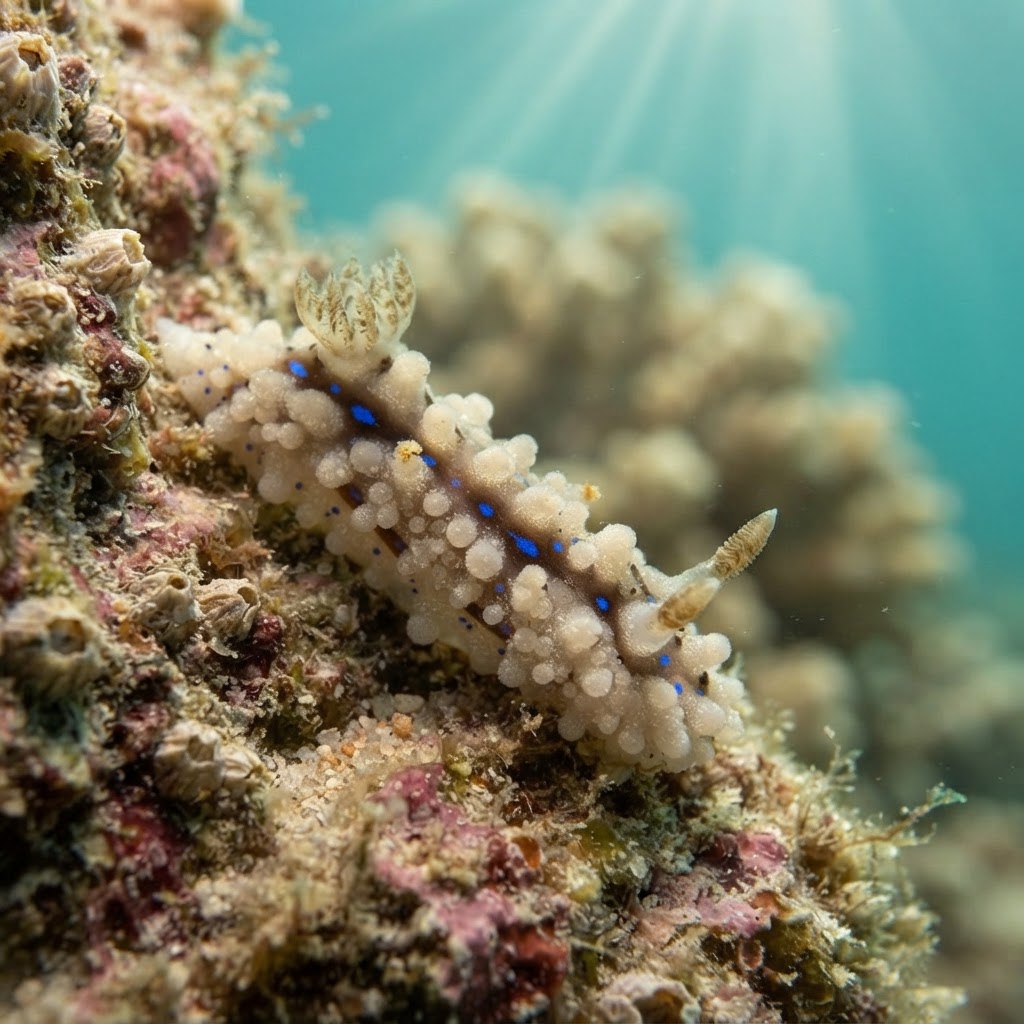
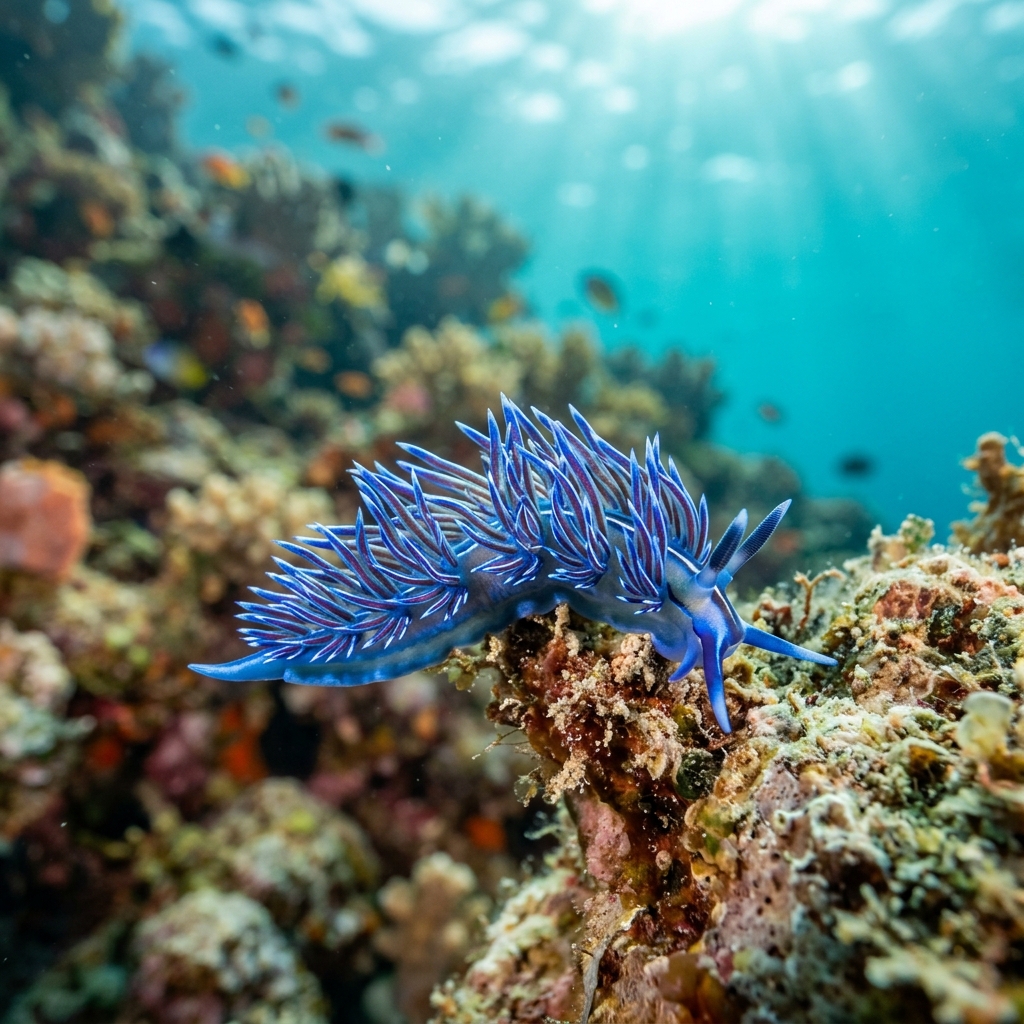
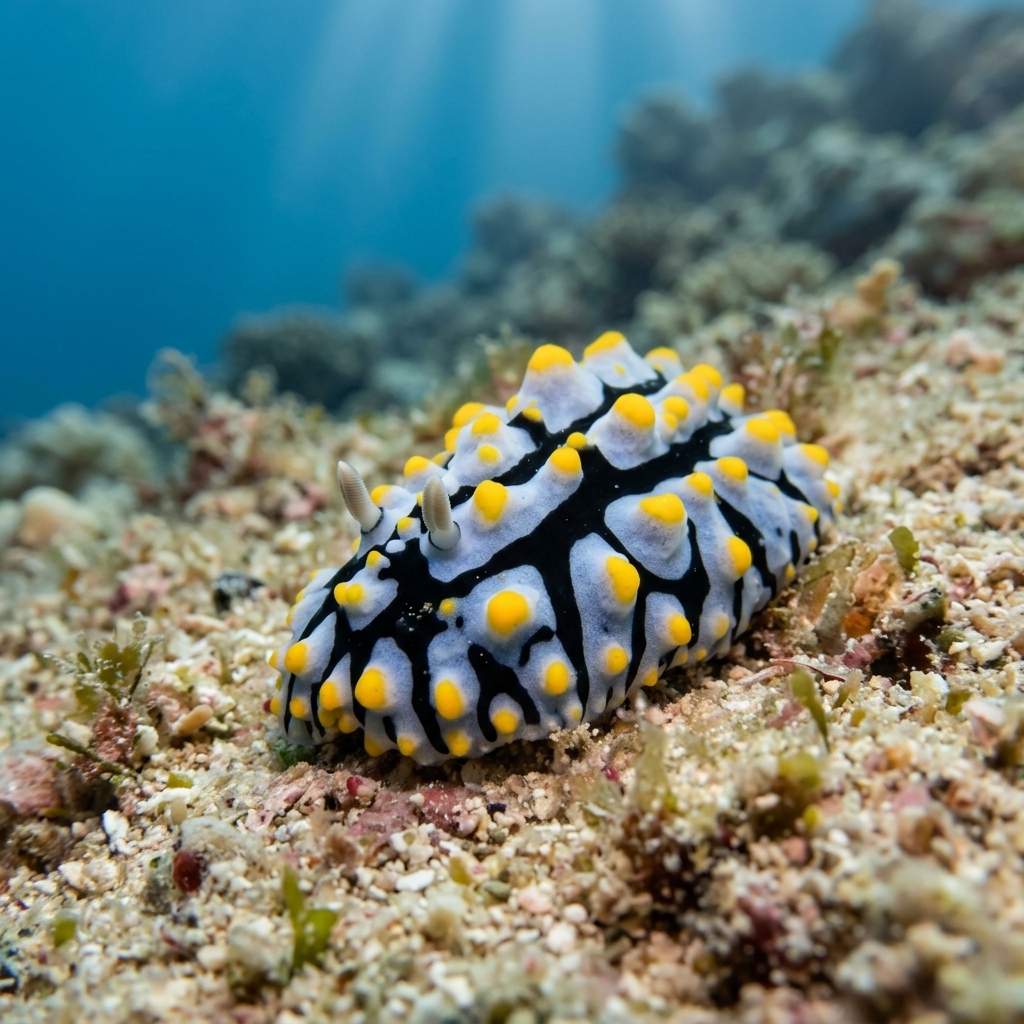
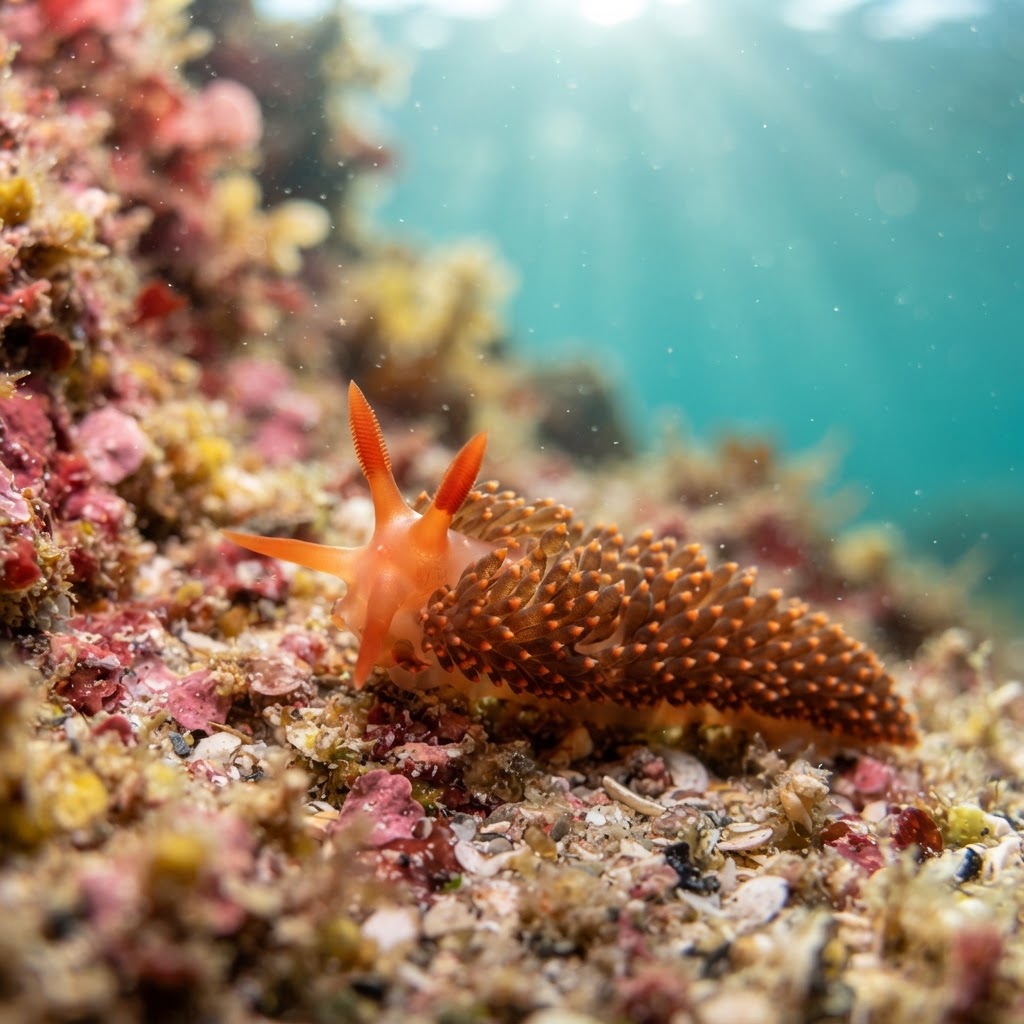
A small nudibranch, around 3 cm, with a body covered in dense, finger-like projections (cerata) that give it a slightly furry or bottlebrush look. Colour tends toward pale, mottled tones that blend into rubble and algae, making it easy to swim past. Look closely at the head area for short, paired tentacles (rhinophores) rather than relying on colour alone, since many small aeolid nudibranchs share a similar muted palette.
Divers find this one tucked into rubble, sponge, or algae-covered surfaces rather than out in the open, which is part of why it's logged as rare at most sites. It moves slowly and shows little reaction to divers, so a careful, close look with a torch or magnifier is usually what turns up a sighting. Best approached as a macro find on a slow, methodical reef or rubble search rather than something you'll spot cruising past.
Like other aeolid nudibranchs, it likely stores stinging cells from its prey inside those cerata for its own defence, turning a meal into a weapon.
Sightings don't show a clear seasonal pattern, and its temperature range of 13.1 to 22C spans typical year-round conditions on southern Australian and New Zealand temperate reefs, so any month is worth a look. Treat it as a possible find on any dive rather than a seasonal target.
Most consistently logged in Victoria and along New South Wales in Australia, with additional sightings in Western Australia, making Australia the stronger bet overall. Across the Tasman, North Island, New Zealand also produces sightings, so both countries are worth checking if this species is on your list.
Mapping where Southern Baeolidia is logged…
It's most often reported from Victoria and New South Wales in Australia, with further sightings in Western Australia and on New Zealand's North Island. It's a rare to uncommon find even at these sites, so treat it as a bonus spot rather than a guaranteed sighting.
There's no detected seasonal pattern, and it's been observed across a wide temperature range from 13.1 to 22C, so sightings are possible year-round on the temperate reefs where it occurs.
Look for a small, roughly 3cm nudibranch with a dense covering of finger-like cerata giving it a fuzzy texture, in pale, mottled tones that blend with rubble and algae. It's easy to overlook, so a slow scan with a torch helps.
They're small, reaching around 3 cm in length, which is typical for aeolid nudibranchs and part of why they're easily missed underwater.
Like related aeolid nudibranchs, it probably repurposes stinging cells absorbed from its prey and stores them in its cerata as a defence against predators.
Site and sighting data is aggregated from diver logs, iNaturalist and GBIF. For taxonomy and conservation status:
Light-spotted Aegires
3,168 sites