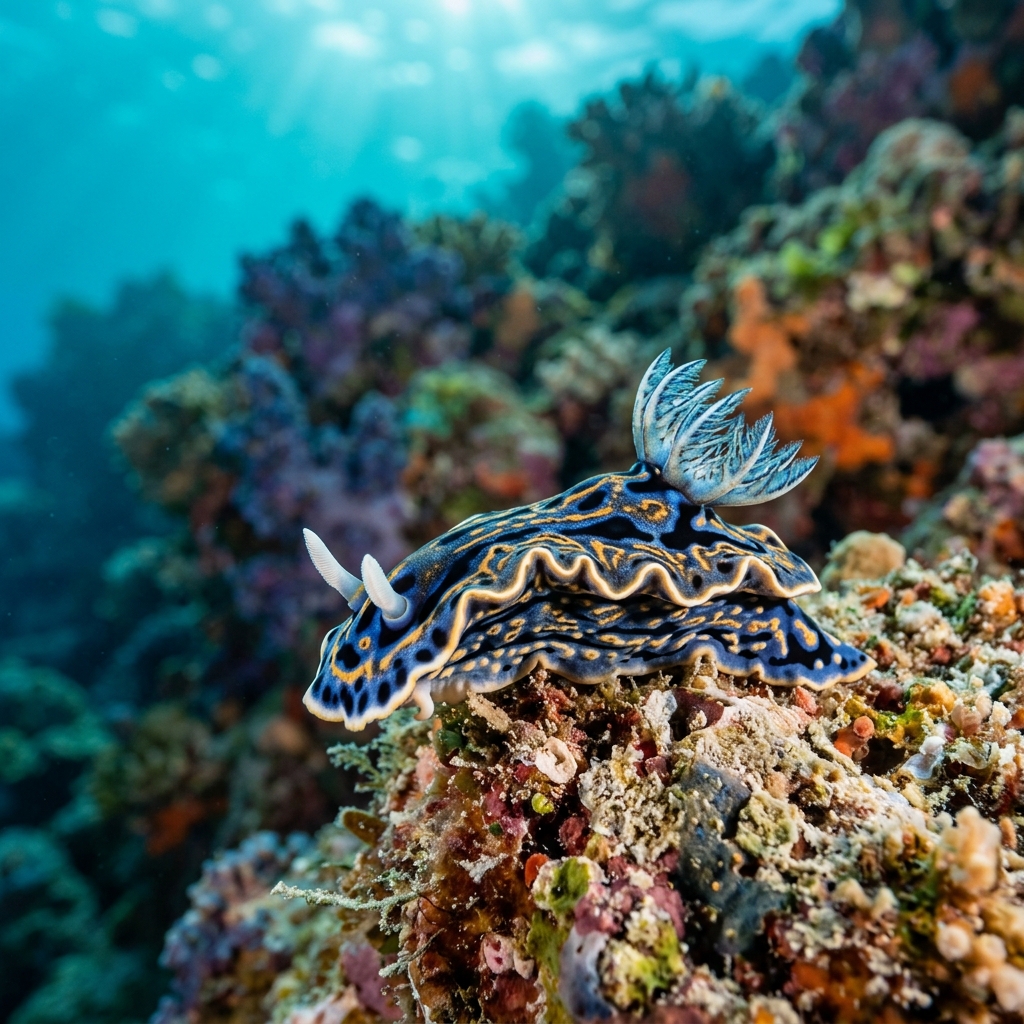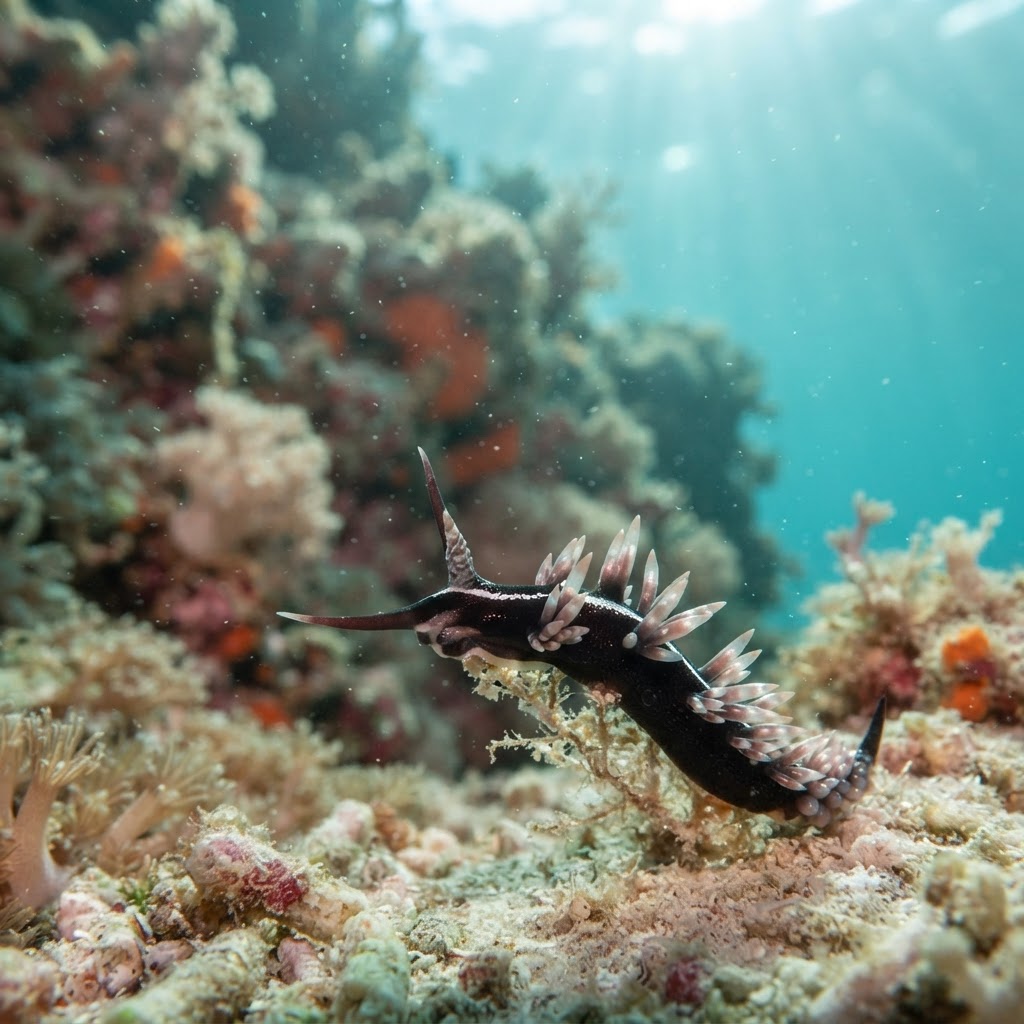
Pleurolidia juliae
An uncommon aeolid nudibranch logged on reefs from Queensland to Hawaii, often on Solanderia hydroids in 21-27C water year-round.
Look for a small, slender-bodied sea slug covered in finger-like projections (cerata) running along its back, giving it a bristly, feathery silhouette rather than the smooth ridged look of dorid nudibranchs. It's typically found clinging directly to the branches of its host hydroid, the Solanderia coral it's named for, so its colour often blends with or echoes that structure. Size and depth details aren't well documented for this species, so go by the cerata-covered profile and its close association with hydroid branches rather than by scale.
Divers find this aeolid parked directly on its Solanderia hydroid host, moving slowly across the branches while grazing rather than swimming or drifting in the water column. It shows little reaction to divers beyond retracting slightly if disturbed, and because it's small and camouflaged against its host, most sightings come from divers deliberately searching hydroid colonies with a torch or macro lens rather than spotting it in open view.
Like other aeolid nudibranchs, it likely feeds on the stinging cells of its cnidarian host and may repurpose those stinging cells for its own defence, storing them in the cerata along its back.
No clear seasonal pattern shows up in the sighting data, so treat this as a year-round find on the reefs where it occurs. Its observed range of roughly 21 to 27C fits comfortably with subtropical to tropical conditions in Queensland, New South Wales and Hawaii across most months.
Most reliably reported from Australia, with sightings spread across Queensland and New South Wales, making the east coast your best bet. It also turns up in Hawaii in the United States and has been logged at Longdong in Taiwan, so the species has a real Indo-Pacific spread even though sightings anywhere are thin on the ground.
Mapping where Solanderia Aeolid is logged…
It's most often reported from Queensland and New South Wales in Australia, with additional sightings in Hawaii and at Longdong in Taiwan. Look specifically on Solanderia hydroid colonies rather than open reef.
There's no strong seasonal signal in the data, so it's considered a year-round sighting where it occurs. Water temperatures at known sites range from about 21 to 27C, comfortable across most of the year in these regions.
Check for a slender body lined with cerata (finger-like projections) rather than a smooth dorid shape, usually seen clinging to the branches of a Solanderia hydroid. Its colouring tends to match or blend with the host structure, so a close look at hydroid colonies is often needed to spot it.
Exact size figures aren't well documented for this species. As with most aeolid nudibranchs in this family, expect a small, slender animal best found by scanning host hydroids closely rather than looking for a large or obvious slug.
No, this species poses no danger to divers. It's a small, slow-moving mollusc with no capacity to harm a diver; the only care needed is not to disturb its hydroid host while looking for it.
As an aeolid nudibranch living on Solanderia hydroids, it almost certainly grazes on the polyps of its host, likely absorbing the hydroid's stinging cells for its own defence in the process, a common trait across this nudibranch family.
Site and sighting data is aggregated from diver logs, iNaturalist and GBIF. For taxonomy and conservation status:
Blue Dragon
3,163 sites