Tritoniopsis elegans
A rare 4cm nudibranch logged on reefs in Queensland, Australia and Kwajalein Atoll, in warm 22-30C water year-round.
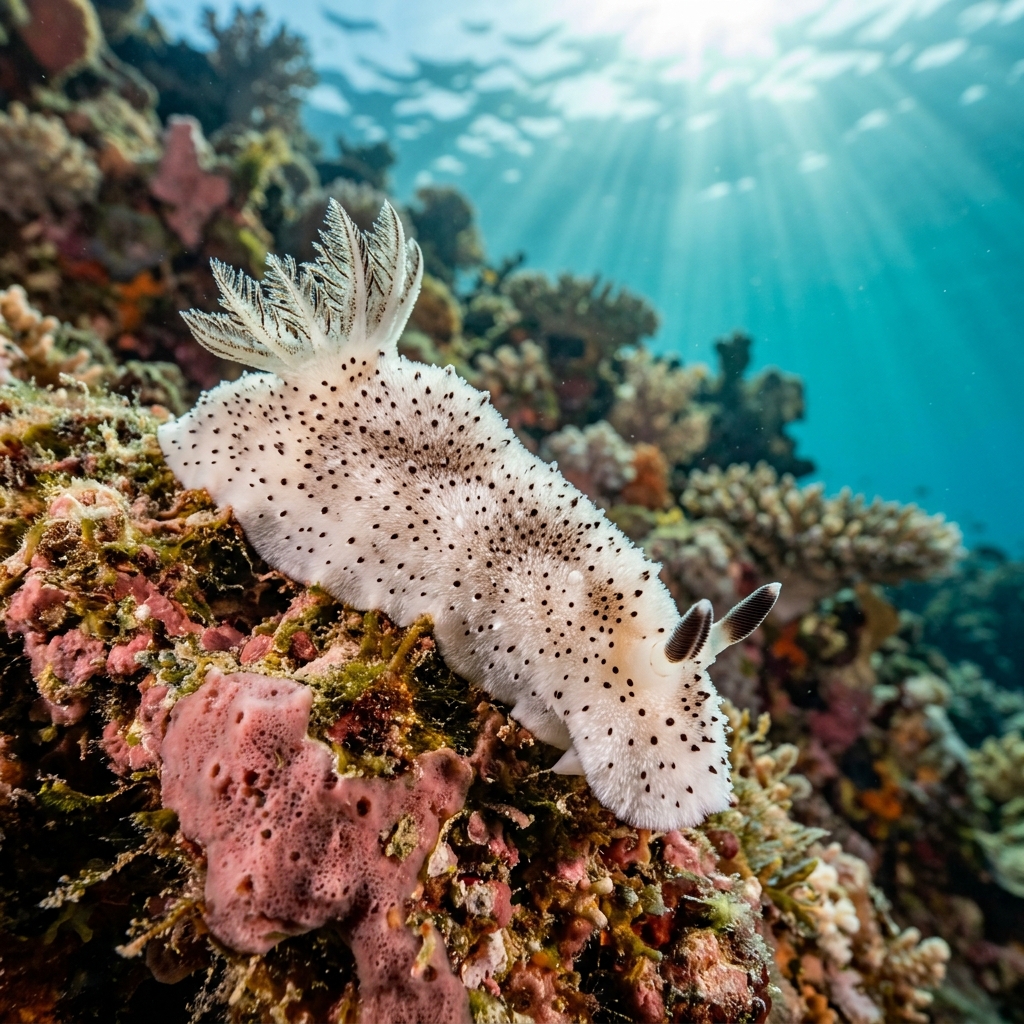
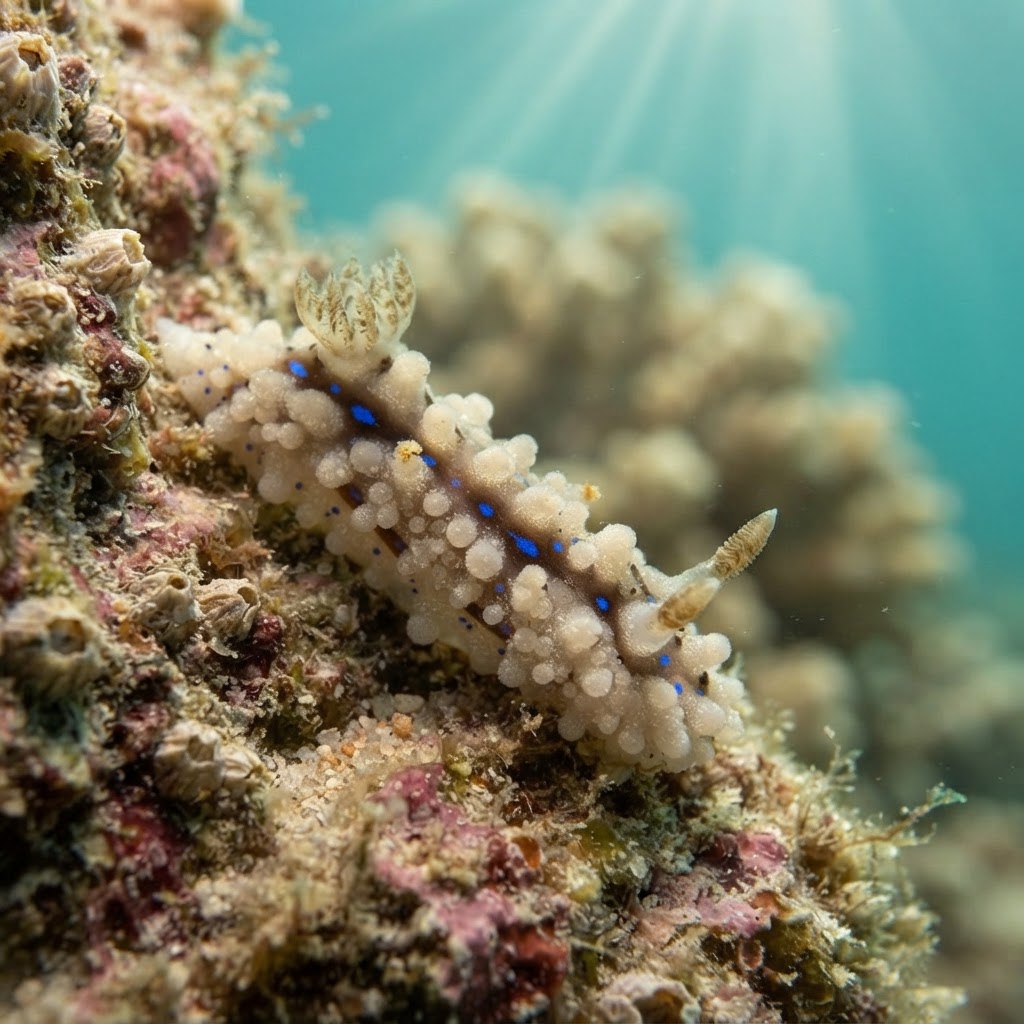
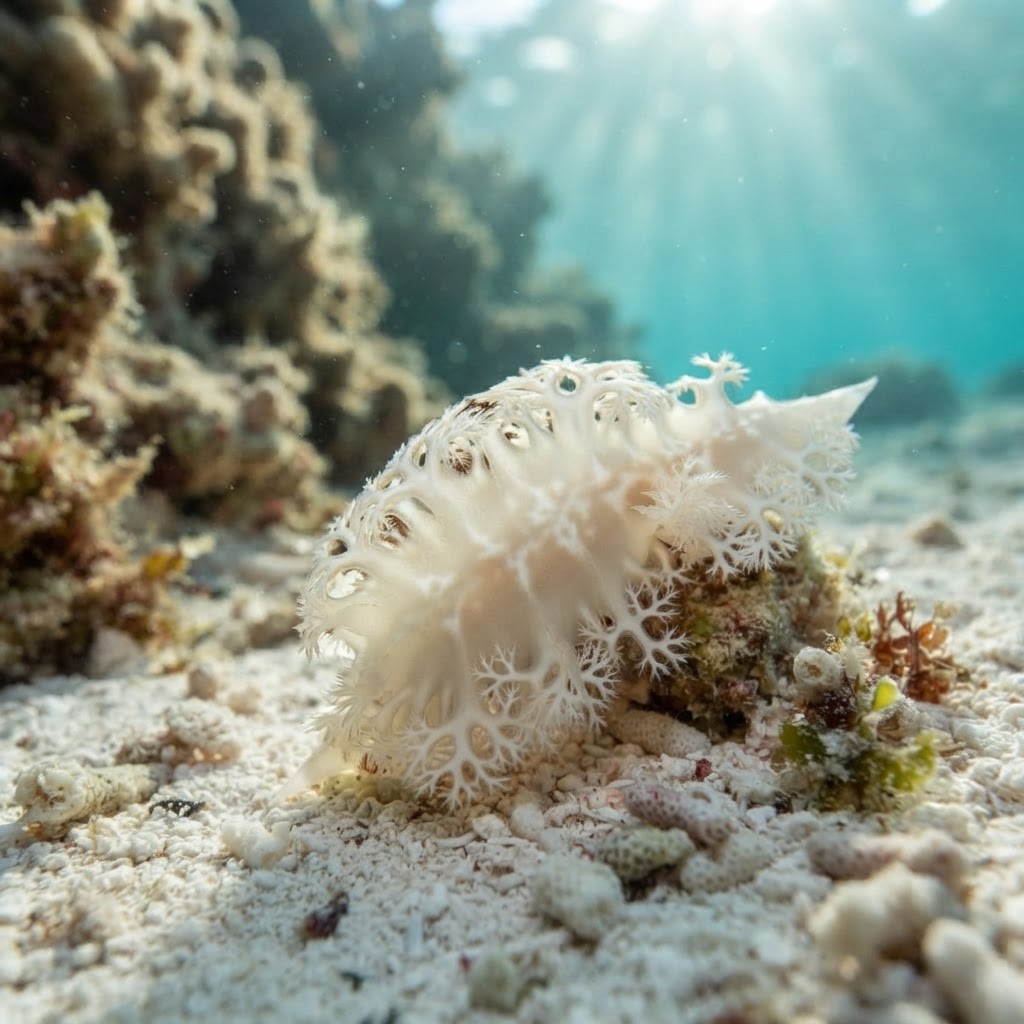
A small nudibranch reaching about 4cm, with a pale, frosty-white body that gives it its common name. Look for the feathery gill cluster (the branchial plume) on its back and a pair of upright sensory horns (rhinophores) near the head, both traits typical of the tritoniidae family. Its slim, elongated body sits low against the substrate, making it easy to miss unless you're scanning slowly.
Divers find it slow-moving and stationary on hard substrate, doing what most tritoniid nudibranchs do: grazing quietly rather than putting on any show. It shows no reaction to divers beyond the usual slug indifference, so a close, patient look with a torch or macro lens is the best way to appreciate it without disturbing it.
Like other tritoniids, it likely feeds on soft corals, using its exposed gill plume to breathe while it grazes slowly across colonies, a lifestyle that keeps it tied closely to soft coral habitat.
Sightings show no clear seasonal pattern, and with a comfortable range of roughly 22 to 30C, it's likely present on these reefs year-round rather than tied to a particular month.
Most records come from Queensland, Australia, which accounts for the bulk of logged sightings, with a further outpost in Kwajalein Atoll, Marshall Islands. At every known site it's logged as rare to uncommon, so this is a species for divers doing careful macro sweeps rather than a reliable poster species for a dive briefing.
Mapping where Snow Queen Lacedragon is logged…
Sightings cluster in Queensland, Australia, with an additional record from Kwajalein Atoll in the Marshall Islands. It's logged as rare to uncommon at every known site, so treat any sighting as a bonus find rather than a guaranteed one.
There's no detected seasonal pattern in the sightings, and it tolerates a wide temperature range of about 22 to 30C, suggesting it can turn up on these reefs at any time of year.
Look for a small, pale white nudibranch around 4cm long with a feathery gill cluster on its back and upright sensory horns near the head. It sits low on the reef and moves slowly, so a careful macro-focused search is needed to spot it.
They're small, typically reaching around 4cm in length, which is fairly average for a tritoniid nudibranch.
Yes, it's currently logged as rare at most known sites and uncommon at one, making it a real find rather than a common reef sighting even where it's been recorded before.
Site and sighting data is aggregated from diver logs, iNaturalist and GBIF. For taxonomy and conservation status:
Light-spotted Aegires
3,168 sites