Doto pita
A 1cm nudibranch logged at 29 dive sites across Victoria, Australia, in water from 14.7 to 21.4C, year-round if you know where to look.
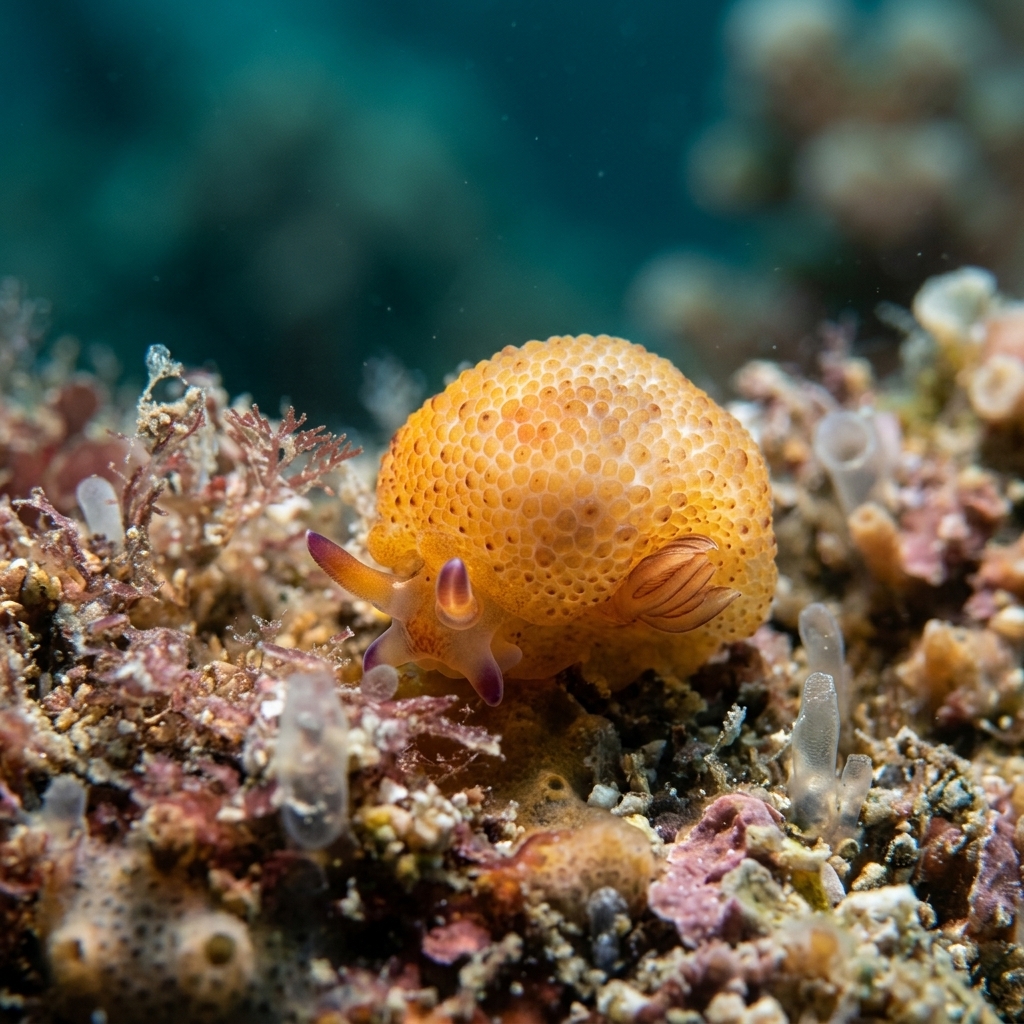
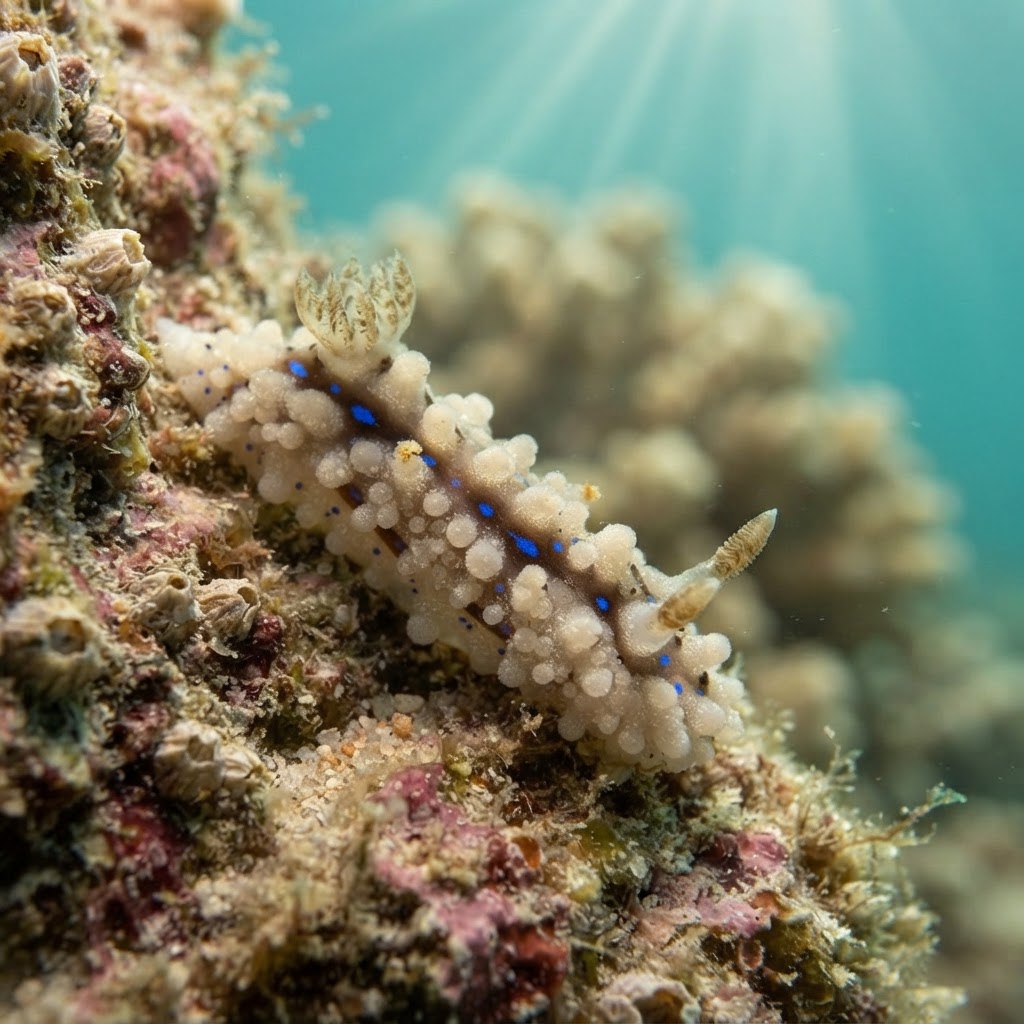
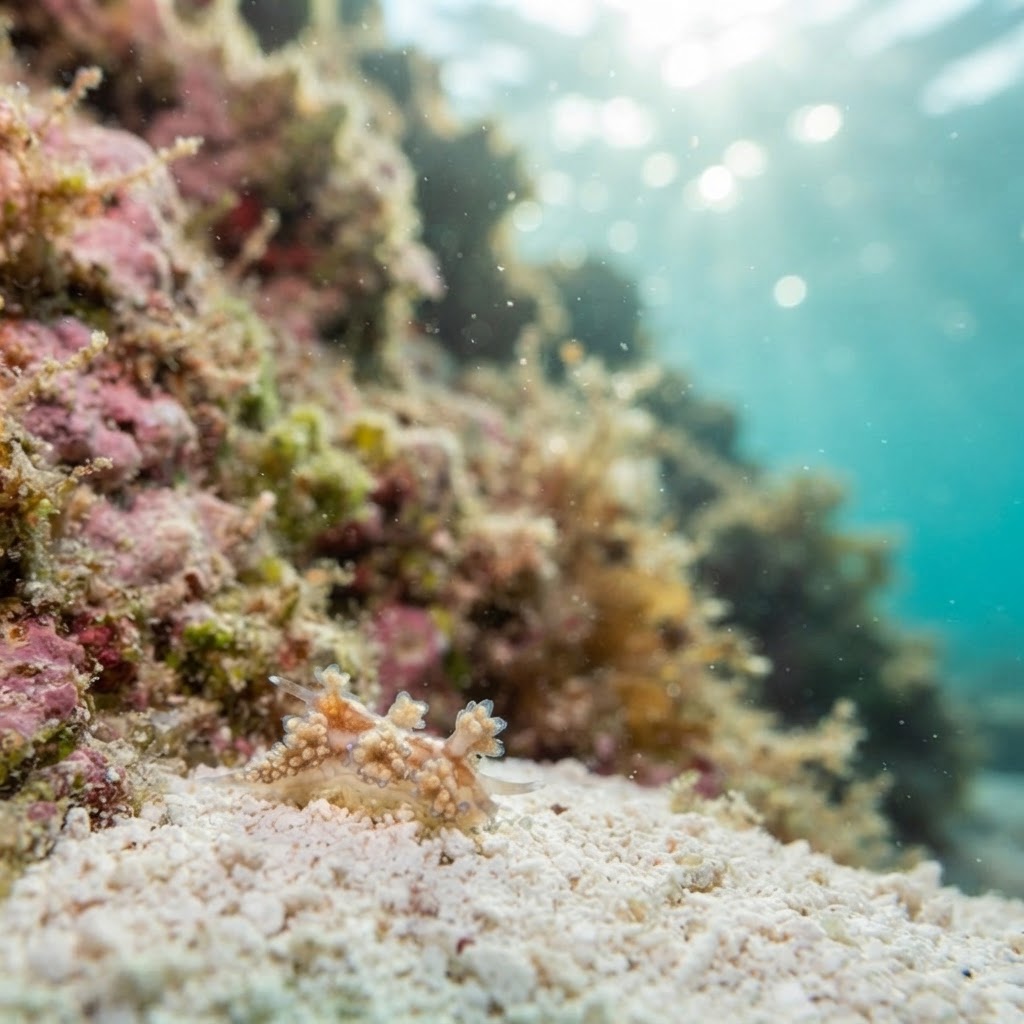
Barely a centimetre long, this slug has a translucent to pale body covered in clumped, warty projections (cerata) that give it a bumpy, almost cotton-bud silhouette rather than a smooth nudibranch outline. It sits low and close to its hydroid host, so divers usually spot it as a small irregular lump on a fuzzy-looking stem rather than as a moving animal. Colour tends toward whitish or cream, sometimes with a faint tint picked up from its food source.
Divers find it parked motionless on the hydroids it feeds on, blending into the fuzzy texture of the colony rather than crawling openly across the reef. It shows no reaction to divers and is easy to swim straight past, so most sightings come from divers deliberately scanning hydroid clumps with a torch or magnifier during a slow macro-focused dive.
Like other Doto species, it feeds directly on hydroids and often takes on the look of its host, which is part of why it is so easily overlooked against the very structure it lives on.
Sightings do not show a clear seasonal pattern, and the recorded temperature range of 14.7 to 21.4C spans Victoria's cooler and warmer diving months alike, so treat it as a year-round find rather than a seasonal target.
Every logged sighting of this species comes from Australia, with Victoria standing out as the stronghold, particularly its temperate reef sites where hydroid growth is dense. If you are diving Victorian sites known for macro life, this is one to add to the slow, close-focus search list.
Mapping where Small Doto is logged…
Recorded sightings are concentrated in Australia, with Victoria the standout region. Look for it on hydroid-covered structure at sites known for temperate macro life.
There is no strong seasonal pattern in the sightings, and it turns up across a wide temperature range from 14.7 to 21.4C, so it is best treated as a year-round find in Victoria rather than tied to one season.
Look for a tiny, pale, bumpy-bodied slug about a centimetre long sitting still on hydroid stems. Its clustered warty cerata make it blend into the fuzzy texture of the hydroid colony, so it reads as a lump rather than a distinct animal at first glance.
Around 1cm, making it one of the smaller nudibranchs divers try to spot, and best found with a torch and a patient, close look at hydroid growth.
It feeds directly on hydroids and tends to take on the appearance of its host, which helps it disappear against the very structure it lives and feeds on.
Site and sighting data is aggregated from diver logs, iNaturalist and GBIF. For taxonomy and conservation status:
Blue Dragon
3,163 sites