Heniochus singularius
Black-and-white bannerfish with a long trailing filament, most often spotted around Phuket and Khao Lak in water around 25-29C.
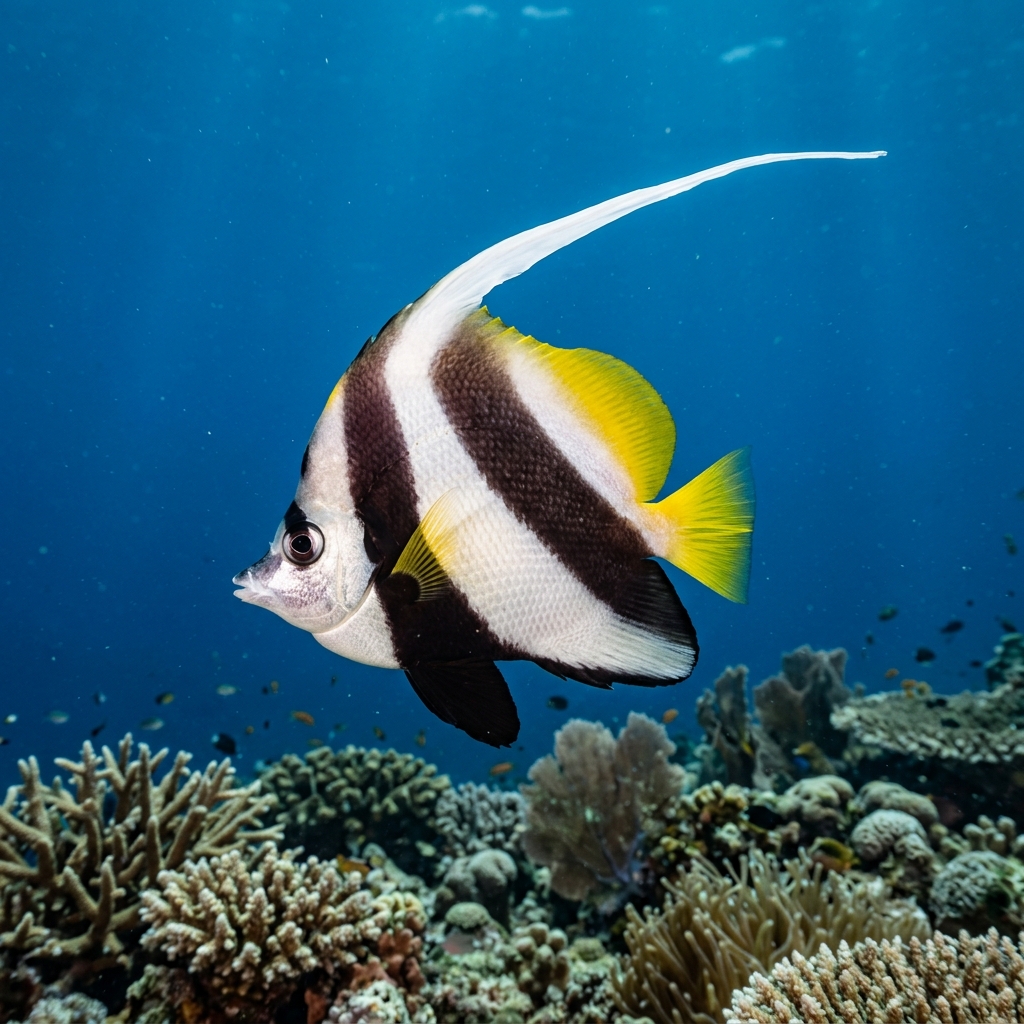
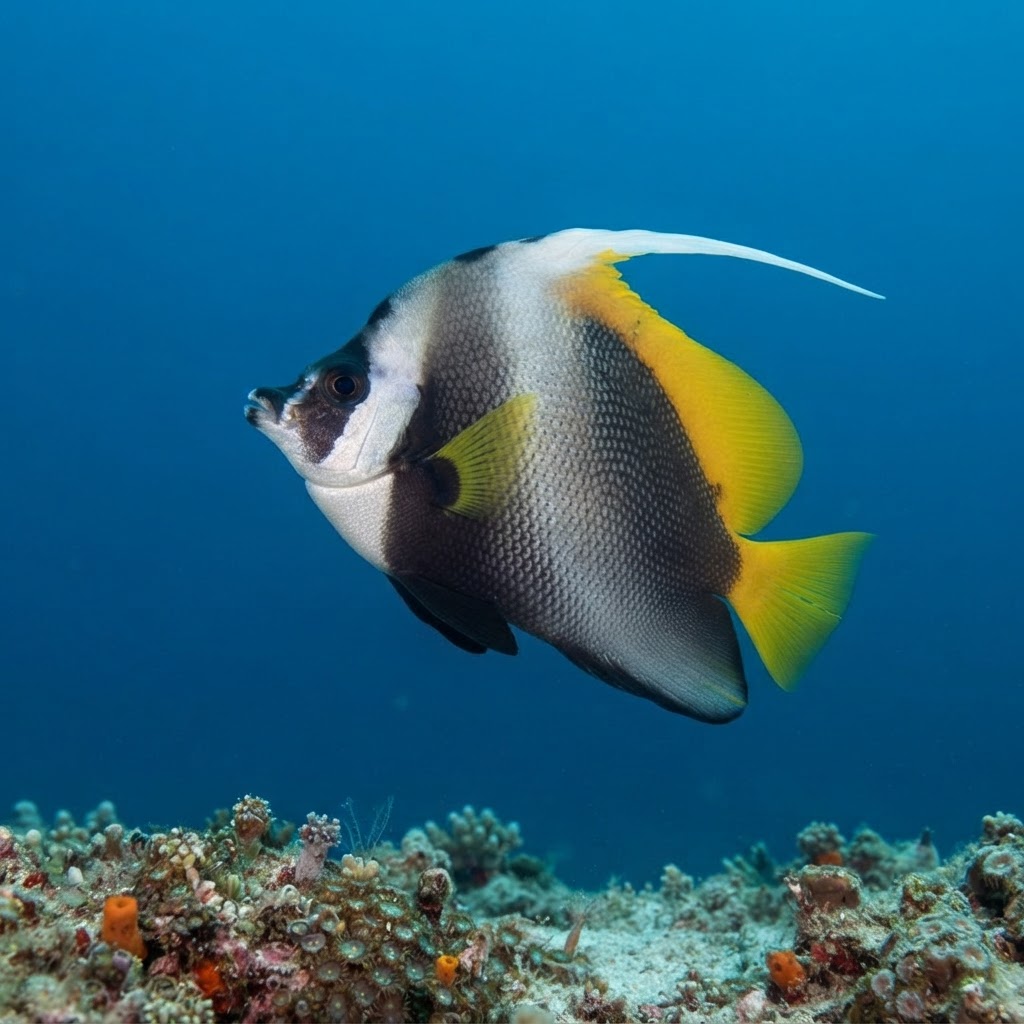
A tall, disc-shaped body split into bold black and white bands, with a long trailing filament streaming off the back of the dorsal fin. Look for the black band across the eye and a second broad black band running down the flank, plus a short dark snout marking that separates it from close relatives. At around 21 cm it is a mid-sized butterflyfish, usually seen alone or in loose pairs hovering just off the reef rather than tight to the substrate.
Divers usually find it hovering alone or in a loose pair over reef slopes and drop-offs, picking at small invertebrates in the water column rather than digging into the substrate. It tends to keep a bit of distance from divers rather than approach, and sightings are logged as uncommon at most sites, so it is a nice surprise rather than a guaranteed encounter. It ranges from shallow reef flats down to well beyond recreational depths, so it can show up anywhere from a few metres to deep drop-offs.
Its huge depth range, from 2 metres down to 250 metres, is unusual for a butterflyfish and suggests adults regularly retreat to deep reef and mesophotic zones well beyond where most divers ever look.
No clear seasonal pattern shows up in the sightings, and its comfort range of 25 to 29C matches tropical reefs year-round, so any month is a reasonable bet at these sites.
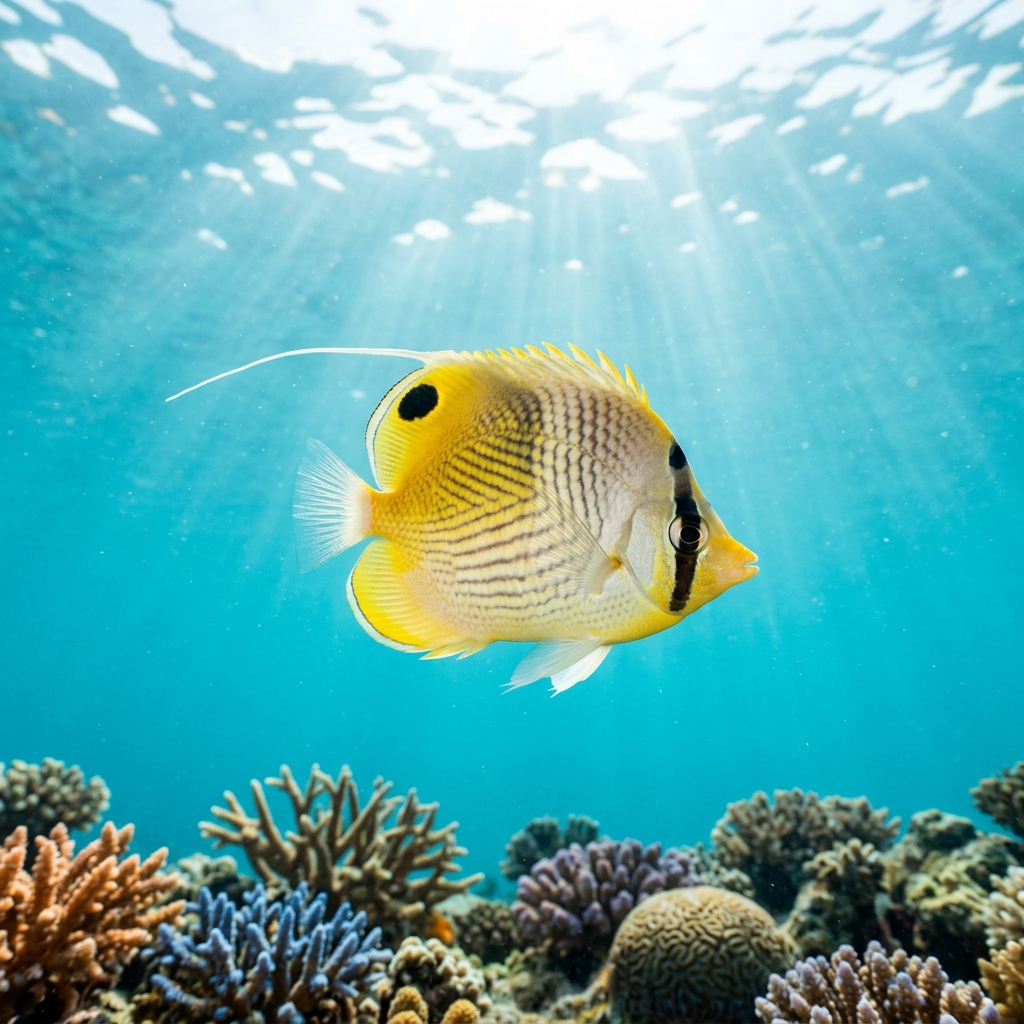
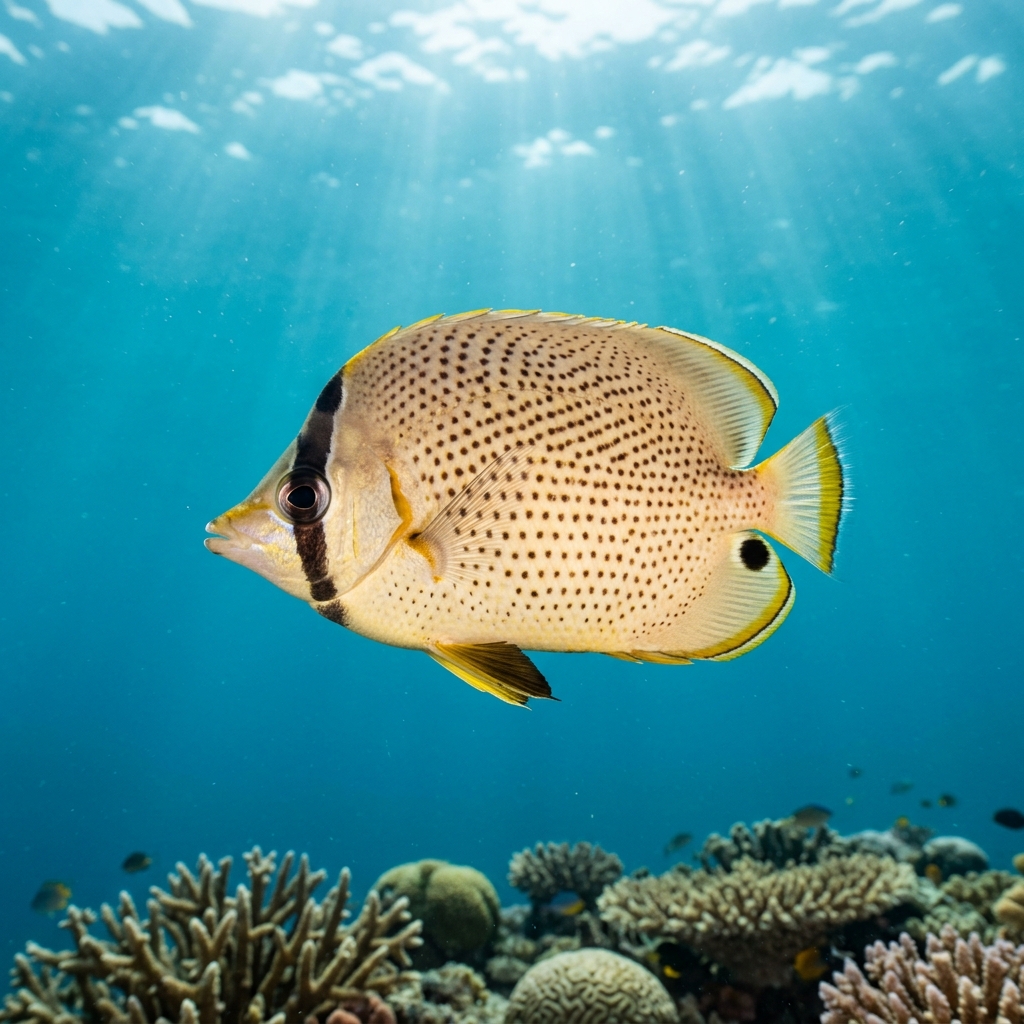
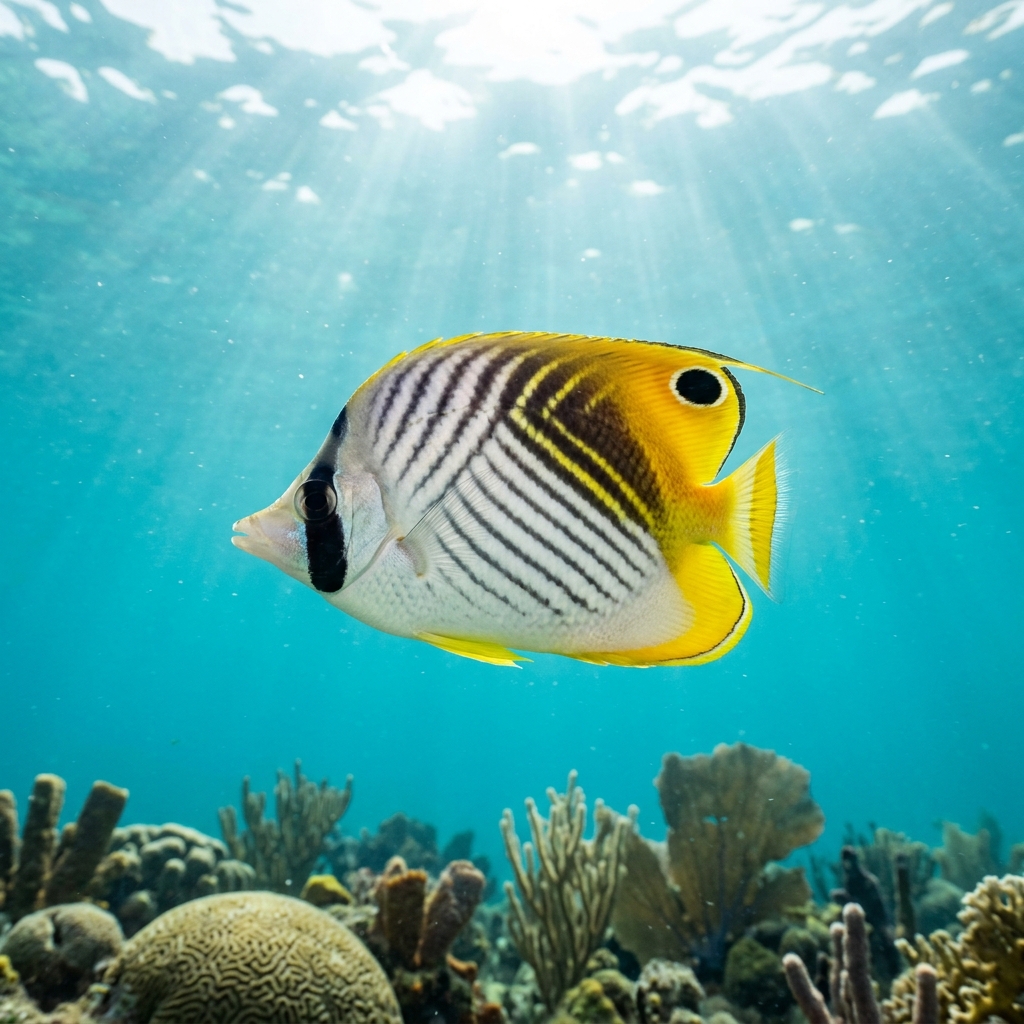
Reef neighbours a diver could mistake it for. Use the identification notes above to tell them apart.
Most commonly logged in Thailand, especially around Phuket, Khao Lak, and Koh Phi Phi, with Krabi also producing regular sightings. Indonesia is the next strongest region, with a good number of sites in Bali and Raja Ampat, and it turns up reliably in Vanuatu around Efate and in Fiji around Taveuni too.
Mapping where Singular Bannerfish is logged…
Thailand is the strongest bet, particularly Phuket, Khao Lak, and Koh Phi Phi, followed by Bali and Raja Ampat in Indonesia. It also shows up around Efate in Vanuatu and Taveuni in Fiji.
There is no strong seasonal signal in the data, and it favours warm water between 25 and 29C year-round, so it is a reasonable sighting on any dive trip to its core regions.
Look for a black-and-white banded body with a long trailing filament off the dorsal fin and a black band crossing the eye. It hovers over the reef alone or in pairs rather than hugging the bottom.
They reach around 21 cm in length, making them a mid-sized member of the butterflyfish family, noticeably taller-bodied than long relative to their length.
No, they pose no threat to divers. They are shy carnivores that keep their distance and have no venomous spines or aggressive behaviour to worry about.
Site and sighting data is aggregated from diver logs, iNaturalist and GBIF. For taxonomy and conservation status: