Abudefduf spp.
Spot Sergeants by their bold black bars on pale bodies across tropical reefs from the Yucatán to the Maldives. Present year-round in warm water.
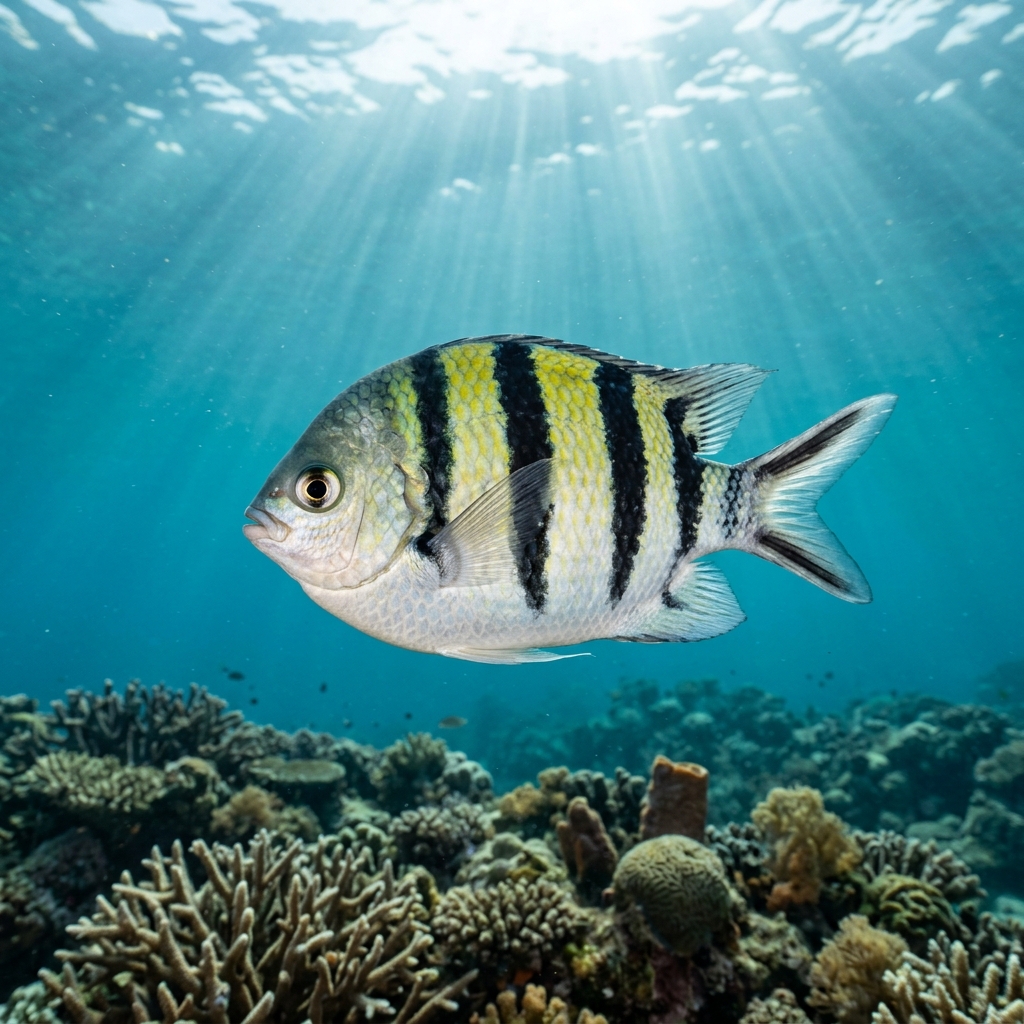
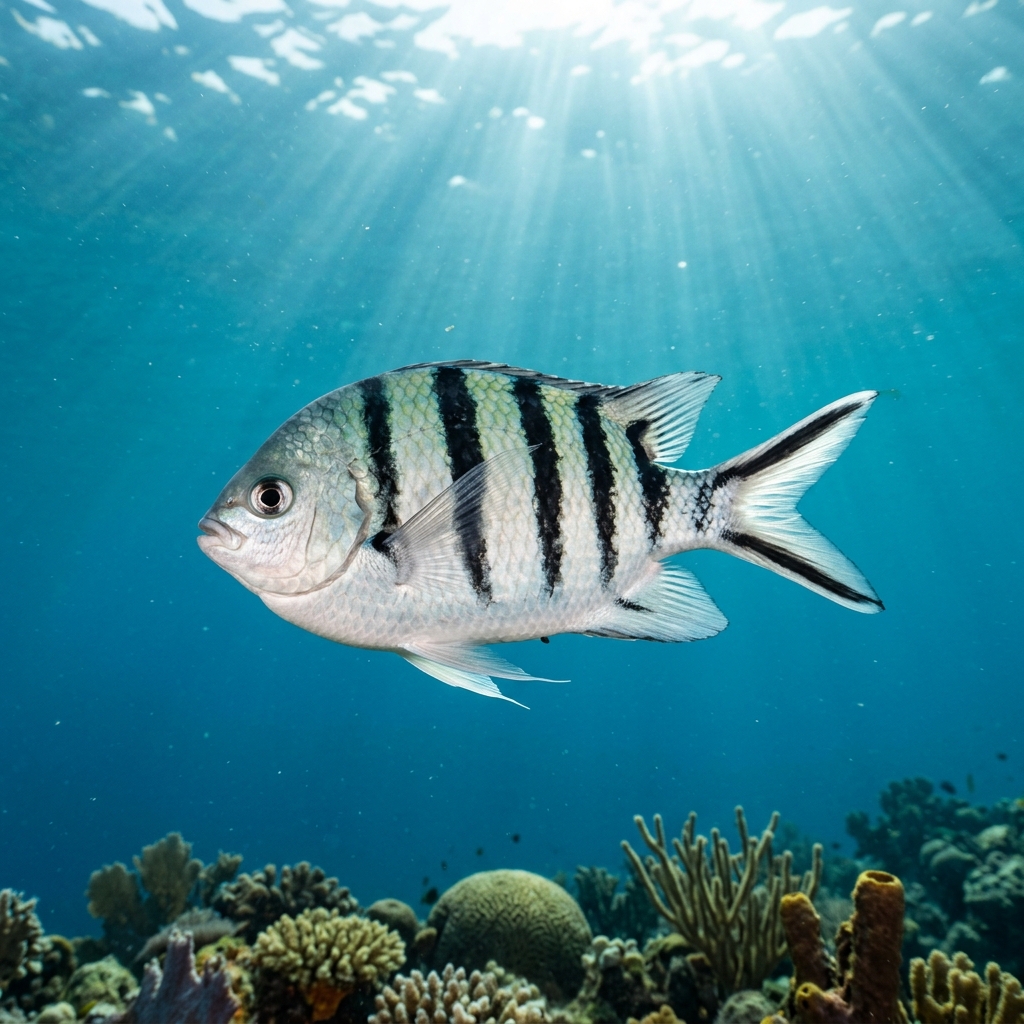
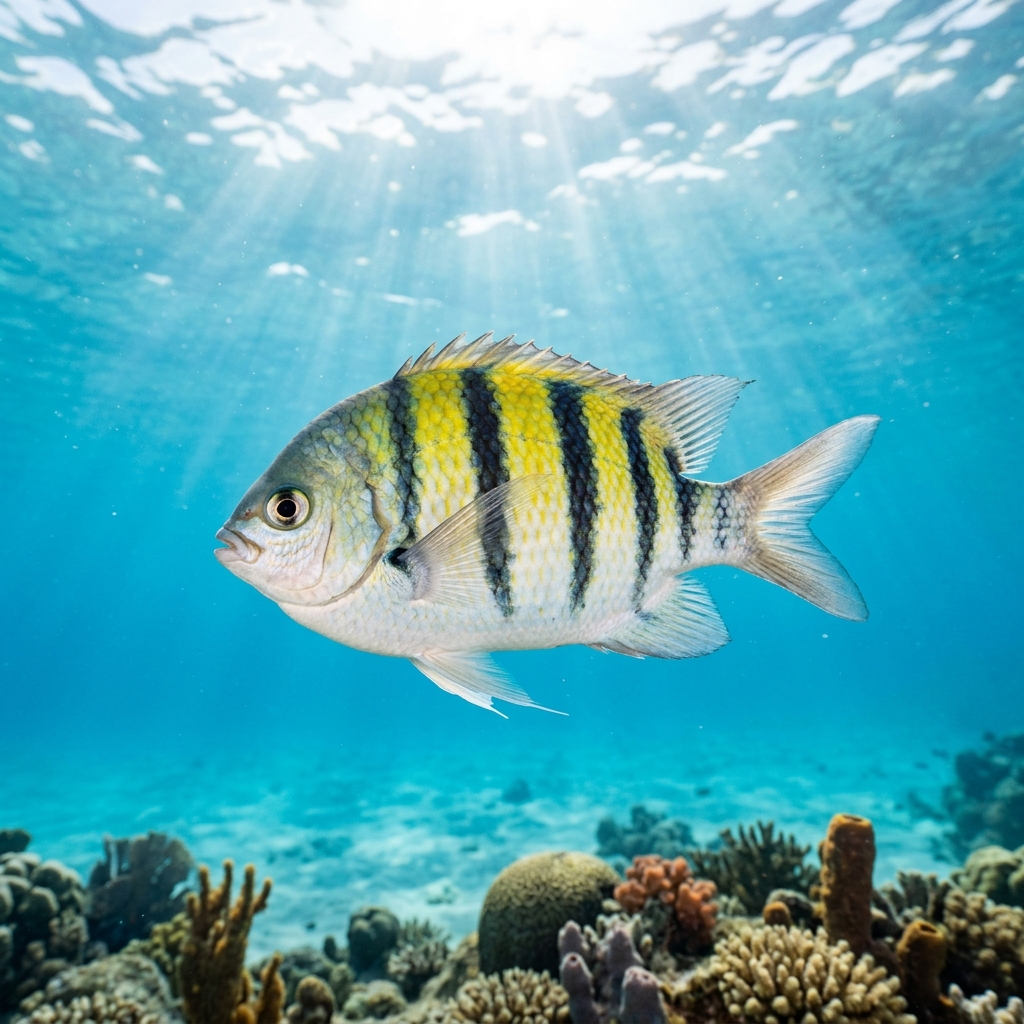
Five bold black vertical bars on a pale yellow-white body make this group one of the easiest reef fish to name at a glance. They are mid-sized damselfish, typically compact and oval-bodied, hovering in open water just above the reef or near the surface. Nesting males undergo a dramatic colour shift, turning deep blue-purple all over, which can briefly throw off an ID. Look for loose aggregations rather than lone individuals.
You will most often find them schooling in open water just above hard coral or rocky reef, darting to pick off plankton drifting in the current. They are generally unbothered by divers and will carry on feeding unless you push very close. Nesting males become noticeably territorial around their egg patches, fanning and guarding aggressively.
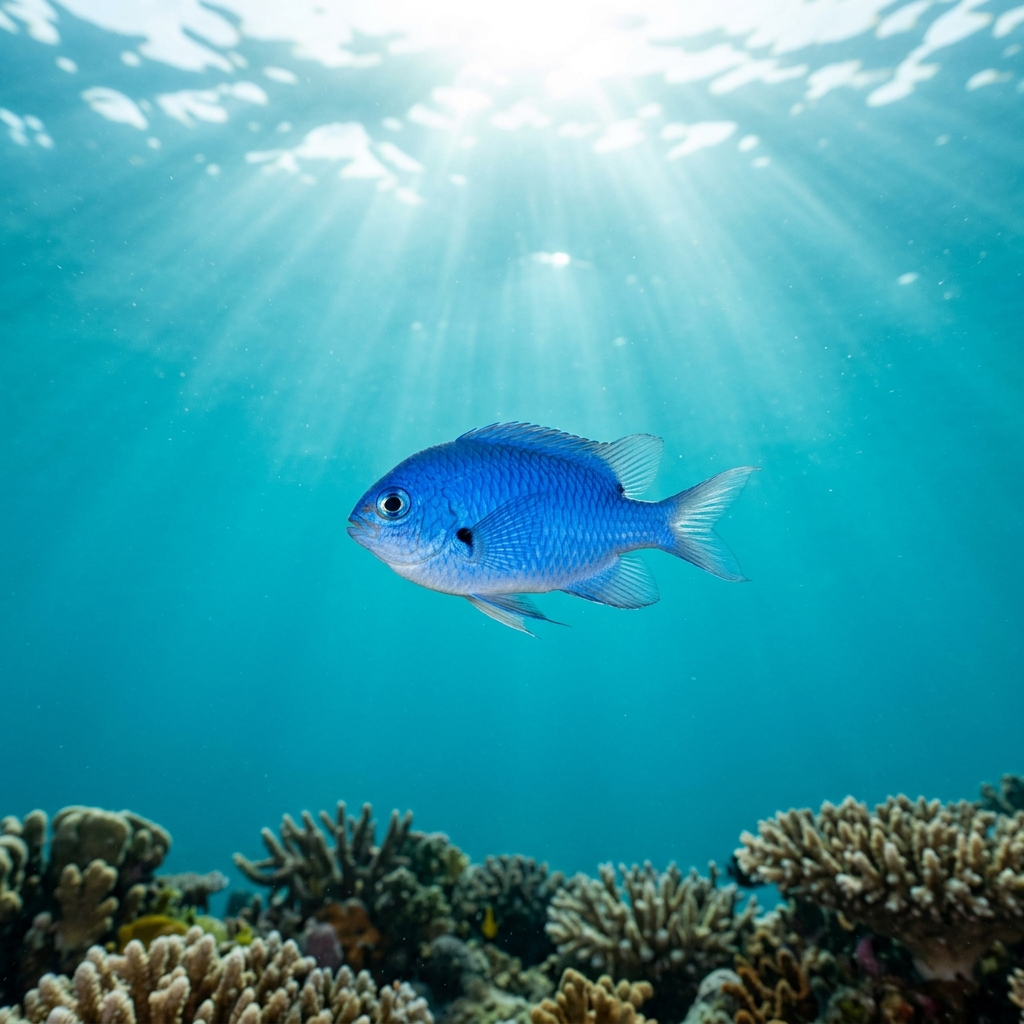
When a male is ready to spawn, his entire body shifts from pale yellow-white to a deep blue-purple. This colour change is so complete that many divers assume they are looking at a different species entirely.
Sergeants are present year-round in both hemispheres, with no concentrated season recorded at either Northern or Southern Hemisphere sites. They are comfortable in water between 24 and 29 °C, which covers virtually all tropical reef destinations throughout the calendar year.
Sergeants are among the most widely logged reef fish on the planet, with strong populations recorded across the Caribbean, Indo-Pacific, and beyond. The Yucatán Peninsula and Florida lead in the Caribbean, while Queensland, Hawaii, and the Maldives are the standout Indo-Pacific destinations. Thailand, the Philippines, Malaysia, and Indonesia all return reliable sightings too.
Mapping where Sergeants is logged…
Sergeants are logged at dive sites across more than 120 countries. The most reliable regions include the Yucatán Peninsula, Florida, the Maldives, Hawaii, Roatán, Phuket and Phi Phi, and Queensland. They are one of the most widely distributed reef fish groups divers encounter.
Any time of year works. Sighting data from both hemispheres shows no concentrated season, and their preferred water temperature of 24 to 29 °C matches year-round conditions on tropical reefs worldwide.
Look for the five broad black vertical bars on a pale yellow-white body. They swim in loose groups above the reef, which helps separate them from most other damsels that stay close to the substrate. The only tricky moment is spotting a nesting male, whose whole body turns deep blue-purple.
Males that are actively guarding an egg nest undergo a rapid full-body colour change from their usual pale yellow-white to a deep blue-purple. This is a temporary breeding signal and defensive display. Once nesting duties are over, the colouration fades back to normal.
Site and sighting data is aggregated from diver logs, iNaturalist and GBIF. For taxonomy and conservation status:
Dascyllus
3,697 sites