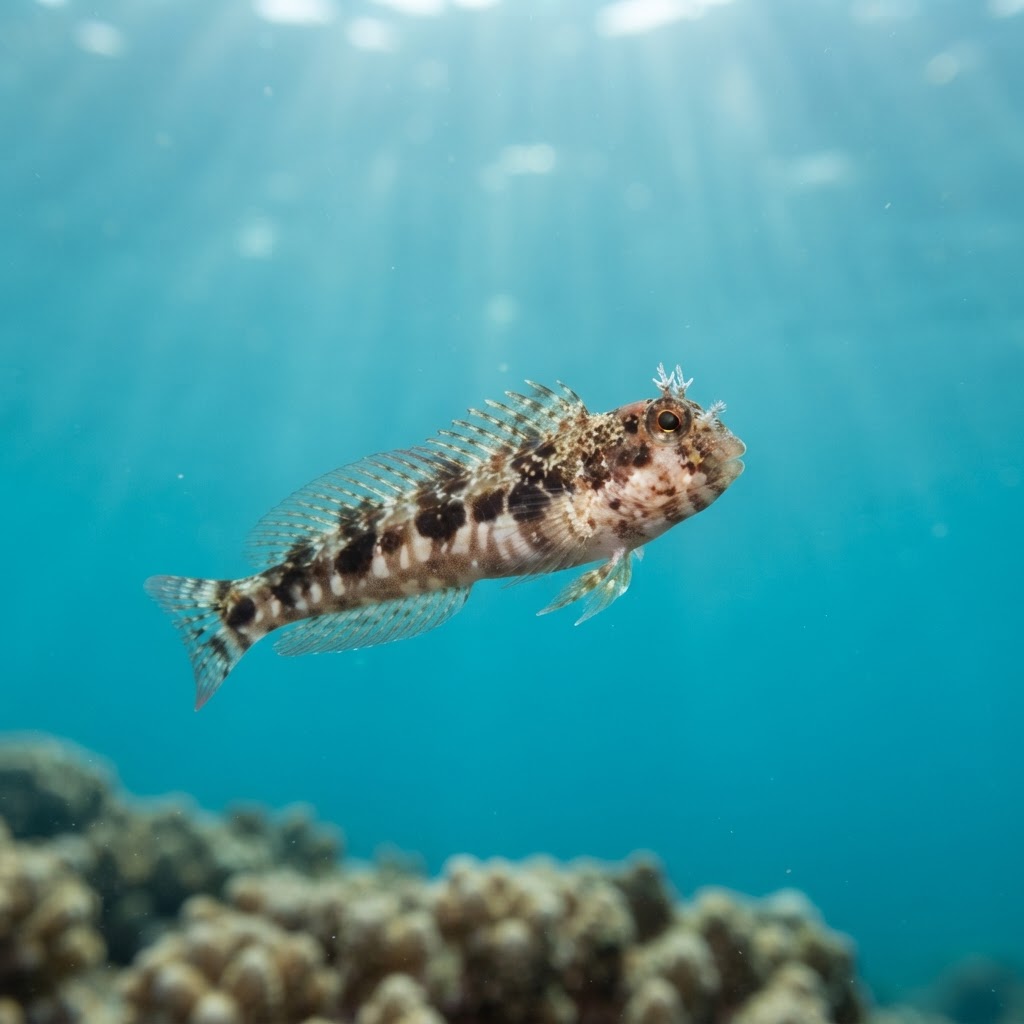
Acanthemblemaria maria
A pinhead-sized face poking from coral rubble in Saint John or Tent Reef, Saba, in 27 to 28C water year-round.
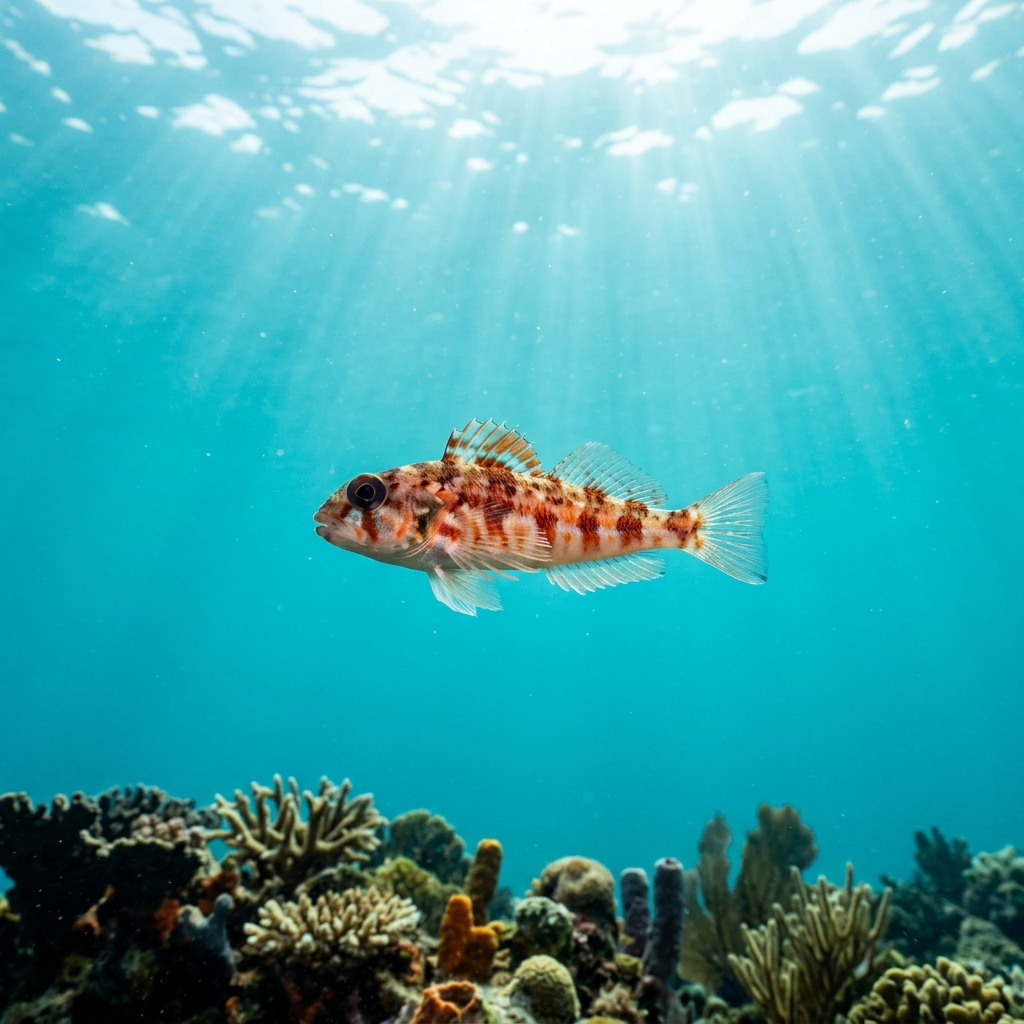
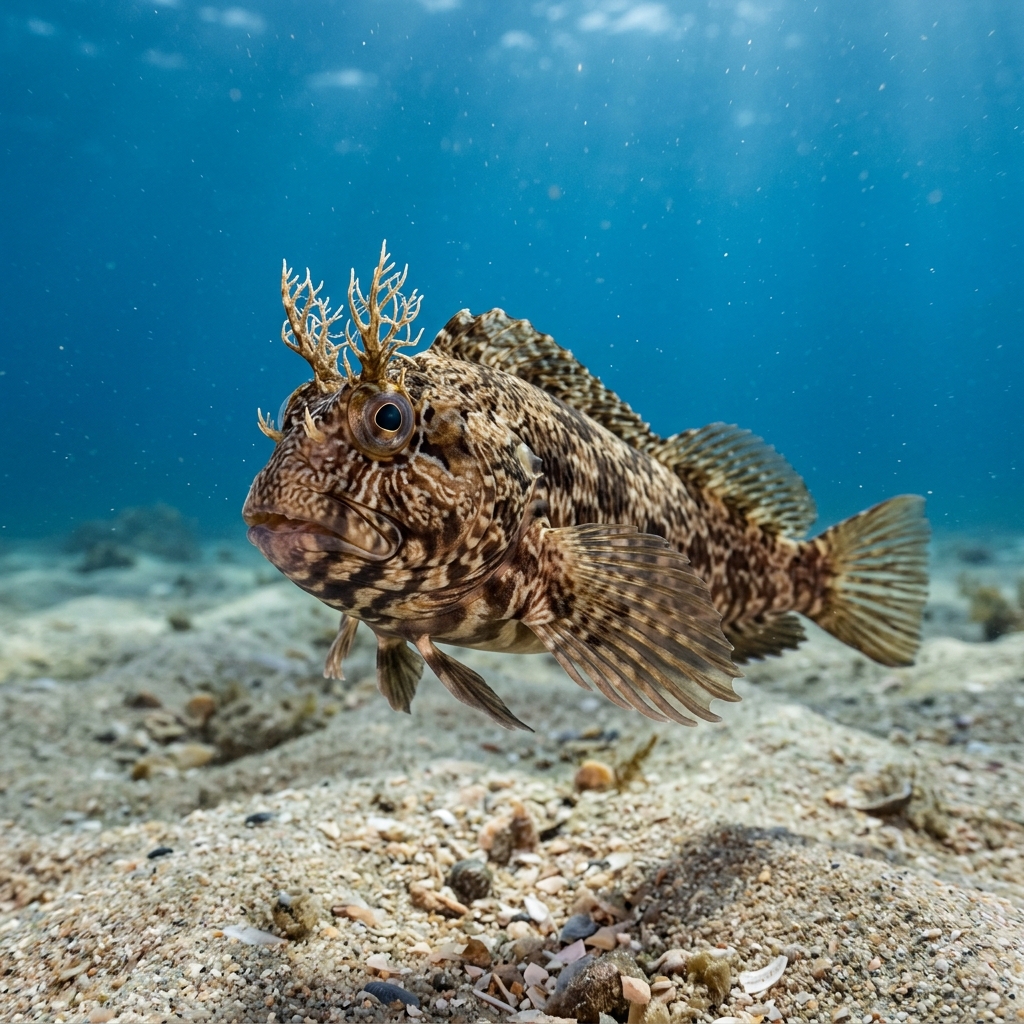
Barely 4cm long and almost all head, poking out from a tiny hole in dead coral or rock with just its face and a pair of branched tufts (cirri) above the eyes showing. Body colour runs from orange-brown to olive with faint mottling, but at this size colour matters less than location: look for a small round hole with two eyes and antenna-like tufts staring back. It rarely shows more than the front third of its body, so you are hunting for a face, not a fish shape.
Spend a dive scanning old coral heads and rubble patches at close range and you will eventually find one wedged into an old worm or barnacle hole, watching the reef go by. They dart back into their burrow at the first sign of a hovering diver or a hand getting too close, then reappear seconds later once things settle. Most sightings come from divers going slow and looking closely at dead coral rather than open water, since this is a fish you find by searching, not one that comes to you.
Like other tube blennies, secretary blennies never leave their burrow willingly, they defend it, feed from it, and if it is destroyed they simply move into another empty hole rather than swim freely across the reef.
No clear season shows up in the sightings data, and with water sitting a steady 27.4 to 28.4C across its range, it is a year-round find on Caribbean reef rubble and coral heads.
Most reliably logged in the US Virgin Islands, especially around Saint John and Saint Thomas, and a strong population on Saba's Tent Reef and The Pinnacles. Also turns up in Martinique around Saint-Pierre, in the British Virgin Islands off Tortola and Jost Van Dyke, and in smaller numbers around Guadeloupe's Basse-Terre.
Mapping where Secretary Blenny is logged…
Best odds are in the US Virgin Islands around Saint John and Saint Thomas, and on Saba's Tent Reef and The Pinnacles. Martinique's Saint-Pierre and the British Virgin Islands around Tortola also produce regular sightings, though it's logged as uncommon almost everywhere.
There's no detected season, and water stays a consistent 27.4 to 28.4C year-round across its range, so any month works as well as another for finding one.
Look for a tiny face, not a whole fish, peering out of a small hole in dead coral or rubble. The giveaway is a pair of branched, antenna-like tufts above the eyes; the body itself is rarely visible.
They max out around 4cm, and since they never fully leave their burrow, you'll usually see even less of them than that.
Essentially no. They live their whole adult life anchored to one small burrow in dead coral or rock, retreating inside instantly when threatened and only reappearing once the coast is clear.
Site and sighting data is aggregated from diver logs, iNaturalist and GBIF. For taxonomy and conservation status:
Rusty Blenny
2,605 sites