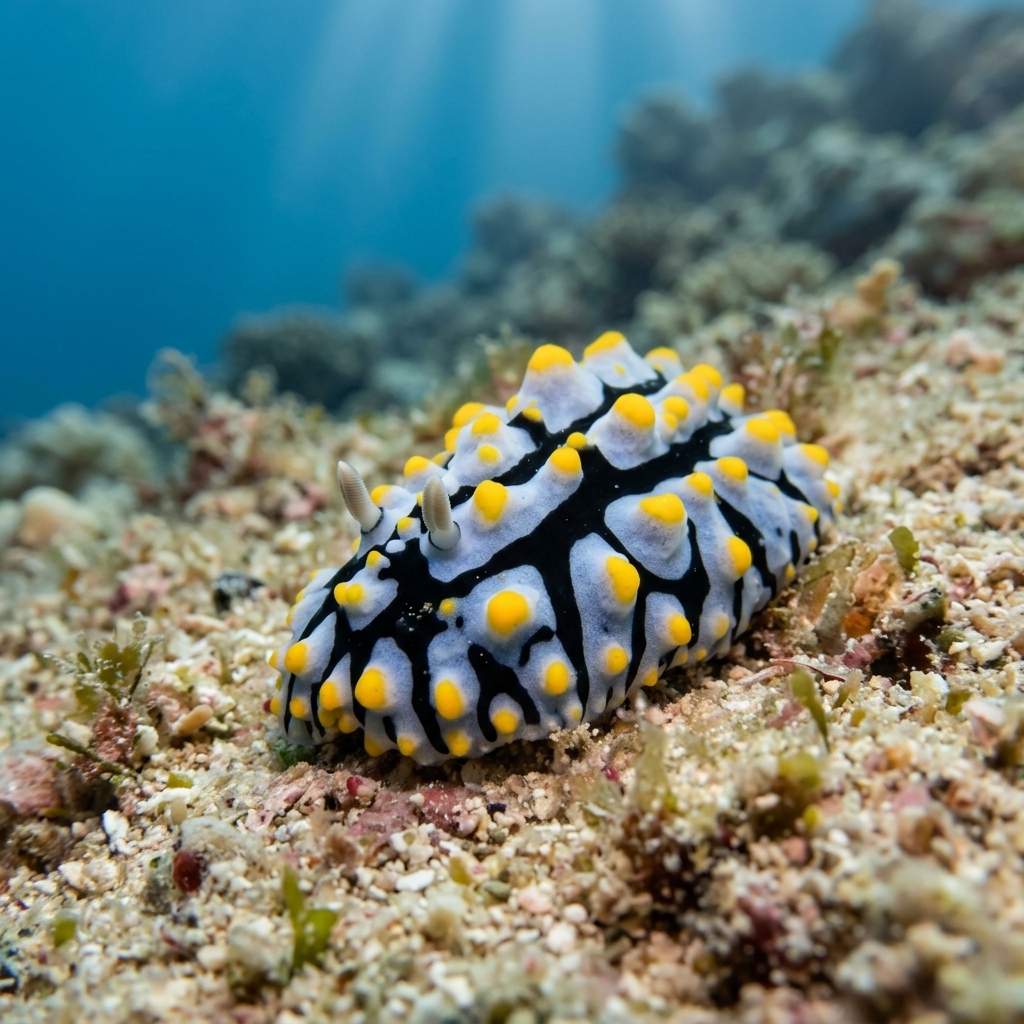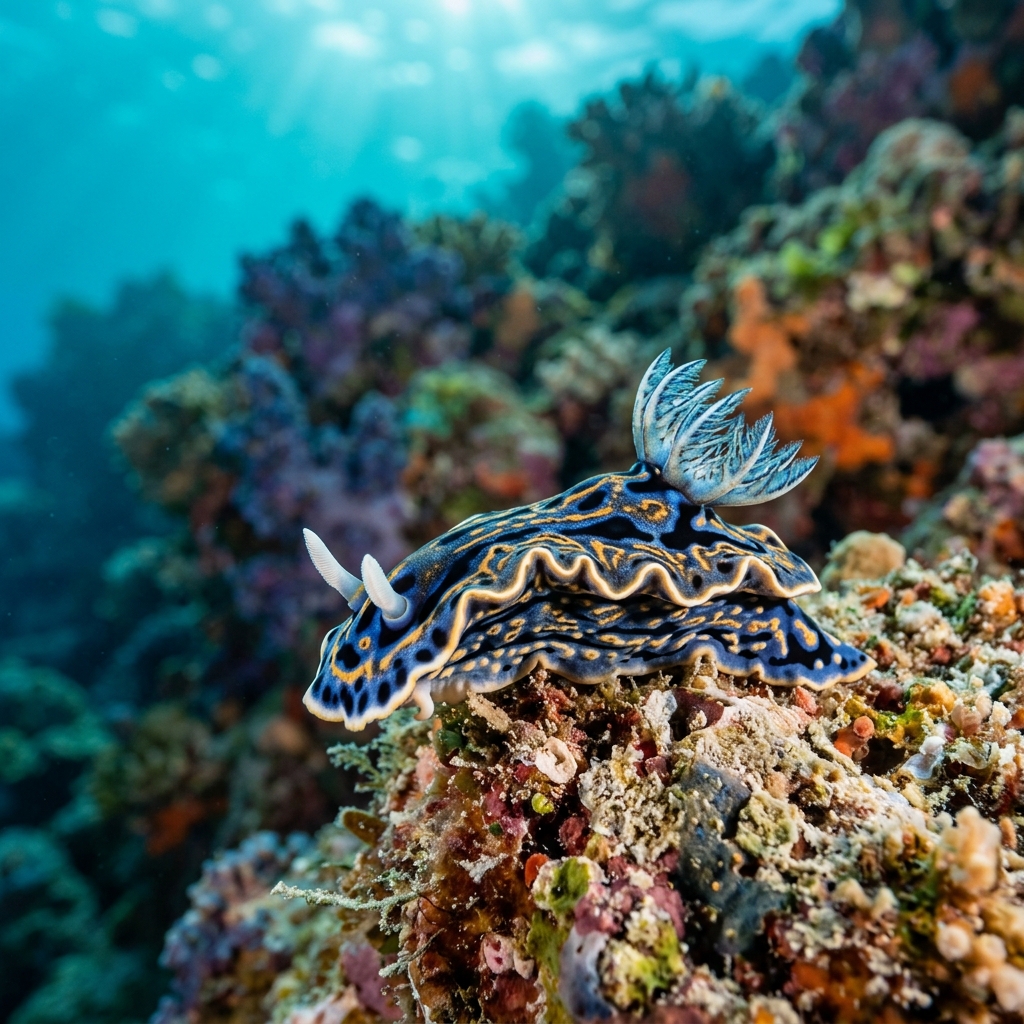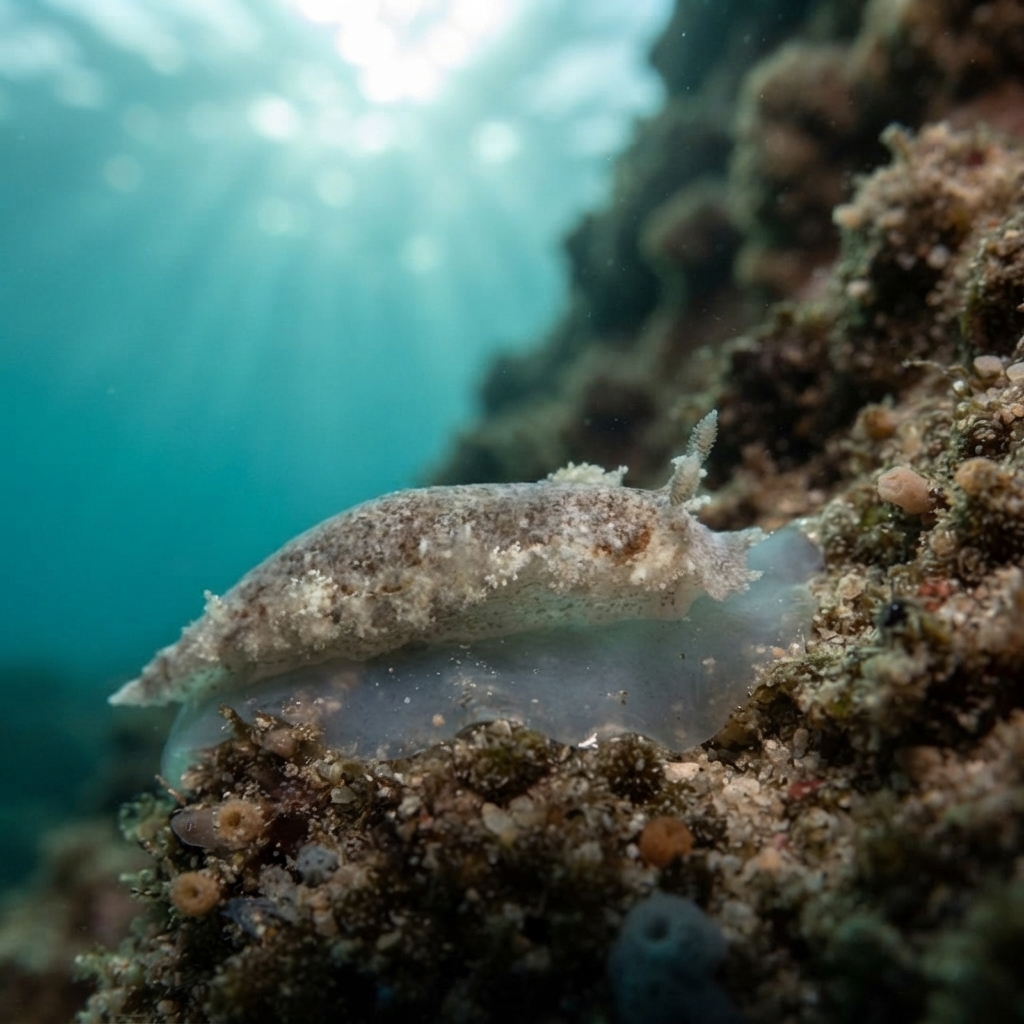
Tritonicula wellsi
A 1cm nudibranch found clinging to sea whips off Grande-Terre, Guadeloupe, in warm 24-30C water year-round. Look closely, it hides in plain sight.
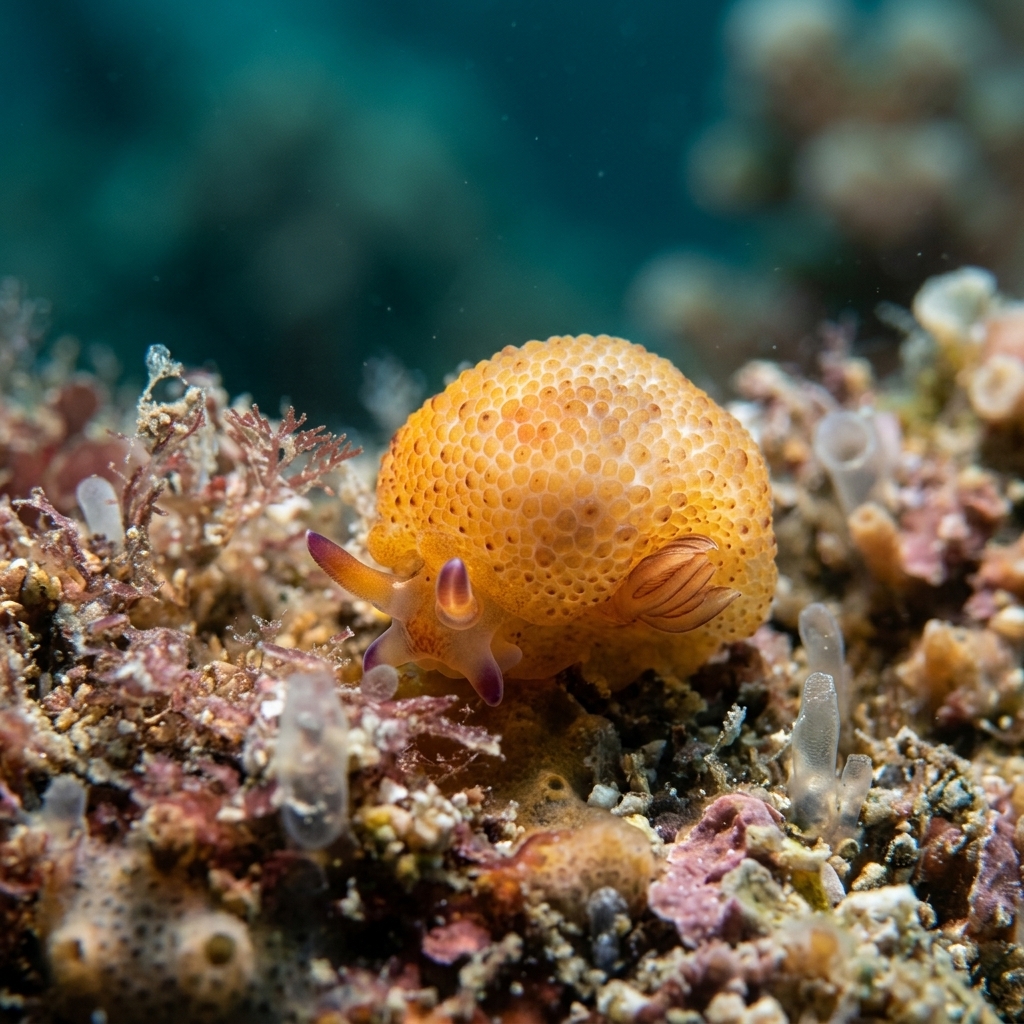
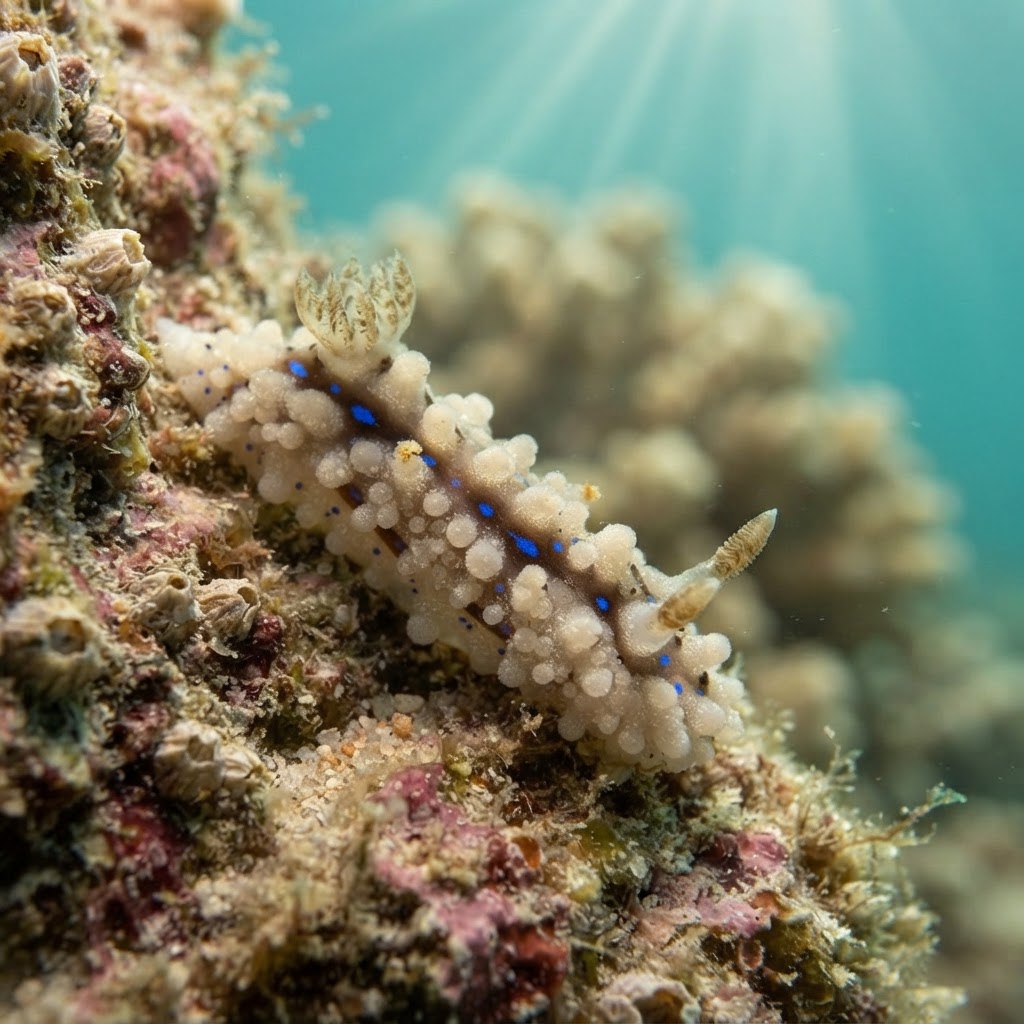
Barely a centimetre long, this nudibranch is built for camouflage rather than colour, with a slender, elongated body that hugs the branch of its sea whip host. Look for a translucent to pale body with fine tubercles (small bumps) running along the back, matching the texture and colour of the whip it clings to. Because it is so small and so well matched to its host, most divers only spot it once they know exactly which sea whip to check and slow right down.
Divers find it sitting motionless on the branches of its sea whip host, grazing slowly rather than moving with any urgency. It shows no reaction to divers beyond simply staying put, which makes it an easy subject for macro photography once located, though the real challenge is spotting it in the first place against the whip's own texture and colour. Best looked for during a slow, deliberate pass along sea whip stands rather than a swim-by.
Like other members of its family, it almost certainly feeds directly on the polyps or tissue of the sea whip it lives on, which explains why it is never found far from one, a classic case of a nudibranch's diet dictating exactly where you'll ever see it.
Sightings sit comfortably within a 24.3 to 30.3C range with no detected seasonal pattern, so this is a year-round find on Guadeloupe's reefs whenever you can get to the right sea whip. Treat any month as fair game and focus on finding the host rather than timing the trip.
This is very much a Guadeloupe species on the current data, with sightings concentrated in Grande-Terre where it turns up on sea whip colonies across a spread of local sites. A single site in Florida, United States, is the only other logged location, so Grande-Terre is by far the strongest bet for a dedicated search.
Mapping where Sea Whip Slug is logged…
Grande-Terre in Guadeloupe is the strongest and most consistent location, with a single additional sighting logged in Florida, United States. If you're searching specifically for this species, Guadeloupe's sea whip stands are the place to focus.
There's no clear season in the data, and its comfortable water-temperature range of roughly 24 to 30C spans Guadeloupe's reefs year-round, so any month is worth a look.
It's tiny, around 1cm, with a slender pale body covered in small bumps that blends closely with the sea whip branch it sits on. Spotting one is more about carefully scanning sea whip colonies than recognising a distinctive pattern.
They stay very small, typically around 1cm in length, which is one reason they're logged as uncommon or rare even at sites where they're known to occur.
It almost certainly feeds on the tissue of the sea whip coral it lives on, in keeping with the feeding habits of related nudibranchs that stay tied to a single host species for life.
Site and sighting data is aggregated from diver logs, iNaturalist and GBIF. For taxonomy and conservation status:
Blue Dragon
3,163 sites