Archidoris pseudoargus
Yellow-green, sponge-eating and easy to miss: find sea lemons in cold water from Brittany to Norway year-round.
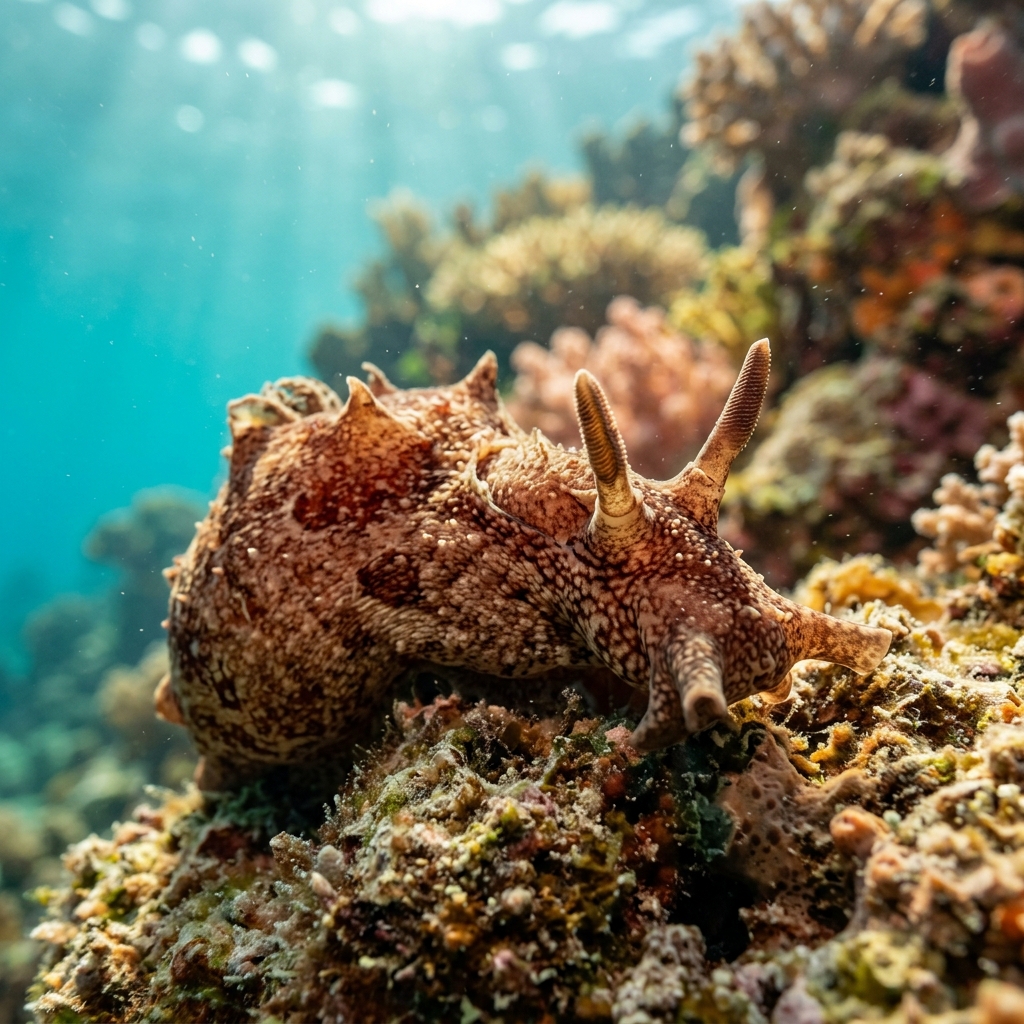
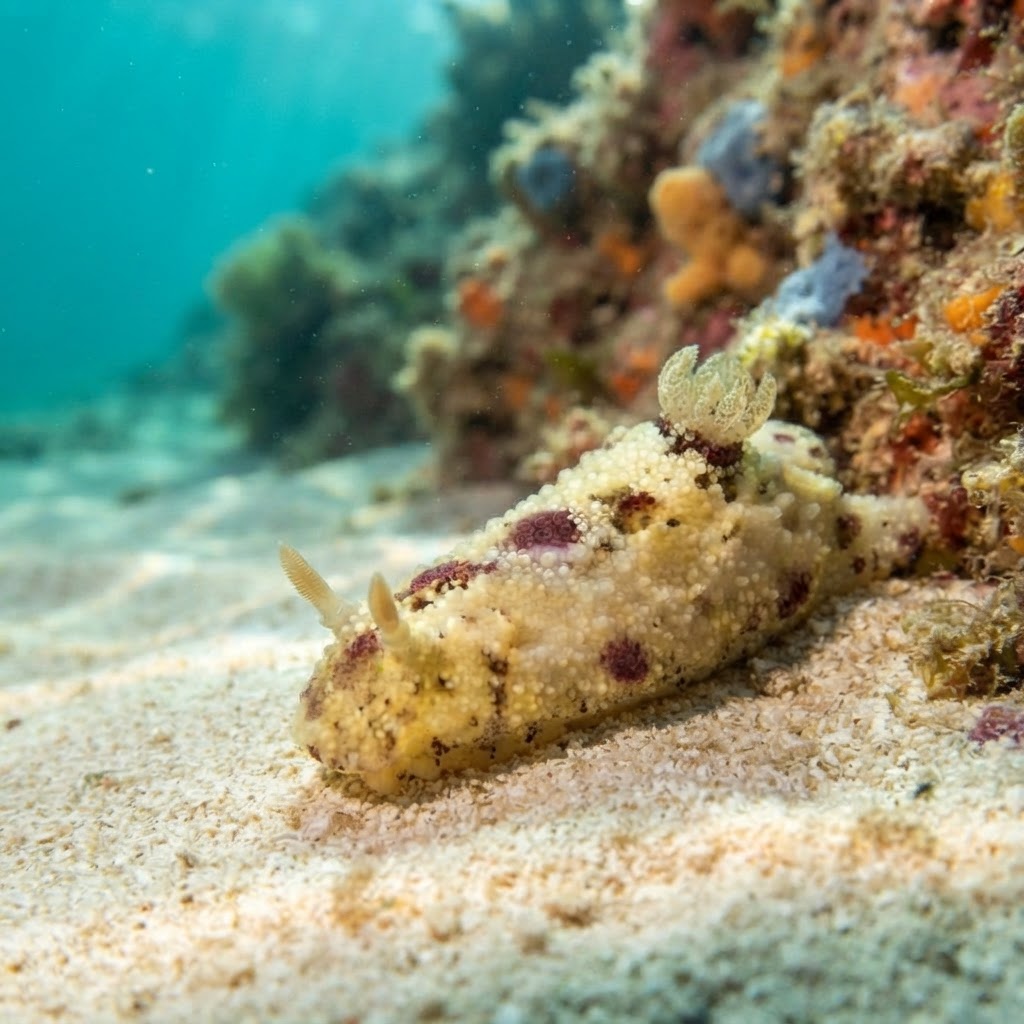
Look for a low, oval body covered in soft, rounded warts, coloured anywhere from mustard yellow to olive-green with darker mottled patches. It has a cluster of feathery gills near the rear and two small tentacle-like rhinophores up front, which it can retract if disturbed. There's no dramatic pattern to key on here, so size, the warty texture, and that dull yellow-green tone are the main giveaways against bare rock or sponge.
Expect to find it sitting still or moving slowly over rock and reef structure, often tucked near or on encrusting sponges, which make up its diet. It shows little to no reaction to divers or torch light, making it an easy, patient subject for a close look or a macro shot. Most logs describe it as uncommon at any given site, so it rewards divers who search low ledges and crevices rather than mid-water.
It feeds almost exclusively on sponges, and its yellow-green colouring is thought to come partly from the sponge species it eats, giving it a rough camouflage match to its food source.
Sightings don't show a clear seasonal spike, so treat this as a year-round find in the cooler waters it favours, roughly 8 to 14C. That temperature range holds through much of the year in the UK, Ireland, Scandinavia and similar cold-temperate sites, which is likely why divers report it across the calendar rather than in one tight window.
Cold-water divers find sea lemons most reliably around the UK, with strong logs across England, Northern Ireland and Wales, and in Brittany, France, which alone accounts for a large share of sightings. Norway's Østlandet region and Sweden's Bohuslän also turn them up regularly, and they've been logged on the northeast coast of the United States and around Dublin, Ireland.
Mapping where Sea Lemon is logged…
Most reliably logged around the UK, especially England, Northern Ireland and Wales, plus Brittany in France. Norway's Østlandet region, Sweden's Bohuslän and the northeast coast of the United States also produce regular sightings.
There's no strong seasonal pattern in the sightings data, so it's considered a year-round find. It's most at home in cold water between roughly 8 and 14C, which many of its core regions hold for much of the year.
Look for an oval, warty-skinned body in yellow to olive-green tones, sitting low on rock or sponge. It has a small rosette of feathery gills near the tail end and two short rhinophores at the front, which it can pull in if disturbed.
No. They're harmless, slow-moving, and typically ignore divers entirely, making them a low-stress subject to photograph up close.
They feed on encrusting sponges, grazing slowly across rock surfaces where sponge colonies grow. Their body colour is thought to be influenced by the sponge species they consume.
Site and sighting data is aggregated from diver logs, iNaturalist and GBIF. For taxonomy and conservation status:
Light-spotted Aegires
3,168 sites