Jorunna parva
Rare, fuzzy and unmistakable: track down the sea bunny nudibranch on muck dives across Central Japan year-round.
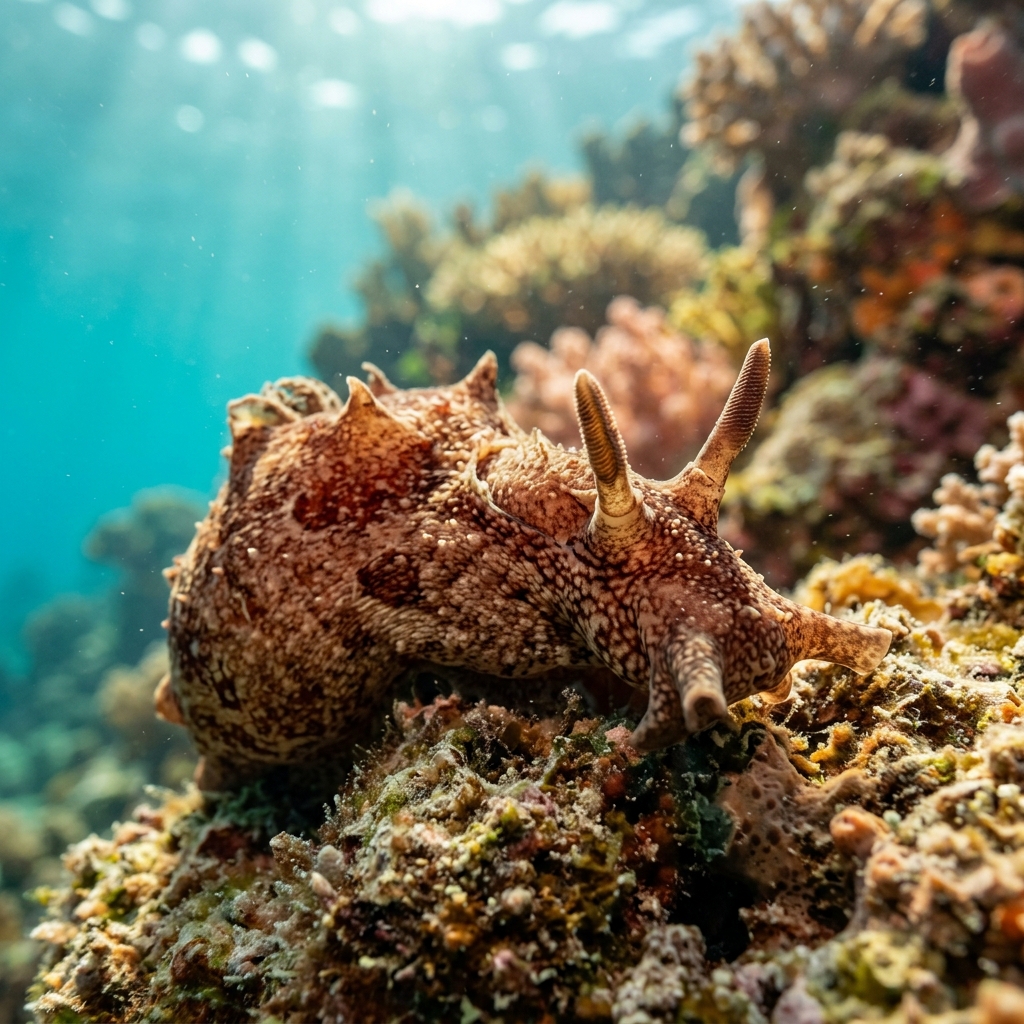
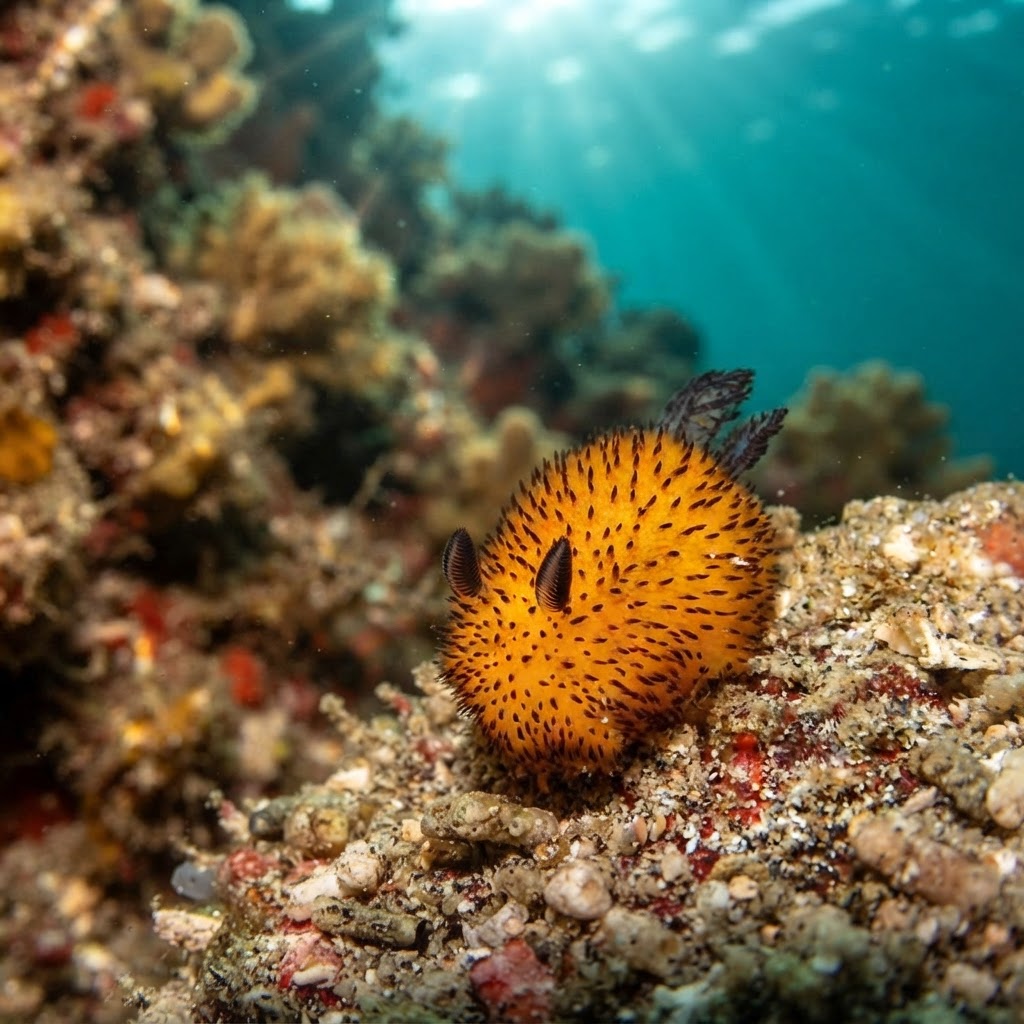
A small white to cream nudibranch covered in soft, fur-like projections (caryophyllidia) that give it a plush, rabbit-like texture. Two upright rhinophores (sensory horns) at the front look like a pair of ears, and scattered black or dark-brown tips across the body complete the bunny look. Most individuals seen underwater are only a couple of centimetres long, so divers rely on slow, careful scanning of the substrate rather than spotting it from a distance.
Divers find it parked on sand, rubble or low reef structure, moving slowly as it grazes rather than swimming or fleeing. It shows no reaction to divers beyond continuing its crawl, which makes it a cooperative subject once spotted, though its small size and rarity mean most sightings come from divers deliberately hunting the substrate rather than stumbling across it mid-dive.
Like other dorid nudibranchs, it breathes through a rosette of gills on its back and feeds on sponges, using its fuzzy back partly as camouflage and partly as extra surface area for those gills.
Data shows no clear seasonal pattern, and observed water temperatures span a wide 19.6 to 29.7C, suggesting it can turn up across the diving calendar rather than in one tight window. Treat it as a year-round possibility in Central Japan and plan around good macro conditions rather than a specific month.
Sightings logged so far cluster entirely in Japan, with Central Japan the standout region for this species. It is a muck and reef-slope find rather than a wall or drift-dive species, so look to Japanese dive operators running slow, macro-focused dives in this region.
Mapping where Sea Bunny is logged…
Confirmed sightings are concentrated in Japan, particularly Central Japan, where divers find them on slow macro-focused dives over sand and rubble. It has not been logged as a reliable find outside this region so far.
There is no detected seasonal pattern, and it has been recorded across a wide temperature range from 19.6 to 29.7C. That points to a year-round possibility in Central Japan rather than one specific season.
Look for a small white or cream body covered in soft fuzzy projections, with two upright rhinophores that resemble rabbit ears and dark-tipped spots scattered across the back. It moves slowly over sand or rubble and rarely exceeds a couple of centimetres.
They are a small nudibranch, typically only a couple of centimetres long when spotted underwater, which makes patient, close-range searching essential for finding one.
No, they pose no danger to divers. They are slow-moving, stationary grazers with no sting or bite risk, so it is safe to observe them closely without disturbing them.
Their fuzzy texture comes from tiny projections called caryophyllidia, which help conceal the gill rosette on their back while they graze on sponges, giving them their distinctive plush, rabbit-like look.
Site and sighting data is aggregated from diver logs, iNaturalist and GBIF. For taxonomy and conservation status:
Light-spotted Aegires
3,168 sites