Noumeaella rehderi
A little-logged sea slug turning up mostly around Mafia Island, Tanzania, in warm 25-31C reef water year-round.
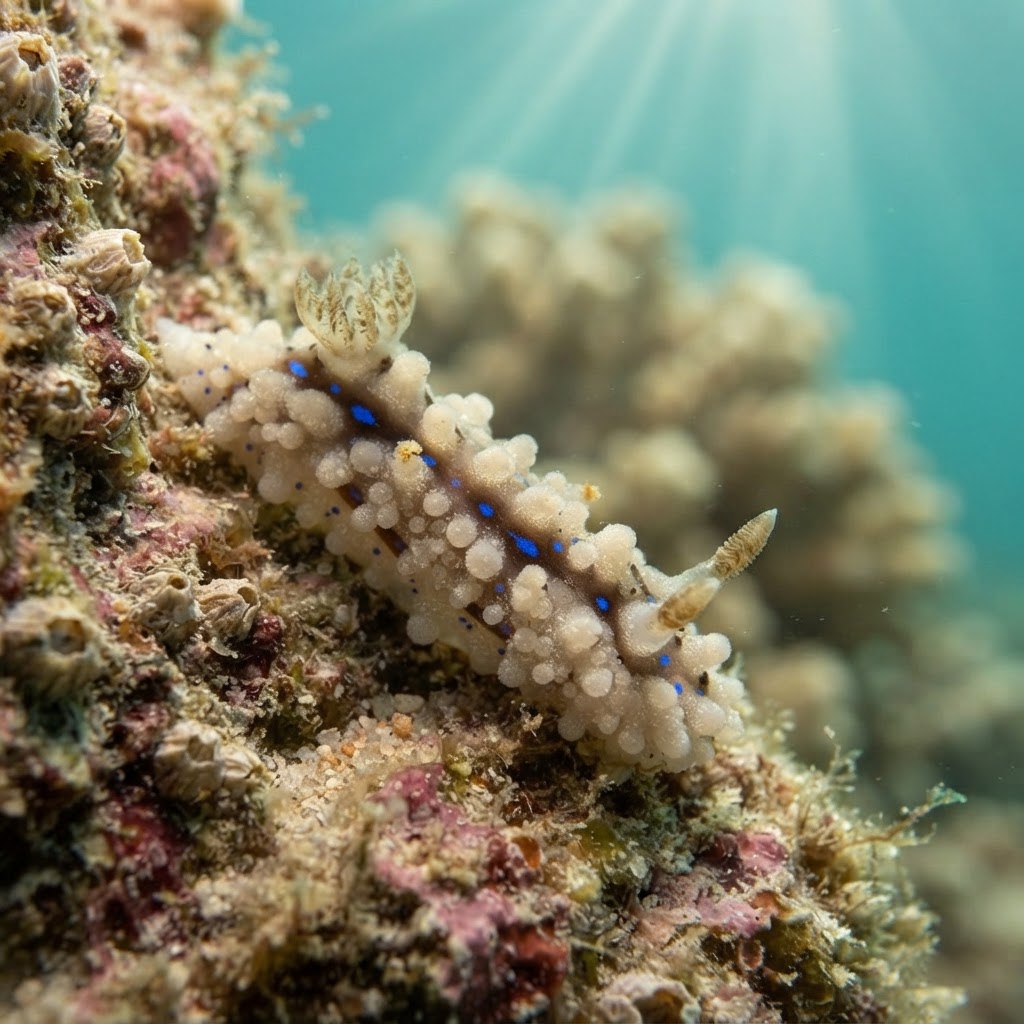
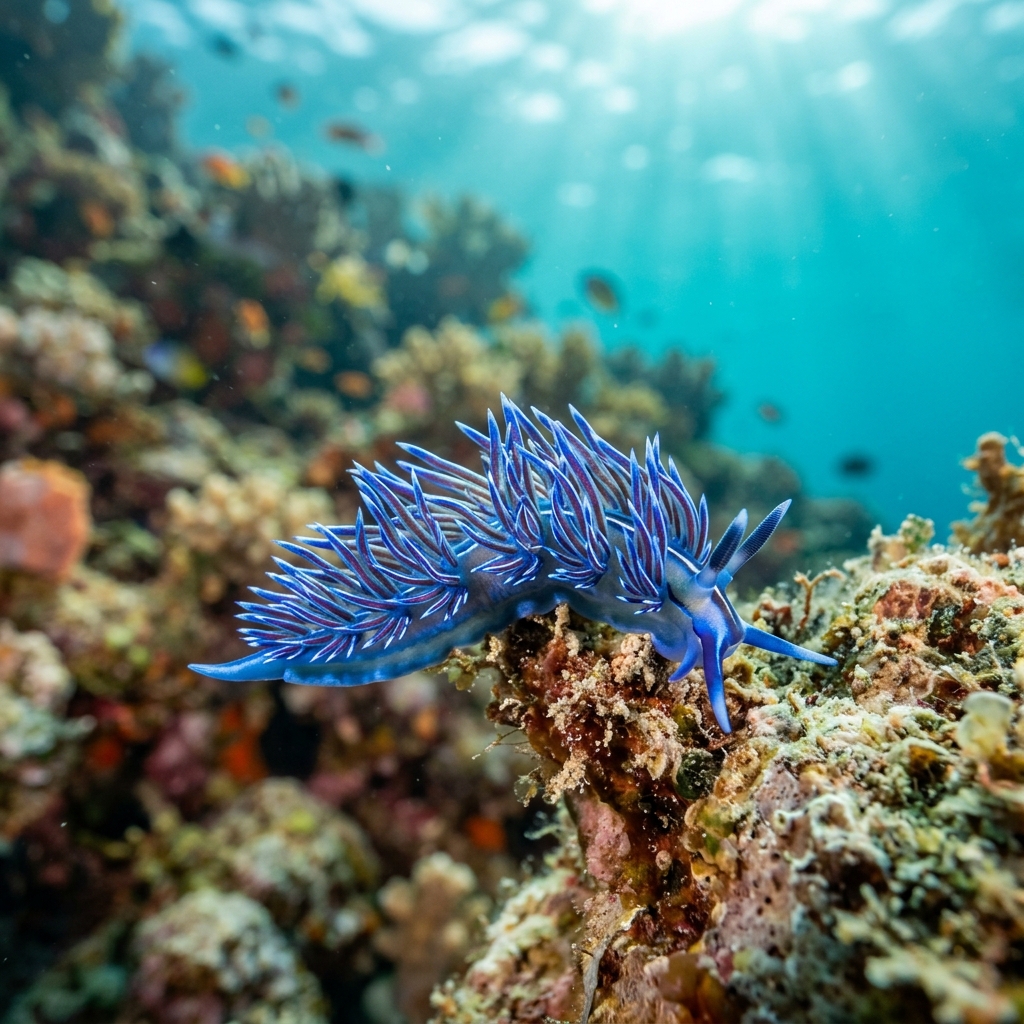
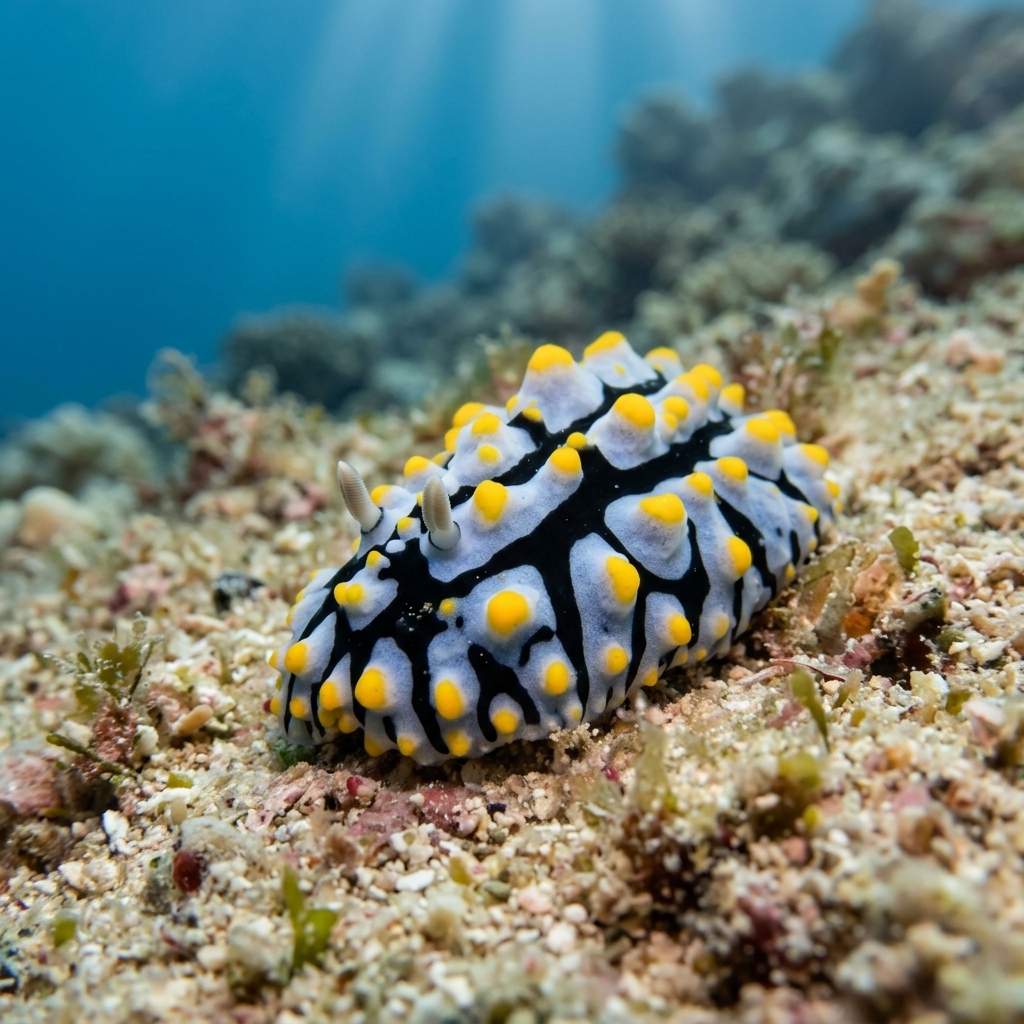
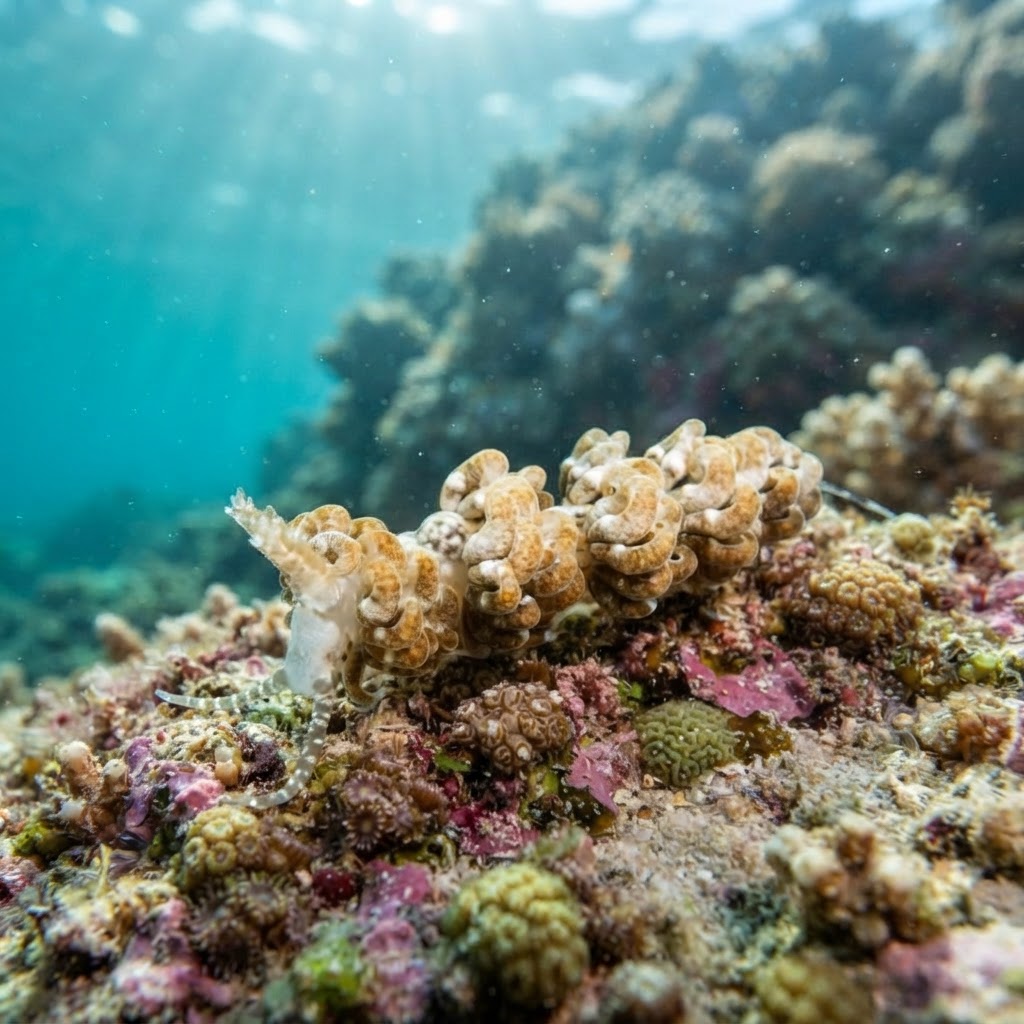
A small facelinid nudibranch with a slender, tapering body in sandy, muted tones that blend into rubble and coral debris. Look for the fine cerata (finger-like projections along the back) that give it a slightly fuzzy silhouette, and a narrow head with short rhinophores. Its low-contrast colouring makes it easy to swim past unless you are scanning the substrate closely.
Divers find it moving slowly over rubble and coral debris, doing what most facelinid nudibranchs do: grazing on hydroids and small stinging organisms it later borrows for its own defence. It shows no reaction to divers beyond its usual unhurried crawl, so a slow, close look with a torch is the best way to actually spot one. Logged sightings suggest it is easiest to find during daytime reef dives rather than night dives.
Like other facelinid slugs, it likely stores stinging cells from the hydroids it eats in its cerata, turning its prey's defences into its own.
Sightings sit in the 25 to 31C range with no detected seasonal pattern, so it appears to be a year-round find on tropical reefs rather than a seasonal specialty. Plan around good visibility and calm conditions at Mafia Island rather than a specific month.
Mafia Island in Tanzania is by far the most reliable place divers have logged this species, accounting for nearly all recorded sightings. Single sightings have also come from Hawaii in the United States and Bali in Indonesia, so it is worth checking rubble patches and reef debris on any warm-water dive in these regions.
Mapping where Sandy Bead-nose is logged…
Mafia Island in Tanzania has by far the strongest record of sightings, with occasional logs from Hawaii and Bali. It is considered uncommon even at the sites where it does turn up, so treat any sighting as a bonus rather than a guarantee.
There is no detected seasonal pattern, and sightings span a warm 25 to 31C range, suggesting it can be found year-round on tropical reefs. Focus on site and slow, careful searching rather than timing your trip around a season.
Look for a small, slender nudibranch in sandy, low-contrast tones with fine cerata along its back and a narrow head. Its muted colouring means it often blends into rubble, so it is easier to spot with a slow scan and a torch than a quick pass.
Exact size data is not confirmed for this species, but like most facelinid nudibranchs it is likely a small, centimetre-scale animal easy to miss without close inspection.
No, it poses no danger to divers. It has no means of harming people and simply grazes slowly over reef rubble.
As a facelinid, it likely feeds on hydroids and repurposes their stinging cells within its own cerata for defence, a trick common to this nudibranch family.
Site and sighting data is aggregated from diver logs, iNaturalist and GBIF. For taxonomy and conservation status:
Light-spotted Aegires
3,168 sites