Diaulula sandiegensis
Spot the San Diego Dorid on the US Pacific Coast and British Columbia in cool 9-18 °C water. ID tips, best season (Apr, Aug), and top dive regions.
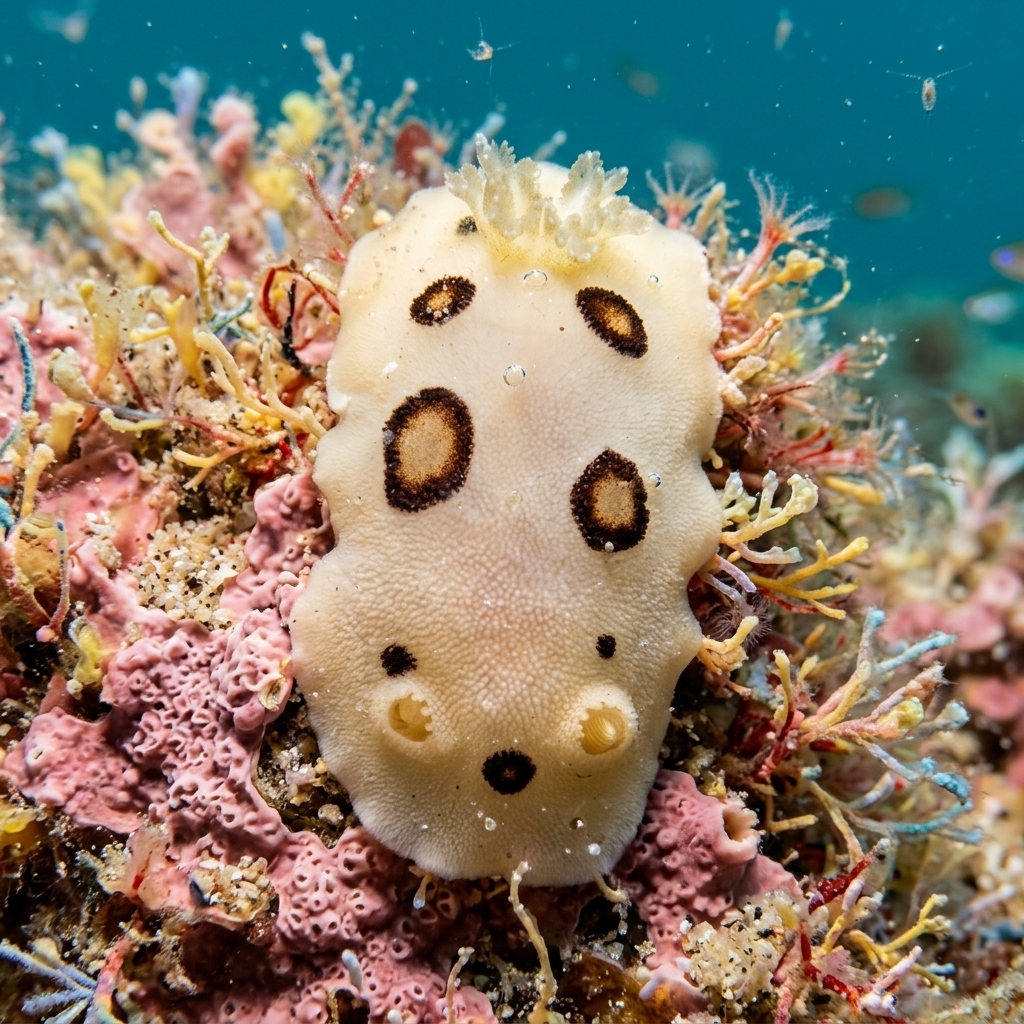
A small dorid (typically around 5 cm) with a pale cream to white body patterned with distinctive dark brown or black rings scattered across the notum (the broad, flat mantle). Those rings are the key field mark underwater, they look almost like leopard spots arranged in loose circles. The gills and rhinophores (paired scent organs at the head) are typically pale with dark flecking, matching the overall body pattern.
When you find one, it will almost certainly be creeping slowly across hard substrate, a rock face, a sponge-covered wall, or rubble, completely indifferent to your presence. They graze on sponges and other invertebrates in that unhurried, methodical way dorids do, which actually makes them easier to photograph since they rarely dart away. There is no particular time of day when they are more active, so any dive in the right habitat is a fair shot.
Like other dorids, the San Diego Dorid likely sequesters defensive chemicals from the sponges it eats, making it unpalatable to most predators, those bold ring markings may serve as a visual warning to would-be attackers.
In the Northern Hemisphere, sightings concentrate between April and August, which aligns with slightly warmer inshore conditions on the cool Pacific coast. Outside that window sightings drop off, so late spring through summer is your best window.
Reef neighbours a diver could mistake it for. Use the identification notes above to tell them apart.
The San Diego Dorid is most commonly logged along the US Pacific Coast, which accounts for the vast majority of sightings, with British Columbia's coast in Canada a strong second. Smaller but notable records come from the Izu Peninsula region of Japan and the East Coast of South Korea, suggesting a broader North Pacific presence than many divers expect.
Mapping where San Diego Dorid is logged…
The US Pacific Coast is by far the most reliable region, particularly in California and the Pacific Northwest. British Columbia in Canada is a strong second choice. Smaller populations have also been recorded around Japan's Izu Peninsula and the East Coast of South Korea.
Sightings on the US Pacific Coast concentrate between April and August. This spring-to-summer window appears to be the most productive, so plan accordingly if you are targeting this species specifically.
Look for a flattish, oval nudibranch around 5 cm long with a pale cream body covered in dark brown or black rings that resemble leopard spots. Those ring markings are the standout field mark and set it apart from most other dorids in its range.
They typically reach around 5 cm in length. At that size they are easy to overlook against rocky reef substrate, so slow down and scan carefully rather than expecting them to jump out at you.
Not at all. They are slow-moving, completely harmless, and entirely unbothered by divers. You can observe them at close range without any concern, just avoid touching them, as with all nudibranchs.
Site and sighting data is aggregated from diver logs, iNaturalist and GBIF. For taxonomy and conservation status:
Nudibranch
3,168 sites