Phenacovolva rosea
A slender pink shell tucked into soft coral off Sai Kung or New South Wales, spotted year-round in 20-30C water.
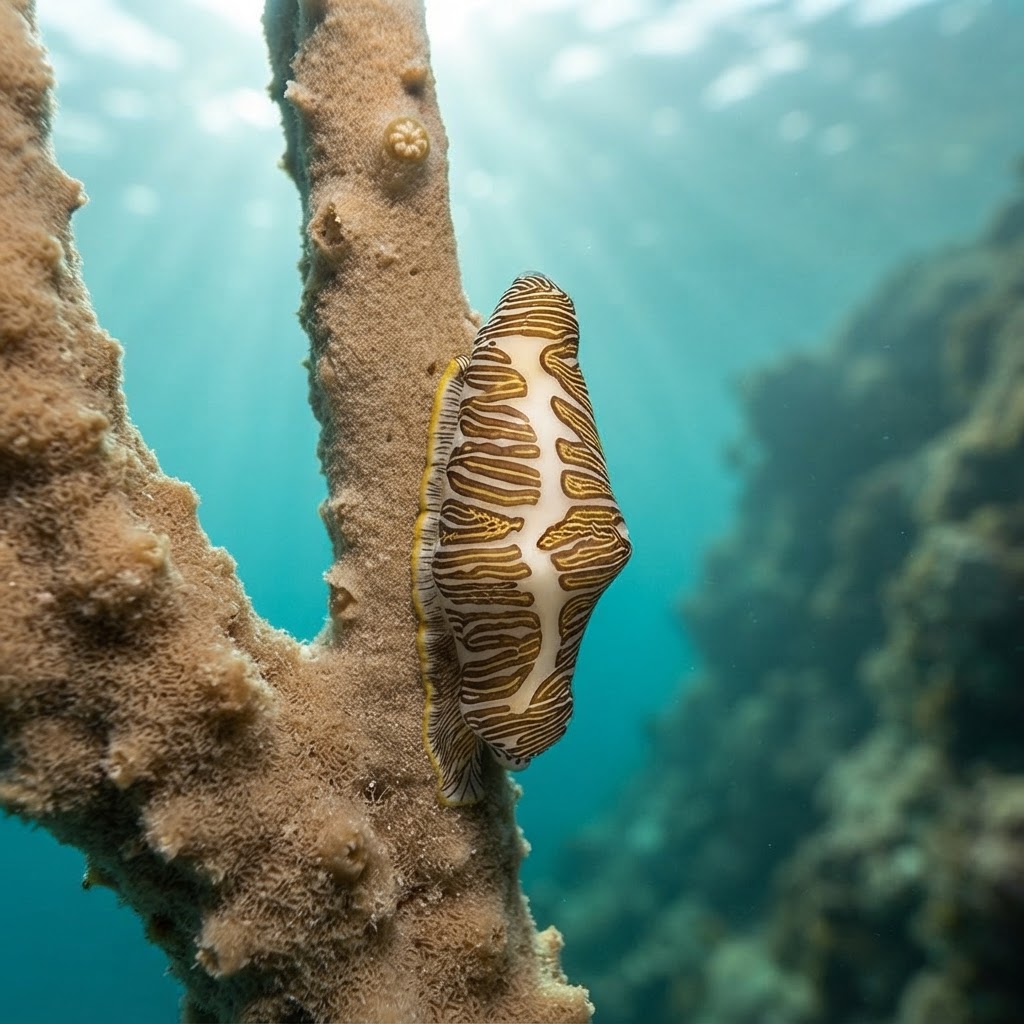
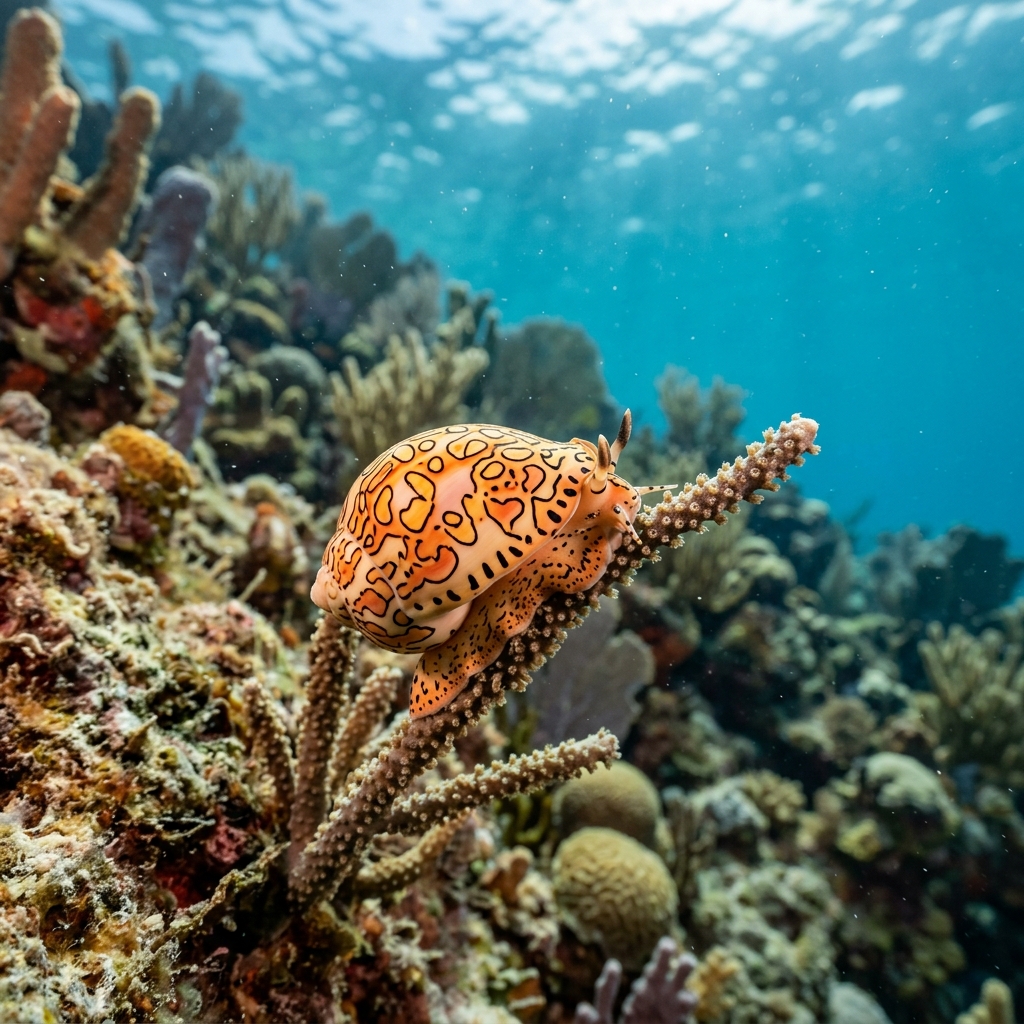
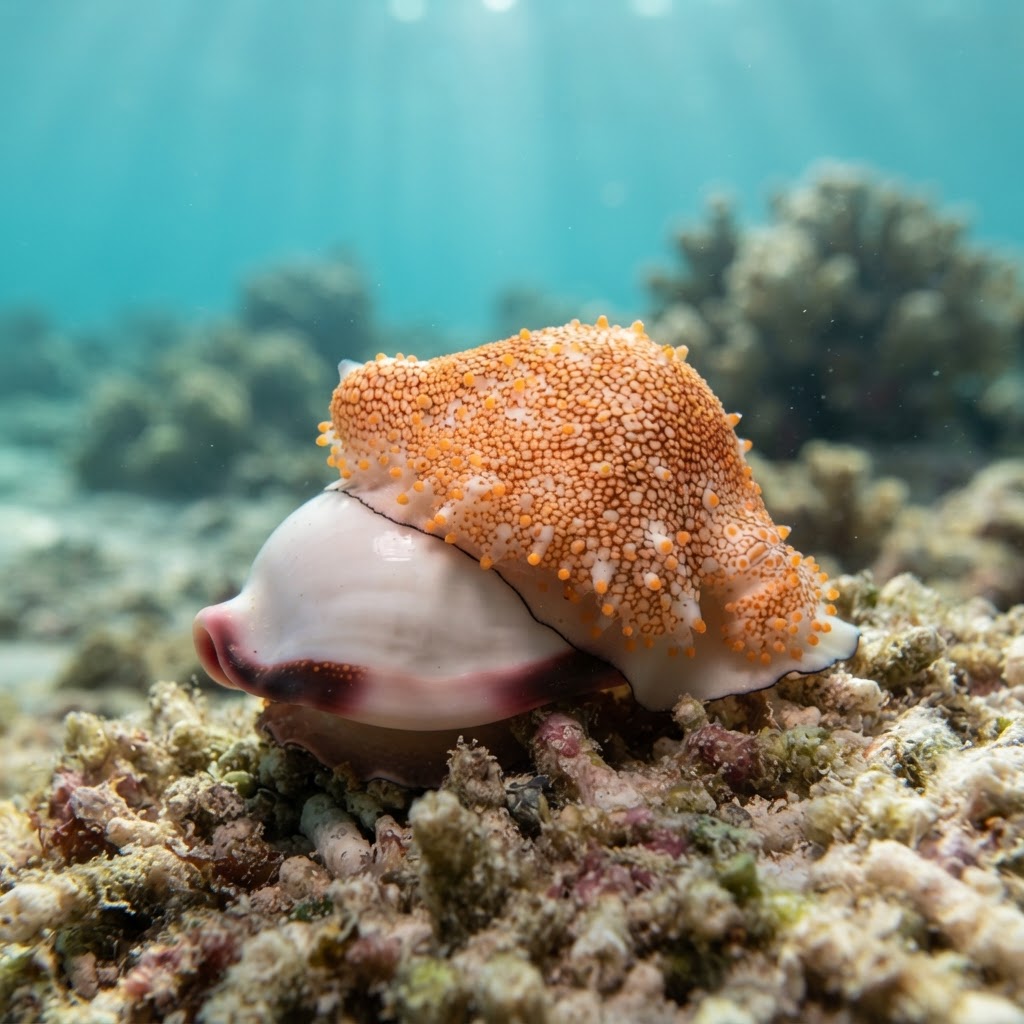
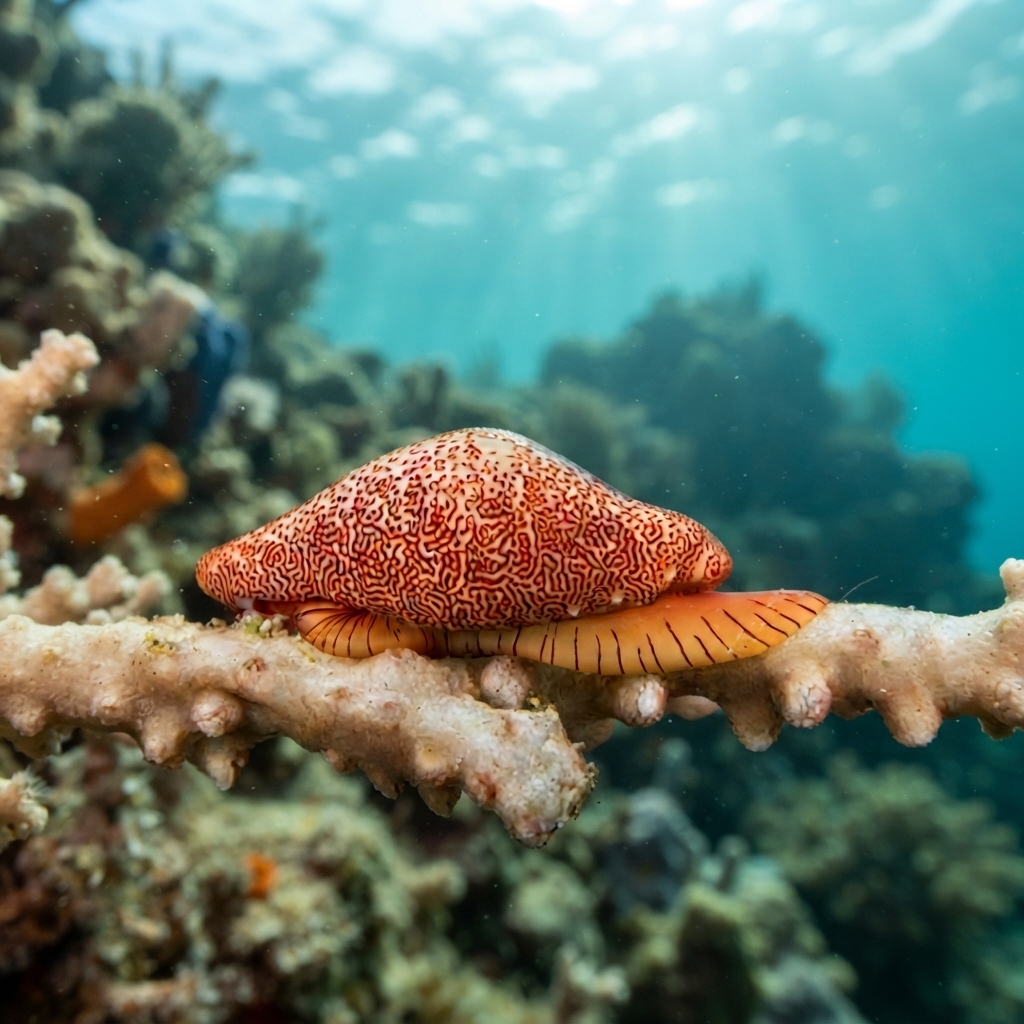
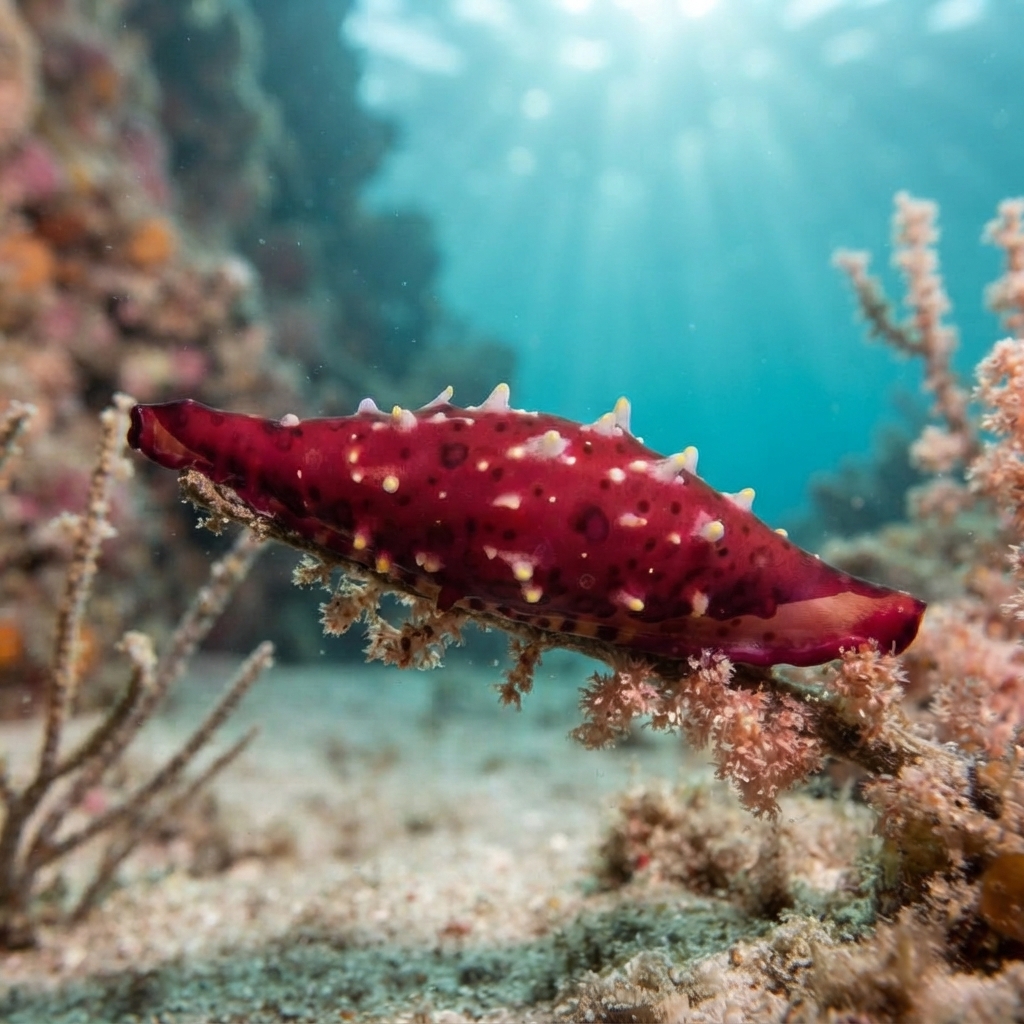
Look for a slender, spindle-shaped shell tapering to points at both ends, usually a soft pink to salmon colour that blends into the soft coral it sits on. It has a smooth, glossy surface and a fine mantle that can be drawn over the shell, so at rest it can look like part of the coral itself. Most sightings are of a single animal clamped tight to a branch, easy to miss unless you are scanning soft coral colonies closely.
Divers typically find it motionless on a soft coral branch, feeding on the coral polyps it lives among rather than moving across open reef. It reacts to divers by staying put or drawing its mantle tighter over the shell, relying on camouflage rather than fleeing. Slow, close looks with a torch or macro lens are the way most divers actually notice it, since from a normal swimming pace it blends straight into the coral.
Like other ovulids, it feeds directly on the soft coral tissue it clings to, and its shell colour often shifts to match the particular coral colony it is living on, making the same individual look slightly different from one coral to the next.
Sighting data shows no clear seasonal pattern, and its comfort range of 20 to 29.7C spans both temperate and tropical reefs, so divers log it across all months. Plan around soft coral condition and visibility at your chosen site rather than a particular season.
Reef neighbours a diver could mistake it for. Use the identification notes above to tell them apart.
Most reliably logged around Sai Kung in Hong Kong and across New South Wales in Australia, with a further scatter of sightings in Bali and Maluku, Indonesia and the Southern Islands of Singapore. Queensland and Western Australia round out the Australian records, making Australia the strongest overall country for logging this species.
Mapping where Rosy Spindle Cowrie is logged…
Sai Kung in Hong Kong and New South Wales in Australia produce the most consistent sightings, with additional records from Bali and Maluku in Indonesia and the Southern Islands of Singapore.
There is no strong seasonal pattern in the sightings, and it tolerates water from 20 to nearly 30C, so it turns up year-round wherever its soft coral hosts are found.
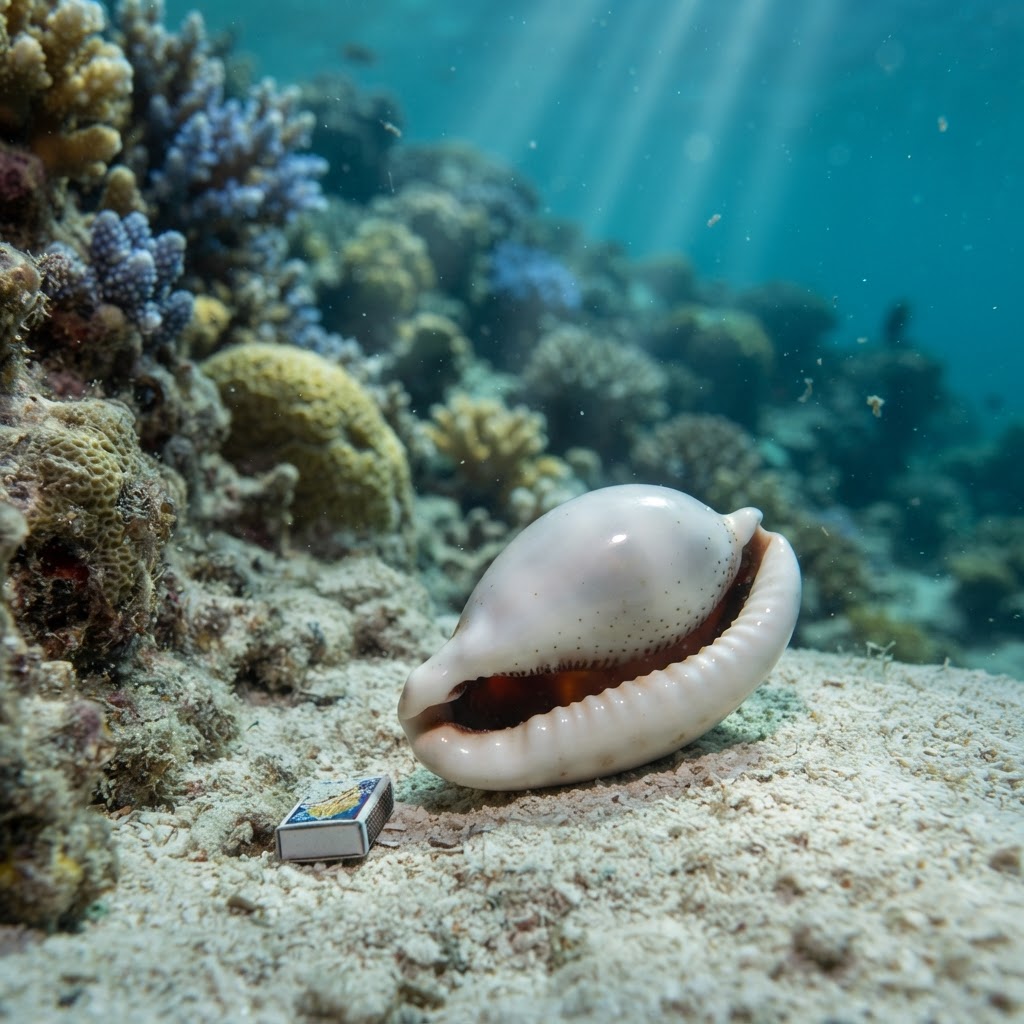
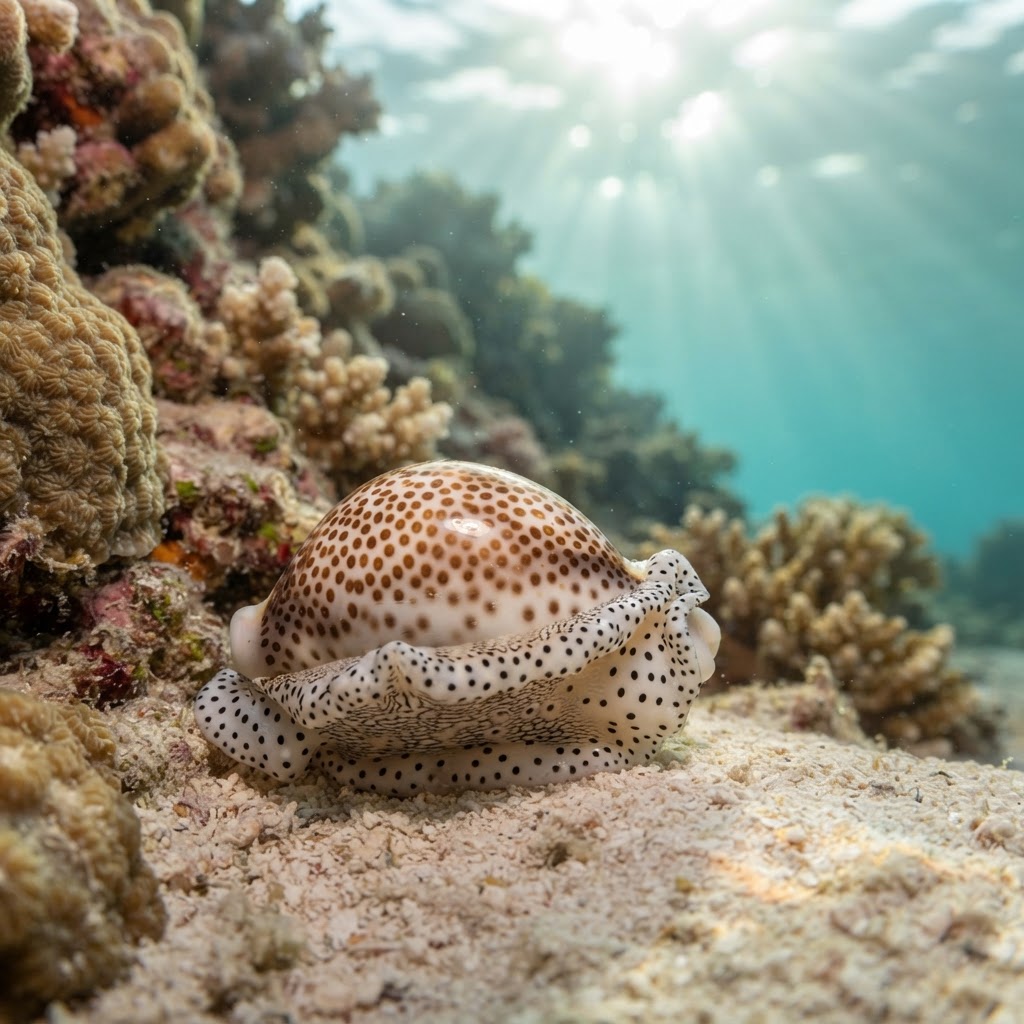
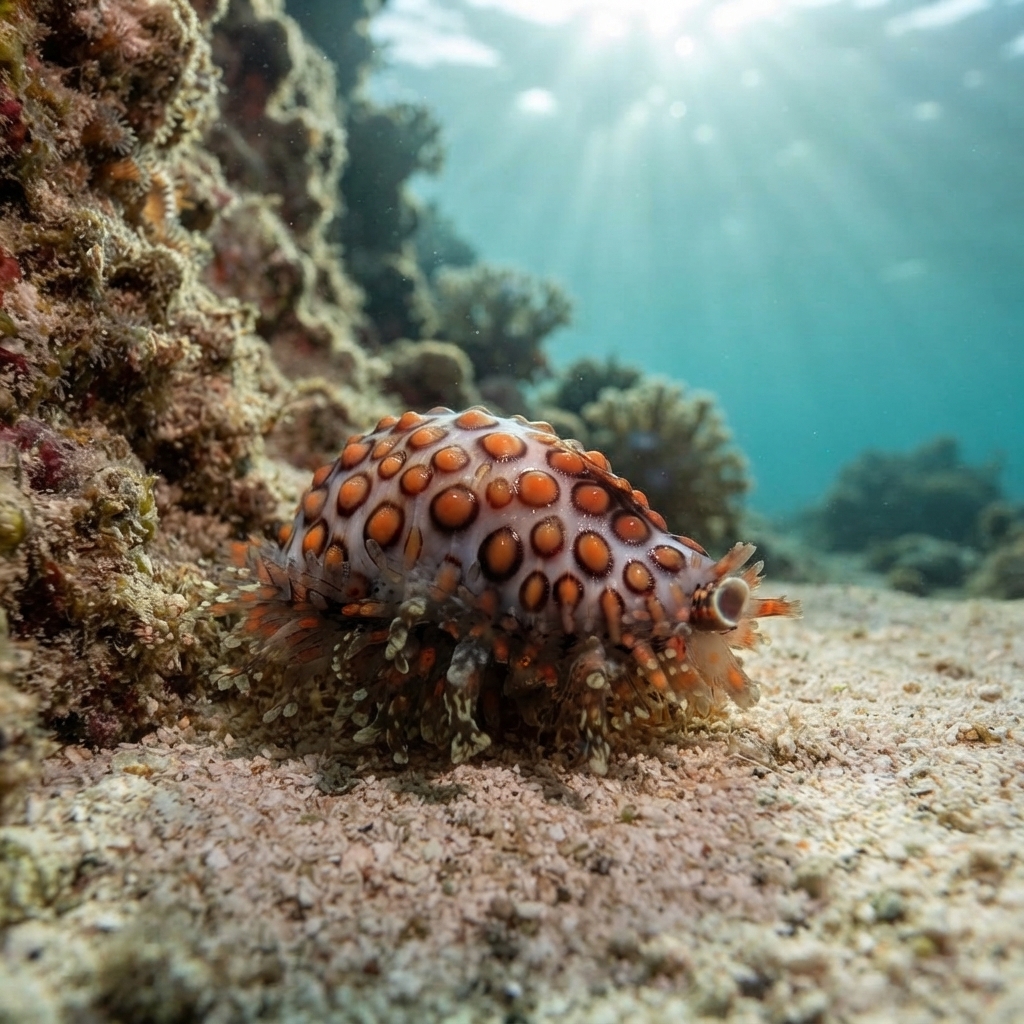
Check soft coral branches for a slender, spindle-shaped shell in pink or salmon tones, usually motionless and partly covered by its own mantle. It looks quite different from the oval, ringed Flamingo Tongue cowries, which have a more rounded shell with dark spots or rings.
Exact size data is not confirmed for this species, but like other spindle-shaped ovulids it stays small enough to be easily overlooked on a coral branch unless you are looking closely.
It feeds directly on the tissue of the soft coral it lives on, and its shell tone can shift subtly to match that particular coral colony, giving individuals on different corals a slightly different look.
Site and sighting data is aggregated from diver logs, iNaturalist and GBIF. For taxonomy and conservation status:
Fingerprint Flamingo Tongue
122 sites