Calpurnus verrucosus
Glossy white shell with black-ringed warts, found on soft coral in Luzon, Visayas and Okinawa year-round in warm water.
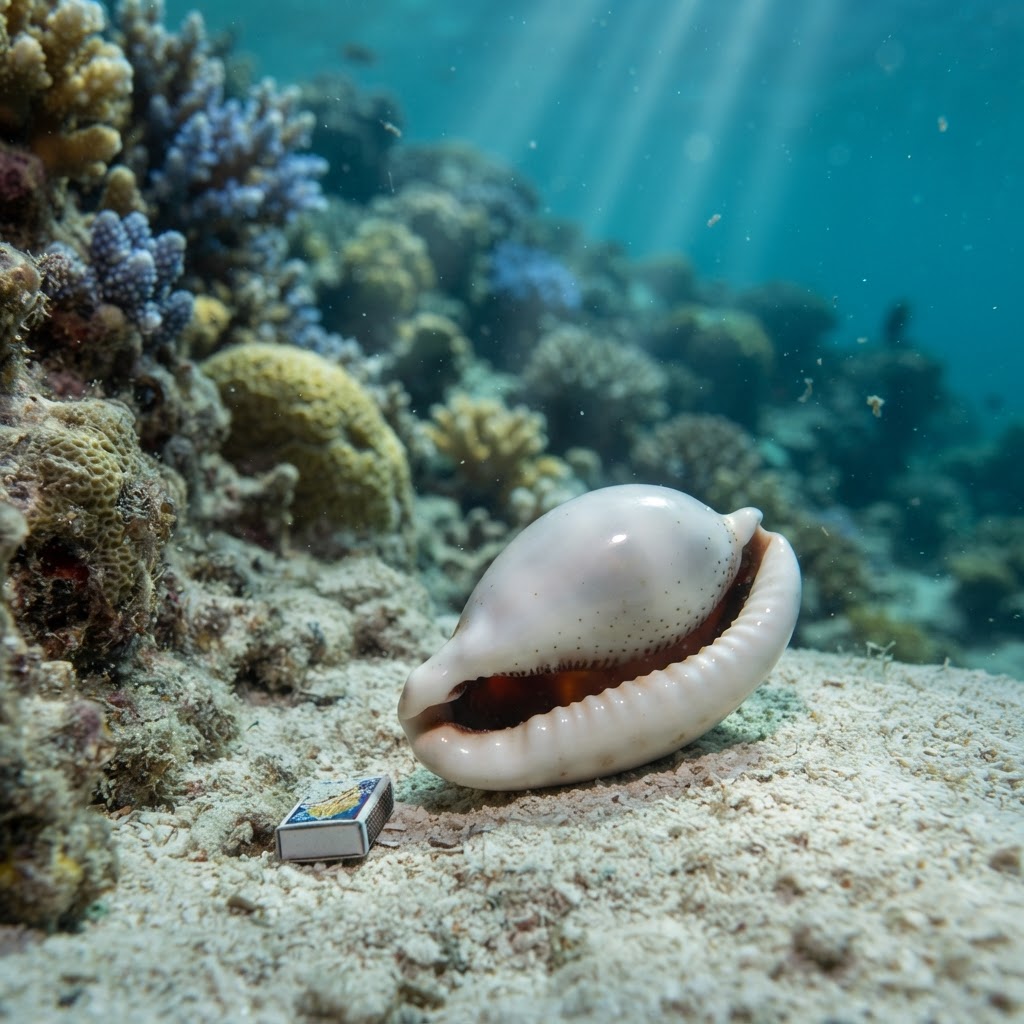
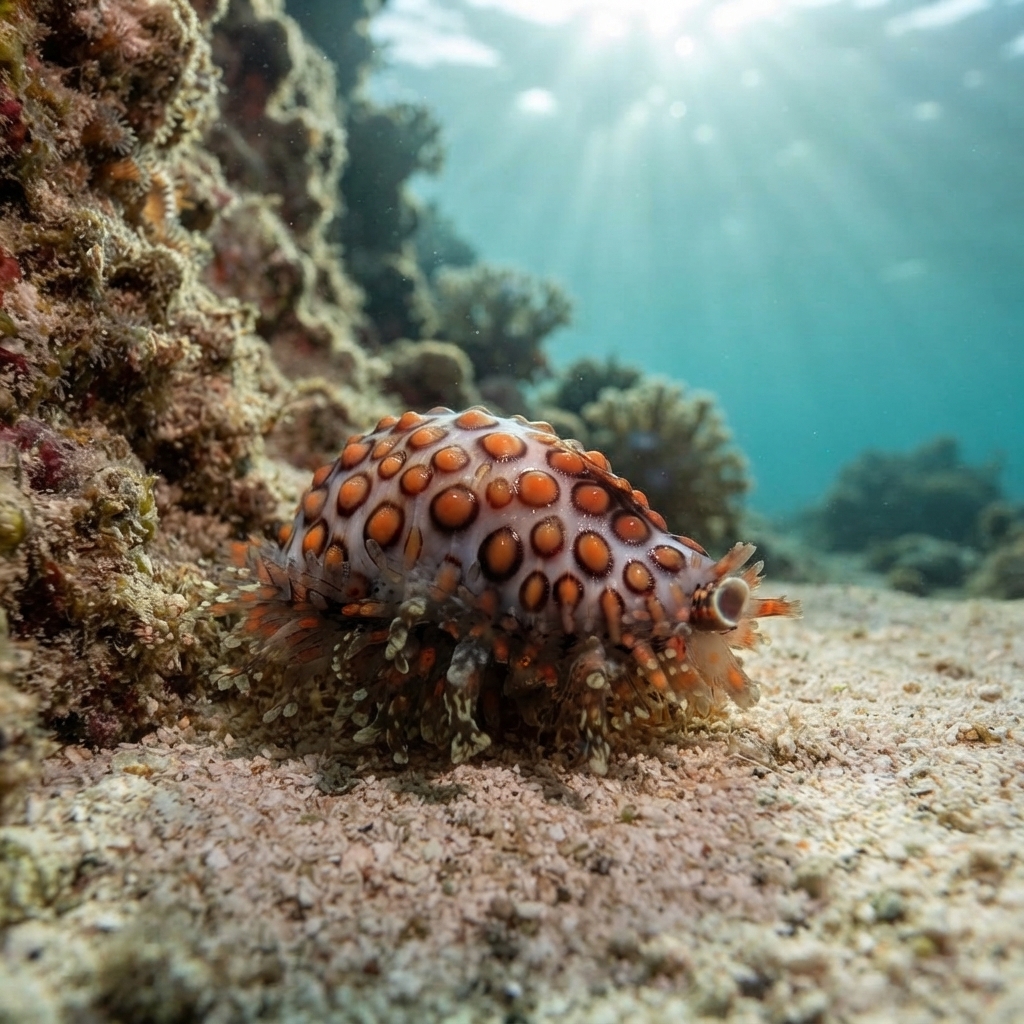
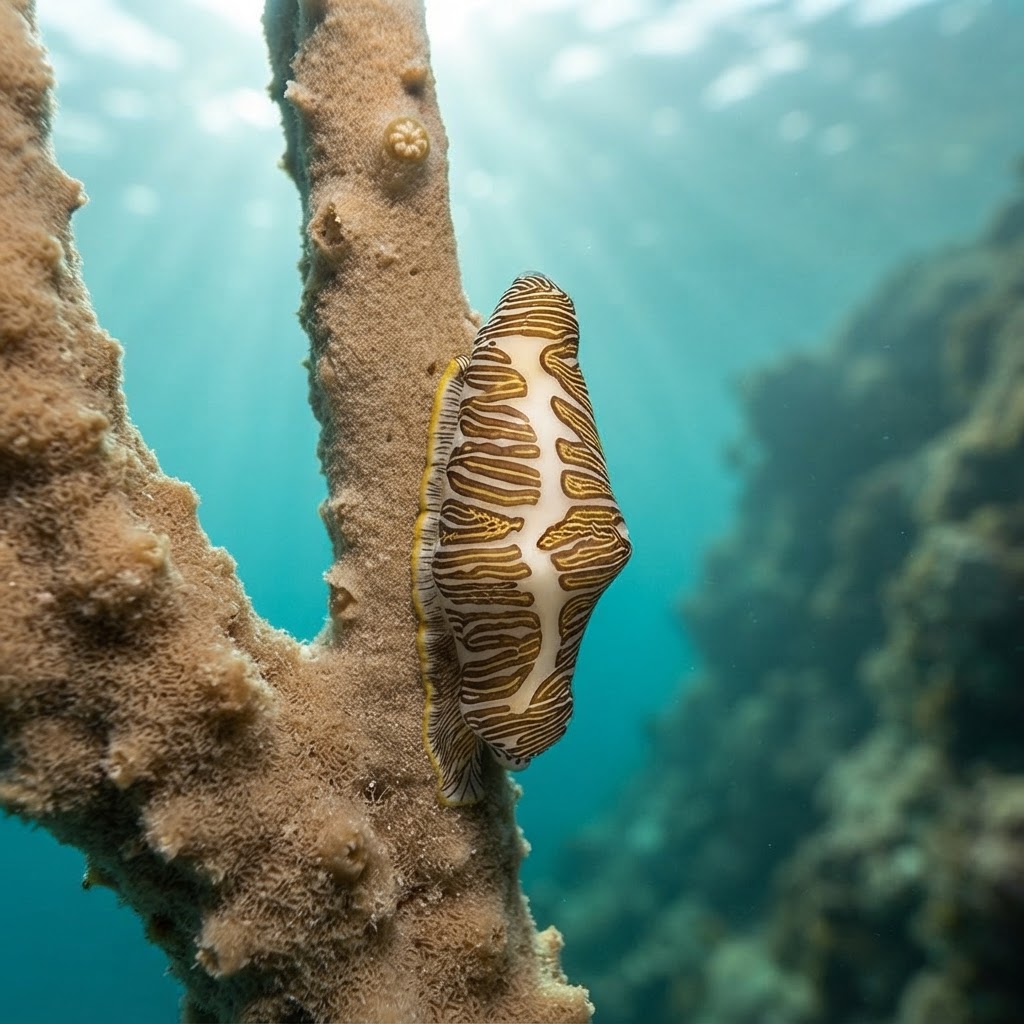
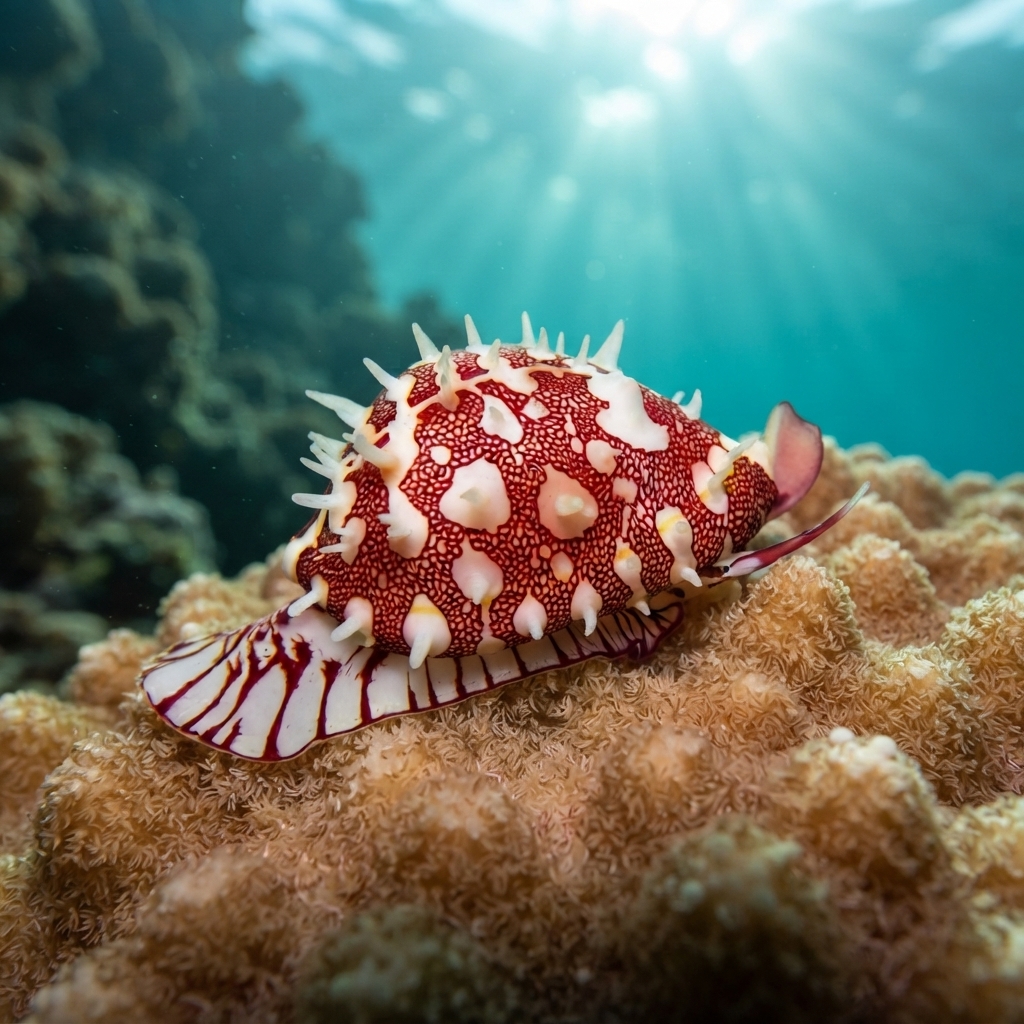
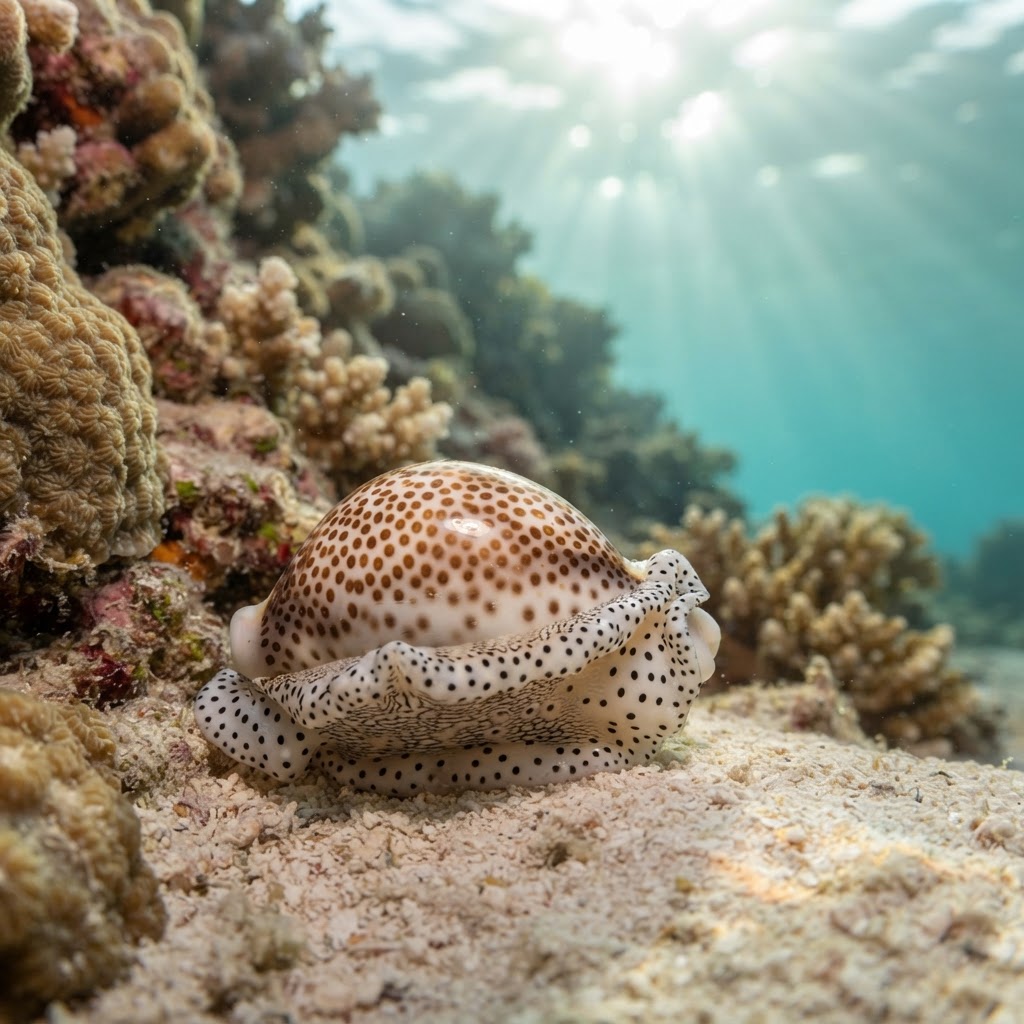
Small, egg-shaped, glossy porcelain-white shell with a scatter of raised black-rimmed warts across the back, usually two to four prominent ones near the centre. The mantle (the soft tissue that can cover the shell) is often not extended when resting, leaving the smooth polished shell fully visible against the darker branches of its host soft coral. Its rounded, almost seamless shell shape and pale colour make it stand out sharply against the purples and pinks of the coral it clings to.
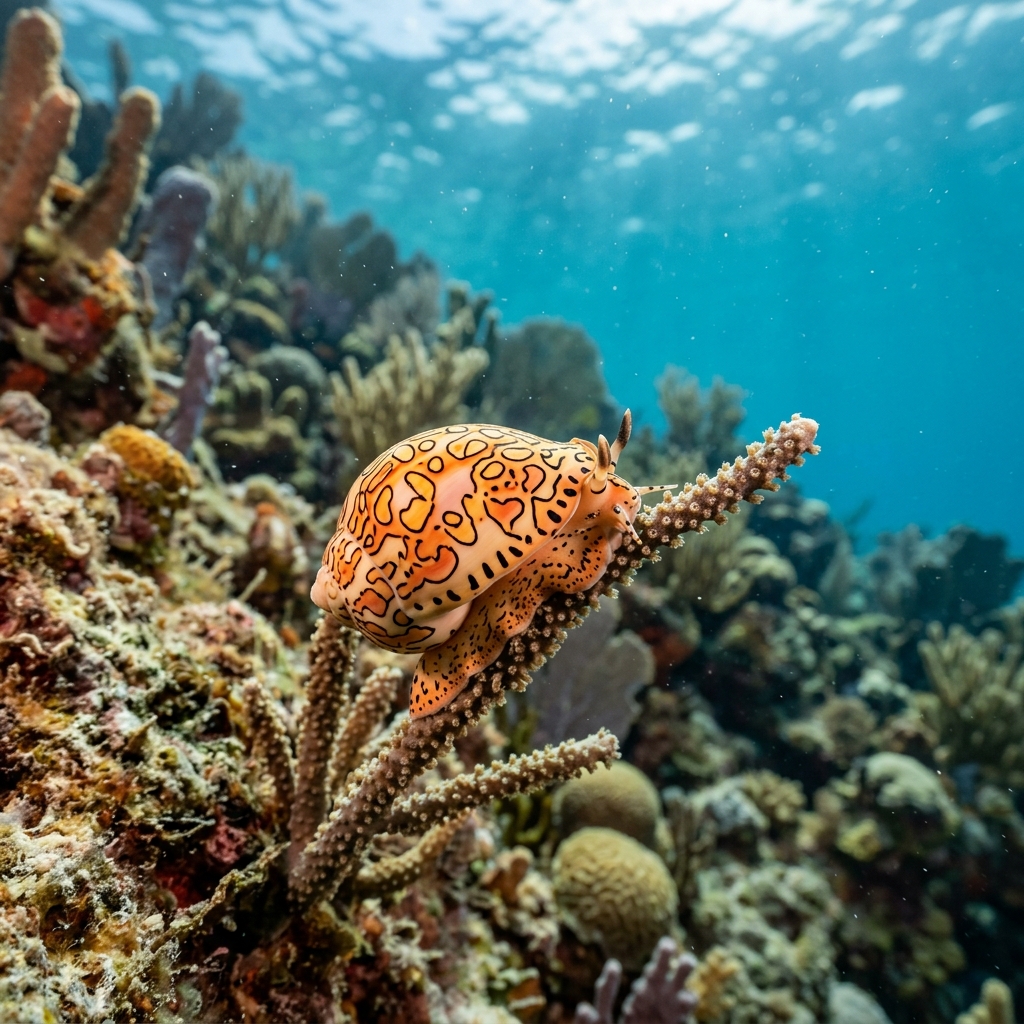
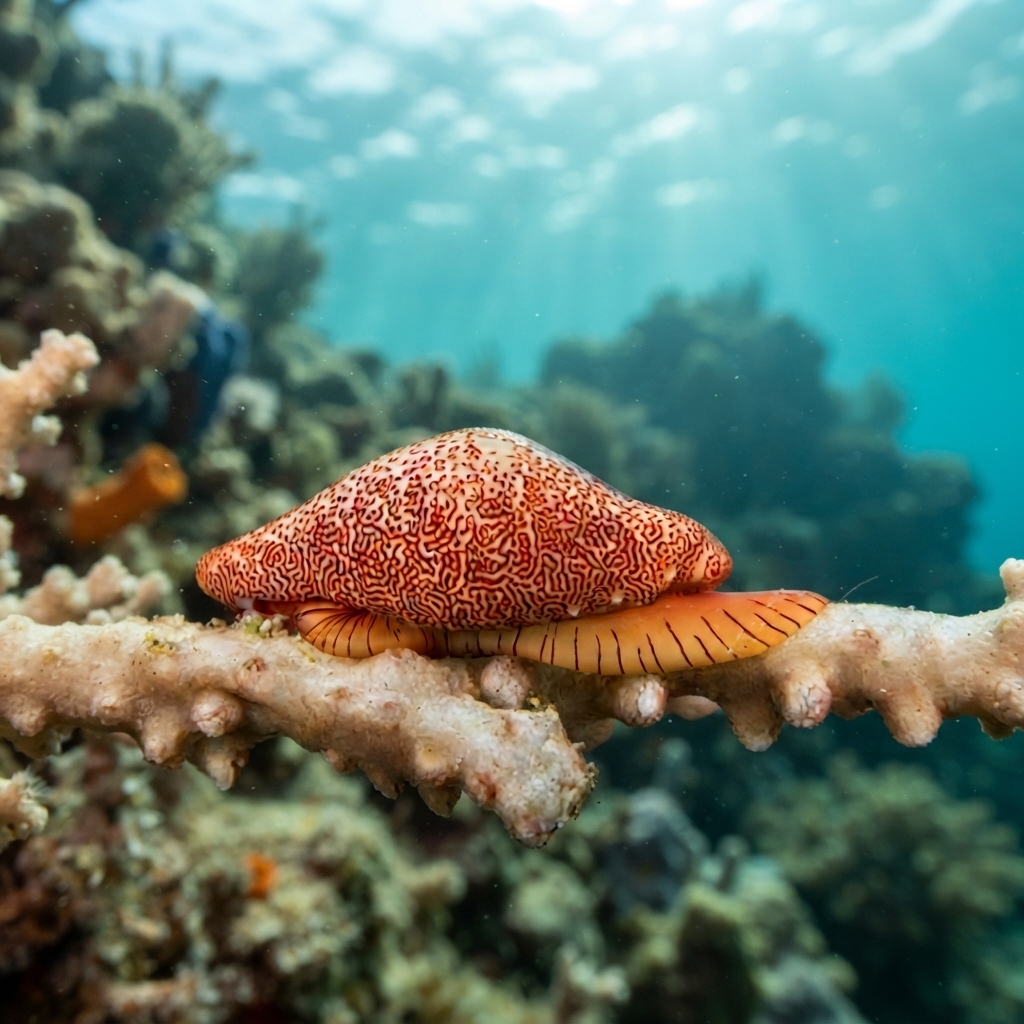
Divers find it parked motionless on the branches of soft coral, usually gorgonians or Sarcophyton-type leather corals, where it grazes slowly on the coral tissue and polyps. It barely reacts to a torch or a close look, making it an easy subject for macro photography once spotted, though its plain white shell can blend into pale coral and take a careful eye to pick out. Most sightings come from typical reef and slope dives rather than any special night or dawn behaviour.
Like other cowries, it secretes a thin layer of mantle tissue over its shell that keeps the surface glossy and helps camouflage it while it feeds on its coral host.
No clear seasonal pattern shows in the data, and with a comfortable range of roughly 25 to 31C it stays active on tropical reefs throughout the year. Plan around good soft coral sites rather than a particular month.
Reef neighbours a diver could mistake it for. Use the identification notes above to tell them apart.
Most consistently logged across the Philippines, especially Luzon and the Visayas, with strong showings in Okinawa and the Ryukyu Islands in Japan and around Kenting in Taiwan. Sabah in Malaysia and Mindanao in the Philippines also produce regular sightings, with occasional records from Queensland in Australia and Bali in Indonesia.
Mapping where Warty Egg Cowrie is logged…
It turns up most reliably in the Philippines, particularly Luzon and the Visayas, with good numbers in Okinawa, Japan and Kenting, Taiwan. Sabah in Malaysia and Mindanao also produce regular sightings.
There is no strong seasonal pattern in sightings, and it lives in warm water year-round, so any time you are diving its usual regions is fair game.
Look for a glossy white, egg-shaped shell with a few raised black-rimmed warts on the back, sitting still on soft coral branches. The smooth shell and dark-ringed bumps are the giveaway against the coral's colour.
No, it poses no risk to divers. It is a slow-moving, shell-covered mollusc that simply grazes on soft coral and can be observed or photographed safely up close.
It coats its own shell in a thin layer of living mantle tissue while feeding, which keeps the shell polished and helps it blend into the soft coral it lives on.
Site and sighting data is aggregated from diver logs, iNaturalist and GBIF. For taxonomy and conservation status:
Fingerprint Flamingo Tongue
122 sites