Ovula costellata
An uncommon find on Queensland reefs, this small glossy cowrie hides on soft coral in warm water year-round. Here's how to spot one.
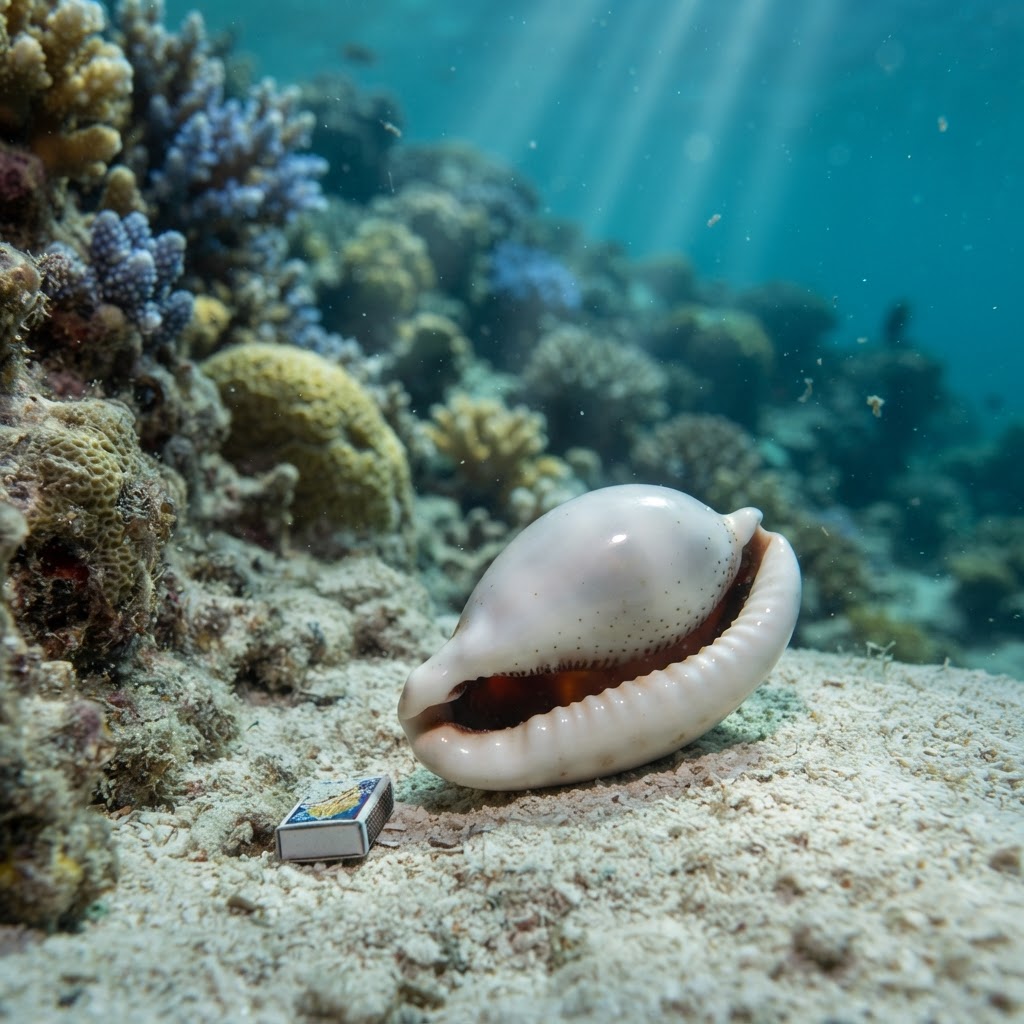
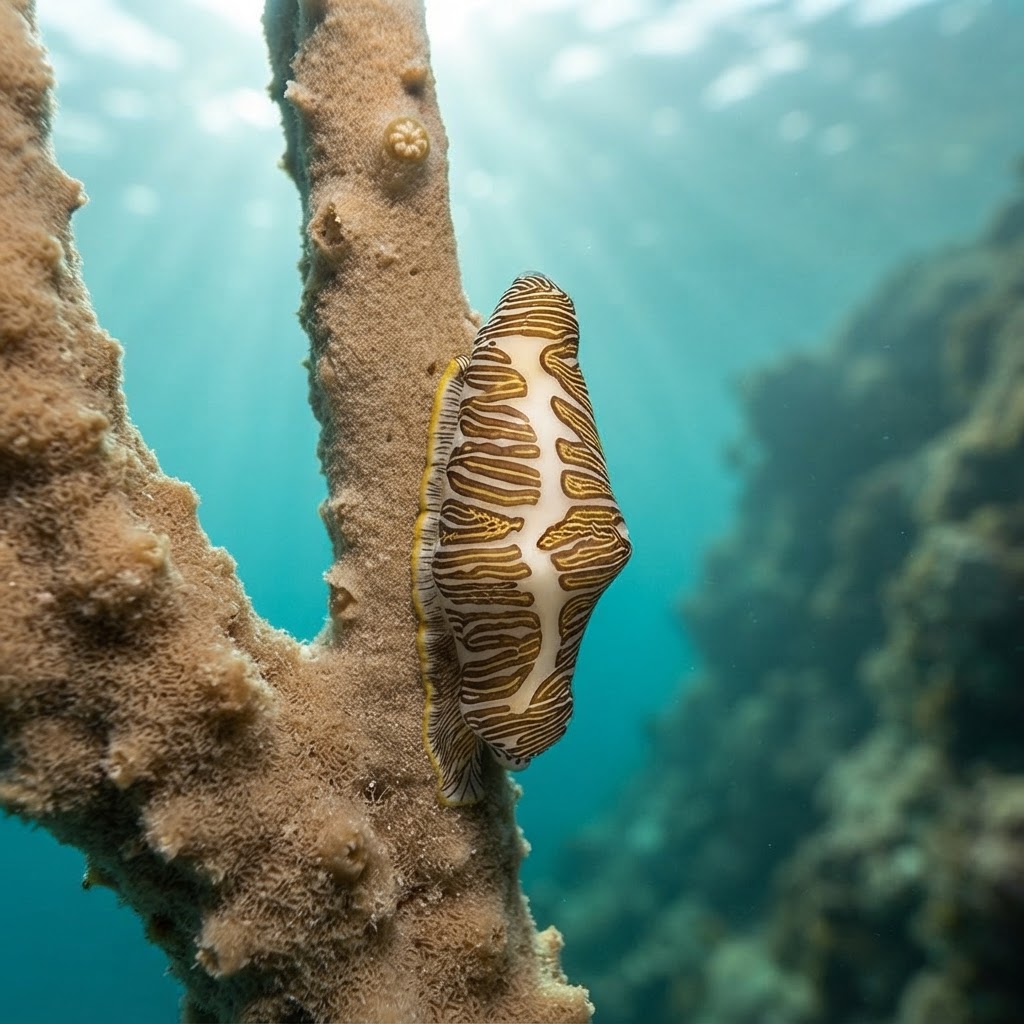
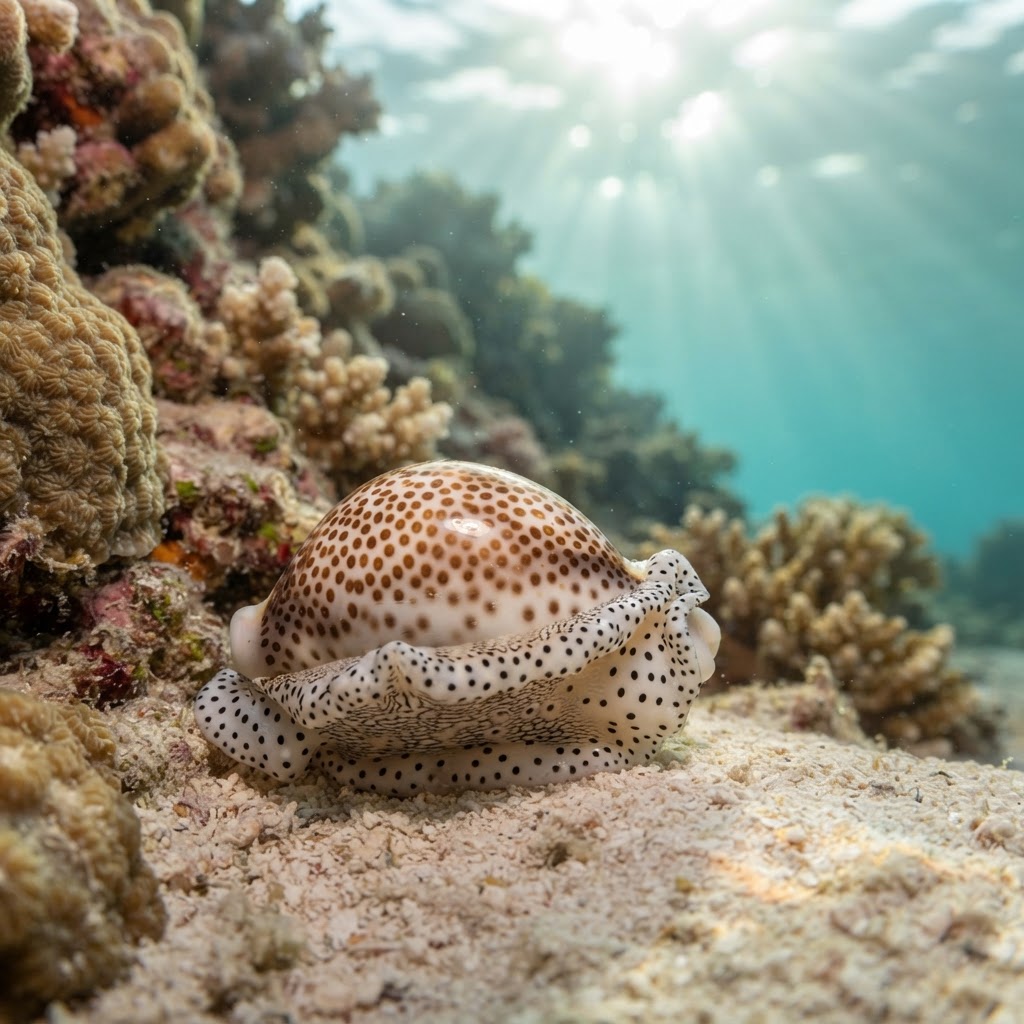
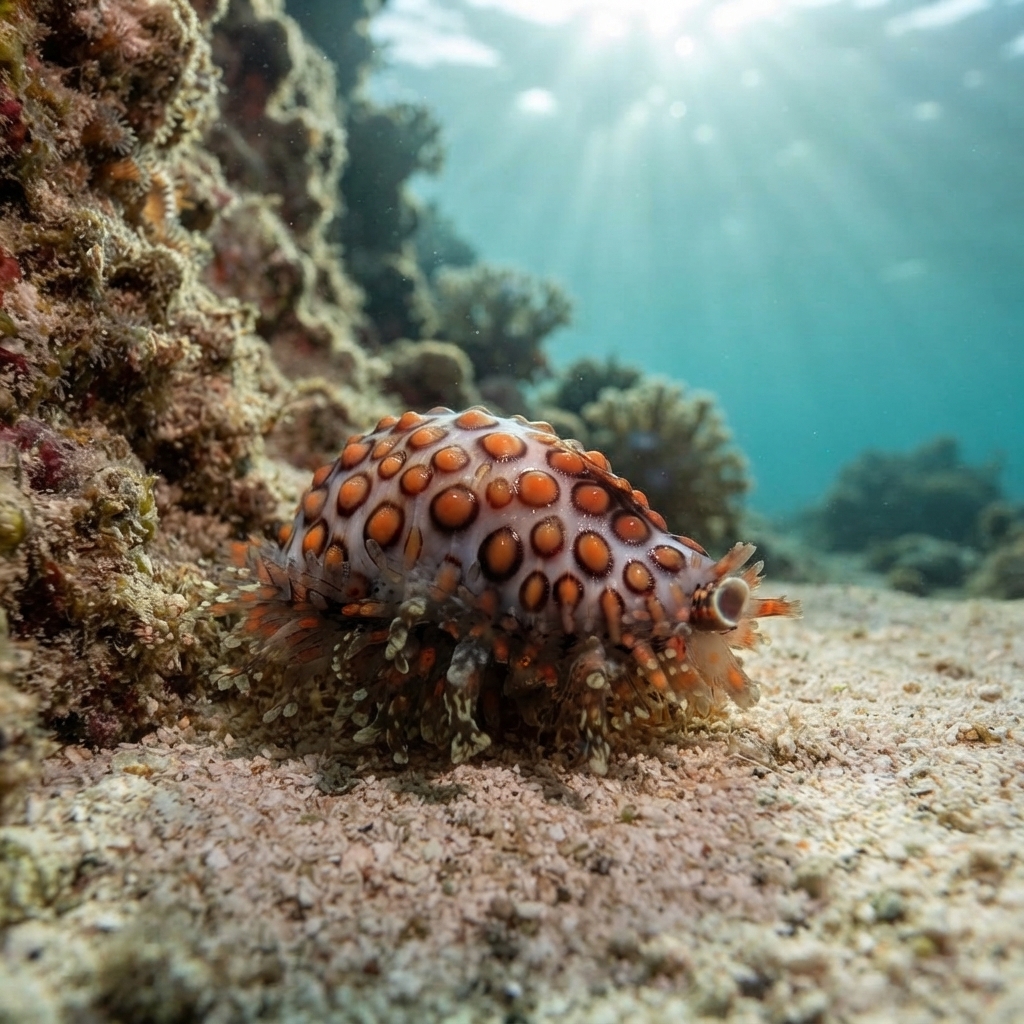
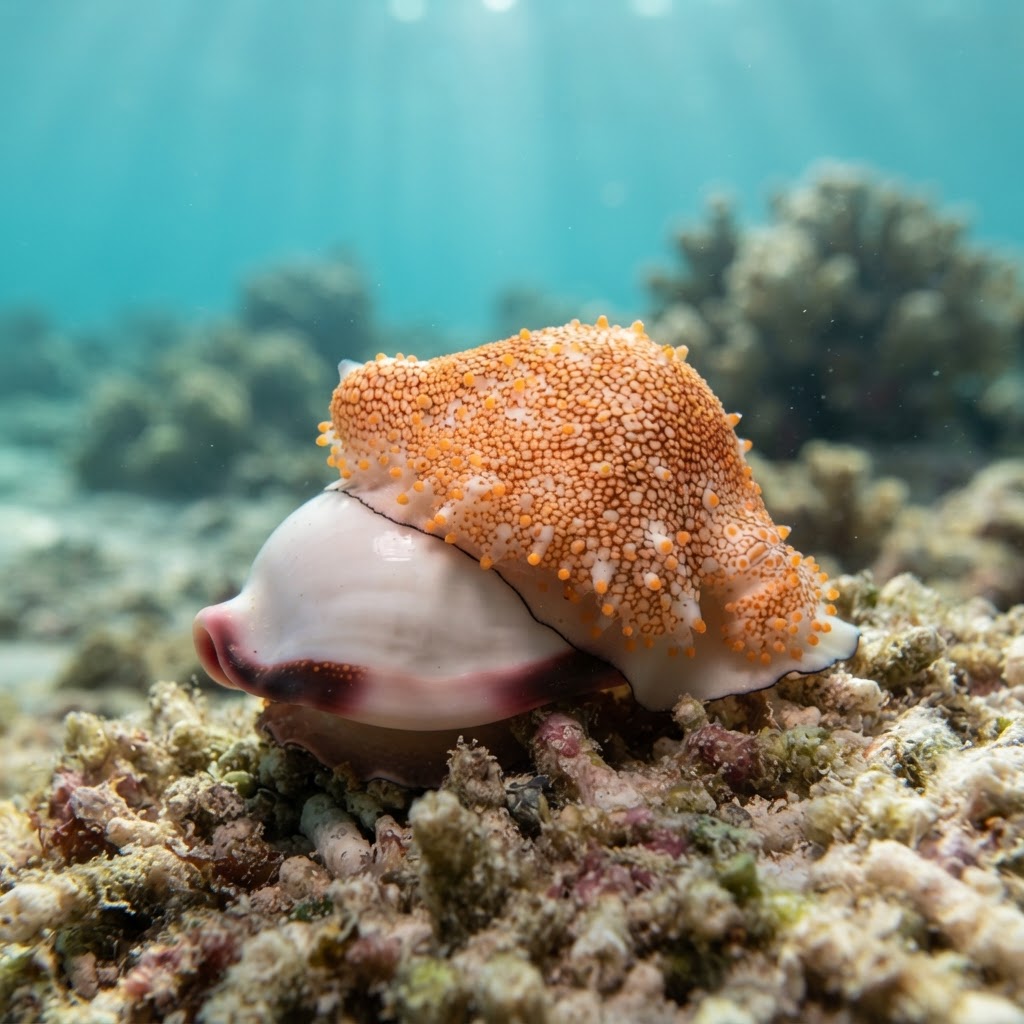
A small, smooth, glossy shell, oval and elongated like a grain of rice, usually pale to white with a mantle that can show pink tones around the mouth (aperture) when the animal is extended over its shell. Look for it clamped tight to the branch of a soft coral or gorgonian rather than out on open reef, where its shape and shine set it apart from the coral's own polyps and mucus sheen. It rarely moves far, so once you spot the shell shape against the host coral's branches, it is unmistakable.
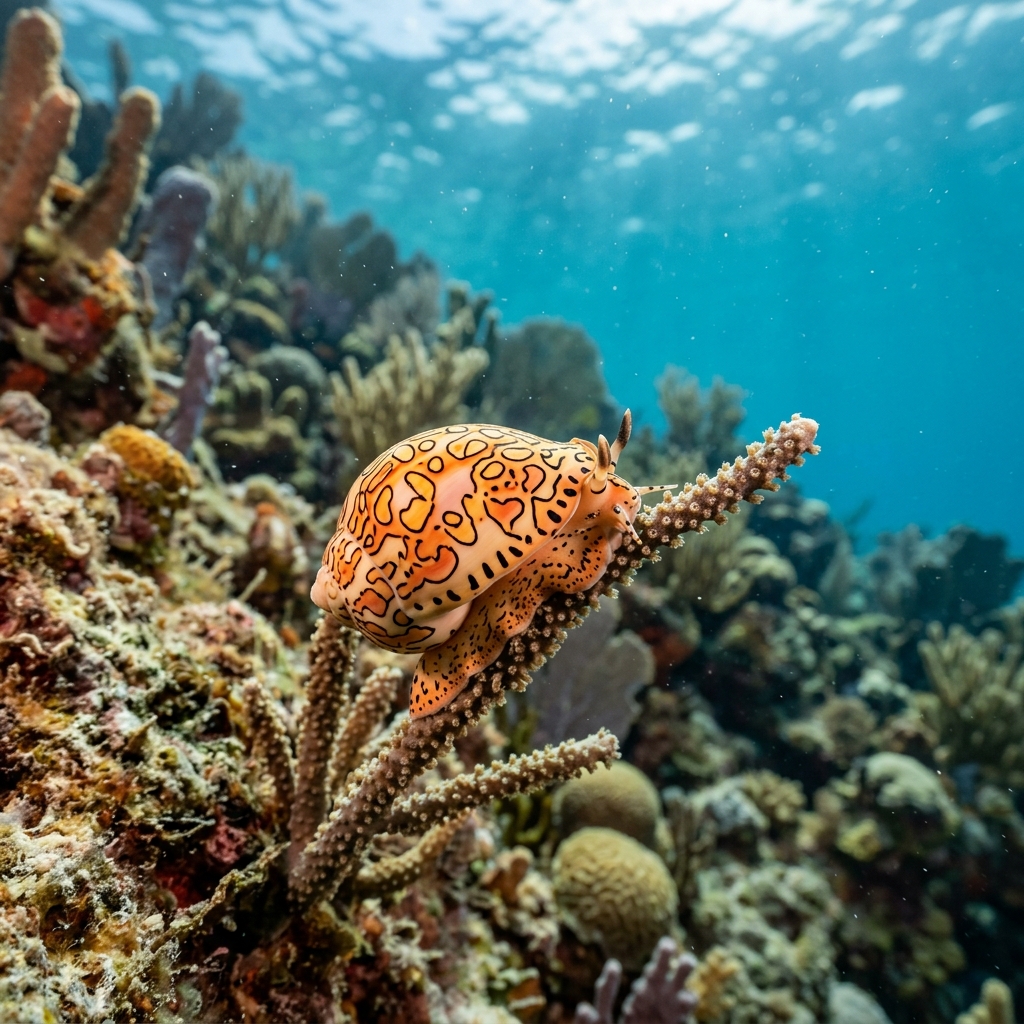
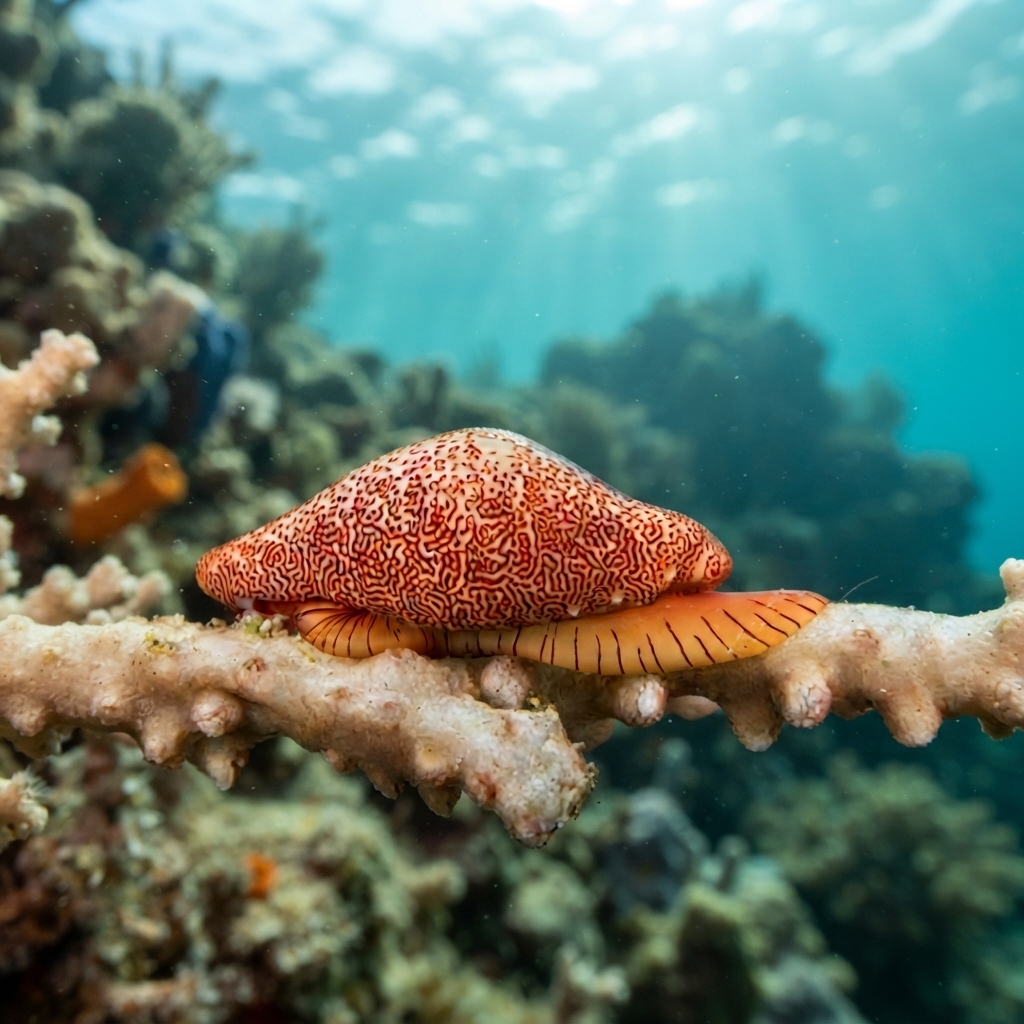
Found parked on the branches of its host soft coral, where it feeds by grazing on the coral tissue itself, moving little between dives. Divers usually find it by scanning gorgonian and soft coral colonies closely rather than by seeing it move, since it sits still and relies on staying put rather than fleeing. Best spotted with a slow, methodical look along coral branches rather than a general reef scan.
Like other ovulids, it likely camouflages its shell by wrapping its mantle over it to match the host coral, only revealing the shell's true colour when removed or disturbed.
No clear seasonal pattern shows up in the sightings, and it sits in a warm 20.8 to 26.8C range typical of tropical and subtropical reefs year-round, so any month on the Queensland coast is worth a look.
Reef neighbours a diver could mistake it for. Use the identification notes above to tell them apart.
Currently best known from Queensland, Australia, where it has been logged on reef dives as an uncommon find. Data is thin outside this region, so if you have seen one elsewhere, it is likely under-reported rather than absent.
Mapping where Pinkmouth Ovula is logged…
The strongest logged sightings come from Queensland, Australia. It is considered an uncommon find even at sites where it has been recorded, so patient searching on soft coral colonies pays off.
There is no detected season in the sighting data, and its comfortable water temperature range of roughly 21 to 27C spans most of the year on Queensland reefs, so it can turn up on any dive.
Look for a small, smooth, glossy oval shell clamped to the branches of a soft coral or gorgonian, with pink tones sometimes visible around the shell's opening. Its shape and shine against the coral's texture are the main giveaway underwater.
Exact size data is not available for this species, but like most ovulids it is a small mollusc, generally a few centimetres in shell length, easy to overlook against its host coral.
No, it poses no risk to divers. It is a small, stationary mollusc that simply grazes on its host coral and has no means of harming a diver.
Site and sighting data is aggregated from diver logs, iNaturalist and GBIF. For taxonomy and conservation status:
Fingerprint Flamingo Tongue
122 sites