Jenneria pustulata
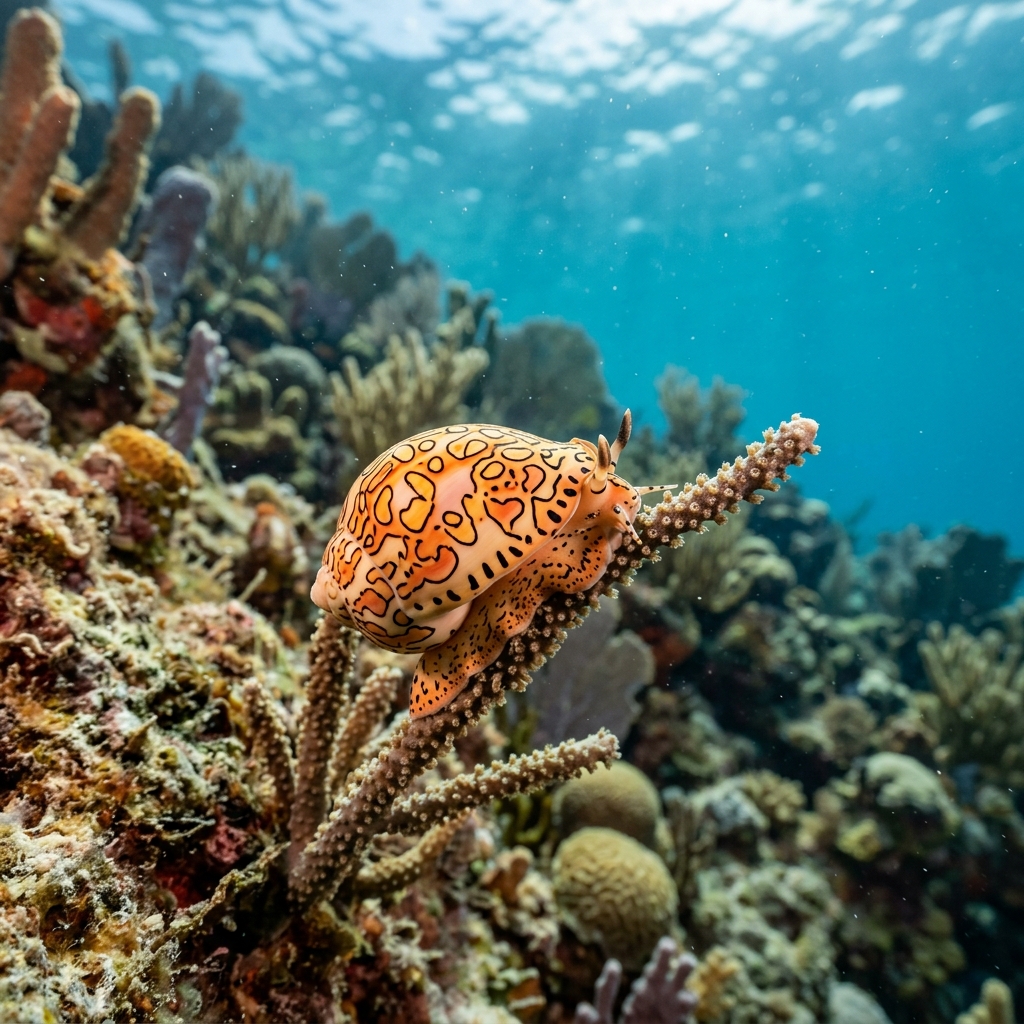
Bright orange shell with black-ringed spots on Pacific coral, most reliably logged along Baja California and Costa Rica's Central Pacific.
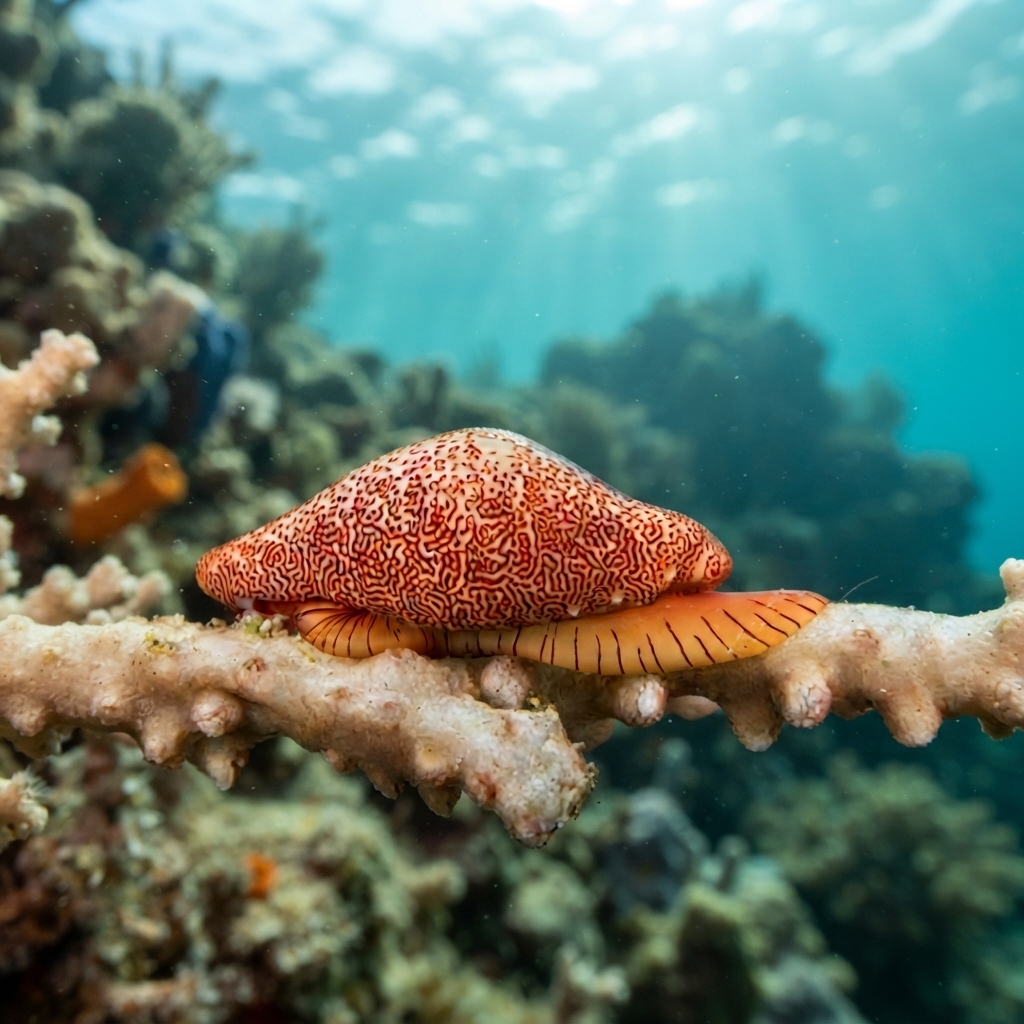
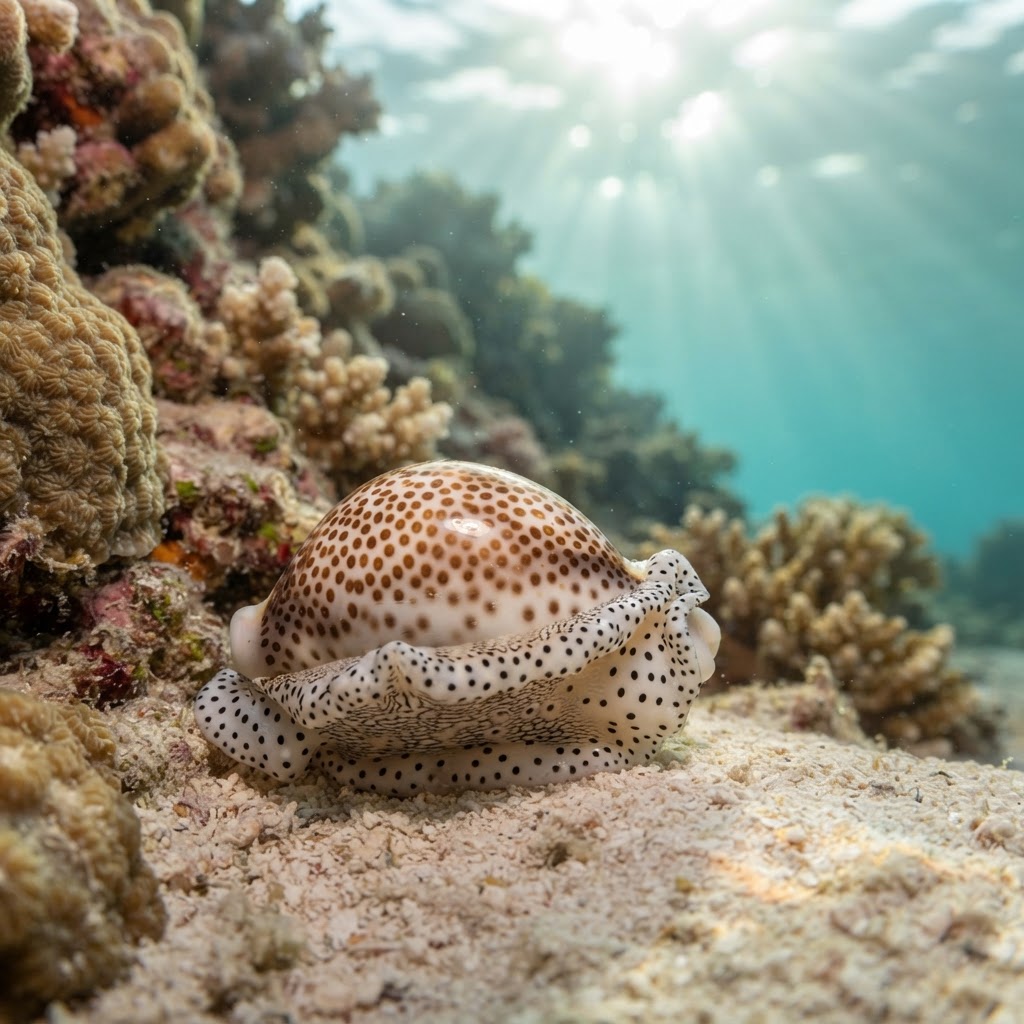
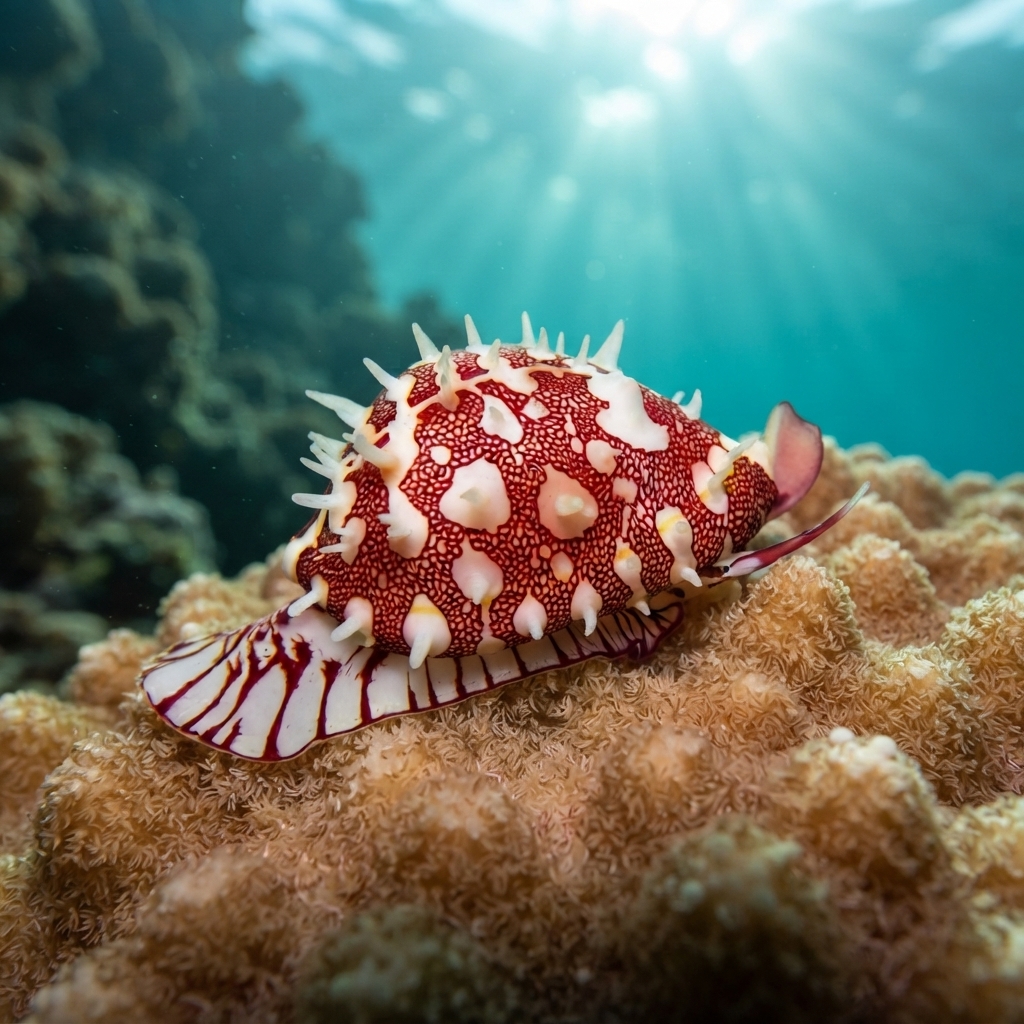
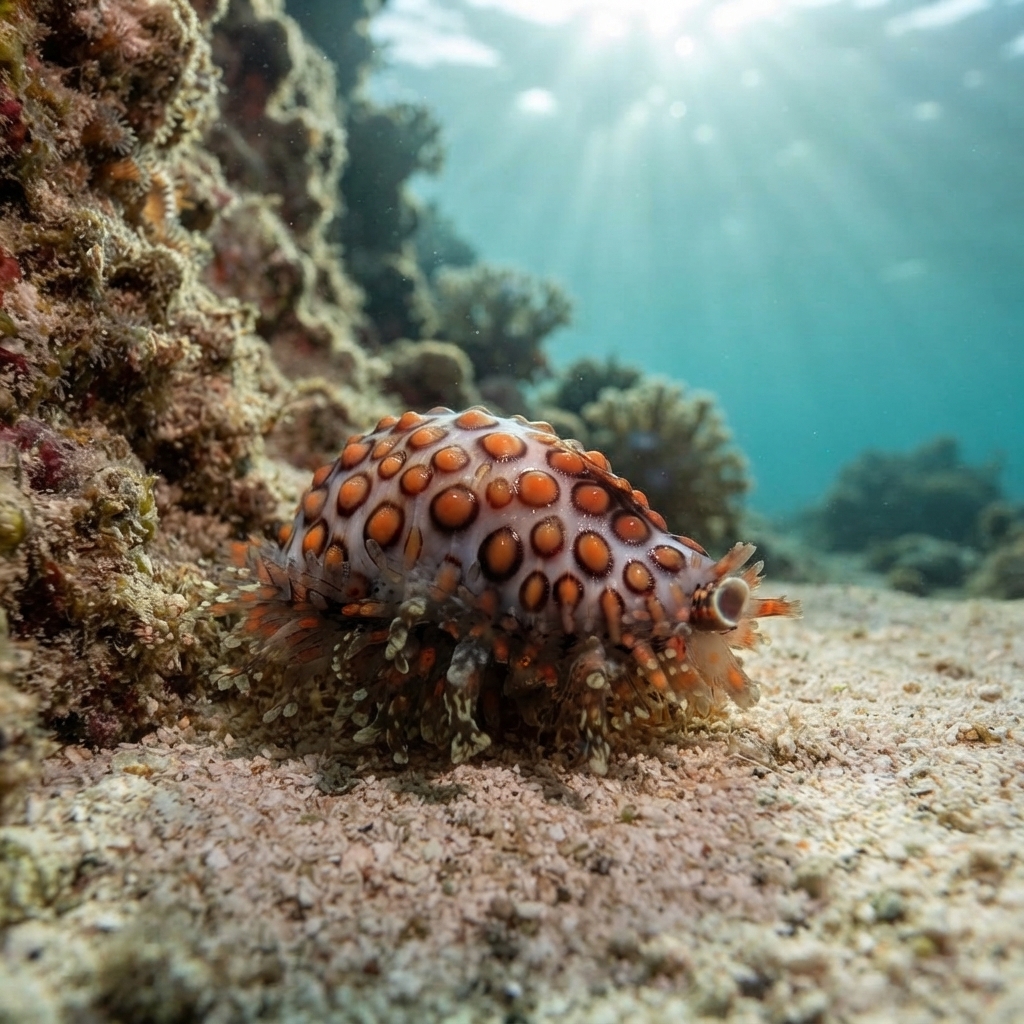
Small snail with a glossy orange to red-orange shell studded with raised black-ringed spots (pustules), giving it a bumpy, polka-dot look quite unlike a smooth cowrie shell. The soft mantle that often covers the shell shares the same orange tone with darker spotting, so the whole animal reads as a single warm-coloured, dotted blob against the reef. It moves slowly across hard coral and rubble, rarely more than a few centimetres at a time.
Divers typically spot it parked on hard coral heads or rubble, grazing slowly and barely reacting to a torch or a close look. It's not a swimmer, so once you find one on a coral colony it's usually easy to get a steady photo without it bolting. Most logs describe single individuals rather than groups, and it turns up on both day and night dives.
Like its cowrie relatives, it feeds directly on live coral tissue, rasping at polyps as it creeps across the colony, which is part of why it's almost always found sitting right on the coral rather than nearby rubble.
No clear seasonal pattern shows up in the sighting data, and the 22.8 to 28.9 C range it's found in covers most of the year on these coasts, so treat it as a year-round find rather than a seasonal target.
Reef neighbours a diver could mistake it for. Use the identification notes above to tell them apart.
Most consistently logged along Mexico's Pacific coast, especially Baja California, with a strong secondary population on Costa Rica's Central Pacific coast and a foothold on Ecuador's Pacific coast. Sites in these three countries account for nearly all logged sightings, so eastern Pacific reef and rocky-reef dives are the best bet.
Mapping where Pustulose False Cowrie is logged…
It's most often logged in Mexico, particularly around Baja California and the Pacific coast, with reliable sightings also reported in Costa Rica's Central Pacific and along Ecuador's Pacific coast.
There's no strong season in the data. It's found in water from roughly 23 to 29 C, a range that holds through most of the year on these eastern Pacific coasts, so sightings are possible year-round.
Look for a small orange shell covered in raised, black-ringed spots that give it a bumpy, dotted texture, usually sitting motionless on a coral head. The overall colour and pattern set it apart from smoother, plain-shelled cowries.
Exact size data isn't confirmed, but like other members of this small snail family it stays modest in size, typically a couple of centimetres long, easy to miss unless you're scanning coral heads closely.
It feeds by grazing directly on live coral polyps, rasping away at the tissue as it slowly moves across a colony, which is why it's almost always found sitting right on coral rather than free-swimming.
Site and sighting data is aggregated from diver logs, iNaturalist and GBIF. For taxonomy and conservation status:
Fingerprint Flamingo Tongue
122 sites