Simnia spelta
Small mantled shell hugging gorgonians in Catalonia and the Bay of Biscay, seen year-round in 14.7 to 20.7C water.
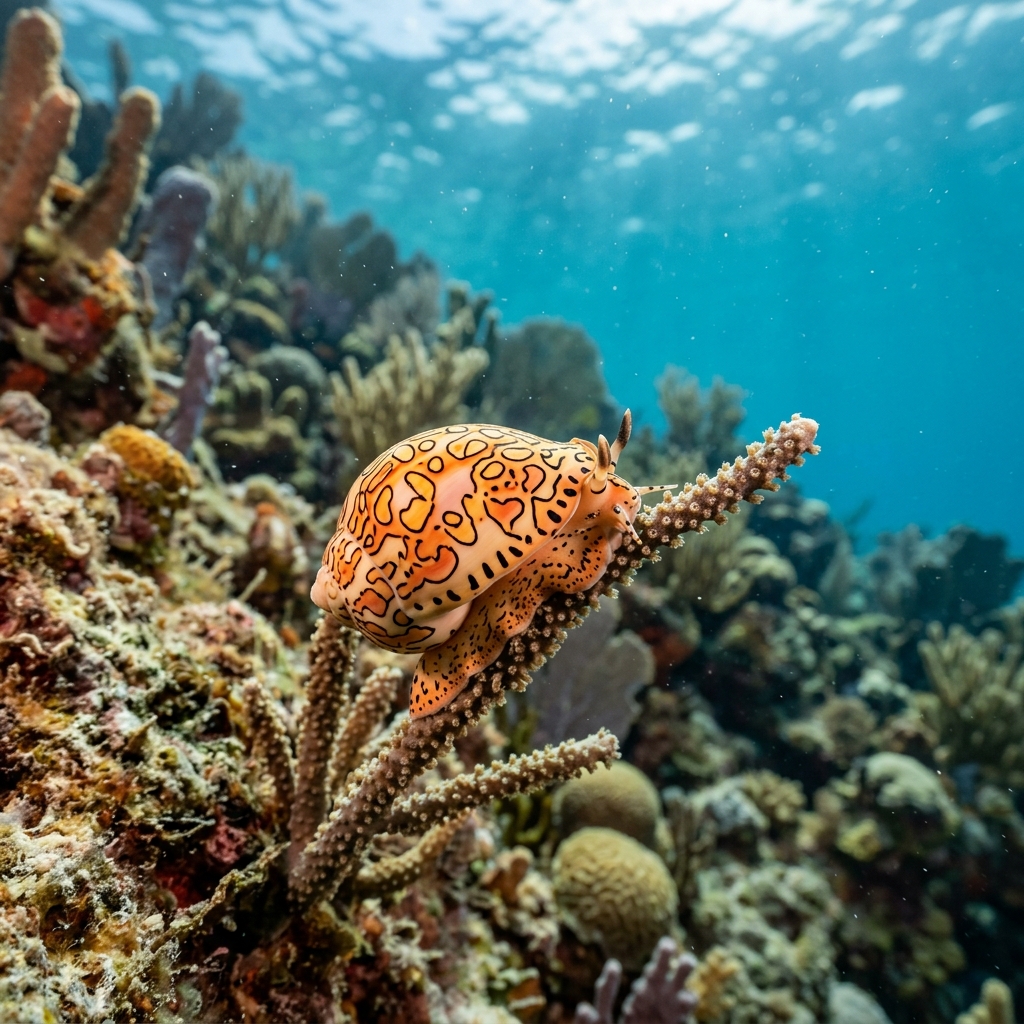
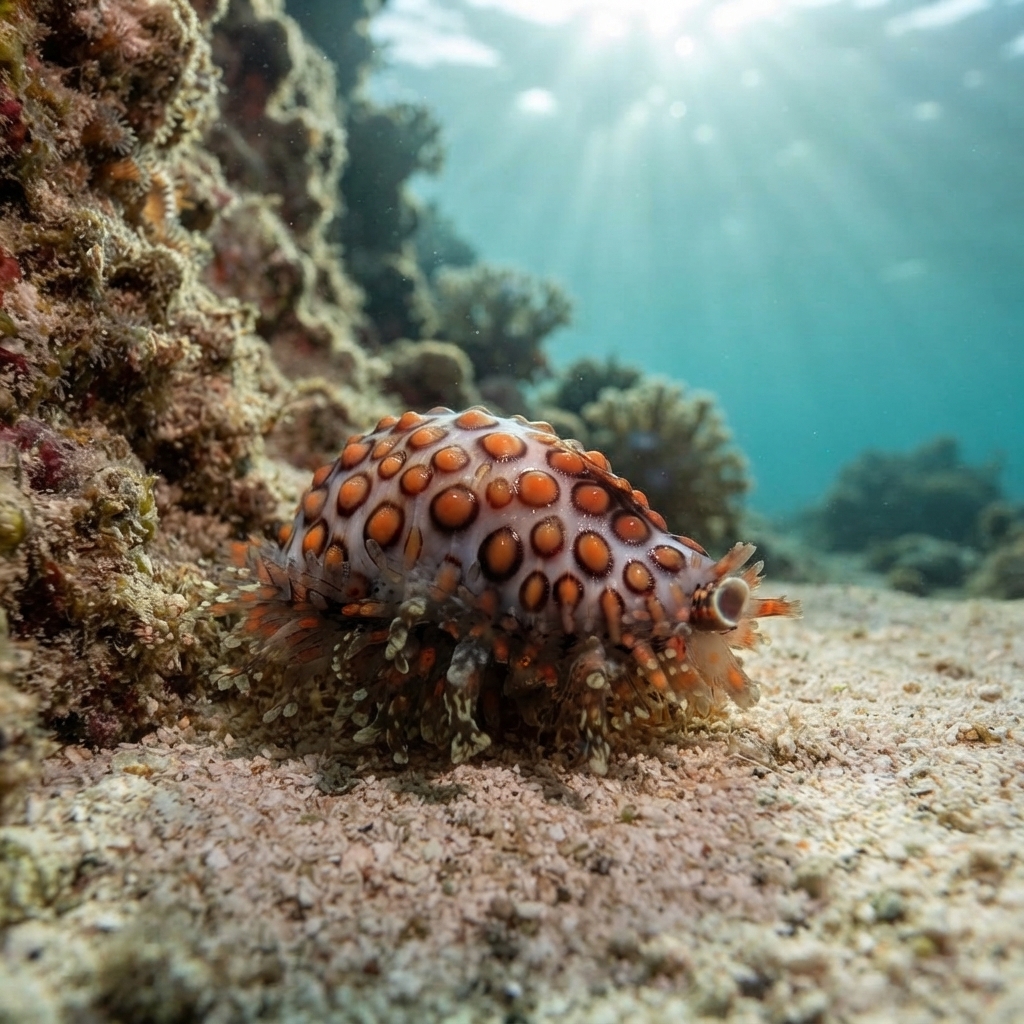
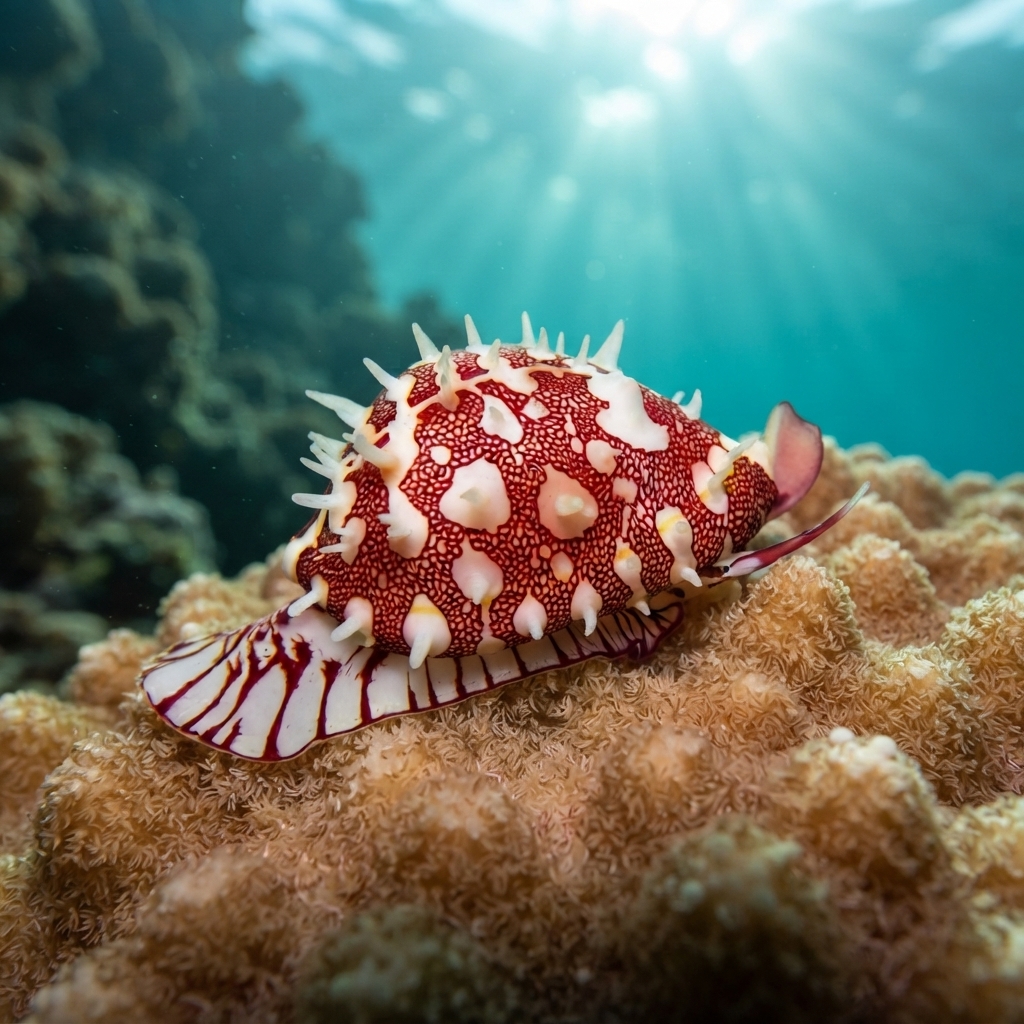
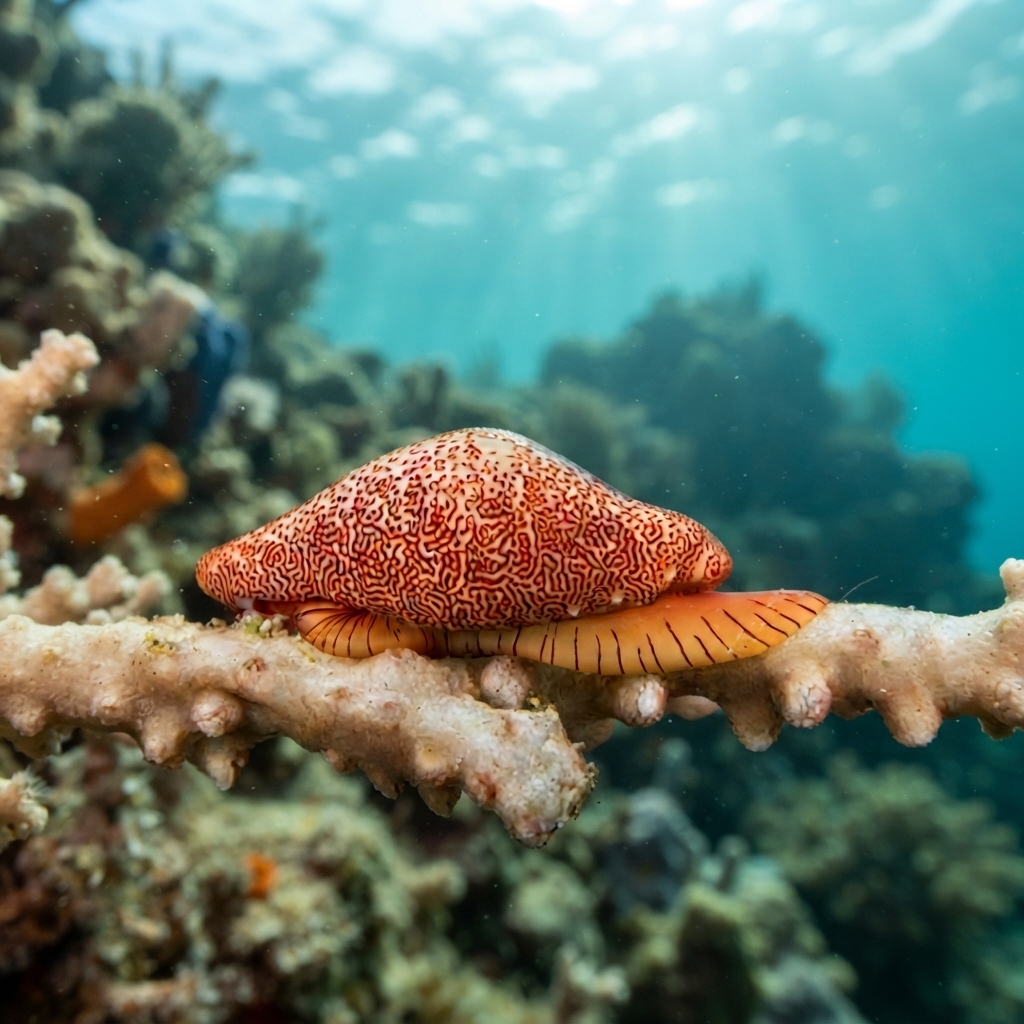
Small, spindle-shaped shell wrapped in a fleshy mantle that it can pull back to reveal a glossy, elongated cowrie-like shell underneath. Colour usually matches or blends with the gorgonian (sea fan) it sits on, running from pale cream to purple-grey, which makes it easy to swim past without noticing. Look for a slow, snail-like glide along the branches rather than swimming, and a mantle surface that can look smooth or faintly mottled depending on the individual.
Divers usually find it parked motionless on a gorgonian branch, grazing slowly across the polyps with barely any visible movement. It relies on camouflage rather than fleeing, so a careful diver can often get a close look without it reacting at all. Most sightings are on rocky reefs and walls where sea fans grow in the current, at depths where those gorgonians are established.
It feeds directly on the gorgonian it lives on, rasping at the polyps and often taking on a colour close to that host, which is part of why it is so easy to overlook against the branches.
Sightings are logged across the year with no clear seasonal peak, which fits its year-round presence on gorgonians in the 14.7 to 20.7C range typical of these coasts. Plan around good visibility and calm seas at your chosen site rather than a particular month.
Reef neighbours a diver could mistake it for. Use the identification notes above to tell them apart.
Most reliably found in Spain, especially Catalonia and Valencia, with a strong presence too in Lisbon Coast, Portugal and the Bay of Biscay and Cantabrian Coast in northern Spain and France. Smaller numbers turn up along the French Riviera, Provence and Occitanie, so divers in the western Mediterranean and along the Atlantic-facing Iberian coast have the best odds.
Mapping where Mediterranean Ovulid is logged…
It is most commonly logged in Spain, particularly Catalonia and Valencia, and also turns up reliably along the Lisbon Coast in Portugal and the Bay of Biscay and Cantabrian Coast in France and Spain.
There is no strong seasonal pattern in the sightings, so it is considered a year-round find in the 14.7 to 20.7C water typical of these coasts.
Look for a small, spindle-shaped shell covered by a fleshy mantle sitting motionless on a gorgonian branch, often coloured to match its host. It moves very slowly and lacks the bold contrasting spots of true flamingo tongues.
Exact size data is not well documented for this species, but like other ovulids it stays small, generally a couple of centimetres, easy to miss against its gorgonian host.
It grazes directly on the living tissue of the gorgonian it lives on and can shift its own colouring to blend with that host, making it one of the better camouflaged molluscs on Mediterranean reefs.
Site and sighting data is aggregated from diver logs, iNaturalist and GBIF. For taxonomy and conservation status:
Warty Egg Cowrie
87 sites