Cuthona divae
A 1cm nudibranch rarely logged in cold Pacific Northwest waters, 8.5 to 14.5C, year-round if you know where to look.
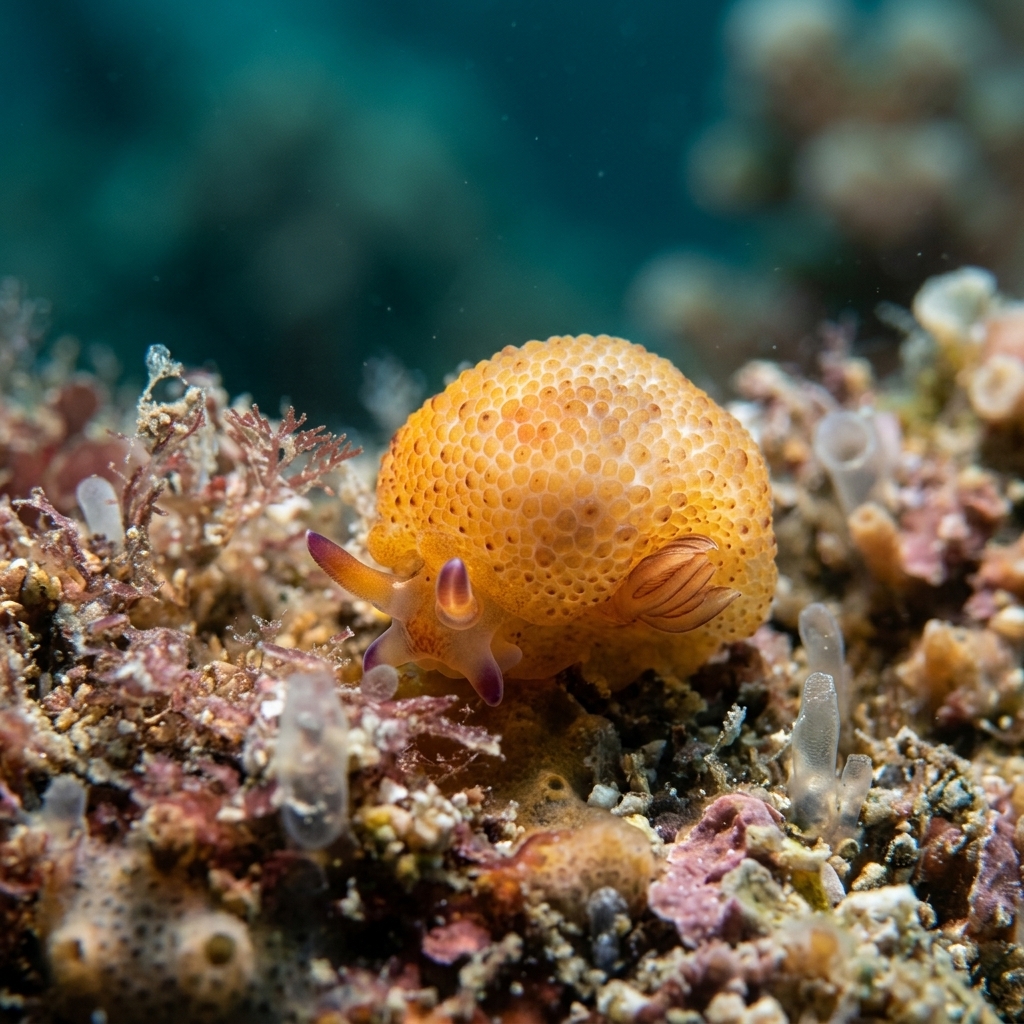
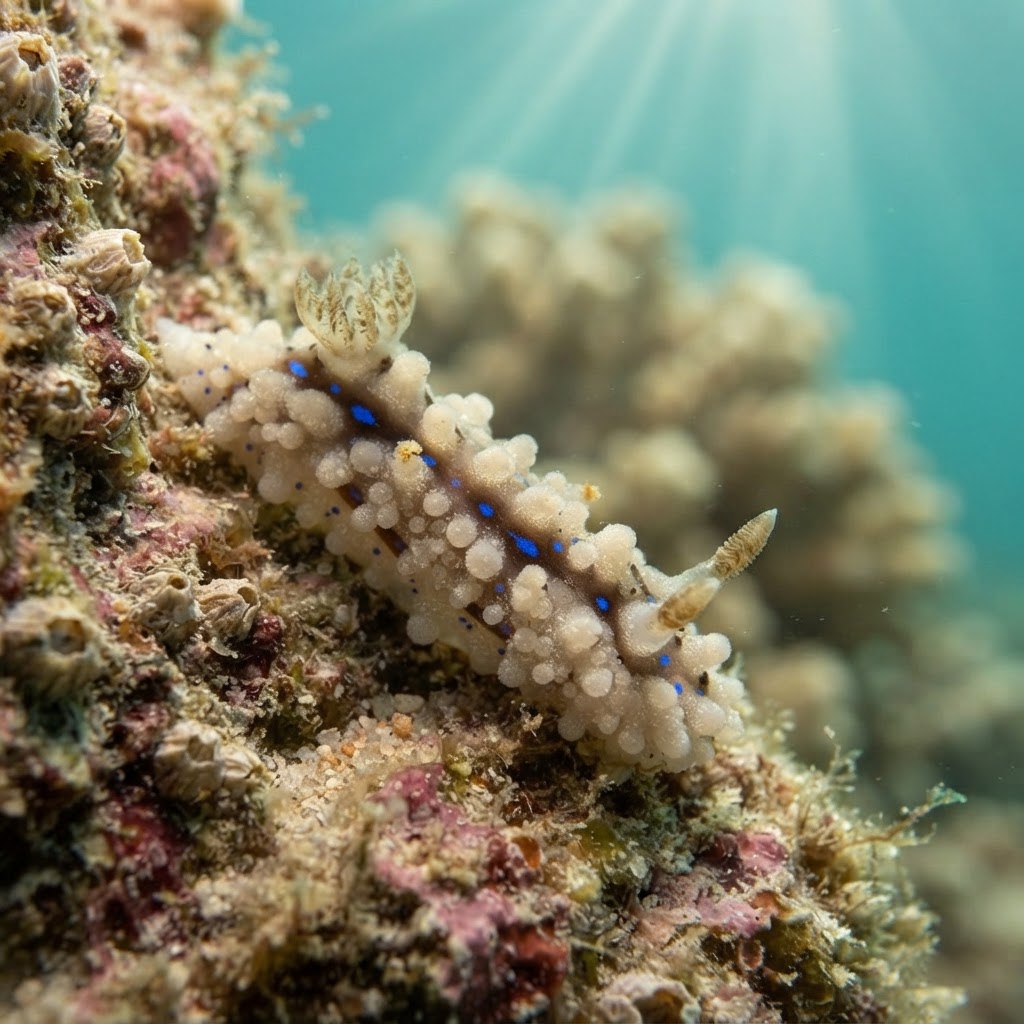
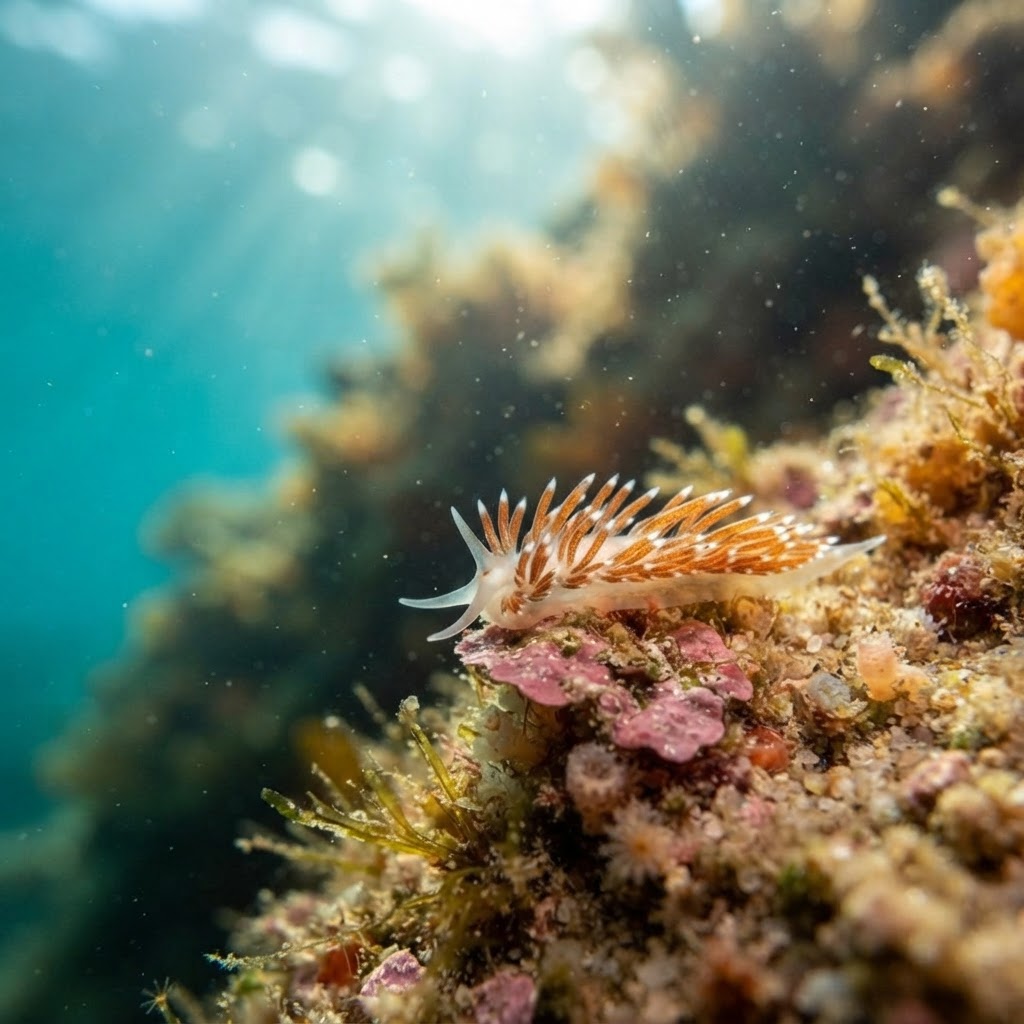
A tiny slug, barely a centimetre long, so you're hunting for it rather than spotting it by chance. Look for a slender translucent body carrying rows of finger-like projections (cerata) along its back tinged in rose-pink, which is what gives this species its glow against dark rock and algae. The head end tapers with a pair of short sensory tentacles (rhinophores), and there's no shell or obvious fins to confuse the outline.
Divers find it grazing slowly over rock and hydroid-covered surfaces, moving at the unhurried pace typical of small nudibranchs feeding on hydroids. It shows no reaction to divers beyond the usual slug indifference, so a slow careful look along encrusted rock and pilings in cold water is the best way to spot one. Most sightings happen on macro-focused dives where someone is already scanning close to the substrate.
Like other Cuthona species, it almost certainly feeds on hydroids and may recycle stinging cells from its prey into those pink cerata for its own defence, a trick common across this nudibranch family.
Sightings don't cluster into a clear season, so treat it as a year-round possibility on cold-water dives between 8.5 and 14.5C. Cold Pacific Northwest water stays in that range for most of the year, which likely explains the lack of a strong seasonal pattern.
Almost every logged sighting comes from the Pacific Northwest in the United States, with a single record from British Columbia, Canada. If you're diving cold-water sites in Washington state waters or nearby BC, this is where divers have actually found it, though at any given site it's logged as rare to uncommon rather than a sure thing.
Mapping where Rose-pink Cuthona is logged…
It's most reliably logged in the Pacific Northwest region of the United States, with a rarer record from British Columbia, Canada. It's a cold-water species, so look for it on rocky reef and macro-focused dives in that region rather than tropical sites.
There's no detected seasonal pattern, so it's considered a year-round find. Water in its range stays within its 8.5 to 14.5C niche for most of the year, which fits with sightings spread across seasons.
It's tiny, around 1cm long as an adult, so divers need to slow down and scan rock and hydroid growth closely to spot one. It's easy to swim straight past without noticing.
Look for a slender translucent slug about a centimetre long with rows of pink-tinged cerata along its back and a pair of short rhinophores on the head. There's no shell, and the pink cerata against a plain body is the main clue at this size.
Like related Cuthona species, it almost certainly feeds on hydroids, using its cerata to store stinging cells taken from its prey as a form of borrowed defence. This is a well-documented strategy across the family, though it hasn't been specifically confirmed for every individual species.
Site and sighting data is aggregated from diver logs, iNaturalist and GBIF. For taxonomy and conservation status:
Light-spotted Aegires
3,168 sites