Grampus griseus
Heavily scarred and blunt-headed, Risso's dolphins are unlike any other species. Learn how to identify them and where to find them in the wild.
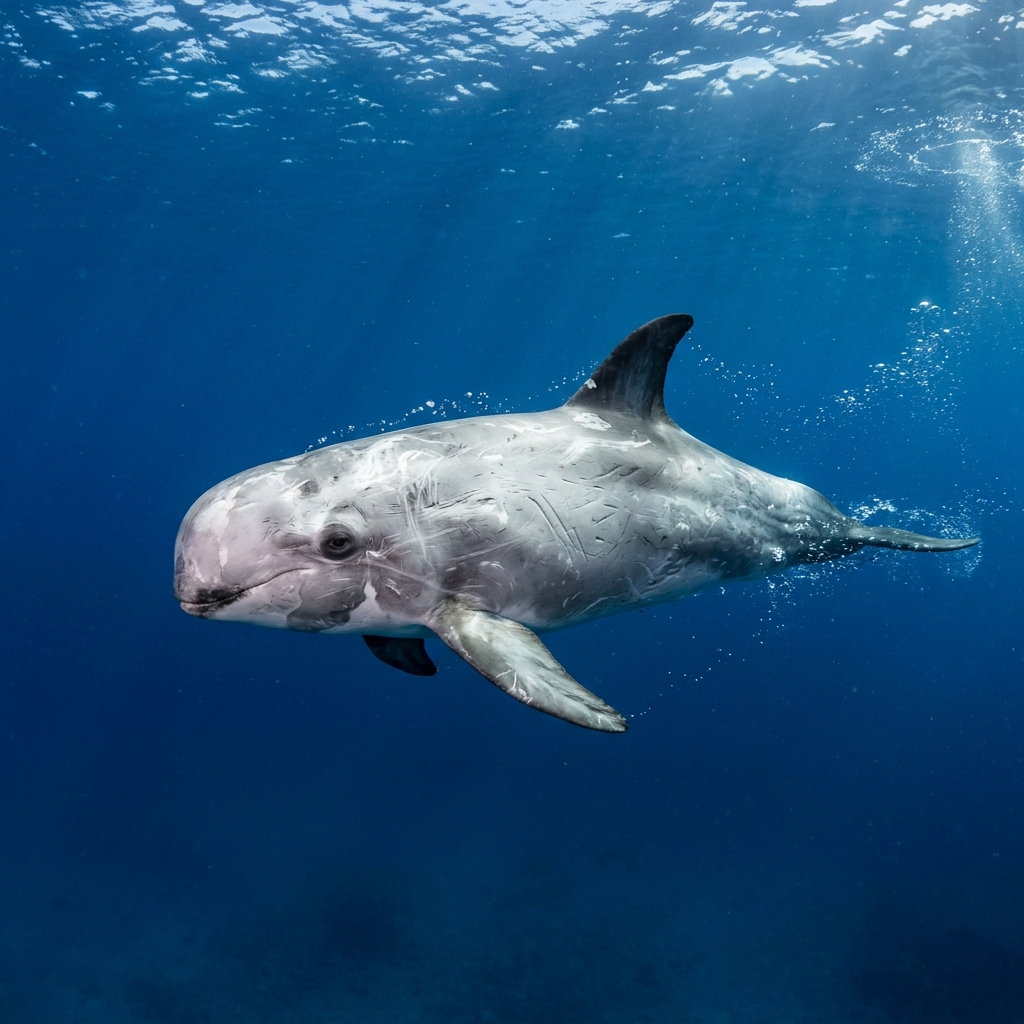
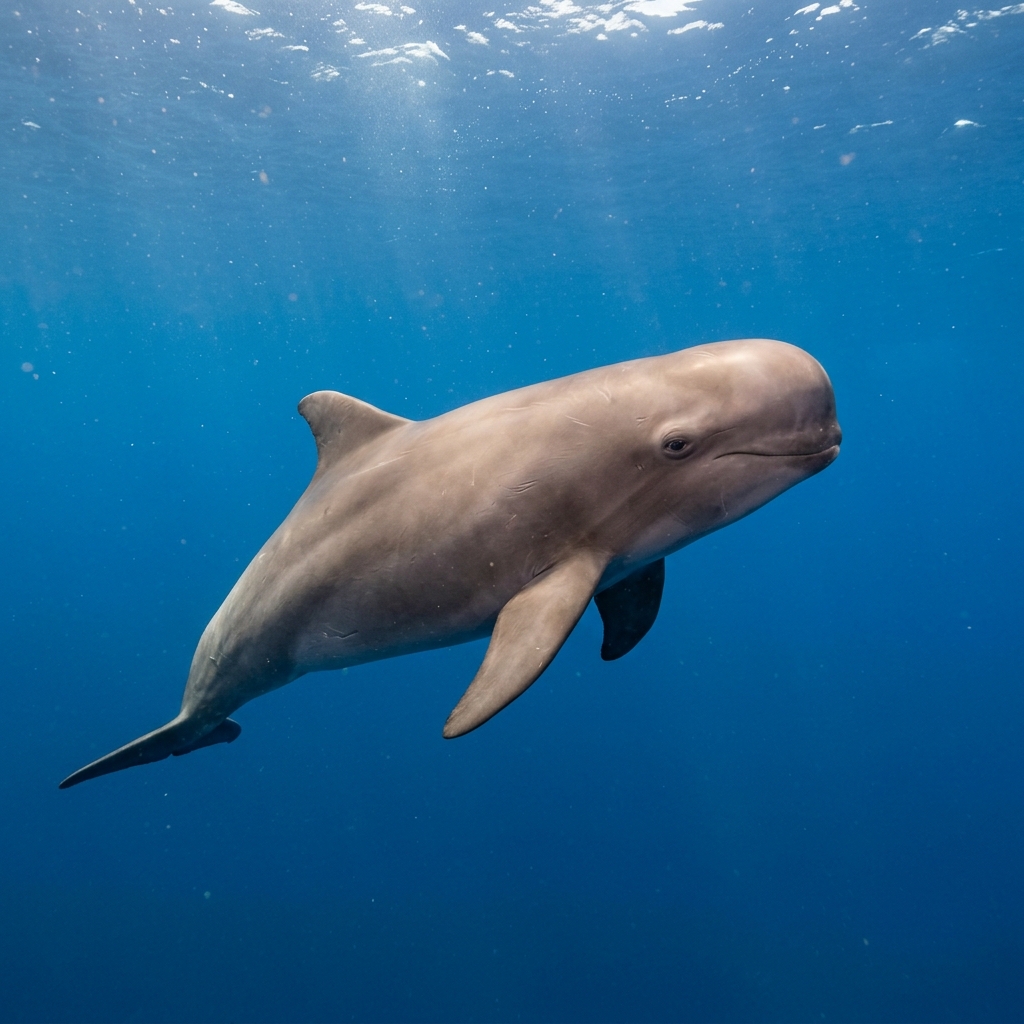
Adults are hard to mistake once you know the key: a blunt, beakless head combined with a body covered in pale white scratches and scars against a grey background, giving older individuals an almost white appearance. At roughly 2.6 metres, they sit between a bottlenose dolphin and a pilot whale in size. The scarring accumulates throughout life from squid beaks and social interactions, so a very pale, heavily marked animal is almost certainly an older adult. Juveniles are smooth grey-brown with minimal scarring and lack the distinctive pale patterning entirely.
Groups range from a handful of individuals to several hundred, and social activity is a big part of what you witness: breaching, lobtailing (slapping the tail on the surface), and spyhopping (raising the head clear of the water to look around) are all commonly observed. They are not reliably bow-riders the way common dolphins are, but curious individuals will sometimes approach vessels and snorkellers. Feeding peaks around dusk and dawn when their main prey, squid, rises toward the surface.
The scarring that makes adults so distinctive is largely caused by the beaks of the squid they eat, which means the most heavily marked animal in the group is often the most experienced hunter in it.
There is not yet enough sighting data to identify a peak season, so encounters should be treated as year-round and opportunistic. Their broad temperature tolerance of roughly 10 to 23 °C means they are present across a wide band of latitudes at different times of year.
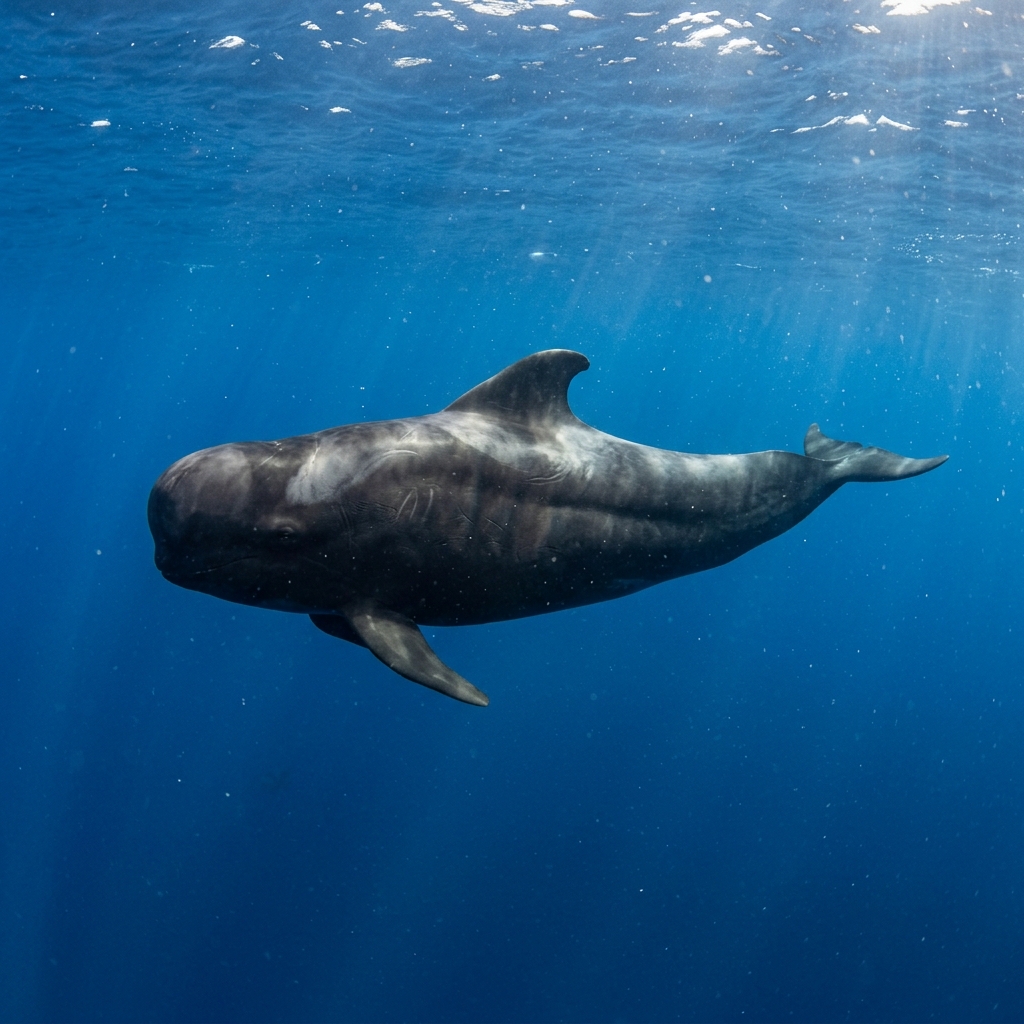
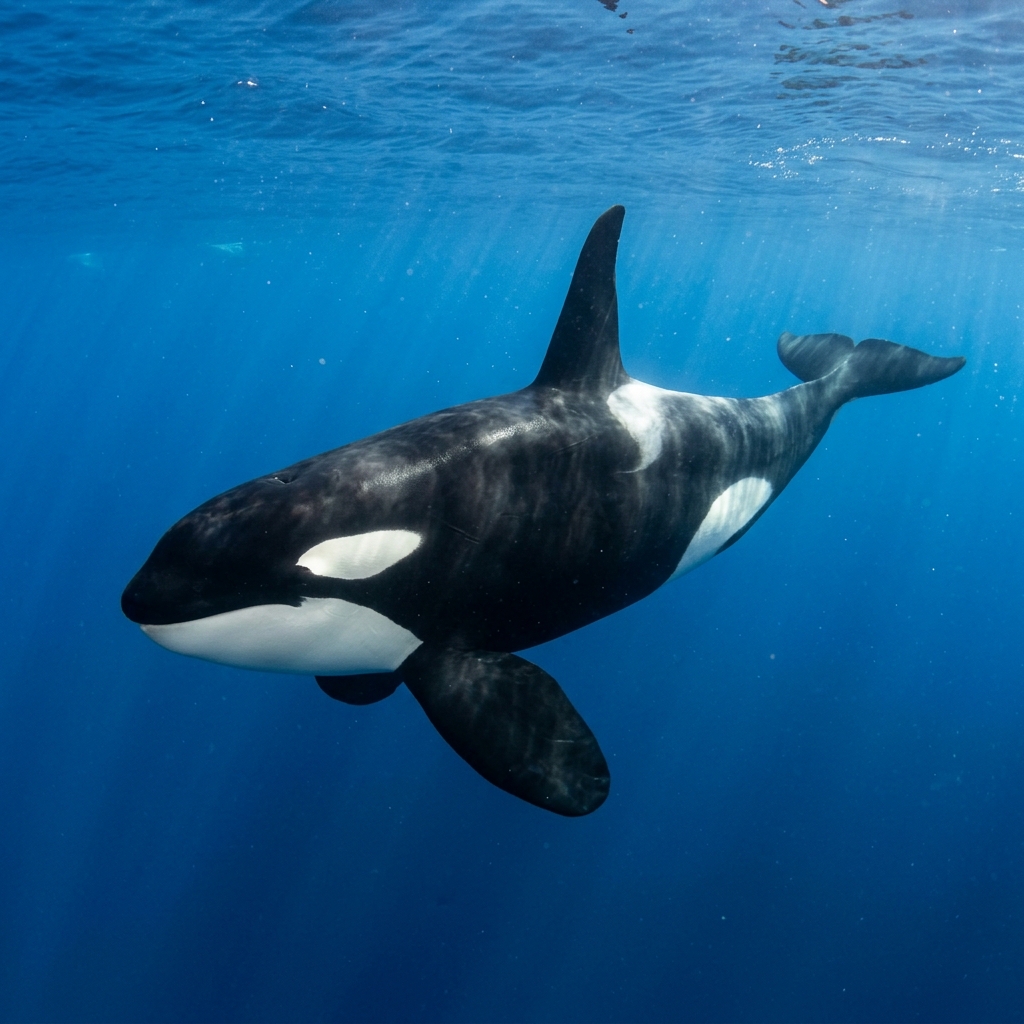
Reef neighbours a diver could mistake it for. Use the identification notes above to tell them apart.
Fin's data does not yet include logged dive sites for this species, so no specific hotspot regions can be confirmed from sightings. Risso's dolphins have a wide global range in temperate and tropical waters between roughly 10 and 23 °C, and encounters are reported from open ocean and deep coastal zones worldwide. If you have dived with them, logging your sighting helps build the picture for the whole Fin community.
Mapping where Risso's Dolphin is logged…
Look for the blunt, beakless head and the dense white scarring that covers the body. Adults are often near-white overall, with a darker dorsal fin standing out against the pale torso. No other dolphin of similar size carries that combination of round forehead and heavy scratch patterning.
Adults typically reach around 2.6 metres in length. That puts them noticeably larger than most common or spinner dolphins, and closer in bulk to a small pilot whale.
There is not enough logged sighting data to point to a reliable peak season. Their wide temperature tolerance means they turn up across many latitudes throughout the year, so encounters are largely opportunistic wherever deep water meets productive ocean currents.
Most of the white scratches and marks come from squid beaks during feeding, and from tooth rakes exchanged during social interactions within the group. The scars accumulate over a lifetime, so a heavily marked, near-white animal is typically a mature adult. It is one of the most reliable age indicators visible on a free-swimming cetacean.
No. Risso's dolphins are not considered dangerous to divers or snorkellers. They may be cautious or indifferent around people in the water, though curious individuals occasionally approach. Standard cetacean etiquette applies: move slowly, avoid chasing, and let the animals set the terms of any encounter.
Site and sighting data is aggregated from diver logs, iNaturalist and GBIF. For taxonomy and conservation status:
Common Dolphin
20 sites