Globicephala macrorhynchus
Built for deep water and rarely seen on dive sites, short-finned pilot whales reward patient pelagic encounters in warm seas between 16 and 27 °C.
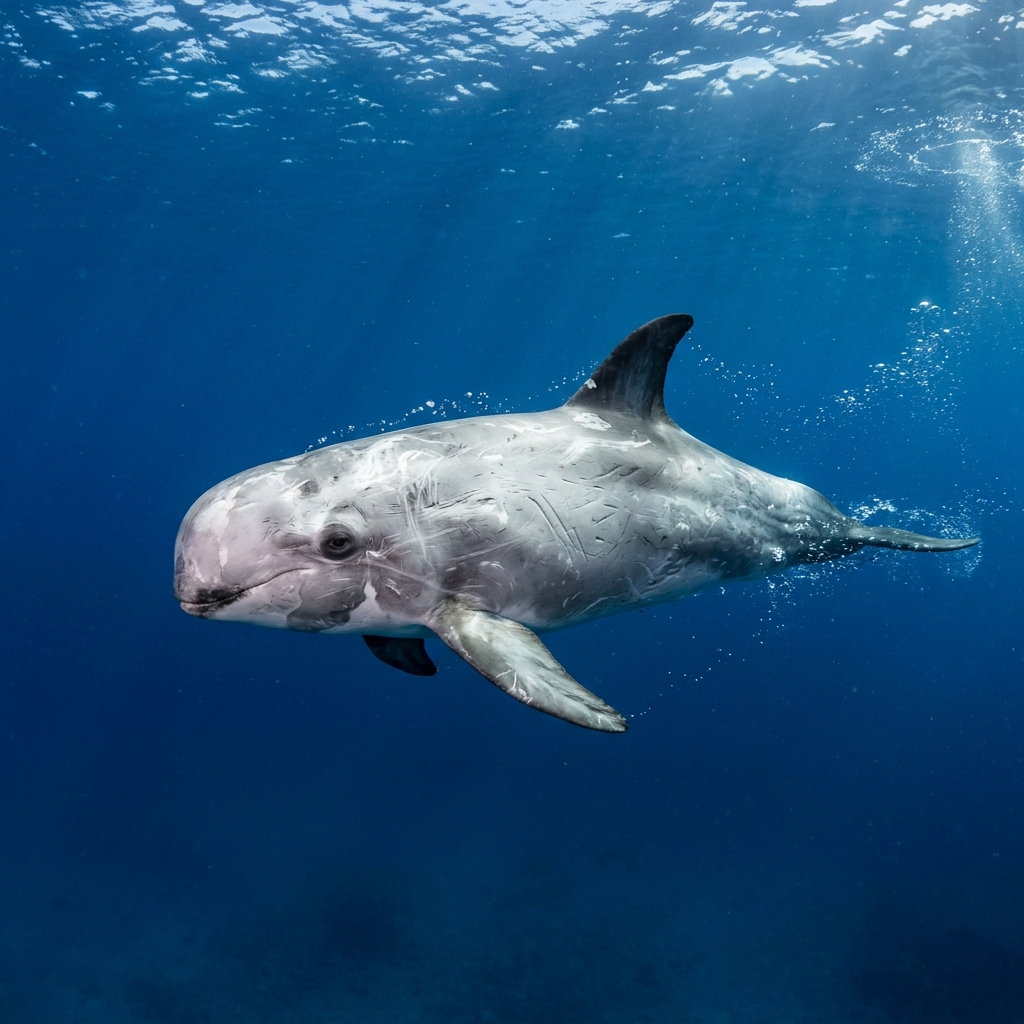
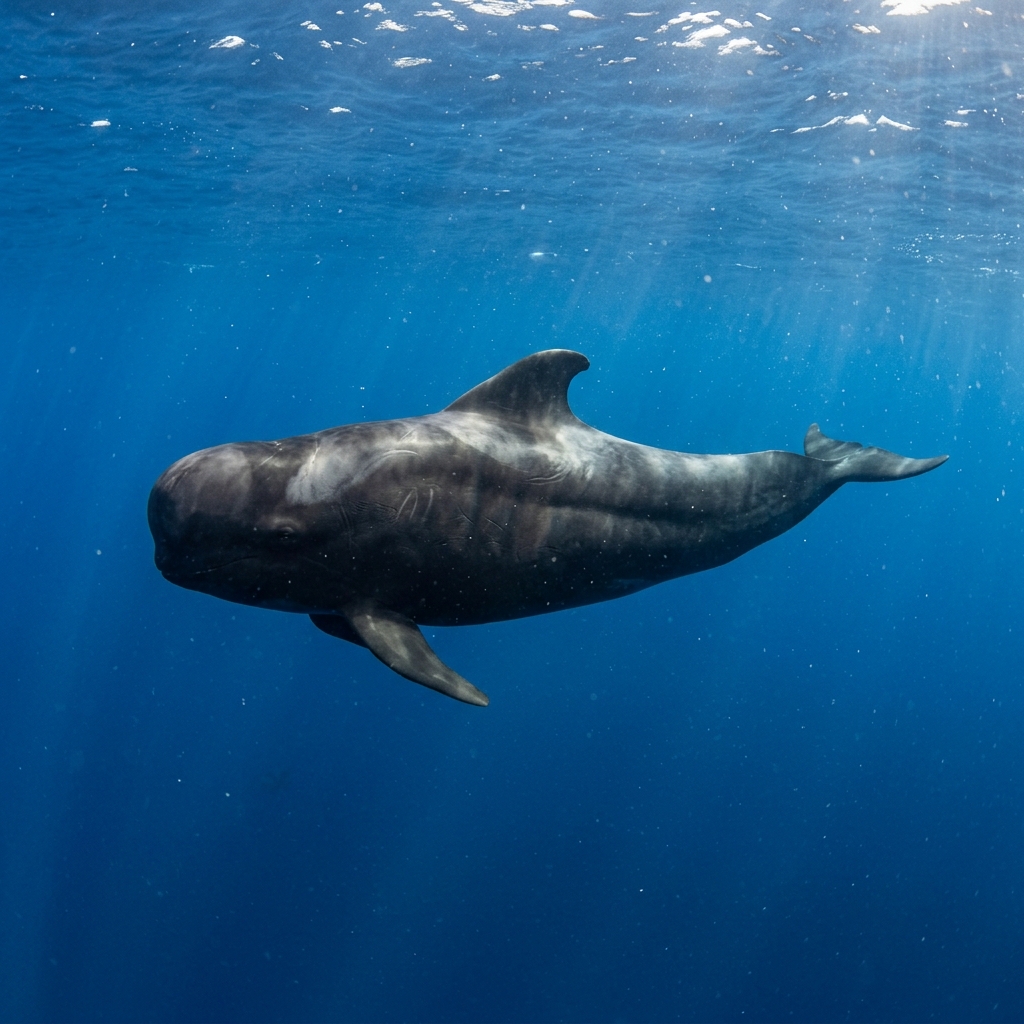
At roughly 4 to 5 metres long, short-finned pilot whales are large, uniformly dark grey to black with a distinctly bulbous, rounded forehead (the melon) that makes the head look almost square-on from the side. The dorsal fin is set well forward on the body, broad-based and swept back, quite unlike the tall falcate fin of an orca. A pale grey saddle patch behind the dorsal fin and a lighter anchor-shaped patch on the chest and belly are the key field marks underwater. Males grow noticeably larger than females and develop a more exaggerated, dome-like melon, giving their heads a heavier profile.
Short-finned pilot whales are highly social and almost always seen in groups, often moving in tight, coordinated formations at the surface between deep foraging dives. Around boats they tend to be curious without being bold, typically holding their distance rather than bow-riding, and will often continue their own socialising, logging (resting motionless at the surface), or spy-hopping while observers watch. Because they are deep-diving hunters, a surface sighting may be a rest pause between long dives, so staying calm and letting the whales set the pace gives the best result.
Short-finned pilot whales are among the deepest-diving of all dolphins, regularly descending past 1,000 metres to hunt squid in the mid-water column, a feat made possible by a physiology tuned to resist the crushing pressure of the deep ocean.
Seasonality data is insufficient to identify a peak period, so encounters should be treated as year-round in suitable habitat. Their observed temperature range of roughly 16 to 27 °C points to subtropical and tropical seas as the most productive hunting ground throughout the year.
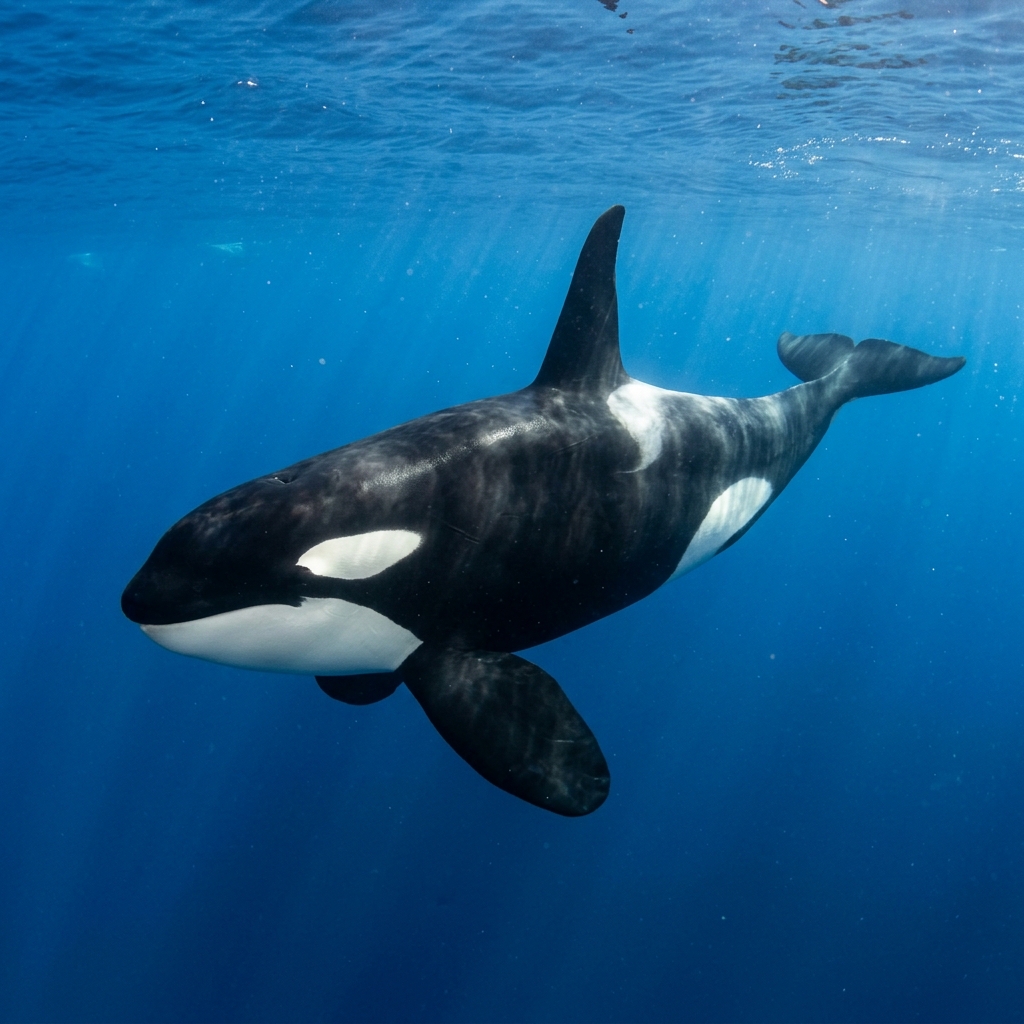
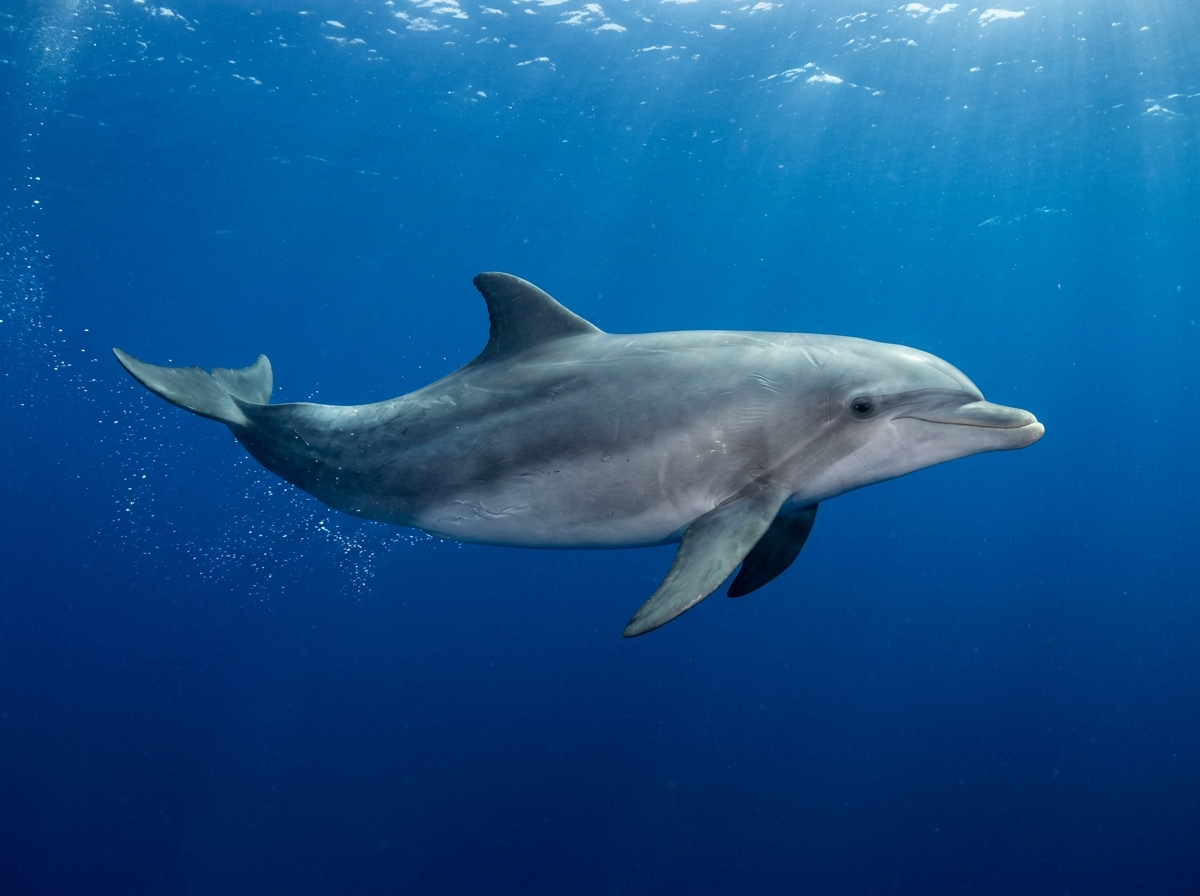
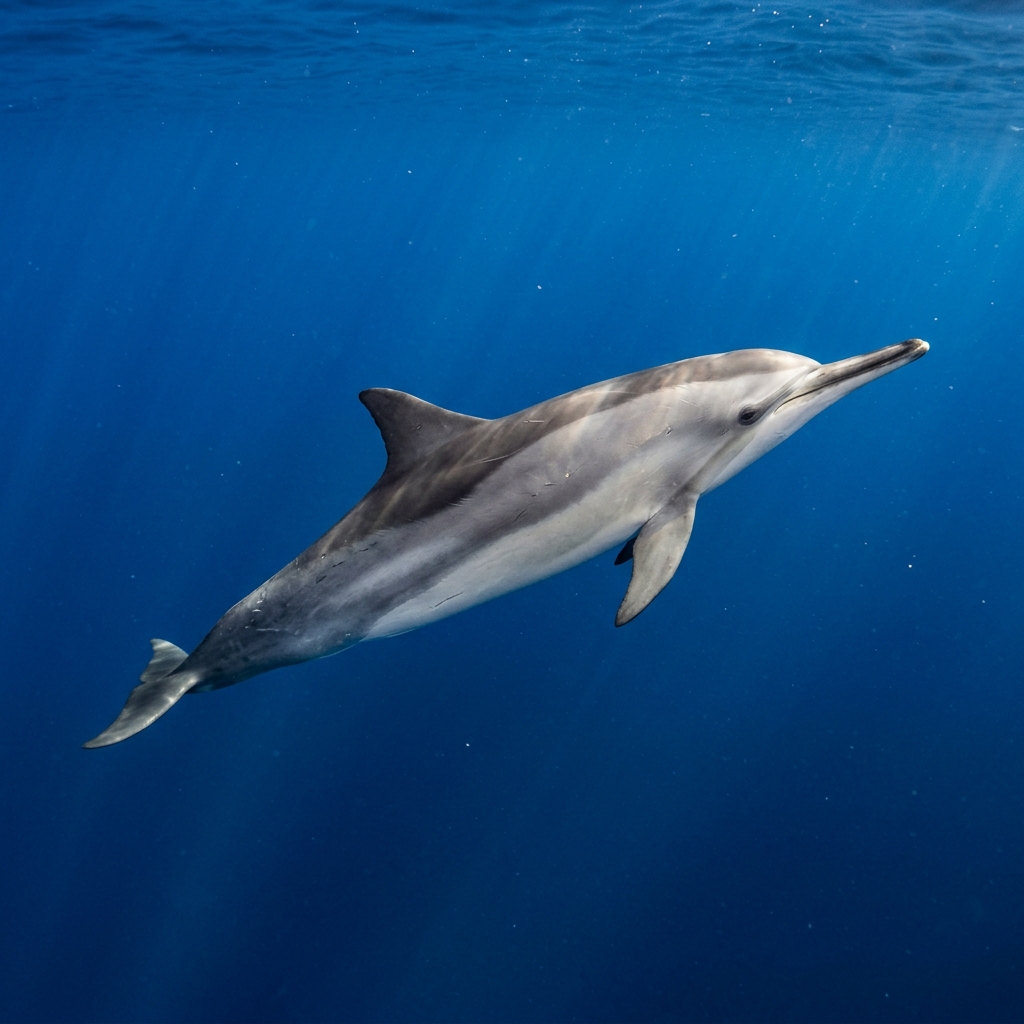
Reef neighbours a diver could mistake it for. Use the identification notes above to tell them apart.
No confirmed dive-site records exist in Fin's database yet for this species, reflecting how rarely it appears on typical reef or coastal dives. Being an oceanic, pelagic animal that regularly dives to extraordinary depths, encounters happen on open-water passages and purpose-run pelagic trips rather than at fixed sites. Areas known for warm, deep water close to shore, such as the Canary Islands and parts of the tropical Indo-Pacific, are among the most consistently reported spots by pelagic wildlife operators.
Mapping where Short-finned Pilot Whale is logged…
No match
They are pelagic animals found in warm and temperate seas worldwide, most often encountered on open-water passages rather than at fixed dive sites. Areas where deep water lies close to shore, such as the Canary Islands, are among the more reliable places for dedicated pelagic trips.
No clear seasonal peak has been recorded in diver observation data. They occupy warm seas year-round within a temperature range of roughly 16 to 27 °C, so sightings are possible in suitable habitat at any time of year.
Adults typically reach around 4 to 5 metres in length, with males at the larger end of that range. In the water their bulk and dark colouration make them unmistakable as something considerably bigger than any common dolphin.
Look for the very rounded, bulbous forehead, the broad-based swept-back dorsal fin set well forward on a uniformly dark body, and the pale saddle patch behind the fin. They are much larger and bulkier than any common dolphin and lack the orca's bold white patches.
They are exceptional divers, recorded at depths beyond 1,000 metres and the species' known depth range extends to over 2,400 metres. Those deep dives target squid in the open ocean, and what a diver sees at the surface is usually the whale resting between long foraging descents.
Site and sighting data is aggregated from diver logs, iNaturalist and GBIF. For taxonomy and conservation status: