Stenella longirostris
Spinner dolphins spin and leap near boats in warm tropical waters between 24-29 °C. Here's how to recognise them and where divers most often encounter them.
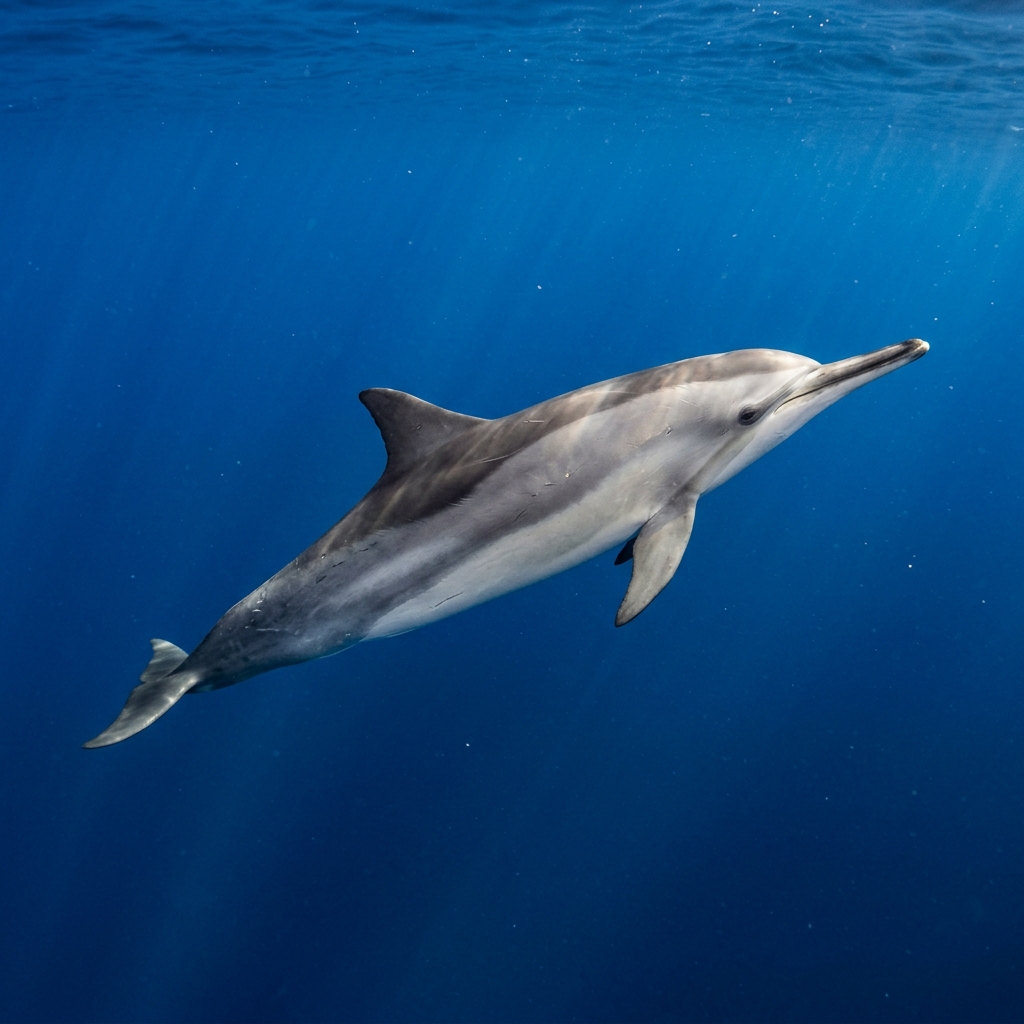
Slender and streamlined at around 1.7 metres, spinner dolphins are noticeably more slender-bodied than most other dolphins their size. Look for the tricolour pattern: dark grey on the back, a paler grey band along the sides, and a white or cream belly. The beak is unusually long and thin, and the dorsal fin in adult males is distinctively upright or even forward-angled, unlike the curved fins of most dolphins. The species gets its name from the acrobatic longitudinal spins it performs when leaping clear of the water, which is the single most reliable way to confirm the ID.
Spinner dolphins are active and social: they frequently ride bow waves, approach snorkellers and divers out of curiosity, and leap repeatedly in tight groups. Mornings and late afternoons tend to see the most energetic surface activity, while midday hours are often spent in slower, more coordinated resting behaviour near sheltered coastlines or offshore reefs. When they engage with you they usually do so on their own terms, so staying calm and still in the water tends to produce much longer, closer encounters than active pursuit does.
The acrobatic spinning leap that gives the species its name is thought to function as communication and parasite removal, not just play. A single individual can rotate up to seven times in one jump.
They inhabit waters between roughly 24 and 29 °C, which means tropical dive destinations host them year-round. No concentrated seasonal peak is apparent in current Fin data, so timing a trip is less about season and more about choosing the right habitat.
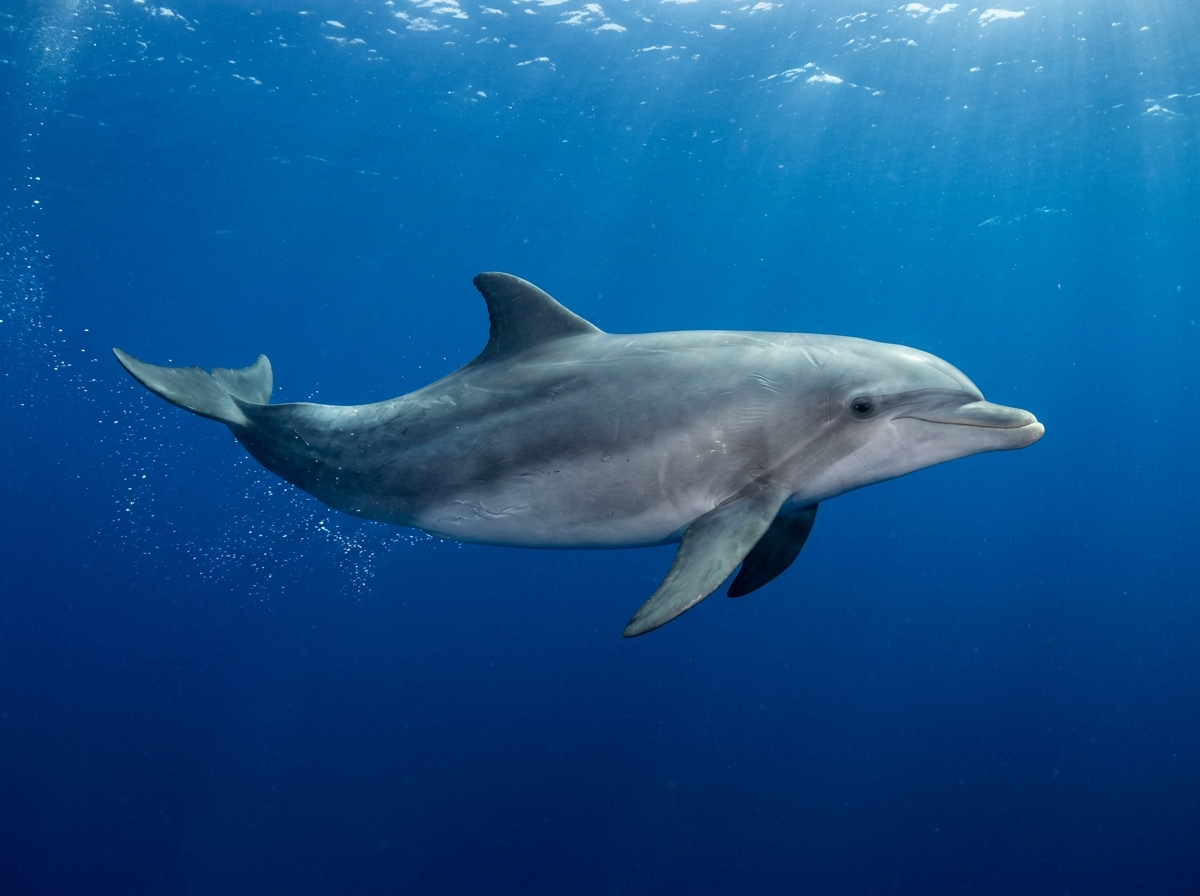
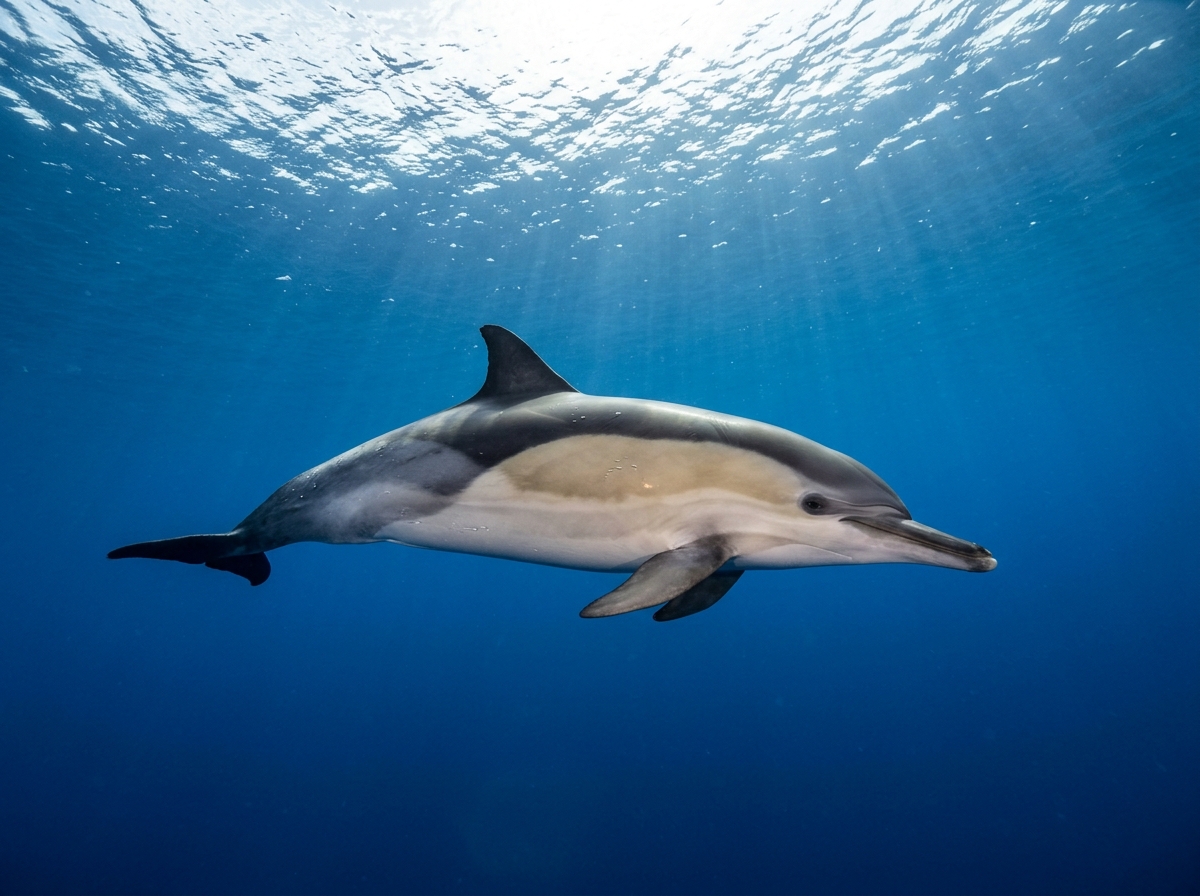
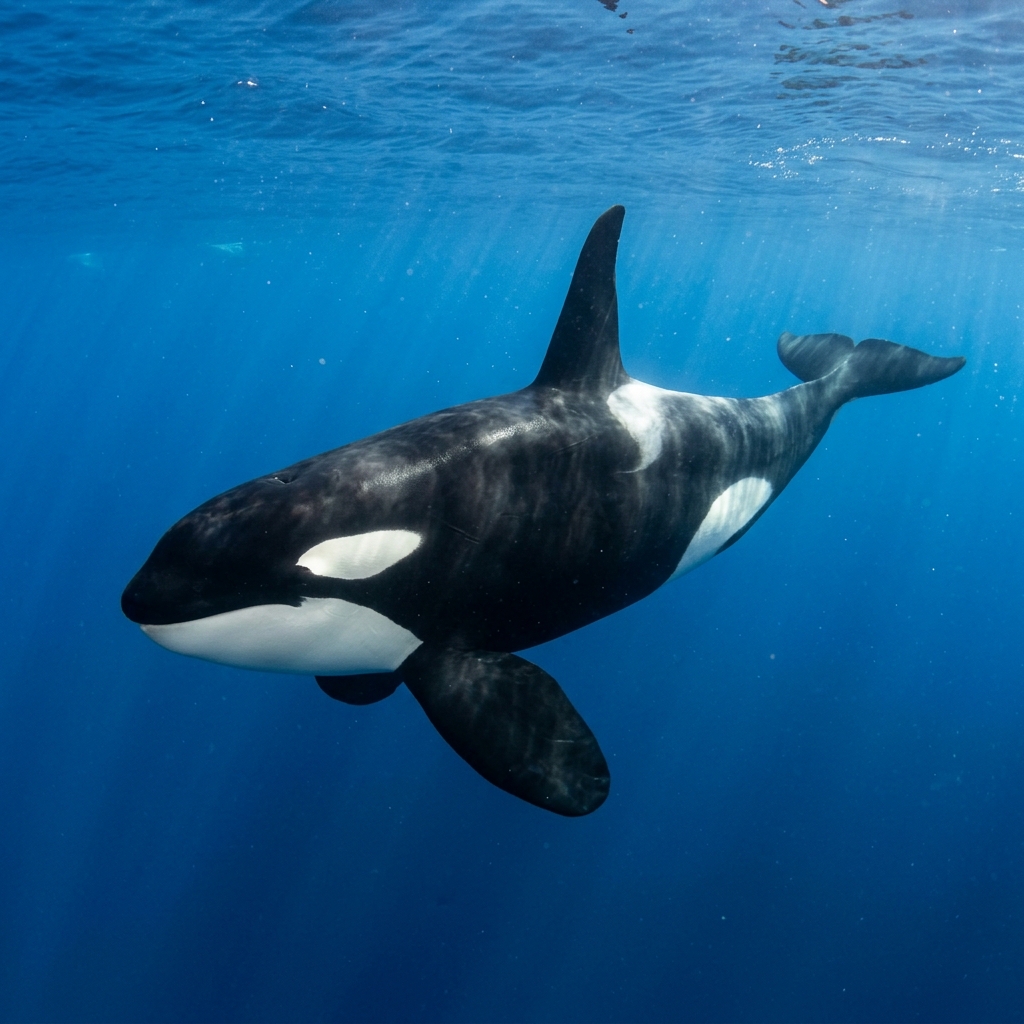
Reef neighbours a diver could mistake it for. Use the identification notes above to tell them apart.
Spinner dolphins are a warm-water, wide-ranging species found across tropical and subtropical oceans. Because no specific dive-site data is yet logged on Fin, we cannot rank top countries or regions for sightings. Encounters are most typically reported in the Indo-Pacific, the Red Sea, Hawaii, and around oceanic island groups where they rest in sheltered bays during the day before moving offshore to feed at night.
Mapping where Spinner Dolphin is logged…
Spinner dolphins range across all tropical and subtropical oceans. Divers most commonly encounter them around oceanic island groups such as Hawaii, the Maldives, and the Red Sea, as well as throughout the Indo-Pacific. They favour sheltered bays for daytime resting and move into open water to feed at night.
Because spinner dolphins live in consistently warm tropical water between roughly 24 and 29 °C, they are present in suitable habitats year-round rather than following a strict season. Your best chances within any given day are during morning and late-afternoon hours when the animals are most active at the surface.
Look for three things: a very long, thin beak, a slender tricolour body with a dark back, grey flanks and pale belly, and the spinning aerial leaps that no other dolphin performs consistently. Adult males also have an unusually upright or forward-angled dorsal fin that stands out compared to the curved fins of bottlenose or common dolphins.
Adults typically reach around 168 cm in length. They are noticeably slimmer than bottlenose dolphins of similar length, which helps with underwater ID. Males are generally slightly larger than females.
The full-body longitudinal rotation during leaps is thought to serve multiple purposes: acoustic communication with other pod members, dislodging parasitic remoras or copepods, and possibly signalling social status. A single dolphin can complete up to seven rotations in one jump. It is the behaviour that makes this species unmistakable from a boat or the surface.
Site and sighting data is aggregated from diver logs, iNaturalist and GBIF. For taxonomy and conservation status: