Delphinus delphis
Spot common dolphins in waters between 10-23 °C worldwide. Learn their vivid hourglass markings and how to recognise them underwater.
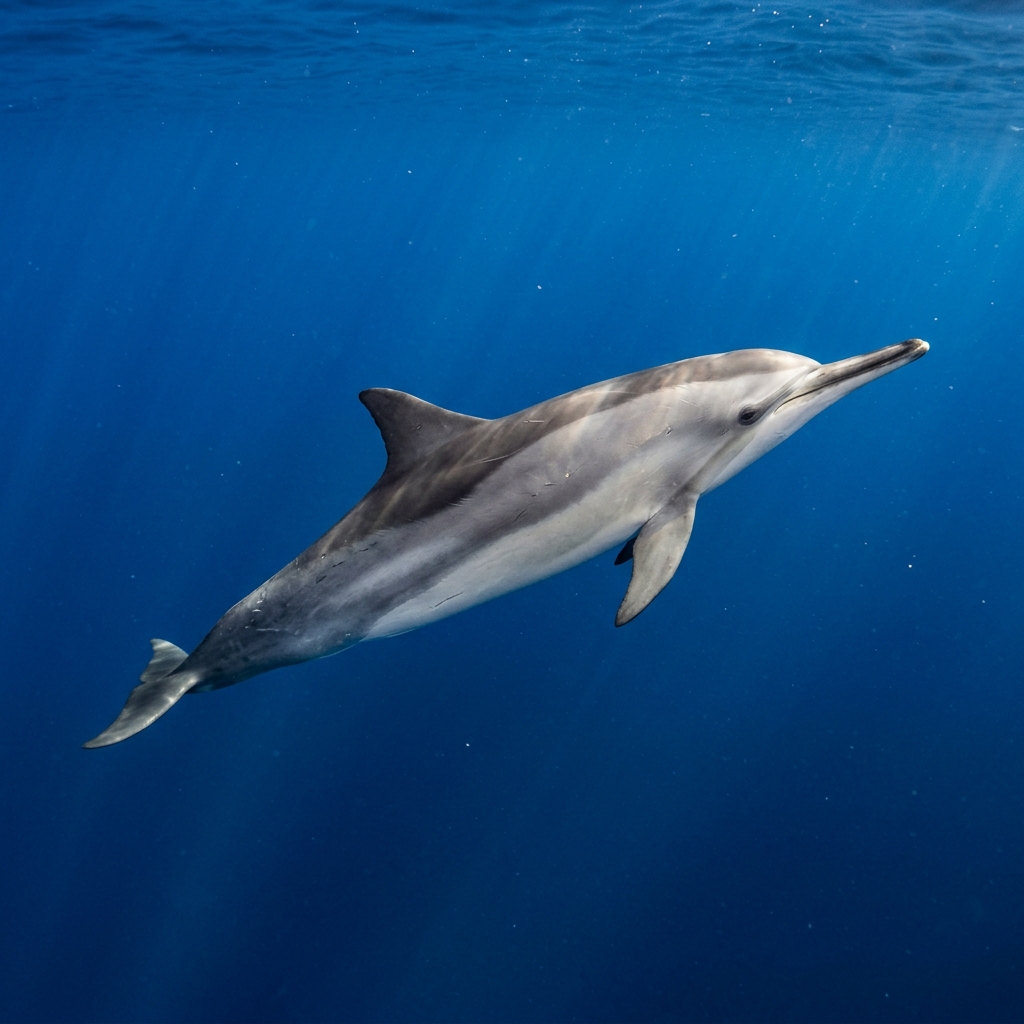
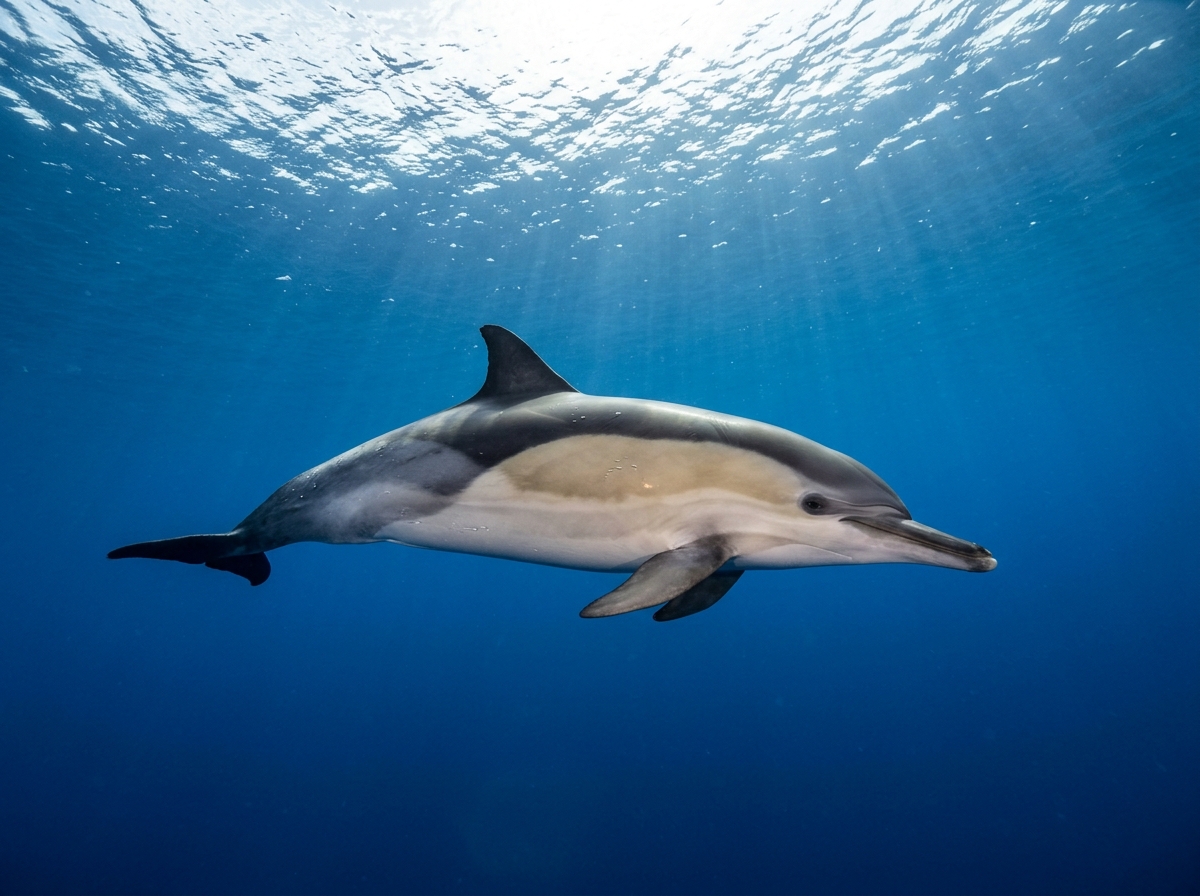
Look for the bold hourglass pattern on the flanks: a yellow-ochre patch forward of the dorsal fin and a pale grey section behind it, divided by a dark cape that dips low beneath the dorsal. The belly is white and the beak is long and well-defined, which helps separate it from the shorter-snouted bottlenose. In the water, adults reach roughly 1.8 metres and move fast, so the vivid colour contrast is your quickest key. A dark stripe from the beak to the eye is visible at close range.
Common dolphins are highly social and regularly approach boats at speed, bow-riding and leaping, encounters with divers in the water tend to be dynamic and brief rather than a slow hover. Large pods are often seen working together to herd fish schools near the surface, which is the most exciting context in which to find them. Sudden loud noises or abrupt movements can cause them to peel away, so entering the water calmly and letting them set the pace gives the best results.
Common dolphins are one of the few dolphin species that regularly forms superpods, aggregations of hundreds or even thousands of individuals, which can be audible underwater before they are visible.
No seasonal pattern has emerged from current sighting data, so encounters should be treated as year-round wherever the species occurs. The observed temperature range of roughly 10 to 23 °C suggests it favours cool-to-warm temperate waters rather than the tropics.
Reef neighbours a diver could mistake it for. Use the identification notes above to tell them apart.
Because the data block currently holds no logged dive-site records, no specific hotspots can be confirmed from diver observations. The species is well-established as a pelagic (open-water) animal, so encounters typically happen on offshore or blue-water trips rather than at fixed reef sites. Check local operators in temperate and warm-temperate coastal regions for pelagic excursions.
Mapping where Common Dolphin is logged…
No match
The hourglass flank pattern is the key: a yellow-ochre panel forward of the dorsal fin transitions to pale grey behind it, all framed by a dark cape. Combined with a long, slender beak and a white belly, this colouration is distinctive among dolphins and visible even at a brief, fast pass.
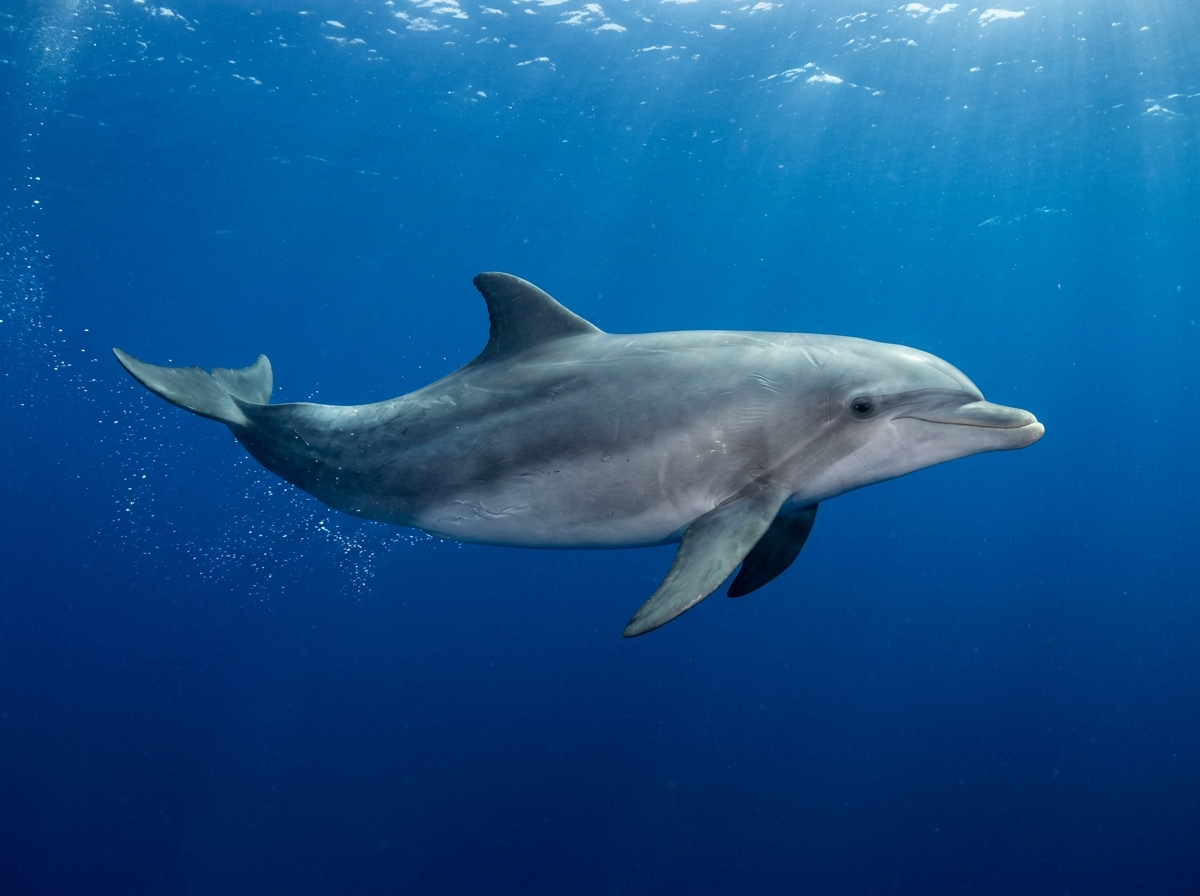
Adults typically reach around 1.8 metres in length. In the water they feel fast and slender compared to the bulkier bottlenose dolphin, which can approach 3 metres.
No. Common dolphins pose no recognised threat to divers. They are curious and may approach closely, but their instinct when uncertain is to swim away rather than engage. Give them space and avoid chasing them.
No clear season has been identified from current records, so sightings can happen year-round wherever suitable cool-to-warm temperate waters exist. The species has been observed across a water temperature range of roughly 10 to 23 °C, pointing to temperate offshore zones as the most reliable hunting ground for an encounter.
Common dolphins feed primarily on small schooling fish and squid. They often hunt cooperatively in large pods, herding fish into tight bait balls near the surface, a behaviour sometimes visible to divers and snorkellers on pelagic trips. This cooperative herding is one of the most dramatic foraging strategies seen in any dolphin species.
Site and sighting data is aggregated from diver logs, iNaturalist and GBIF. For taxonomy and conservation status: