Tursiops spp.
Recognised by their stocky build and bottle-shaped beak, bottlenose dolphins are curious, social, and found in waters from 8.8 to 26.4°C worldwide.
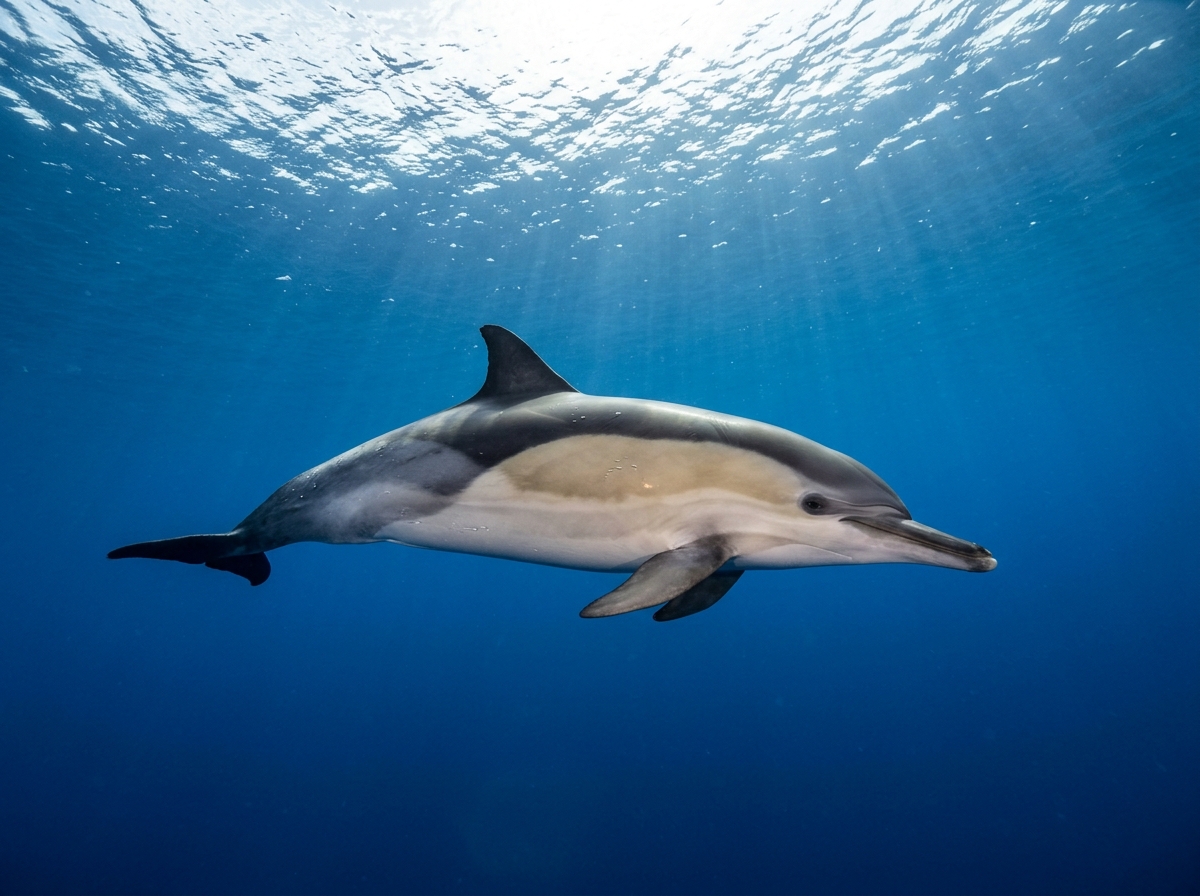
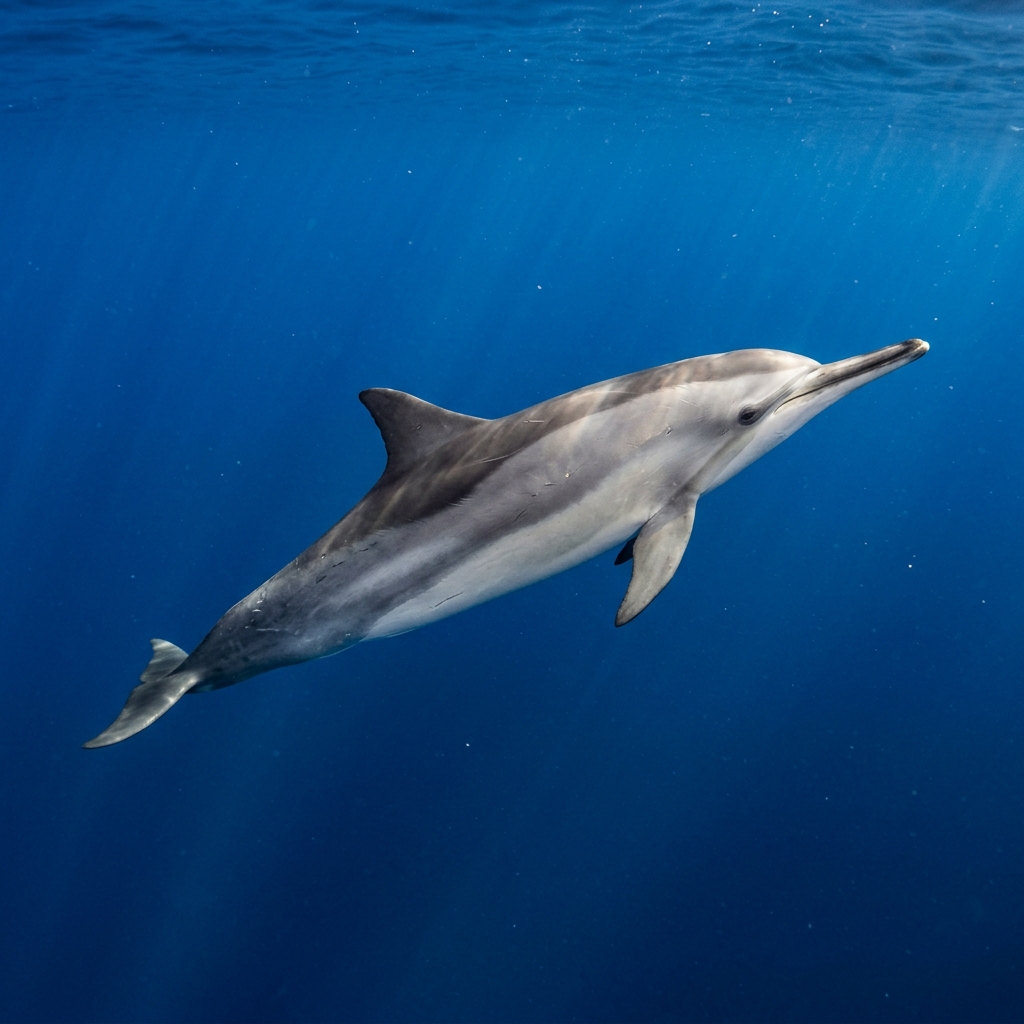
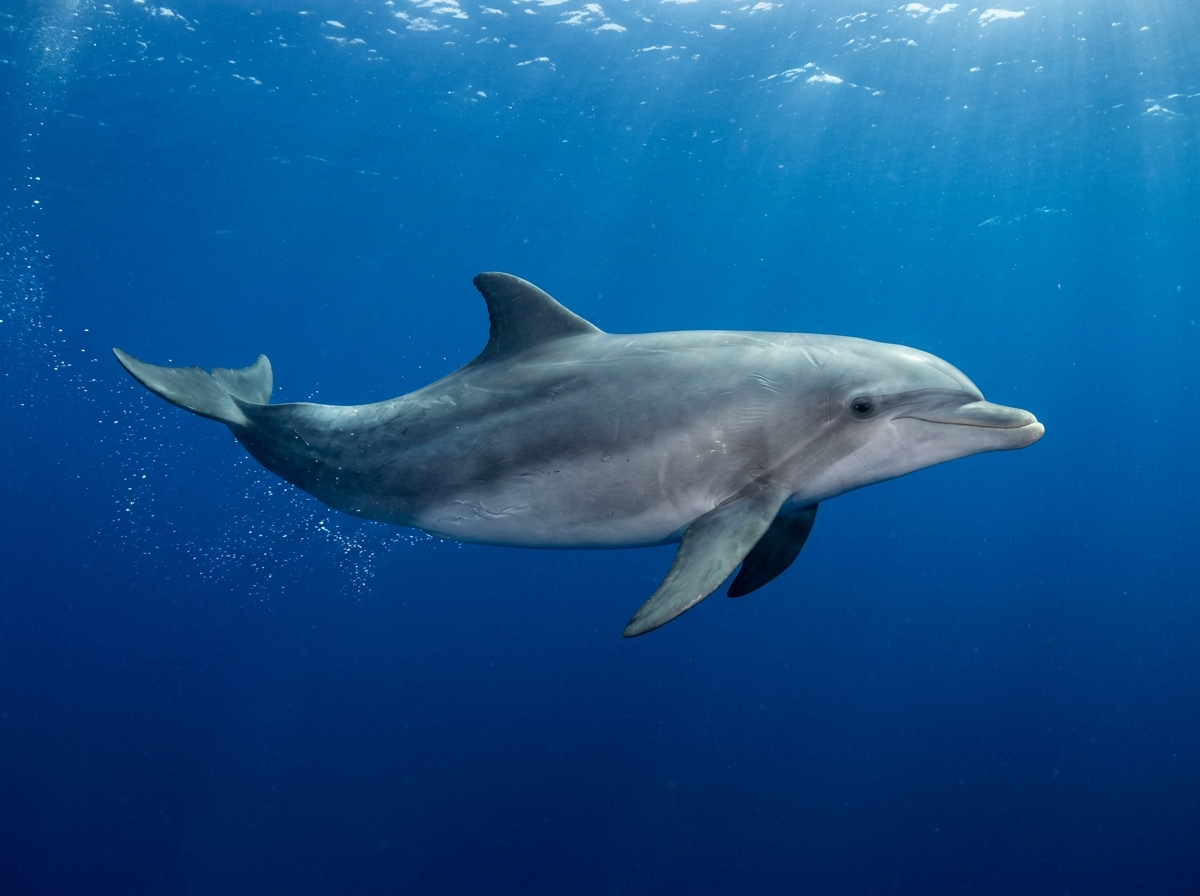
Robust and smoothly grey from above, fading to a pale or pinkish belly below, bottlenose dolphins are noticeably stockier than most other dolphins you will encounter at depth. The defining feature is the short, well-defined beak (rostrum) that gives the genus its name, paired with a prominent, curved dorsal fin set roughly mid-back. Adults average around 2.6 metres, making them considerably larger than spinner or common dolphins. Up close, look for a faint crease where the beak meets the melon (the forehead), a trait shared by close relatives but most pronounced here.
Pods typically move as a coordinated group, and a curious group is hard to miss: they often bow-ride, circle, and close the distance to investigate divers or snorkellers before peeling away. Underwater you may hear a rapid stream of clicks and whistles, which is active echolocation, before you spot them visually. Some individuals are bold and will hover at arm's length; others in the same pod hang back and observe, so encounters vary even within a single dive.
Bottlenose dolphins are one of the few non-human animals documented using tools in the wild: some Indo-Pacific populations carry marine sponges on their beaks while foraging on the seafloor, apparently to protect their snouts from abrasion, a behaviour passed down through generations.
No concentrated seasonal pattern emerges from current sighting data, so bottlenose dolphins should be treated as a year-round possibility across their range. Their broad temperature tolerance, from cool temperate to warm tropical seas, means resident pods can be encountered in any month depending on location.
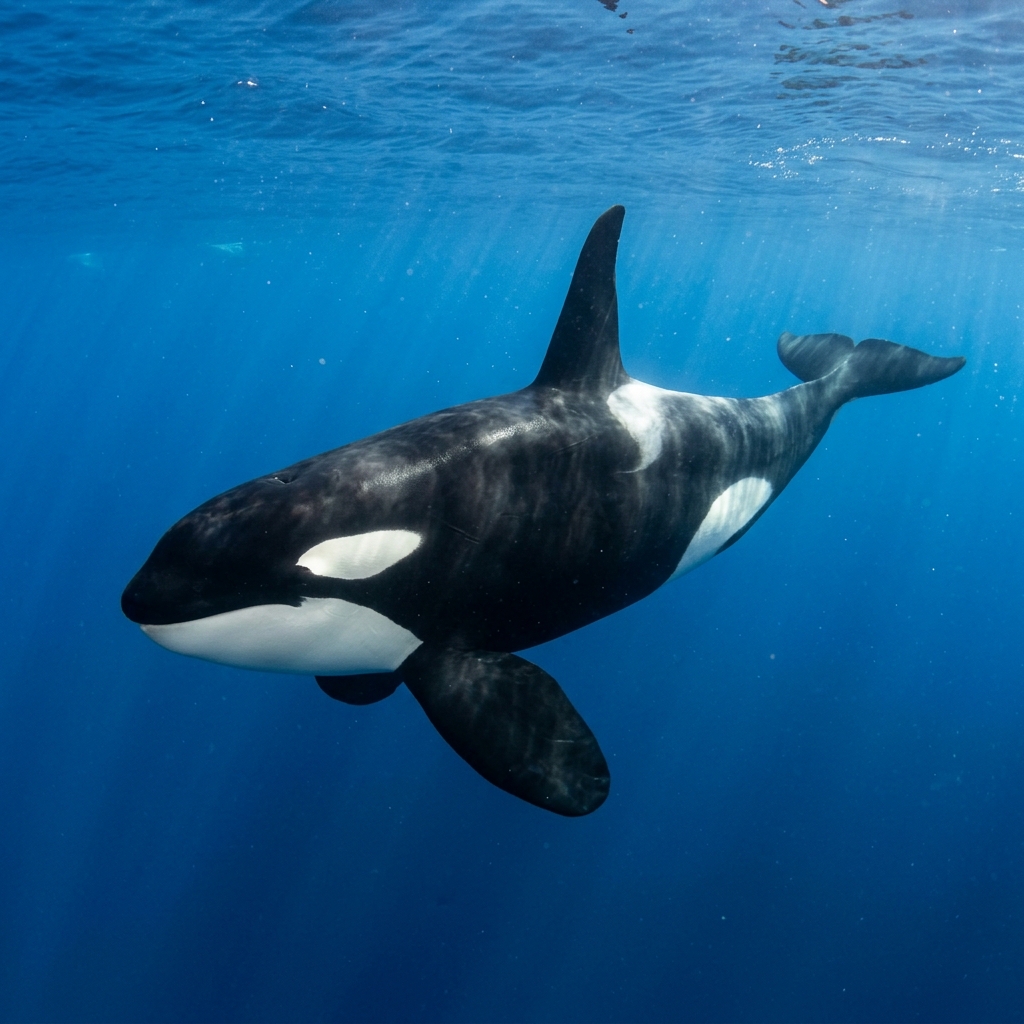
Reef neighbours a diver could mistake it for. Use the identification notes above to tell them apart.
Bottlenose dolphins are one of the most cosmopolitan cetaceans on the planet, ranging across tropical, subtropical, and temperate seas wherever water temperatures sit between roughly 9 and 26°C. Encounters are reported from coastal shallows all the way out to open oceanic water, with pelagic sightings common during blue-water dives and snorkel trips. Because site-level data is still being aggregated on Fin, the best approach is to seek local liveaboards or day boats in regions known for cetacean activity and ask guides about recent sightings.
Mapping where Bottlenose Dolphin is logged…
Bottlenose dolphins are found in coastal and offshore waters worldwide, from temperate Atlantic and Pacific seas to tropical Indo-Pacific reefs. Blue-water snorkel trips, pelagic dives, and boat excursions in areas with resident pod activity give the best chances. Ask local operators about recent sightings, as pods often return to favoured areas.
Current data shows no strong seasonal peak, and their wide temperature tolerance means they are present year-round across much of their range. Resident coastal pods offer the most predictable encounters regardless of month, while migratory offshore groups follow prey availability.
Look for the short, distinct beak clearly separated from the melon by a crease, a uniformly grey back, pale belly, and a tall, curved dorsal fin. They are notably stockier than spinner or common dolphins. Group size and the characteristic clicking vocalisations you can hear underwater are also useful clues.
Adults in the Tursiops genus typically reach around 2.6 metres in length. Offshore ecotypes tend to be larger and more robust than coastal ones, and males are generally slightly larger than females, though the difference is not dramatic enough to be reliable underwater.
No. Bottlenose dolphins pose no meaningful risk to divers and are not considered dangerous. That said, they are large, powerful animals and should always be approached calmly and on their terms. Give pods space to move away if they choose, and never chase or block their path.
Site and sighting data is aggregated from diver logs, iNaturalist and GBIF. For taxonomy and conservation status: