Atagema intecta
Spot this pale, warty nudibranch on New South Wales reefs year-round, an uncommon but reliable find for macro-focused divers.
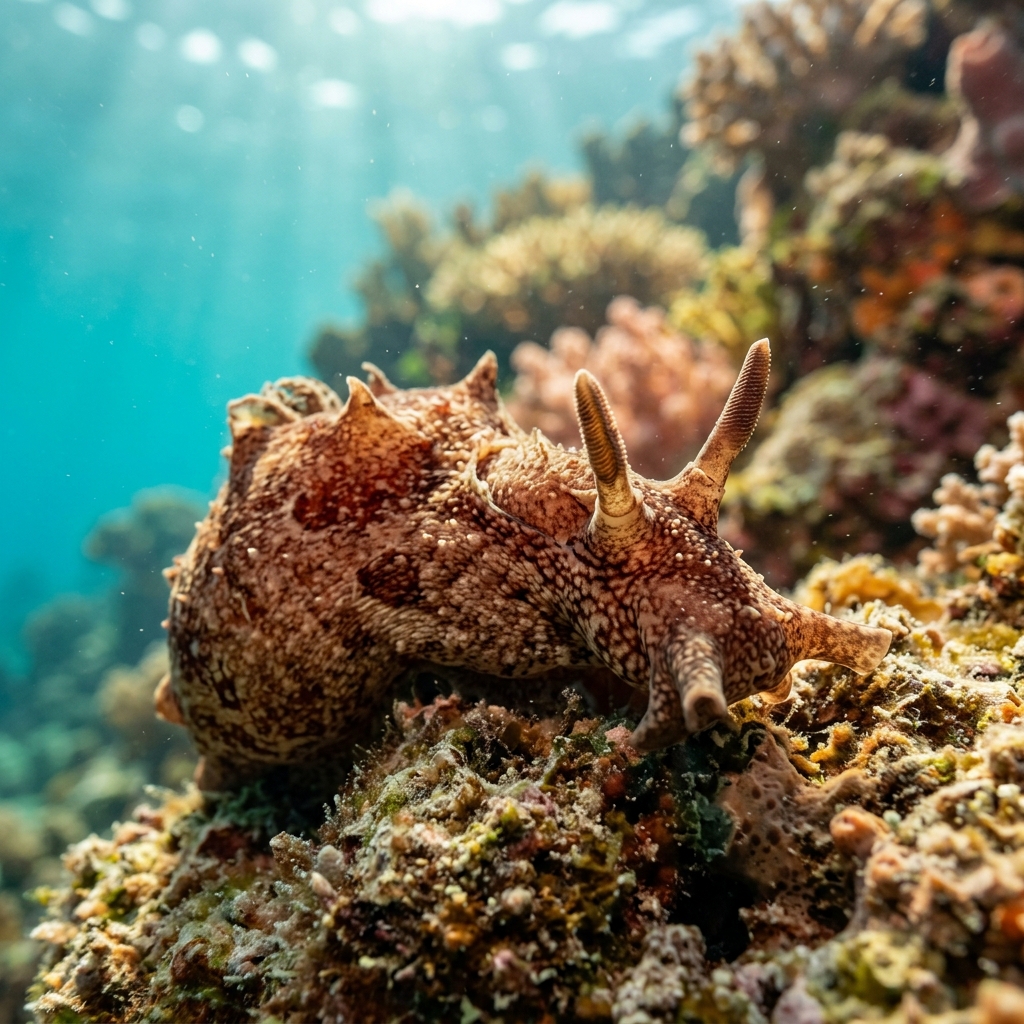
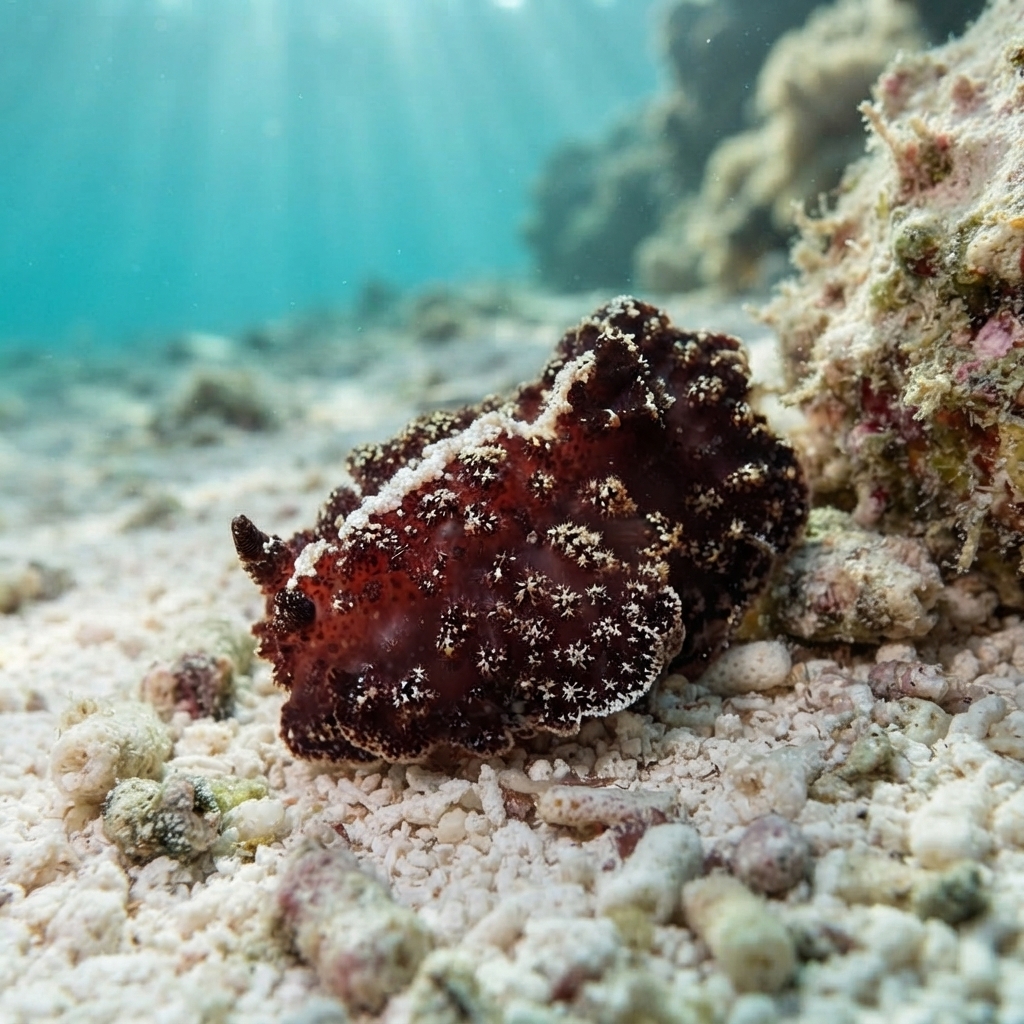
A squat, oval nudibranch around 4 cm long, its back covered in coarse, granular warts (tubercles) that give it a rough, ridged texture rather than a smooth or glossy look. Colour runs pale grey to off-white to buff, usually blending closely with the sand or rubble it sits on, which makes it easy to swim past. Look for the two rhinophores (small sensory stalks) at the front and a rosette of gills near the tail, both retractable and often held low against the body when the animal is undisturbed.
Divers typically find this one moving slowly over rock, rubble or sandy substrate during the day, grazing rather than swimming, since nudibranchs of this family crawl using a muscular foot and have no free-swimming stage as adults. It shows no reaction to divers beyond withdrawing its rhinophores and gills if touched, and its dull, matching colouration means most sightings happen because someone was scanning the substrate closely rather than the animal being conspicuous. Logged as uncommon at every site where it has been recorded, so it rewards a slow, methodical eye rather than a quick reef scan.
Like other dorid nudibranchs, it likely feeds on sponges, using that diet to build up the same chemical defences its prey relies on, which is part of why so many dorids can afford to be slow and unhurried on open substrate.
Sighting data shows no clear seasonal pattern, and its recorded temperature range of 19.5 to 29.7C spans cooler temperate water through warm tropical reefs, so it can turn up on a dive at almost any time of year. Treat it as a year-round possibility rather than something tied to a particular month.
Most records come from New South Wales, Australia, which carries the bulk of known sightings for this species, with further logged finds in Western Australia. Outside Australia it has turned up in Sulawesi, Indonesia, and off Saipan in the Northern Mariana Islands, so it is worth checking rubble and rocky reef patches on temperate and tropical Indo-Pacific dives alike.
Mapping where Ridged Granulated Dorid is logged…
New South Wales, Australia has produced the most sightings by far, with additional records from Western Australia, Sulawesi in Indonesia, and Saipan in the Northern Mariana Islands. It is an uncommon find wherever it is logged, so treat any sighting as a bonus rather than a guarantee.
There is no detected season for this species, and it has been recorded across a wide temperature range from 19.5 to 29.7C. That spread means it can realistically be seen on a dive in any month.
Check for a small, oval nudibranch around 4 cm long with a rough, warty back and pale grey to buff colouring that blends into sand or rubble. Its texture is coarser and more granular than smoother, brightly patterned nudibranchs, and it lacks bold contrasting markings.
They reach around 4 cm in length, making them a small, easy-to-overlook find best spotted with a slow, close look at rocky or rubble substrate.
No, they pose no danger to divers. They have no means of stinging or biting and simply withdraw their sensory organs if disturbed.
It most likely feeds on sponges, a common diet among dorid nudibranchs, and probably absorbs some of the sponge's chemical compounds as a form of defence against predators.
Site and sighting data is aggregated from diver logs, iNaturalist and GBIF. For taxonomy and conservation status:
Light-spotted Aegires
3,168 sites