Reticulidia fungia
Spot Reticulidia fungia in the warm waters of the Philippines, Japan, and Malaysia. Rare but logged across Indo-Pacific reefs year-round.
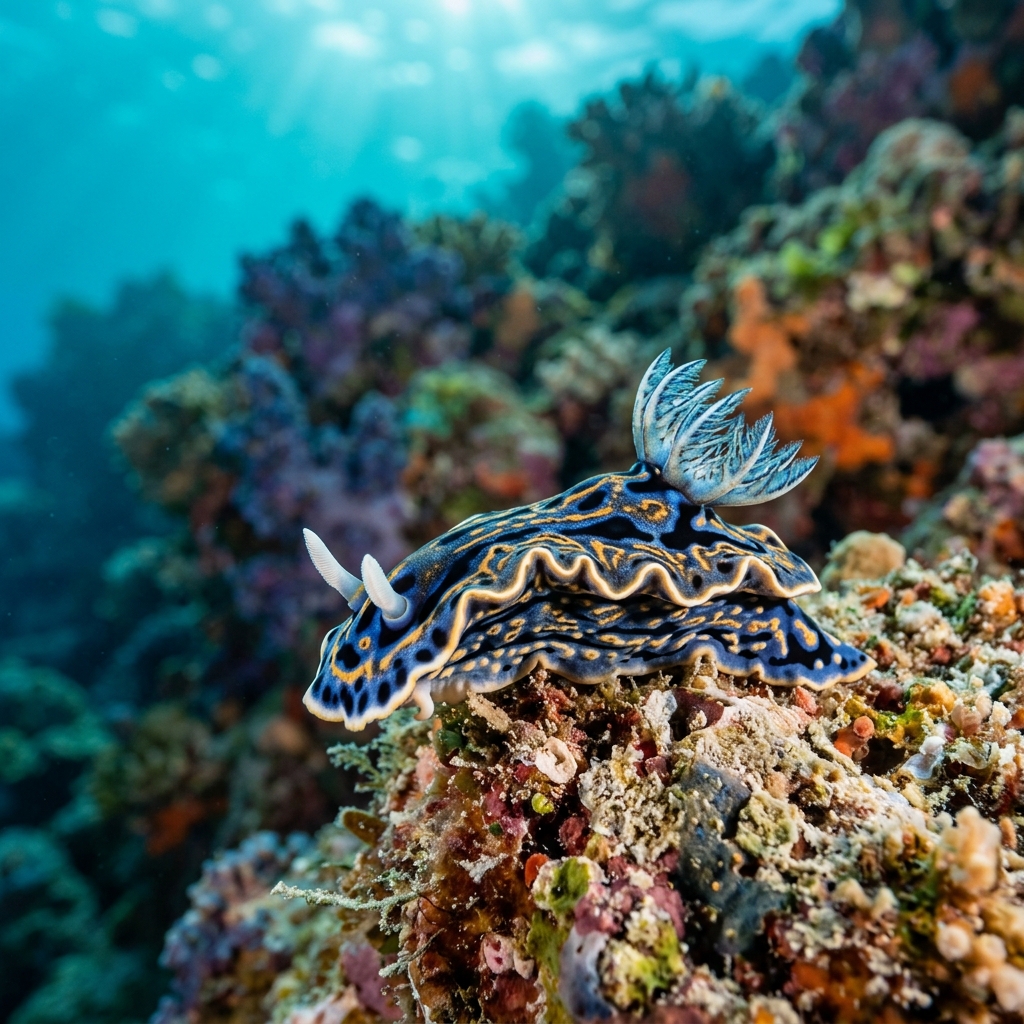
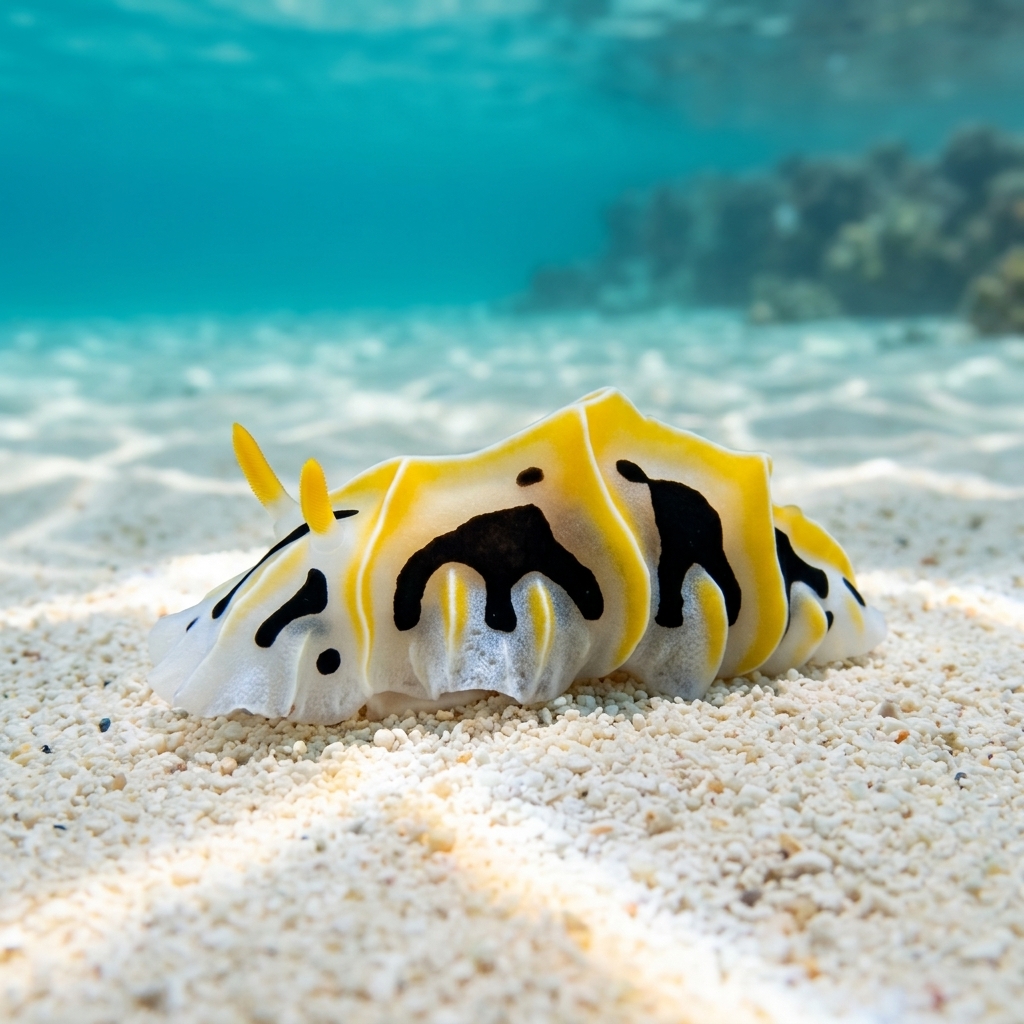
A small dorid nudibranch (dorid meaning a type of sea slug with gills clustered on the back), its pale or whitish body is overlaid with a dark brownish network of reticulated lines that give the animal its common name. The gill plume at the rear is visible when the animal is undisturbed, and the notum (dorsal surface) has a slightly granular texture. Key on the distinctive net-like pattern, no other common Indo-Pacific phyllidiid shares quite that combination of pale ground colour and dark mesh markings.
Like most phyllidiids, this nudibranch is typically found crawling slowly over hard coral and sponge encrusted surfaces, where it grazes on its preferred food. It tends to move steadily and does not retreat quickly when approached, making it relatively straightforward to photograph if you spot it first. Daytime searches on rubble and reef slopes at recreational depths are the most productive strategy.
Phyllidiidae nudibranchs, including this species, sequester toxic compounds from the sponges they feed on and release them as a chemical defence when stressed, so they have very few natural predators despite their slow pace and conspicuous markings.
No clear seasonal peak has emerged from the available data, so this species is best treated as a year-round target. It has been observed in water temperatures of roughly 26 to 29 °C, which fits stable tropical and subtropical reef conditions throughout the Indo-Pacific.
Most sightings come from the Philippines, particularly the Visayas Central and Luzon dive sites, and from Japan's Okinawa Islands, which together account for the bulk of logged encounters. Malaysia, especially West Sabah and Labuan, is also a reliable area, with further records from Queensland in Australia and Efate in Vanuatu.
Mapping where Mushroom Coral Reticulida is logged…
The strongest concentration of sightings is in the Philippines, particularly around the Visayas and Luzon dive sites, and in Japan's Okinawa Islands. Malaysia's West Sabah and Labuan region is another good bet, with additional records from Queensland, Australia, and Efate, Vanuatu.
There is no confirmed seasonal peak based on current data. Observations span the Indo-Pacific's warm tropical season year-round, in water temperatures between about 26 and 29 °C. Plan your dive for daytime reef exploration whenever you visit these regions.
Look for a small, pale-bodied dorid nudibranch with a dark net-like pattern across its back, the reticulated markings are the key feature. The granular dorsal surface and visible gill plume at the rear help confirm the ID. No other common phyllidiid in the Indo-Pacific shares quite this pale base with dark mesh overlay.
It is rated rare at the majority of sites where it has been logged, with some sites recording it as uncommon. Do not expect to find it on every dive; searching rubble patches and encrusted hard reef during daylight improves your odds considerably.
No, it poses no risk to divers. Like other phyllidiid nudibranchs it carries chemical defences in its skin, but these only matter to would-be predators. You can observe it closely without concern; just avoid touching the animal.
Site and sighting data is aggregated from diver logs, iNaturalist and GBIF. For taxonomy and conservation status:
Blue Dragon
3,163 sites