Noumeaella rubrofasciata
A tiny orange-red nudibranch found off California, best spotted in cool 14-20C water on the state's reefs.
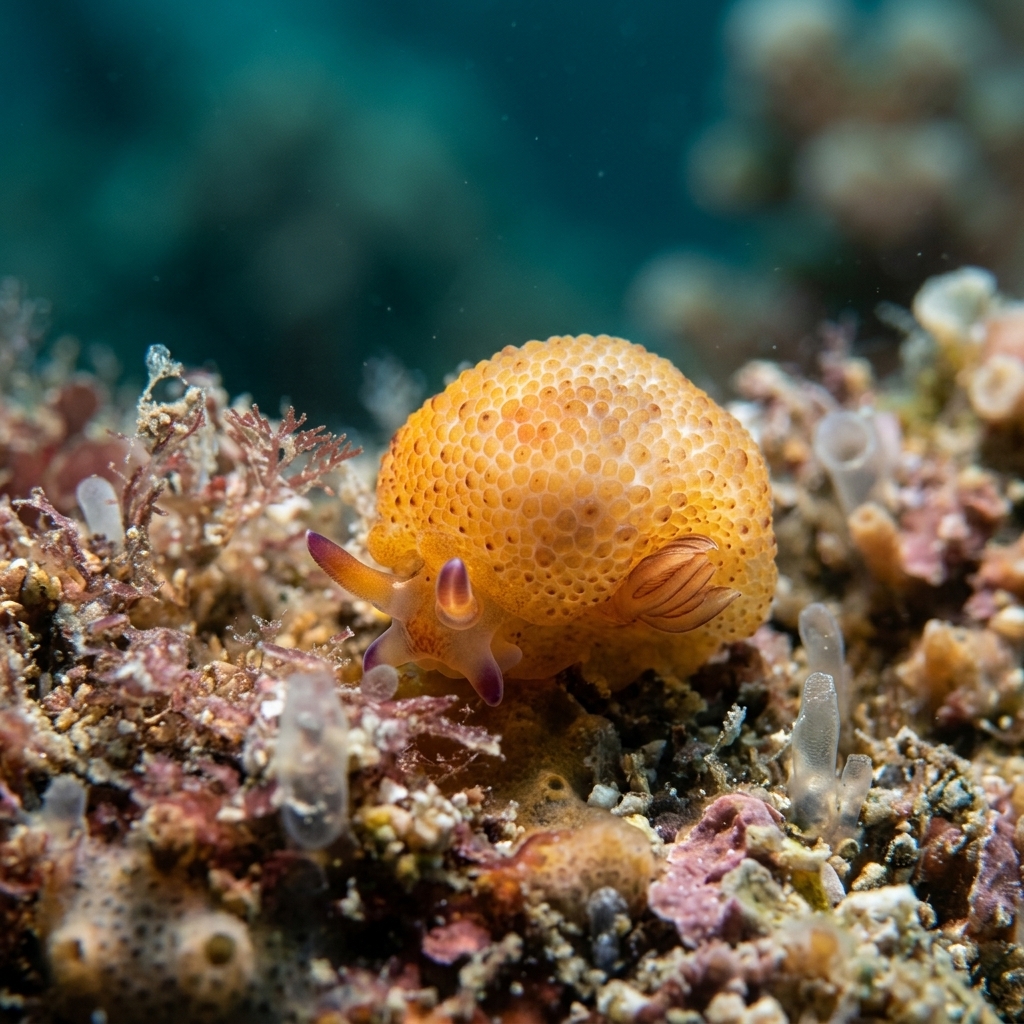
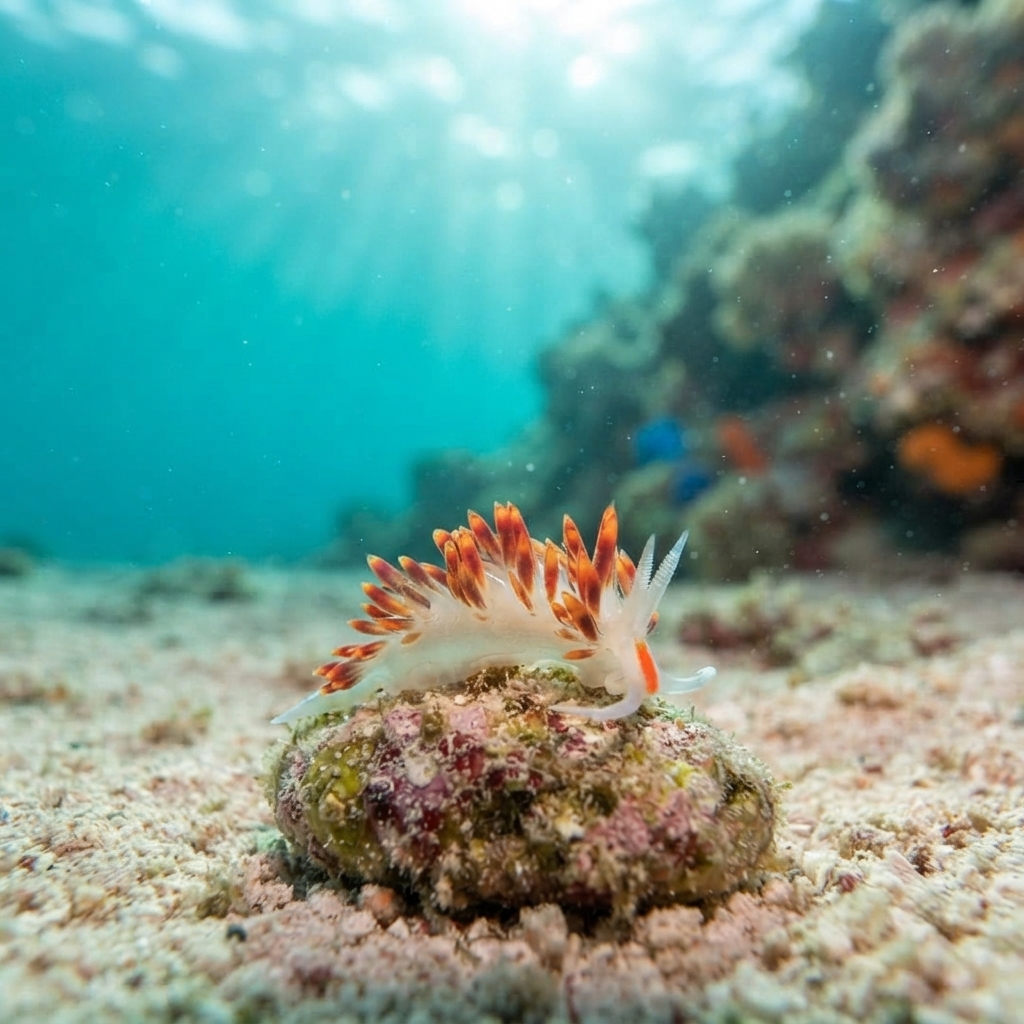
Barely a centimetre long, this nudibranch is easy to miss unless you slow down and scan rock and algae surfaces closely. Look for a slender, translucent body carrying rows of finger-like projections (cerata) tipped in reddish-orange, with the same warm colour concentrated around the head, which is where the common name comes from. There's no dramatic pattern to memorise, just that reddish head against a paler body, so a dive light and a patient eye help more than anything else.
This is a slow-moving grazer, found creeping over rock and algae rather than swimming or reacting much to divers nearby. It's logged as uncommon at the sites where people do find it, so most sightings come from divers deliberately searching small crevices and algae mats rather than spotting it in open water. Best found with a macro-focused, close-to-the-substrate search style, often on the same dives where other small nudibranchs turn up.
Like other aeolid nudibranchs, the cerata on its back likely double as gills and, if it feeds on stinging hydroids the way related species do, may let it borrow those stinging cells for its own defence.
Sightings sit in the 14 to 20C range, consistent with California's cooler coastal water rather than a warm-season pulse, and there isn't enough data yet to point to a specific month. Treat it as a year-round possibility on cool-water California dives rather than something tied to a season.
Every logged sighting so far comes from California, United States, making it the only region divers currently report this species from. Within California it turns up in cool water reef and rock habitat, so it's one to watch for on Pacific coast dives rather than anything tropical.
Mapping where Red-headed Aeolid is logged…
So far it's only been logged in California, United States, on cool-water rock and reef habitat along the Pacific coast. There's no confirmed record from other regions yet.
There isn't a clear season in the data, and it's found in water from 14 to 20C, which matches California's coastal temperatures most of the year. It's best treated as a year-round possibility rather than a seasonal target.
Look for a translucent body about a centimetre long with reddish-orange cerata on its back and the same colour concentrated around the head. It moves slowly over rock and algae, so a close, patient look is needed to spot it.
They stay tiny, reaching about a centimetre in length, so they're easy to swim past without a close, deliberate search.
No, they pose no threat to divers. They're tiny, slow, and have no way to harm anyone larger than the small invertebrates they may feed on.
As an aeolid nudibranch, it likely uses the cerata on its back for both breathing and, if it feeds on stinging hydroids, for repurposing those stinging cells as its own defence.
Site and sighting data is aggregated from diver logs, iNaturalist and GBIF. For taxonomy and conservation status:
Blue Dragon
3,163 sites