Pyrostremma spinosum
Giant Salp spotted across the Maldives, Canary Islands and Azores. Learn what to look for and where divers log this rare colonial invertebrate.
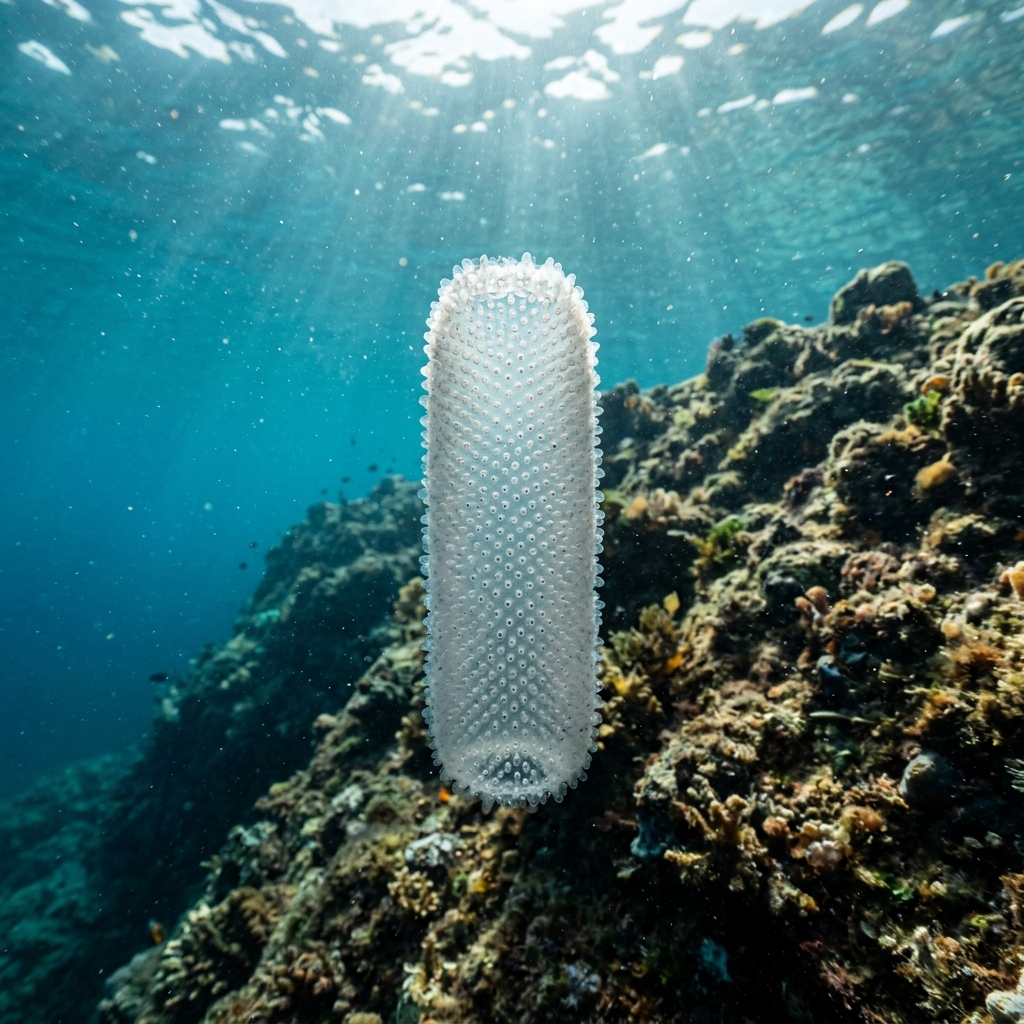
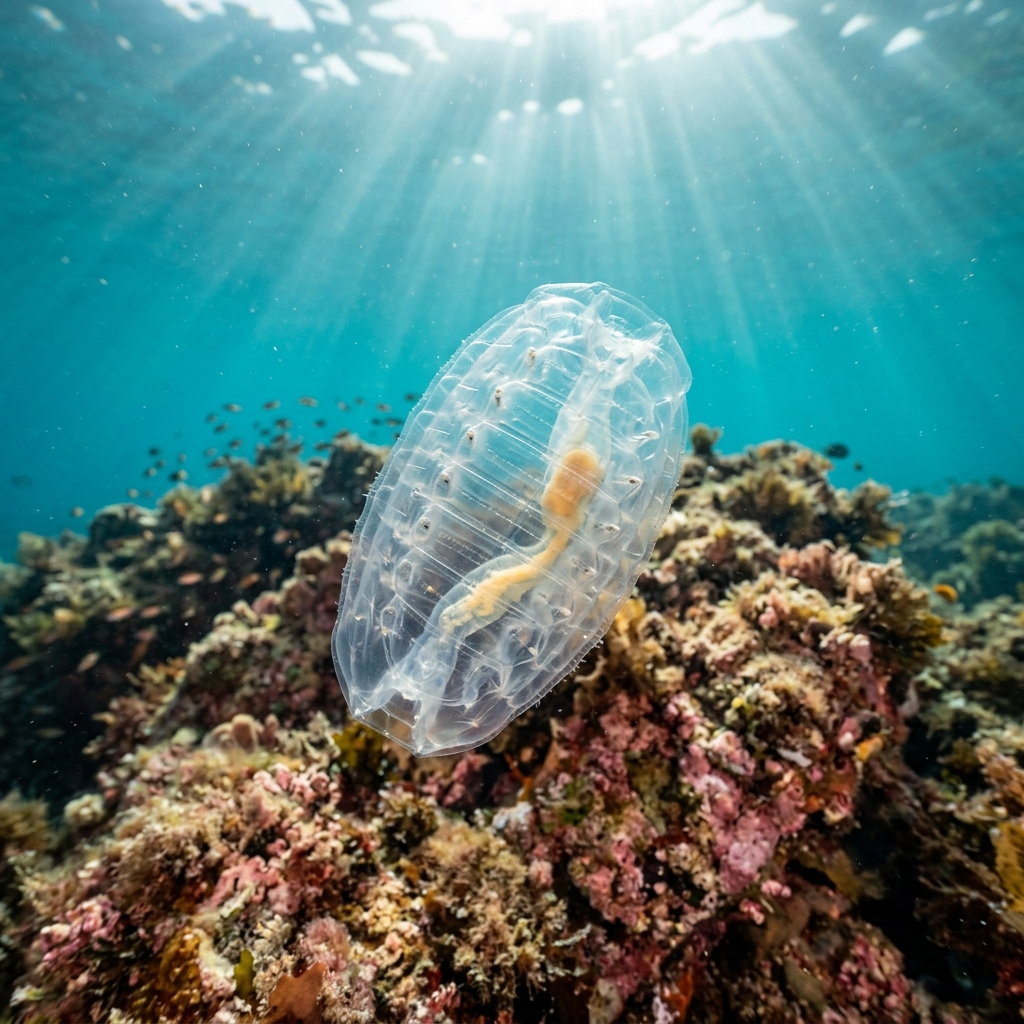
Picture a hollow, translucent tube drifting in open water, sometimes reaching several metres in length and wide enough to dwarf a diver. The outer surface is gelatinous and faintly iridescent, while the interior shows a repeating pattern of tiny individual zooids (cloned filter-feeding animals) arranged in a tight spiral around the cylindrical wall. Colour is nearly colourless to pale pink or lilac, with the zooid rows often appearing as faint banding. The sheer size alone is the single best field mark underwater.
Giant salps are pelagic drifters, carried by open-ocean currents rather than actively swimming, so encounters tend to happen in mid-water well away from the reef structure. Divers most often spot them while doing blue-water or drift dives, hanging neutrally buoyant in the water column. They show no active response to divers and will simply continue drifting past.
Each cylindrical colony is built from hundreds of genetically identical zooids, all connected and working together as a single organism. Water is drawn in at one end, filtered for phytoplankton, and expelled at the other, giving the colony both nutrition and a slow jet propulsion.
There is not yet enough monthly data to pin down a distinct season, so sightings should be treated as possible year-round. The observed water temperature range of roughly 16 to 23 °C fits the cooler currents of all four recorded regions, suggesting encounters are tied more to oceanic conditions than to any fixed calendar window.
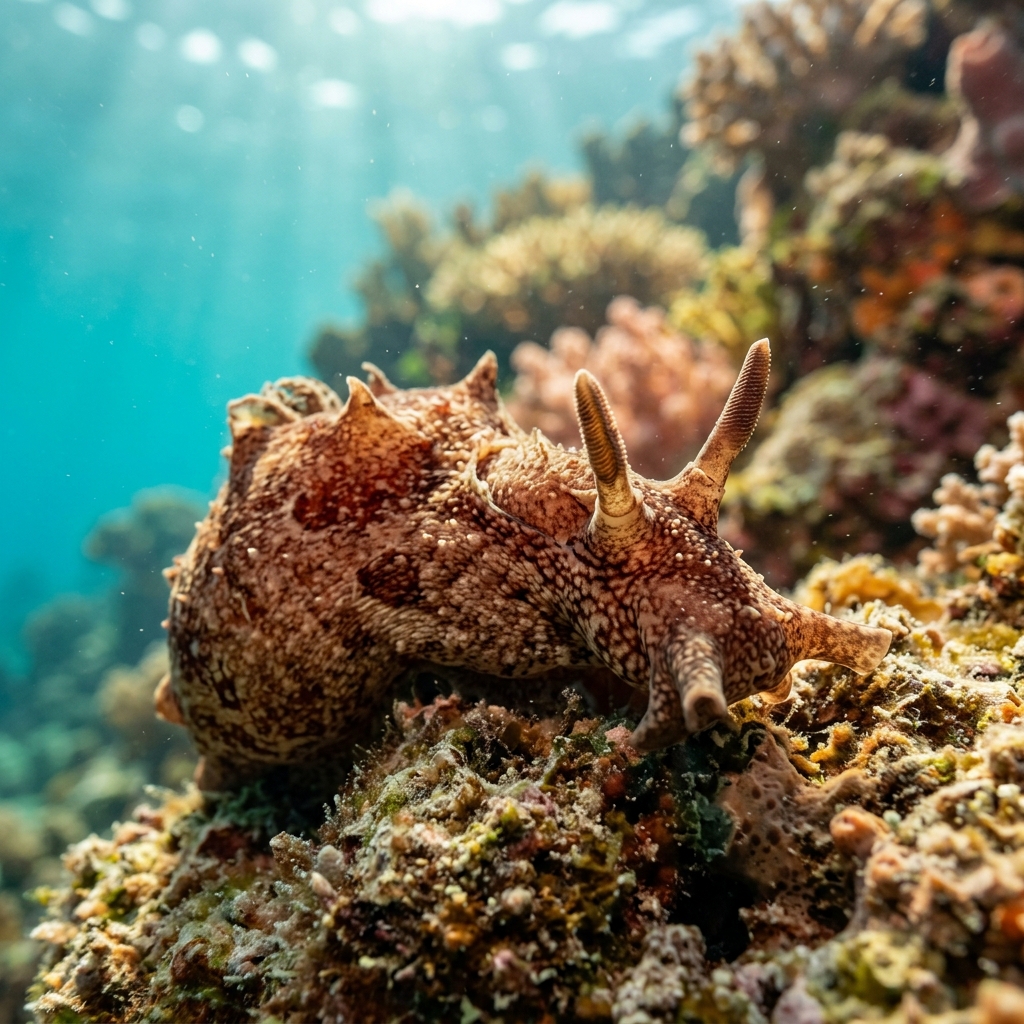
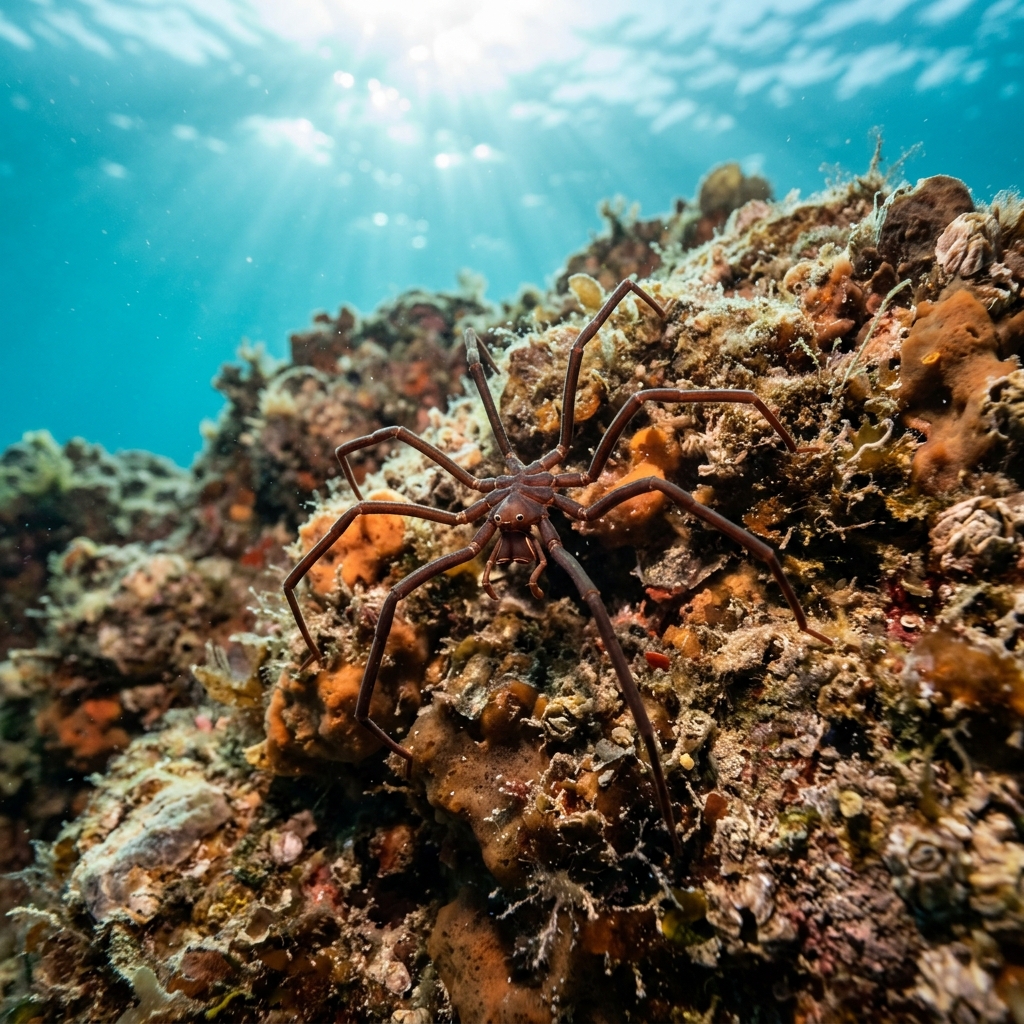
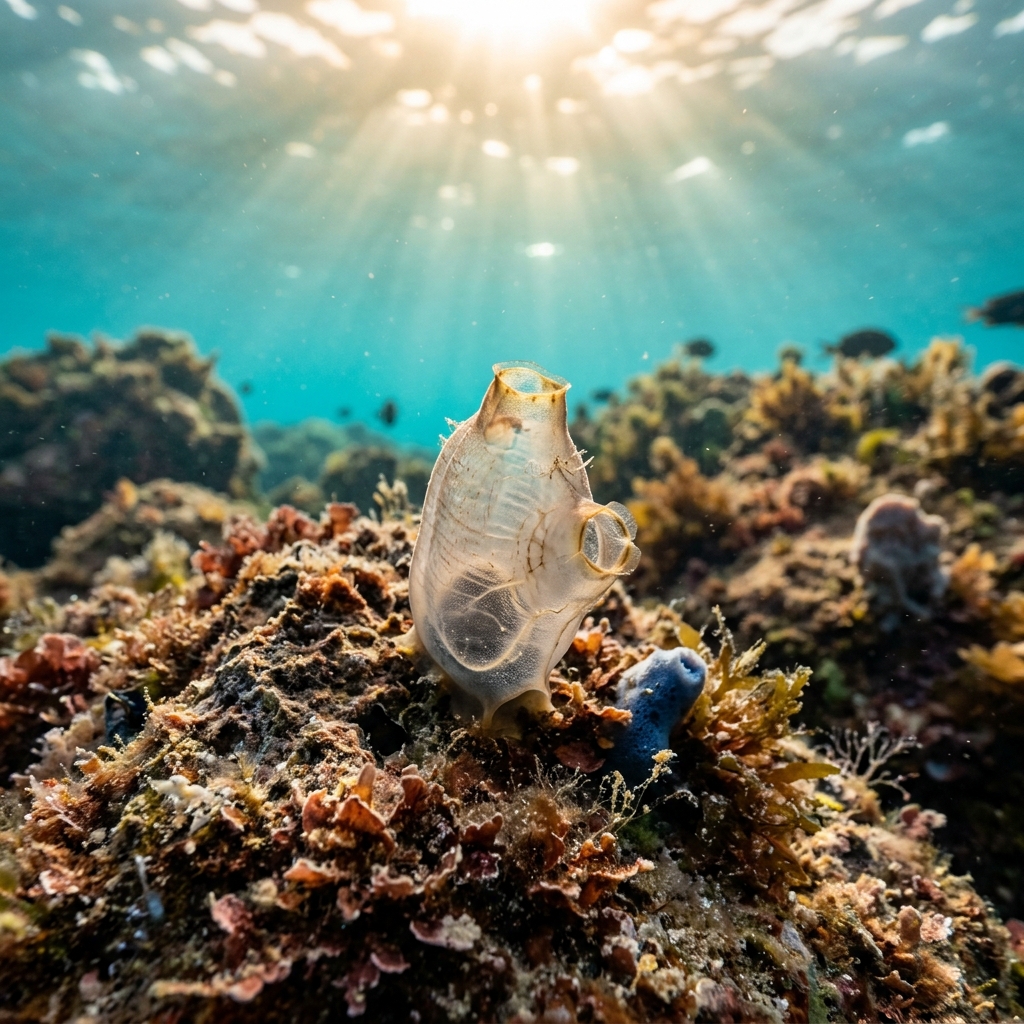
Reef neighbours a diver could mistake it for. Use the identification notes above to tell them apart.
Most sightings are logged in the Maldives, particularly around Malé and Ari Atolls, making this the single best destination to target it. El Hierro in the Canary Islands comes in a close second, with strong representation across dive sites there. Smaller numbers of records come from the Azores, around Faial and São Jorge, and a single site in the Northland and Auckland region of New Zealand.
Mapping where Giant Salp is logged…
The Maldives, specifically the Malé and Ari Atolls, is by far the most productive destination, followed by El Hierro in the Canary Islands. A smaller cluster of sightings has been recorded around Faial and São Jorge in the Azores, with one outlying record from the Northland and Auckland area of New Zealand.
No clear peak season has emerged from current sighting data, so encounters are best treated as year-round possibilities. Giant salps favour cooler oceanic water in the 16 to 23 °C range, so keeping an eye on local current and upwelling conditions at your destination is more useful than watching the calendar.
Pyrostremma spinosum is considered the world's largest tunicate (sea squirt relative). Colonies have been recorded exceeding 20 metres in length in some scientific observations, though most diver encounters involve colonies of a few metres. Exact sizes are hard to confirm underwater, but even a modest colony is unmistakably large.
Despite looking like a jellyfish or worm, a giant salp is actually a tunicate, a group more closely related to vertebrates than to jellyfish. Each cylinder is a colony of hundreds of cloned individuals called zooids, permanently fused together. They filter phytoplankton from the water and expel it as compact faecal pellets that sink rapidly, playing a small but real role in transporting carbon to the deep ocean.
Site and sighting data is aggregated from diver logs, iNaturalist and GBIF. For taxonomy and conservation status:
Atlantic Pyrosomes
170 sites