Ascidiacea spp.
Spot ascidians on reefs from the French Riviera to the Philippines. Present year-round, in water from 7.6 to 22.5 °C, here's how to find and ID them.
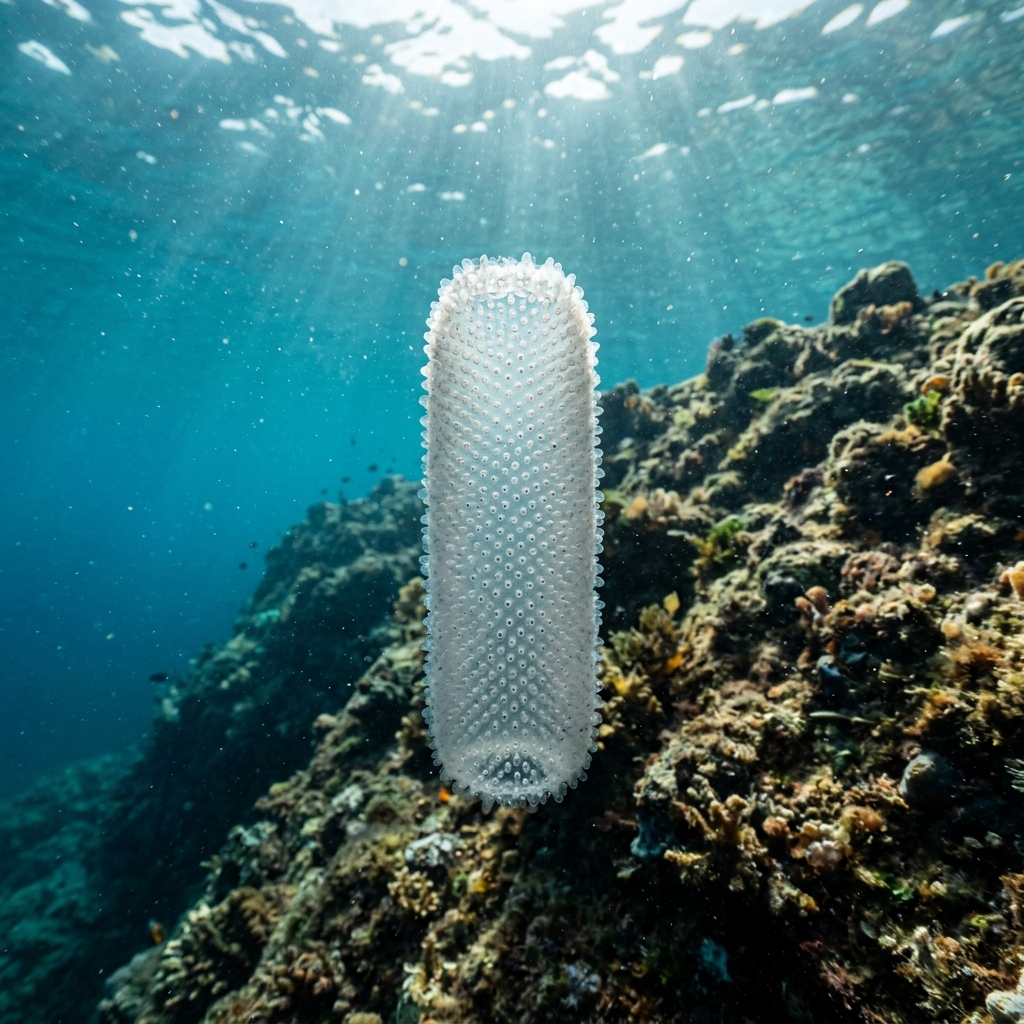
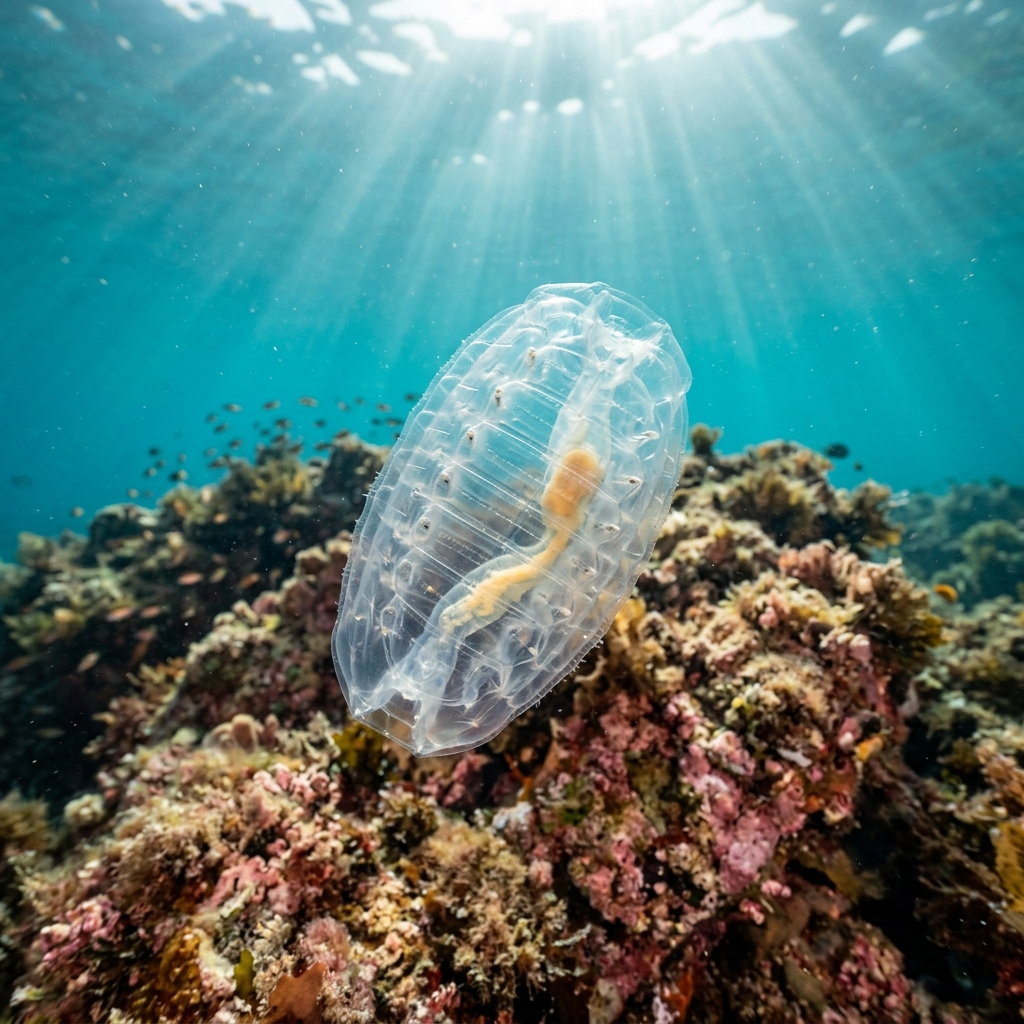
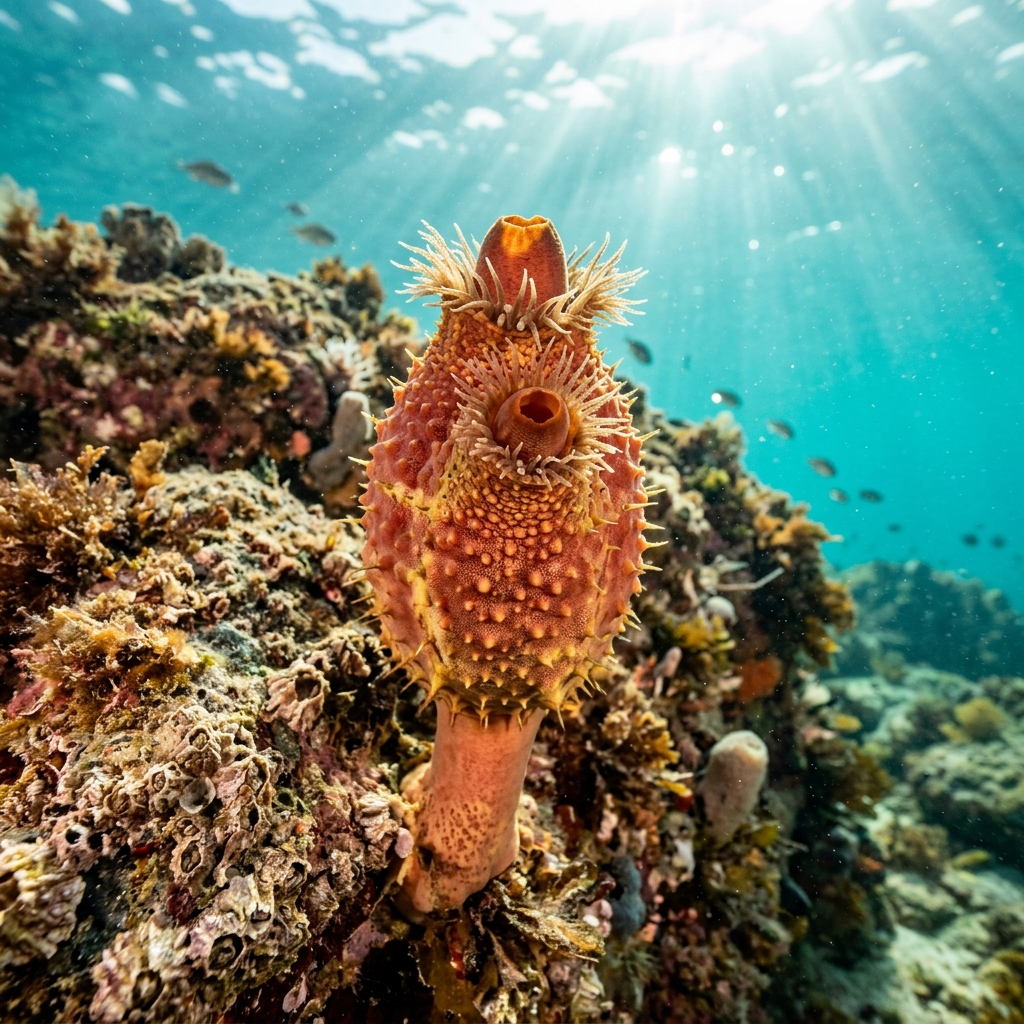
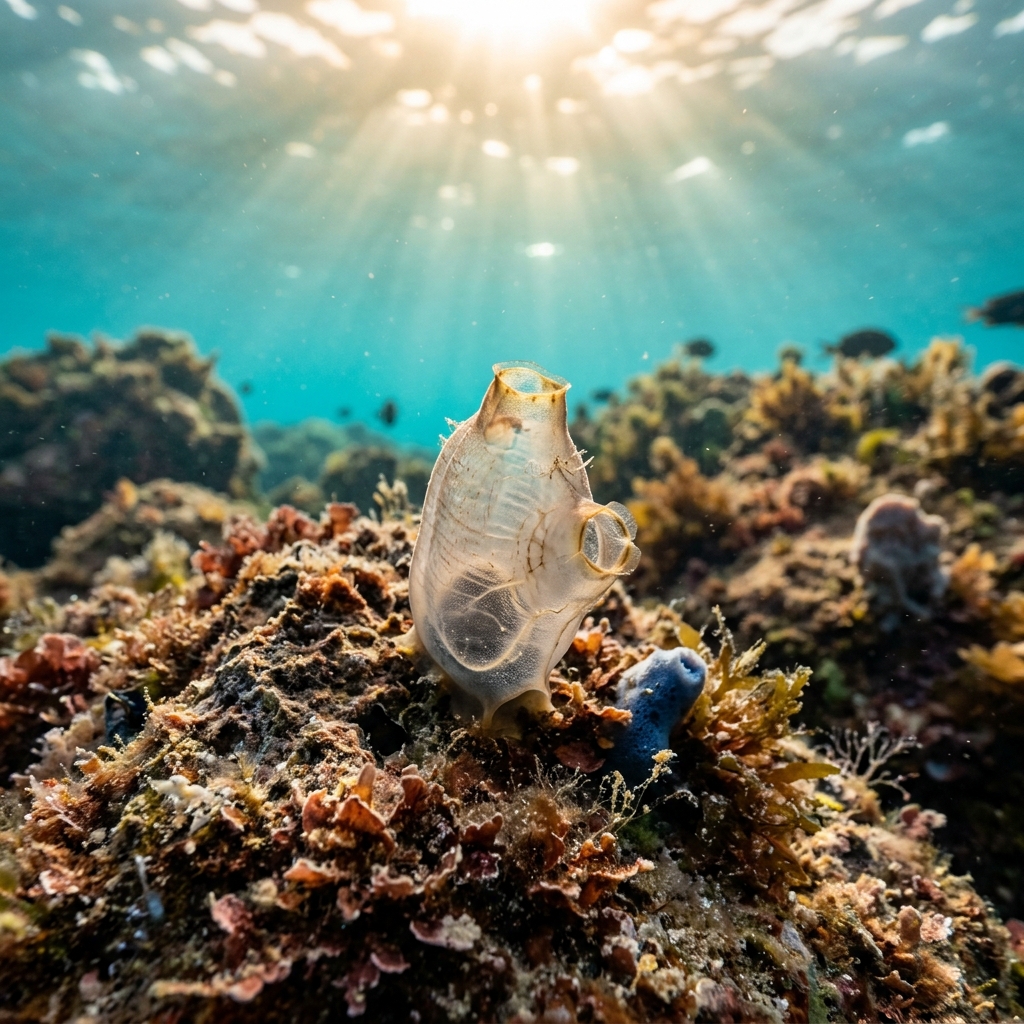
Ascidians are filter-feeding invertebrates that sit fixed to hard surfaces and look, at first glance, like rubbery blobs or small vases anchored to the reef. Each individual has two tube-like openings called siphons, one draws water in, the other expels it, which is the key underwater marker. Colours range enormously across the group: vivid red, orange, yellow, blue, and transparent; some species form dense colonial mats while others grow as solitary barrel-shaped animals several centimetres tall. Looking for that paired-siphon structure is the fastest way to confirm what you're looking at.
Ascidians are sessile (permanently fixed to the substrate), so when you find them they are simply sitting there, rhythmically pumping water through their siphons to filter out plankton and dissolved organic matter. They do not react to divers and will not move away, your best approach is to slow down and look closely at rocky walls, pier pilings, and shaded reef overhangs where they tend to colonise. Colonial forms can carpet large patches of hard substrate and are easy to overlook until you notice the repeating pattern of paired openings across the surface.
Ascidians are more closely related to vertebrates than they are to most other invertebrates, their free-swimming larvae have a notochord (a primitive backbone precursor), placing the whole class within the phylum Chordata. That means what looks like a simple blob on the reef is one of your closest invertebrate relatives.
Ascidians are present year-round in both hemispheres, with no concentrated peak season recorded. Their tolerance for water temperatures from around 7.6 to 22.5 °C means they thrive on temperate and subtropical reefs alike, so there is no wrong time of year to look for them.
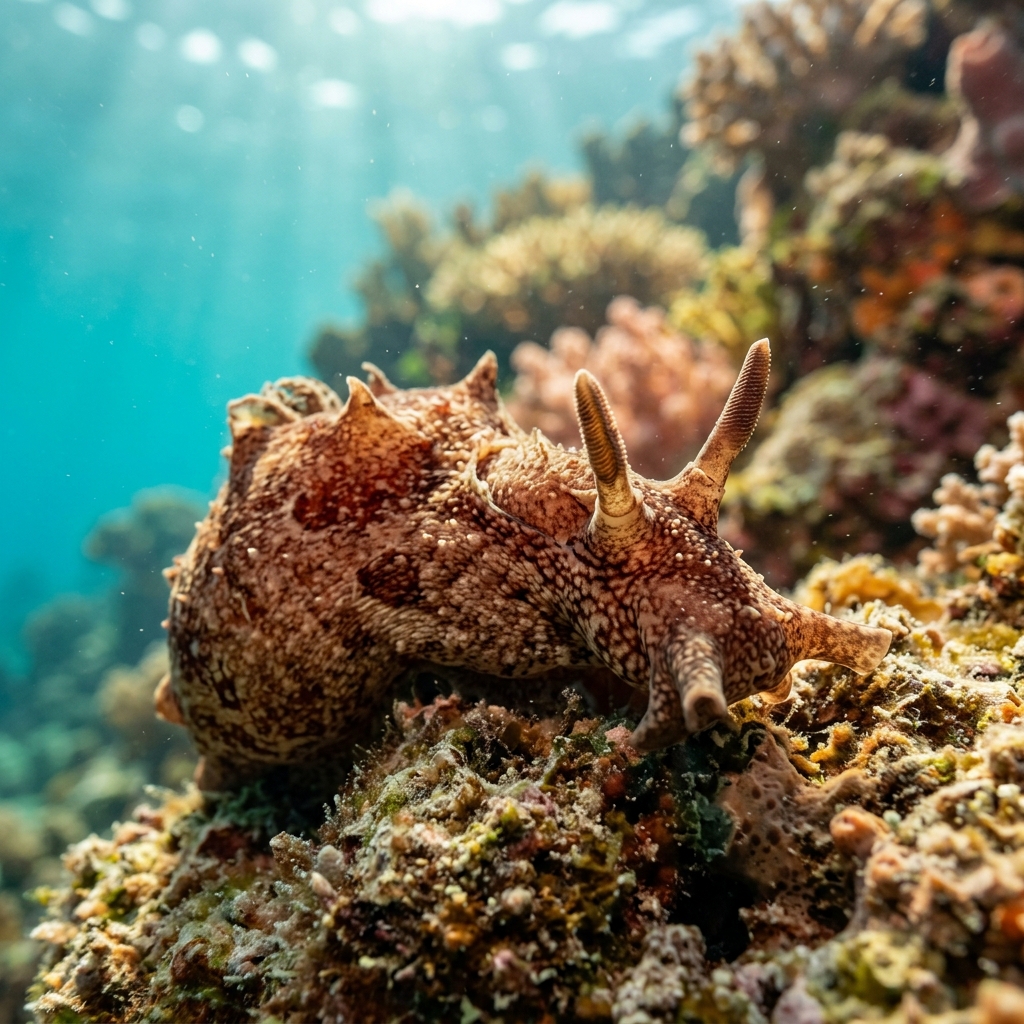
Reef neighbours a diver could mistake it for. Use the identification notes above to tell them apart.
Ascidians are logged across a vast spread of dive destinations, with the heaviest concentration of sightings in France (especially the French Riviera and Provence), Spain (particularly the Costa Brava), and Australia (New South Wales). Strong records also come from the Philippines (Visayas Central), Italy (Sardinia and Tuscany), the United Kingdom, the United States (Florida and the Southeast), and Indonesia, making this one of the most geographically widespread groups a diver will encounter.
Mapping where Sea Squirt is logged…
Ascidians are logged at dive sites across more than a hundred countries. The most reliable regions include the French Riviera, the Costa Brava in Spain, New South Wales in Australia, the Visayas in the Philippines, and Sardinia in Italy. They are equally at home on temperate European reefs and tropical Indo-Pacific walls.
Ascidians can be found year-round in both the Northern and Southern Hemispheres, with no distinct peak season. They tolerate water temperatures from around 7.6 to 22.5 °C, so they are present on cold temperate reefs through to warm subtropical ones throughout the year.
Look for rubbery, sac-like or barrel-shaped animals fixed firmly to hard surfaces such as rock, coral, or artificial structure. The definitive feature is a pair of siphon openings, one inhalant, one exhalant. Colours vary widely from translucent white to vivid orange or blue. Colonial species form encrusting mats with repeating siphon patterns across the surface.
No. Ascidians are completely harmless to divers. They do not sting, bite, or produce toxins that pose a risk through contact during a normal dive. Avoid touching them only to protect the animal and the reef.
Despite looking like simple blobs, ascidians are classified as chordates, the same group that includes all vertebrates. Their larvae have a notochord, the precursor to a backbone. After settling on the reef, they lose this structure and spend their adult lives as sessile filter feeders, making them one of the most dramatic examples of regression in the animal kingdom.
Site and sighting data is aggregated from diver logs, iNaturalist and GBIF. For taxonomy and conservation status:
Sea Tulip
149 sites