Prognathodes aculeatus
Spot the Longsnout Butterflyfish on Caribbean reefs from Grenada to Roatán. Key ID tips, best dive sites, and what to expect in warm 26-29 °C waters.
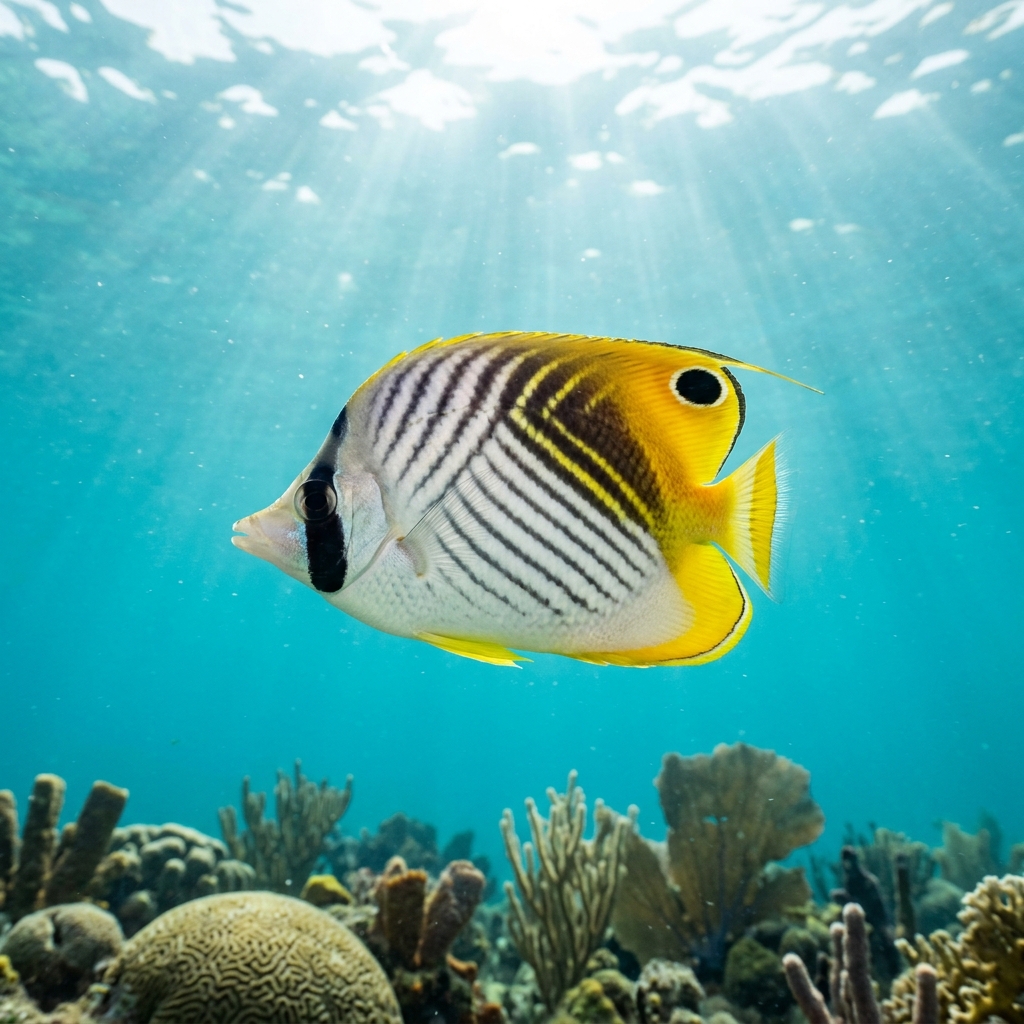
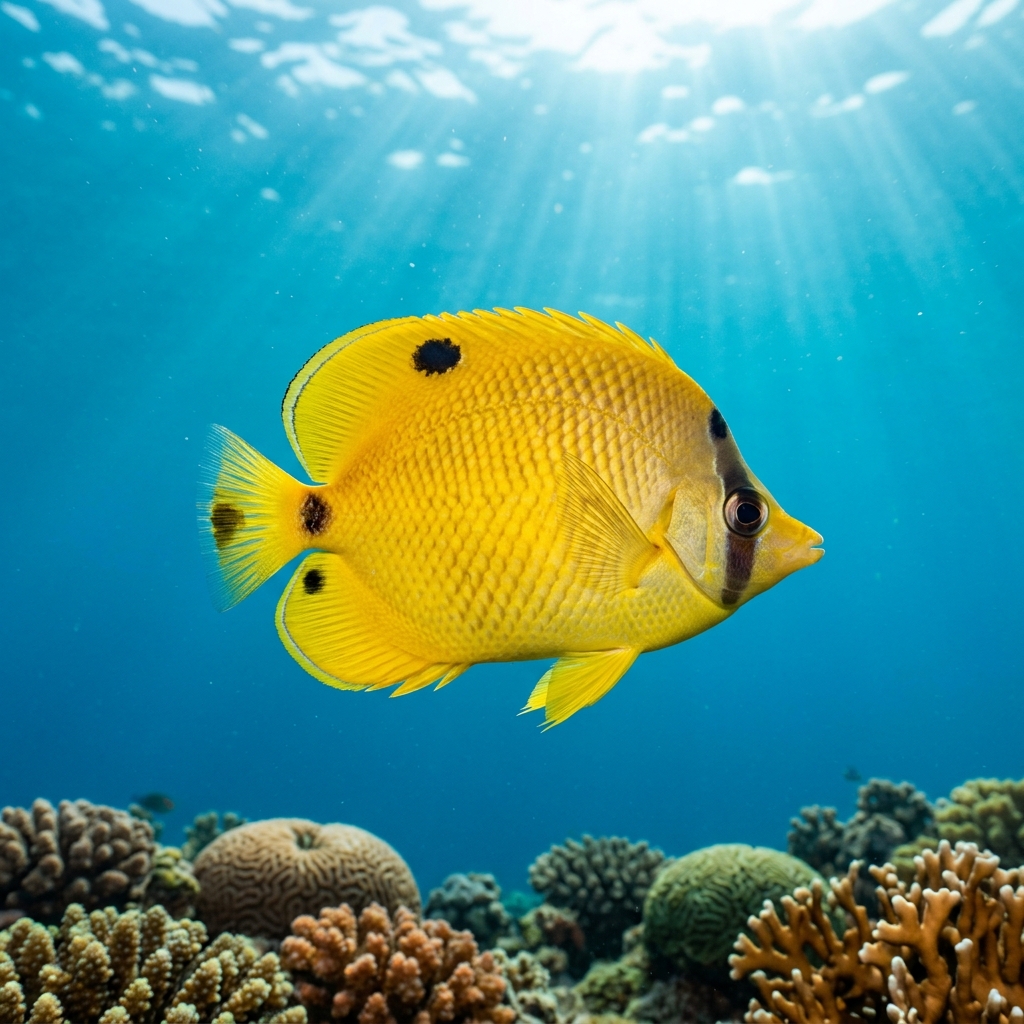
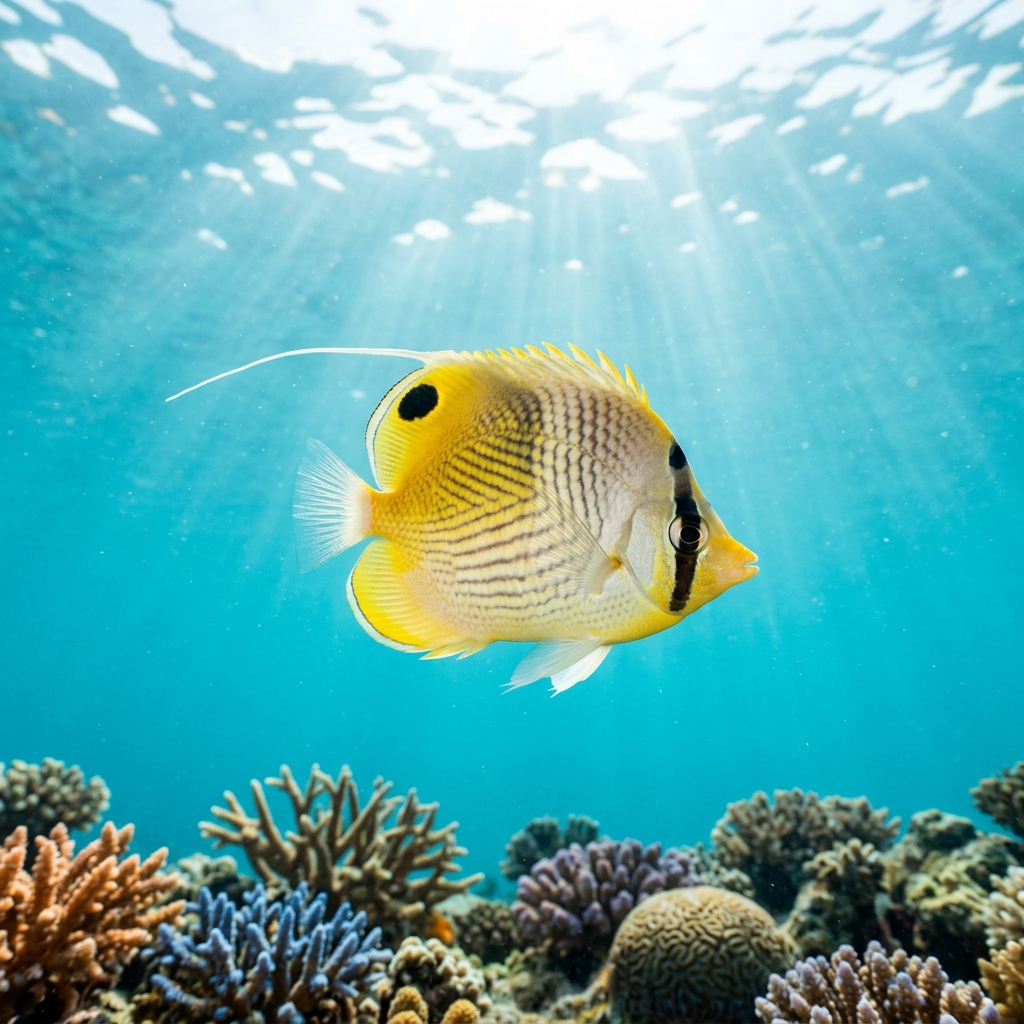
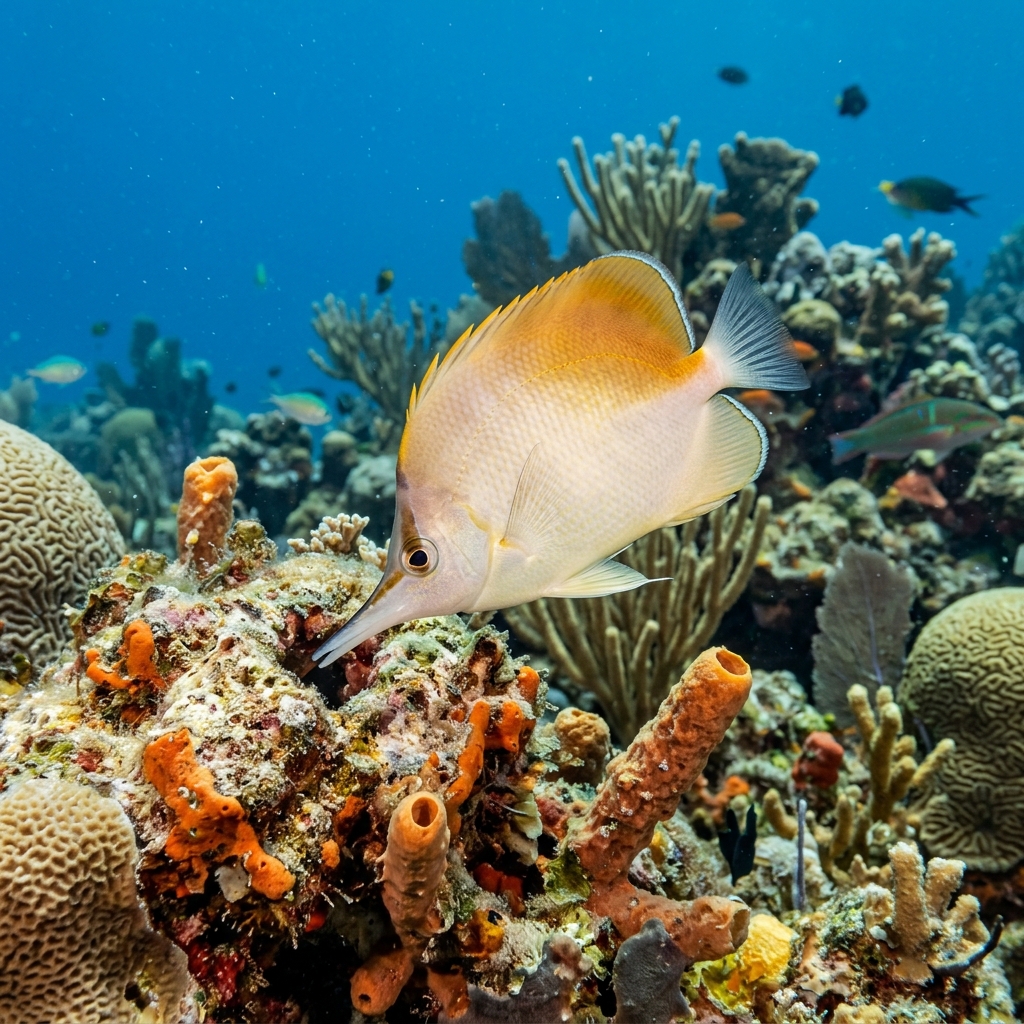
That elongated, forceps-like snout is the giveaway, longer and more pointed than any other Caribbean butterflyfish. The body is bright yellow with a whitish upper flank, crossed by a broad dark bar running through the eye. Look for a small but distinct black spot or blotch near the dorsal fin base; combined with the snout length, it narrows identification quickly. Small and disc-shaped in the water, it typically hugs the reef closely rather than swimming in open water.
You will usually find it working the reef structure at close range, poking that slender snout into crevices and coral heads to pick out small invertebrates and coral polyps. It tends to stay low and tight to the reef rather than rising into the water column, which can make it easy to miss if you are scanning mid-water. Longsnout butterflyfish are generally wary of divers and will keep a respectful distance, slipping around the far side of a coral head if approached too quickly.
That extraordinary snout is a feeding speciality: it lets the fish reach prey tucked deep inside branching corals and crevices that are inaccessible to blunter-snouted species, giving it a dietary niche of its own on Caribbean reefs.
No strong seasonal peak emerges from the sighting data, so it can be treated as a year-round resident. Its observed temperature range of roughly 26.5 to 28.9 °C fits the consistently warm waters of the Caribbean, meaning there is no off-season to plan around.
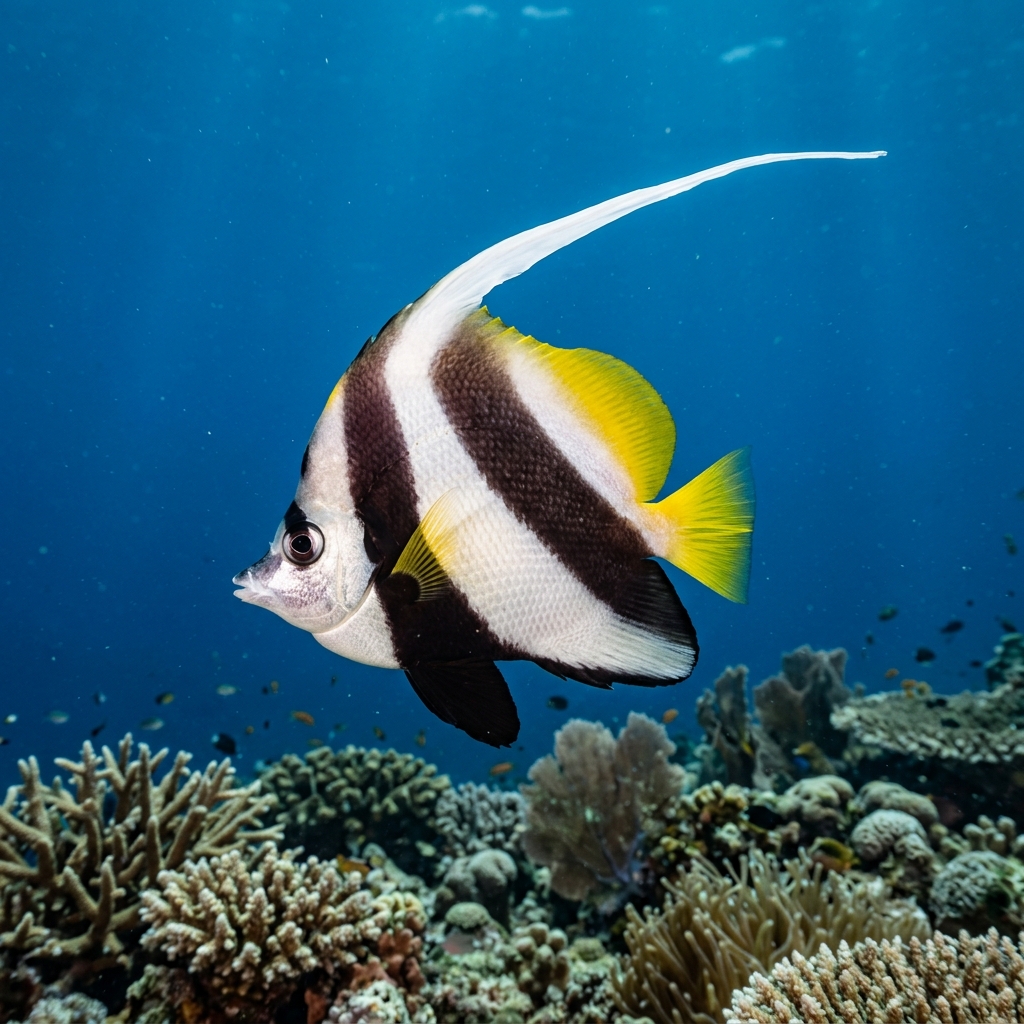
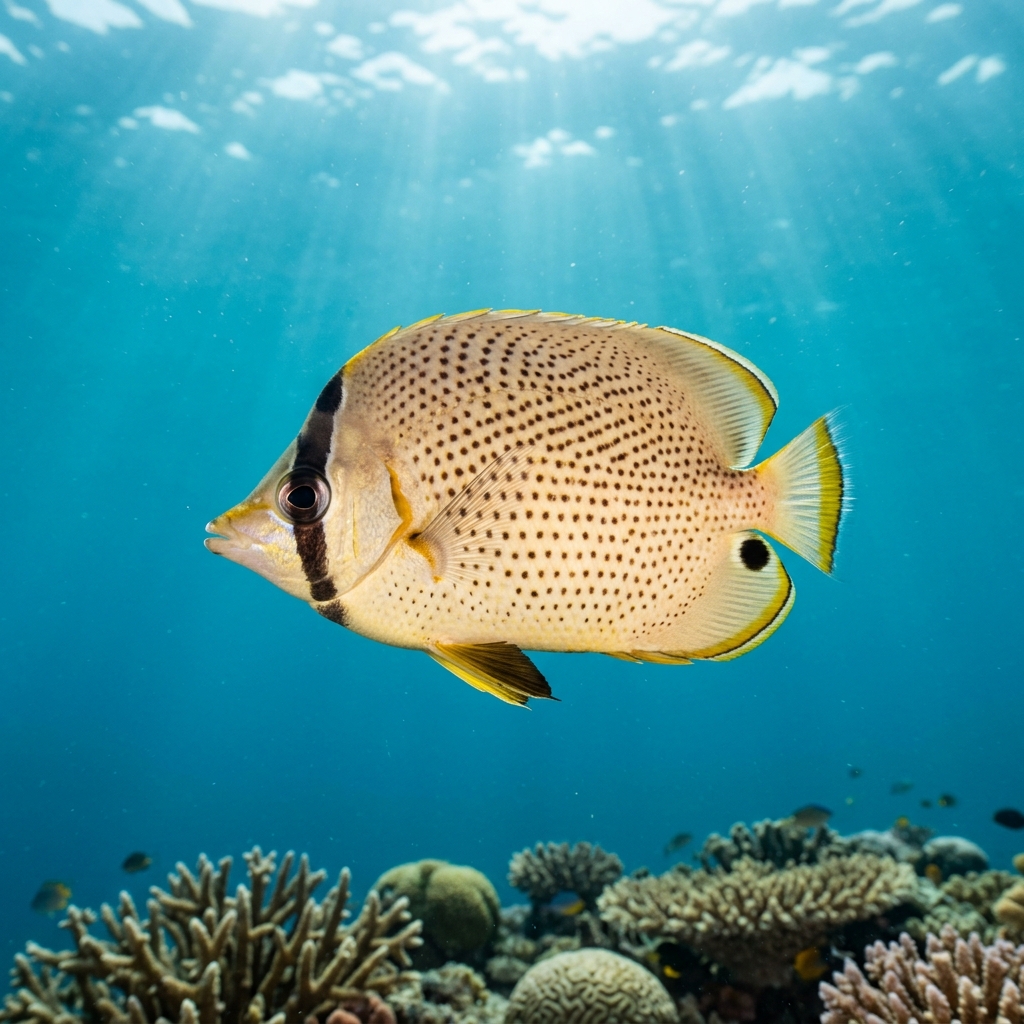
Reef neighbours a diver could mistake it for. Use the identification notes above to tell them apart.
The longsnout butterflyfish is most consistently logged across the eastern and southern Caribbean, with Grenada Island standing out as the single strongest location in the data. Colombia's Caribbean Coast and the reefs around Roatán, Honduras also feature prominently, alongside Les Anses-d'Arlet in Martinique and the Saba Marine Park. Dominica, Guadeloupe, and Saint Lucia round out a region-wide pattern that makes the Lesser Antilles and Western Caribbean the go-to area.
Mapping where Longsnout Butterflyfish is logged…
The longsnout butterflyfish is a Caribbean species logged across a wide range of sites. Grenada Island, the Caribbean Coast of Colombia, Roatán in Honduras, and the Saba Marine Park are among the most reliable locations. It also appears regularly around Martinique, Guadeloupe, Dominica, and Saint Lucia.
Sightings are spread across all months with no clear seasonal peak, so it can be dived year-round. The species is comfortable in the Caribbean's consistently warm water, typically between 26 and 29 °C, which persists throughout the year across its range.
Focus on the snout first: it is notably long and pointed, more so than any other butterflyfish you will encounter in the Caribbean. The body is bright yellow with a whitish upper area and a dark bar through the eye, plus a dark spot near the dorsal fin base. That snout length alone is usually enough to confirm the ID.
It is present across a large number of Caribbean dive sites but is most often logged as uncommon rather than common. Divers should not expect to see it on every dive; patience and slow, attentive reef searching will improve your chances, particularly around complex coral structures.
Not at all. They pose no threat to divers. If anything, they are shy and will retreat if approached closely, so slow, calm movements give you the best chance of a decent look.
Site and sighting data is aggregated from diver logs, iNaturalist and GBIF. For taxonomy and conservation status: