Produnga rubropunctata
Small red-spotted nudibranch logged uncommonly around Bali and South Sinai in warm 24-30C water, year-round.
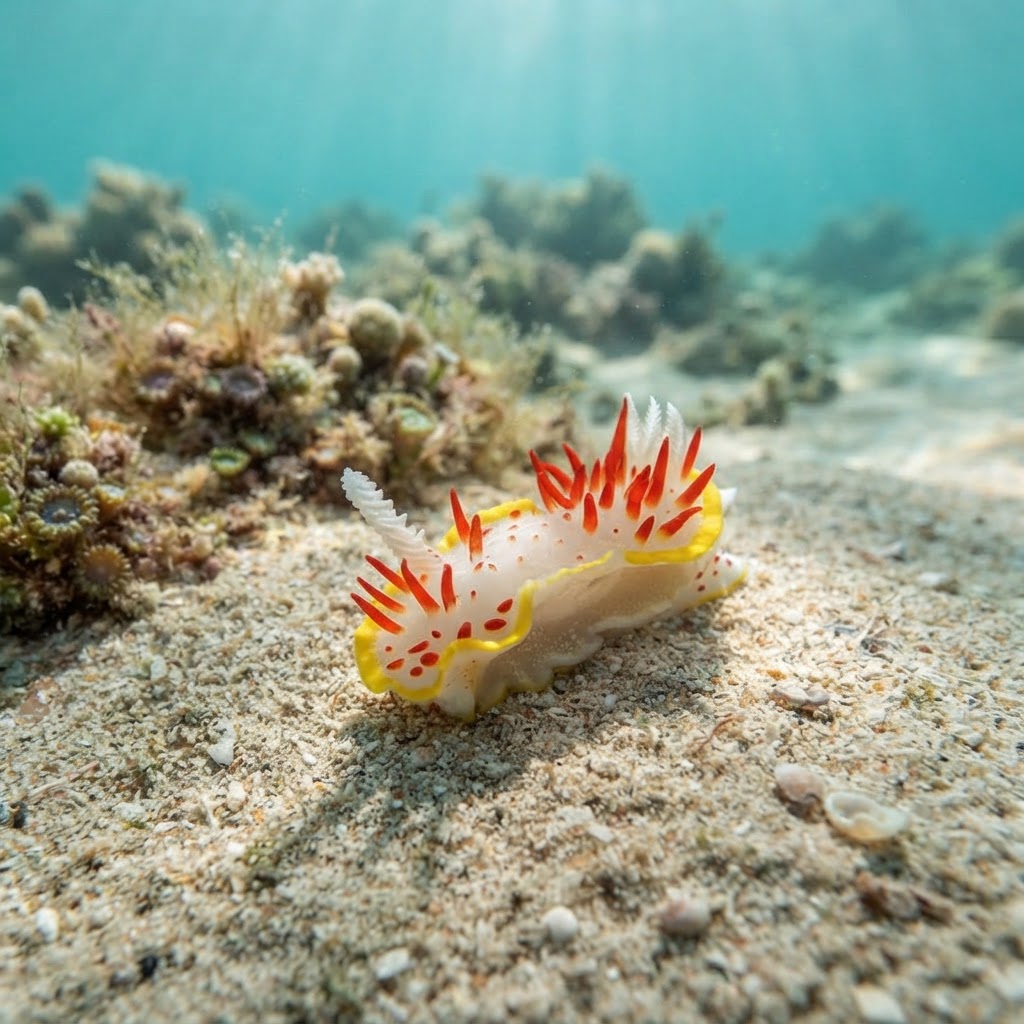
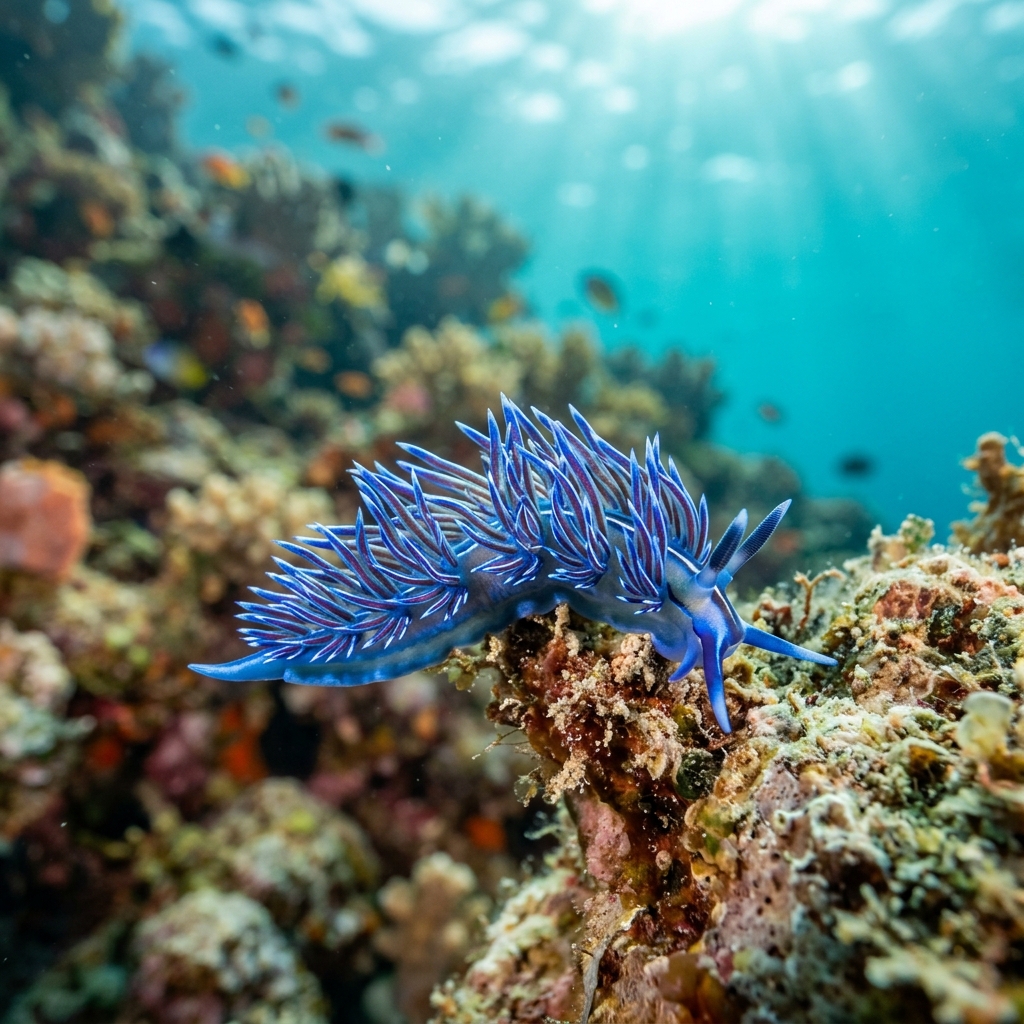
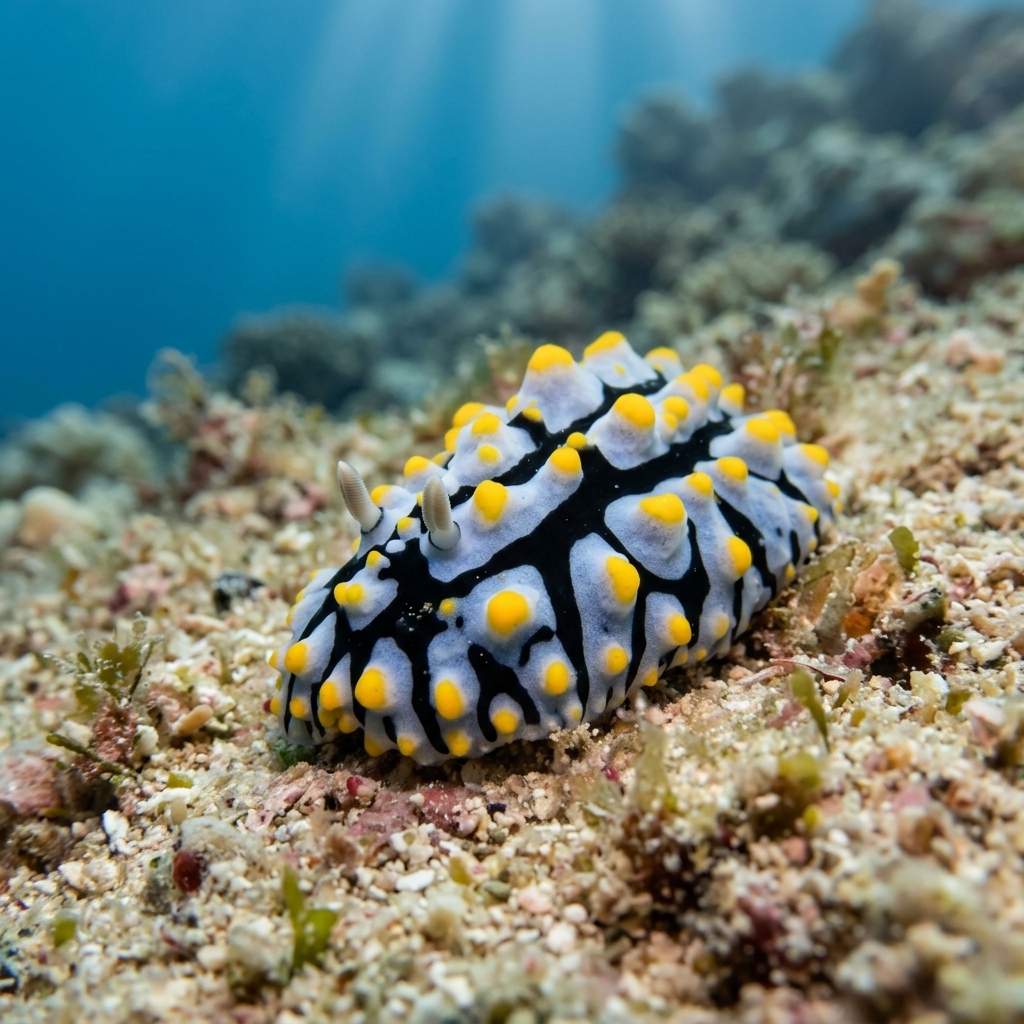
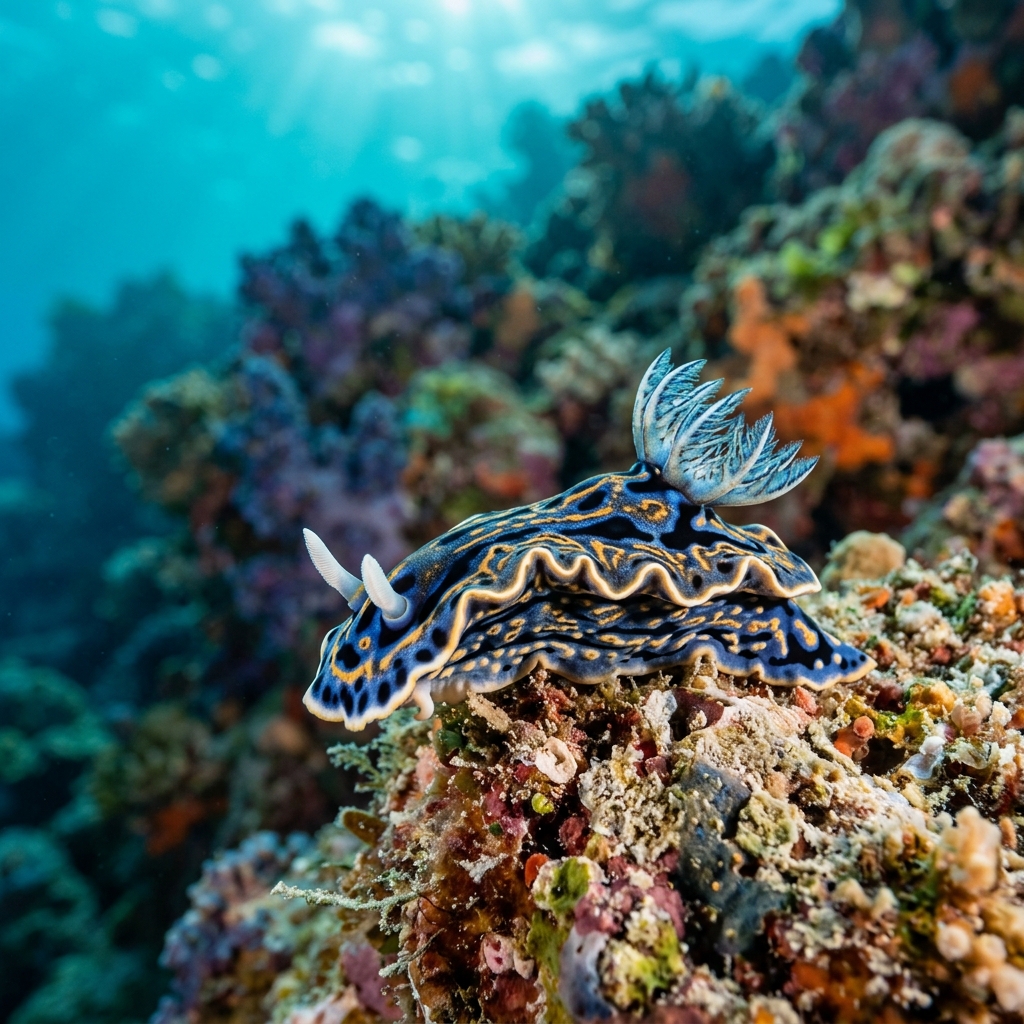
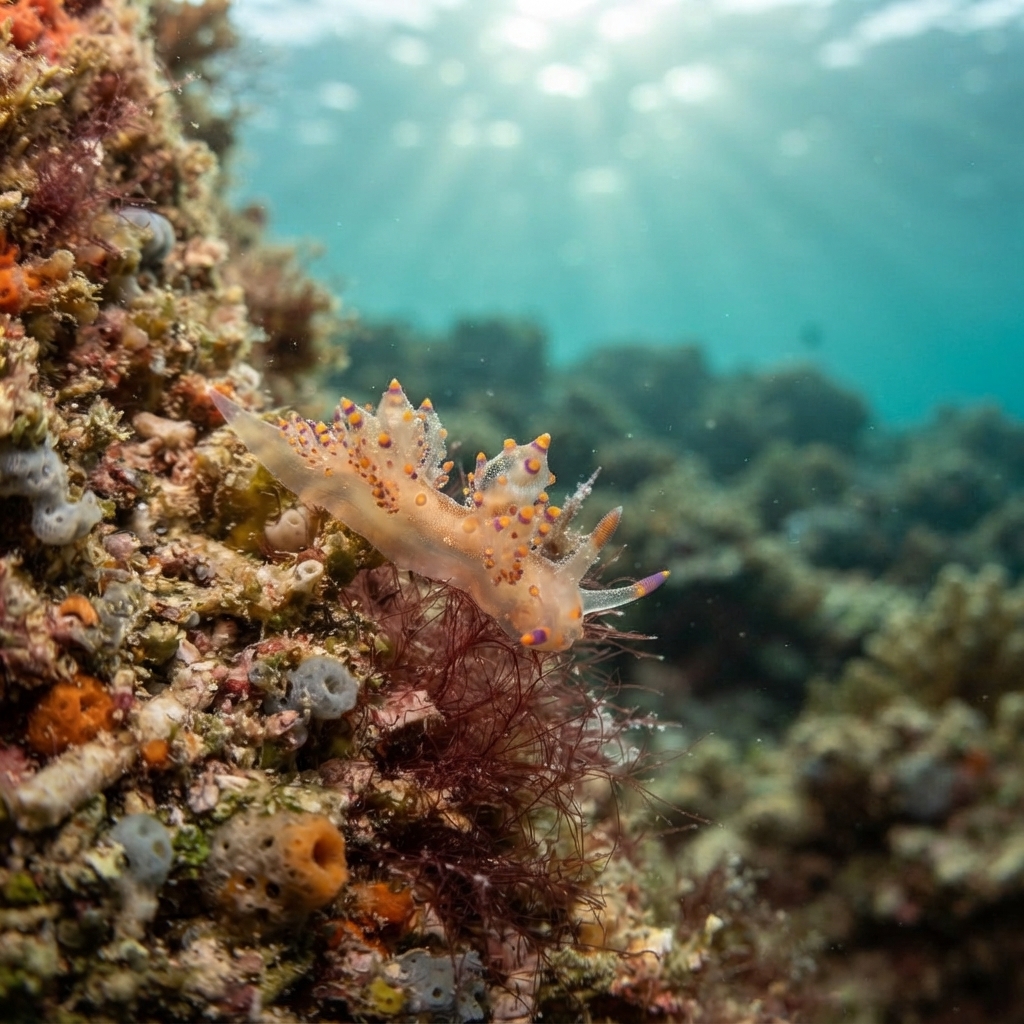
A small, slender nudibranch with a pale translucent to whitish body scattered with distinct red spots, which give this species its name. The spots run along the back and sides rather than clustering, and the body tapers to a narrow tail with soft cerata (the finger-like projections on its back) that carry a hint of the same red colouring. It sits low on the substrate and is easy to swim past unless you are already scanning close to the reef.
Found moving slowly over reef substrate and rubble, usually on a muck or slope dive rather than open reef, where divers doing careful macro-focused passes spot it. It shows no reaction to divers beyond continuing its slow crawl, and like most nudibranchs it is active by day as well as at night on torch-lit dives.
Like other members of its family, it almost certainly feeds on hydroids, and the red pigment in its cerata likely comes from whatever prey it has been eating rather than being fixed for life.
Sightings are spread across the year with no detected season, and the 23.6 to 29.6C range it is found in matches warm reef water in both Bali and the Red Sea year-round. Go whenever you are diving either region rather than waiting for a particular month.
Reef neighbours a diver could mistake it for. Use the identification notes above to tell them apart.
Most consistently logged in Bali, Indonesia, with a further reliable presence in South Sinai, Egypt, on the Red Sea side. Outside these two regions it has not turned up in diver records, so Bali and South Sinai are the two places to plan around.
Mapping where Produnga Rubropunctata is logged…
It is most often logged in Bali, Indonesia, with a smaller but reliable number of sightings in South Sinai, Egypt. These two regions cover essentially all confirmed diver records for this species.
There is no detected seasonal pattern, so it turns up year-round on Bali and South Sinai reefs, which stay within its comfortable 23.6 to 29.6C range throughout the year.
Look for a small, pale nudibranch with scattered red spots along the body and soft cerata tinged with the same red. It moves slowly over rubble and reef surfaces, so a slow scanning eye helps spot it.
Exact size data is not available, but like most species in the Eubranchidae family it is small, typically only a few centimetres or less, making it a macro-life sighting rather than something visible from a distance.
No, it poses no danger to divers. It has no means of harming a diver and simply continues its slow crawl across the reef if approached.
Site and sighting data is aggregated from diver logs, iNaturalist and GBIF. For taxonomy and conservation status:
Blue Dragon
3,163 sites