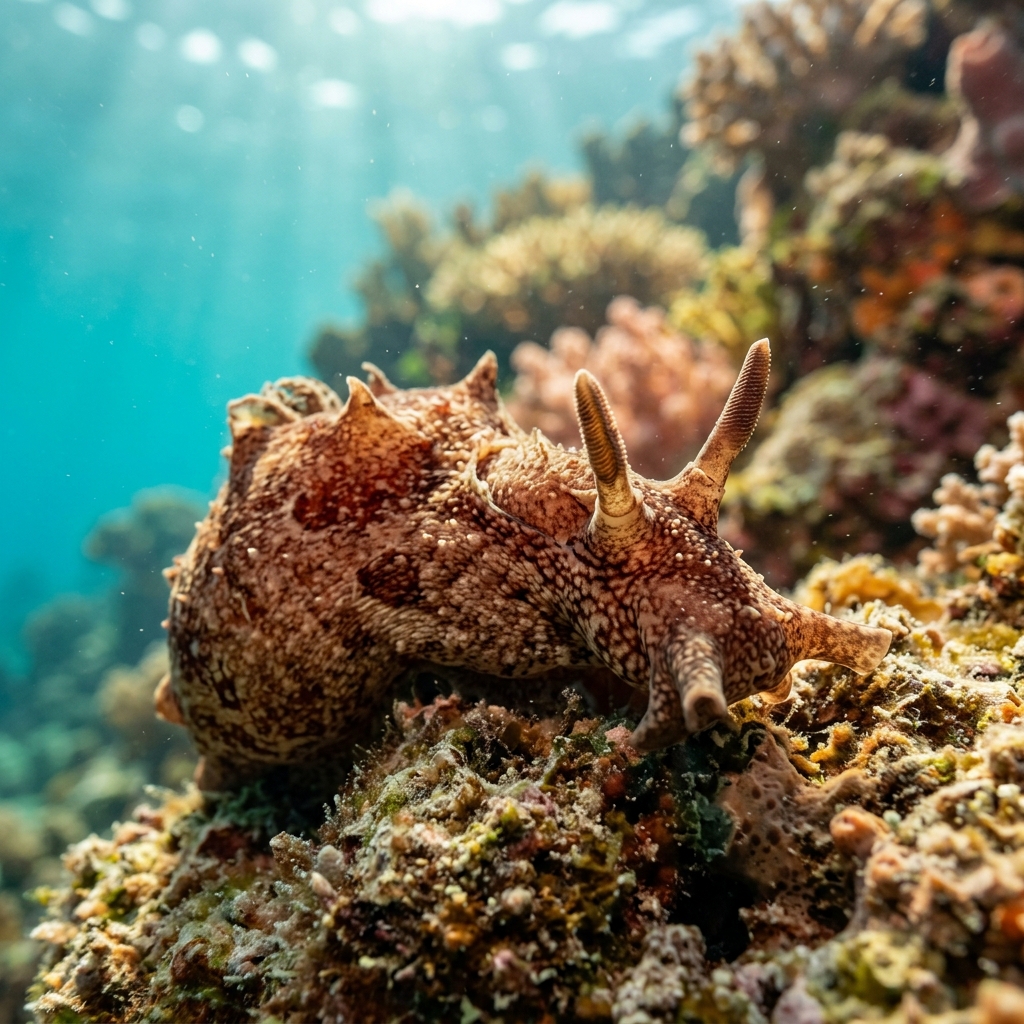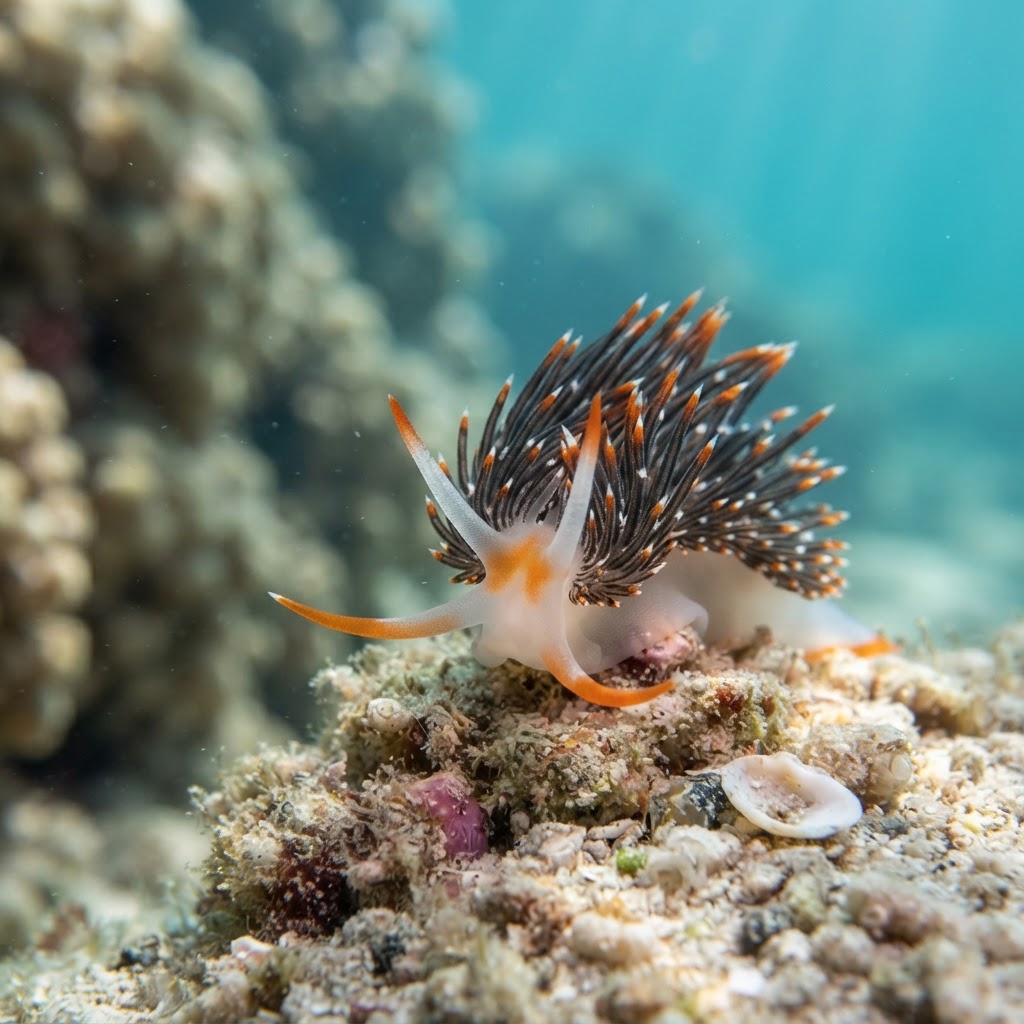
Sakuraeolis nungunoides
A rare find in Queensland and Singapore's Southern Islands, this spiky little nudibranch turns up year-round in warm 20-29.5C water.
Look for a small, slender-bodied nudibranch covered in long, tapering finger-like projections (cerata) that give it a bristly, spiked look, hence the common name. The body is typically pale with the cerata often showing darker tips or banding, and the animal rarely grows large enough to spot from more than a few centimetres away. Slow-moving and easy to miss unless you're already scanning rubble or algae patches close up.
Divers find this one grazing slowly over hard substrate or amongst algae and hydroids, which it likely feeds on given its family's habits. It shows no reaction to divers beyond its usual unhurried pace, since it has no eyes or ears to register you and no real means of fleeing anyway. Best looked for during a careful, slow-paced macro dive rather than a drift or wide-reef swim.
Like other aeolid nudibranchs, it likely stores stinging cells from the hydroids it eats in the tips of its own cerata, turning its prey's defences into its own.
No clear seasonal pattern shows up in the data, and with a comfortable range of 20 to 29.5C it likely turns up on reefs across the year rather than in a narrow window. Treat sightings as opportunistic rather than tied to a specific month.
Most consistently logged in Queensland, Australia and the Southern Islands of Singapore, the two regions carrying all currently known sightings. It's a rare-to-uncommon find at each site rather than a guaranteed spot, so pair a dive here with a dedicated muck or macro dive plan.
Mapping where Porcupine Sakuraeolis is logged…
Sightings cluster in Queensland, Australia and the Southern Islands of Singapore. It's logged as rare to uncommon at each site, so it's a bonus find rather than a target species.
There's no detected season in the sighting data, and it's recorded across a wide 20 to 29.5C range, so it appears to be a year-round find on the reefs where it occurs.
Check for a small, pale-bodied nudibranch covered in long, spike-like cerata rather than smooth gills or a rounded mantle. Its slow crawl over rubble or algae, combined with the bristly outline, separates it from smoother aeolid look-alikes.
Exact size data isn't well documented for this species, but like most Sakuraeolis nudibranchs it stays small, generally a couple of centimetres or less, making a close look essential.
No. It poses no threat to divers and has no means of harming anyone; any stinging cells it carries are defensive and reserved for predators, not people.
It likely recycles stinging cells from the hydroids it eats, storing them in the tips of its own cerata as a borrowed defence system.
Site and sighting data is aggregated from diver logs, iNaturalist and GBIF. For taxonomy and conservation status:
Light-spotted Aegires
3,168 sites