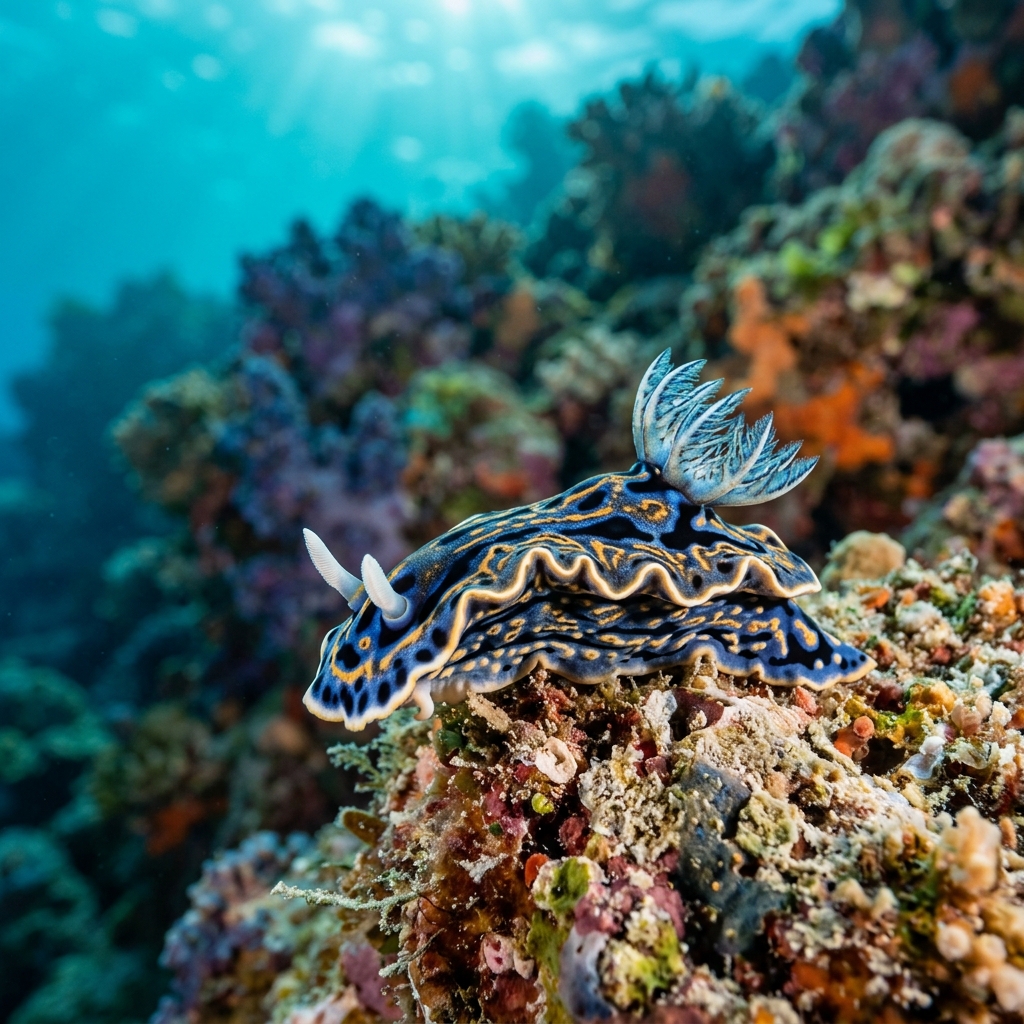
Taringa halgerda
A rare white nudibranch with tufted gills, logged only at dive sites across Luzon, Philippines, warm reefs 25 to 31 C.
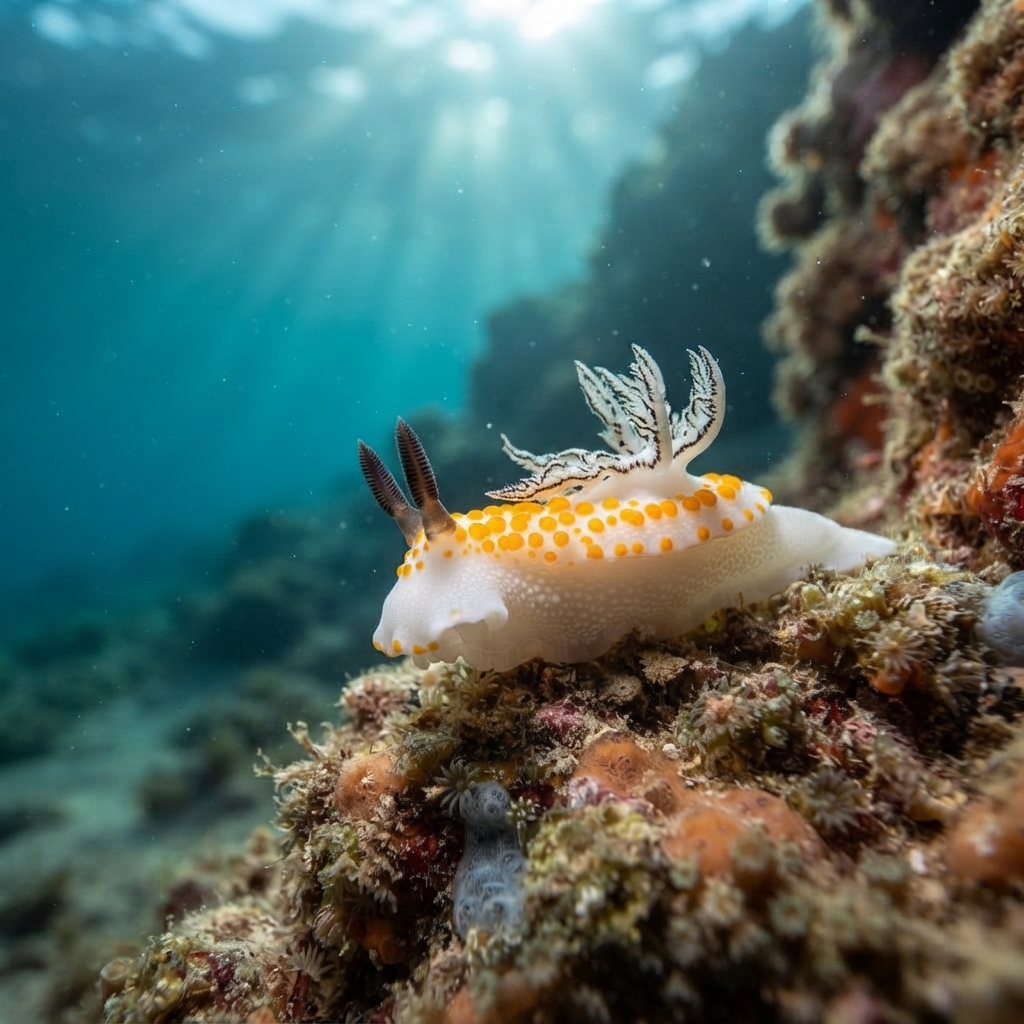
A small white to cream-bodied nudibranch with a soft, rounded body and a cluster of tufted, pom-pom-like gills on its back, from which it gets its common name. Look for scattered darker speckling across the mantle and short rhinophores (sensory tentacles) near the head. It moves slowly across hard substrate, and its size in the water is modest, best spotted by scanning rubble and reef surfaces closely rather than from a distance.
Divers find this nudibranch grazing slowly over reef surfaces and rubble, likely feeding on sponges as many discodorid nudibranchs do. It shows no reaction to divers beyond its usual unhurried pace, making it an easy subject once spotted, though its small size and muted colouring mean it is often missed on a first pass over the reef.
Its tufted gill cluster, the source of the pom-pom name, functions as a gas-exchange organ and can be retracted if the animal is disturbed, a defence shared across many dorid nudibranchs.
Sightings do not show a clear seasonal pattern, so treat this as a year-round find in the Philippines. Water temperatures where it has been observed sit in a warm 25.3 to 31.3 C band, consistent with tropical reef conditions that hold steady across the calendar.
Every logged sighting of the Pom-pom Taringa comes from the Philippines, with Luzon standing out as the region where divers most reliably find it. Outside this stretch of the Philippines it has not turned up in diver records, making Luzon the place to focus a search.
Mapping where Pom-pom Taringa is logged…
Every recorded sighting comes from the Philippines, with Luzon the standout region for finding this nudibranch. It has not been logged elsewhere in diver records, so a Luzon-based trip gives the best odds.
There is no strong seasonal pattern in the sightings, so it is considered a year-round find. Water temperatures at recorded sites range from 25.3 to 31.3 C, typical of warm tropical reefs that stay consistent through the year.
Look for a small white to cream nudibranch with a tufted, pom-pom-shaped gill cluster on its back and scattered darker speckling on the mantle. It moves slowly over reef surfaces and rubble, so a close, patient scan is often needed to spot it.
No, this nudibranch poses no danger to divers. It has no means of attack and simply moves slowly across the reef, so it can be observed and photographed at close range without concern.
Site and sighting data is aggregated from diver logs, iNaturalist and GBIF. For taxonomy and conservation status:
Blue Dragon
3,163 sites