Apogon pacificus
Uncommon but reliable in Baja California, Mexico, this small reddish fish shelters in reef crevices year-round in 22-29C water.
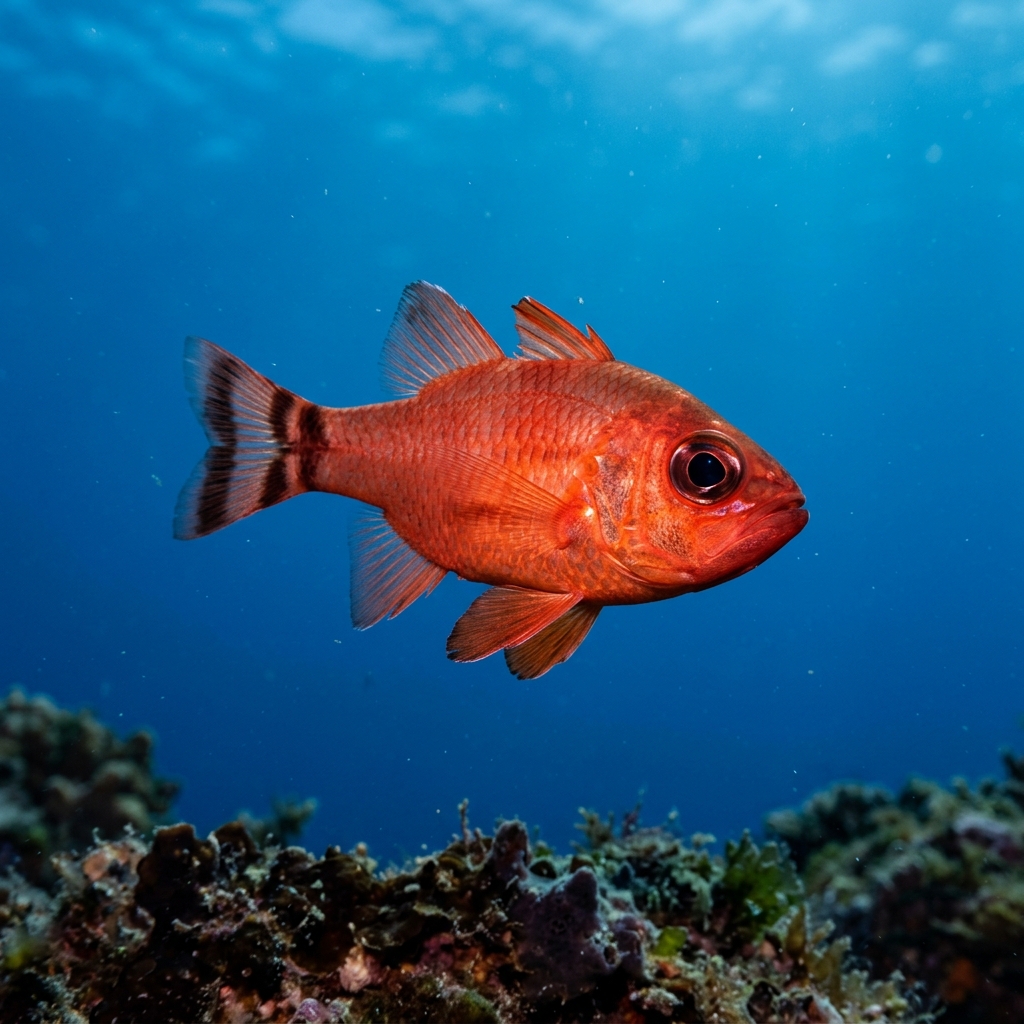
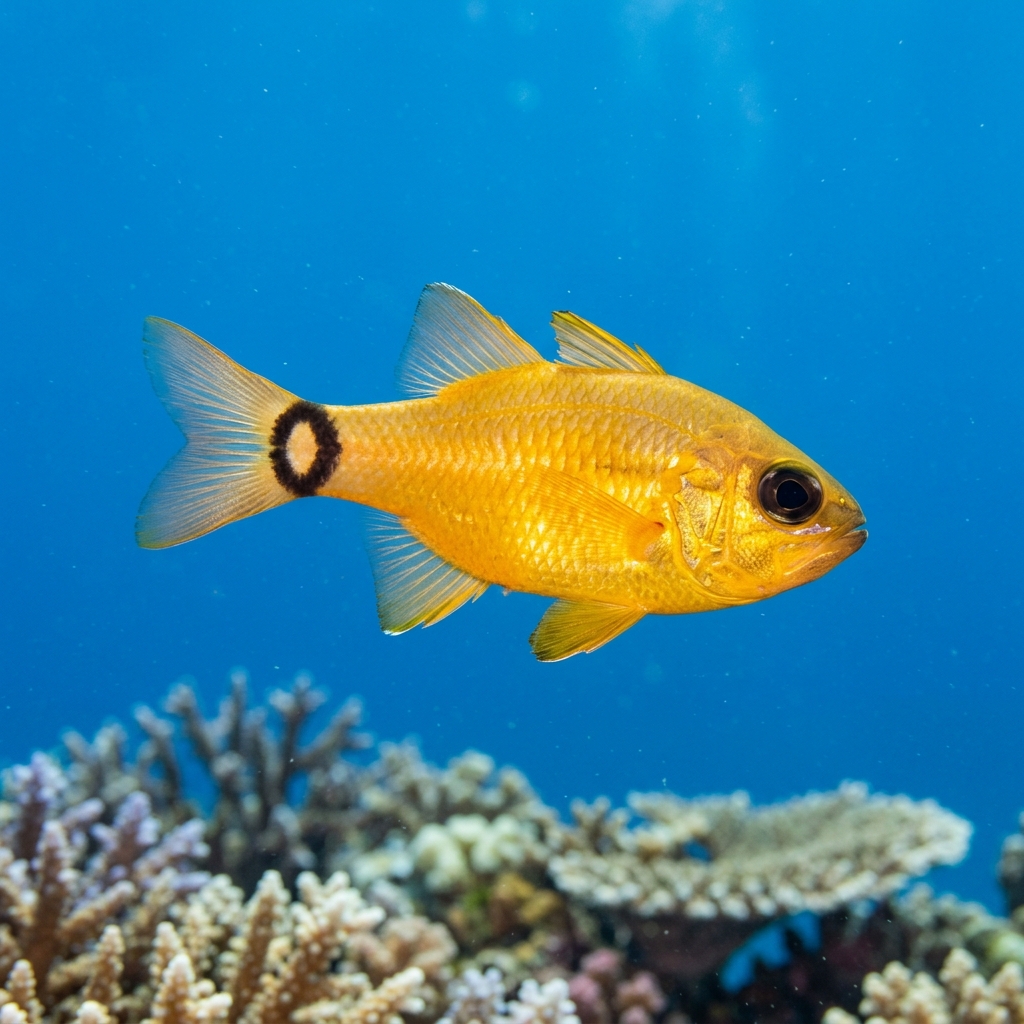
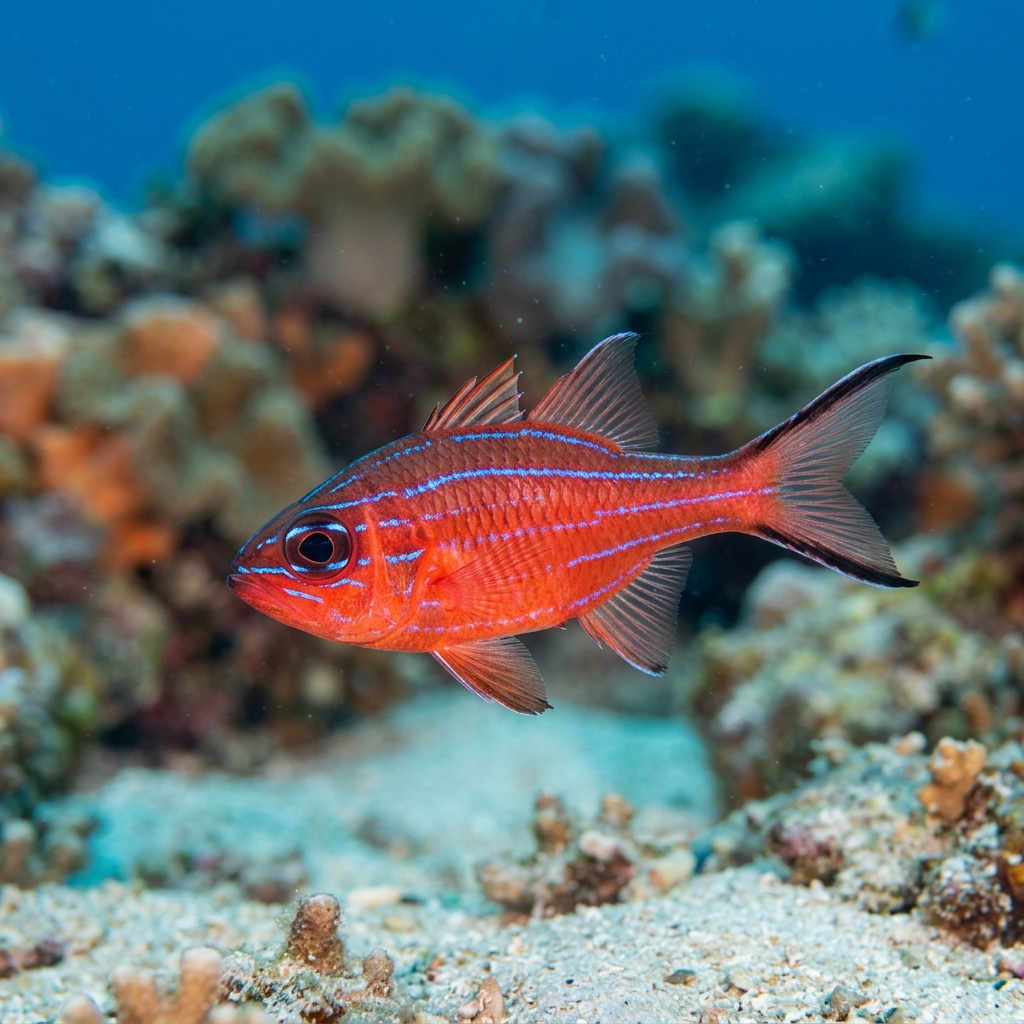
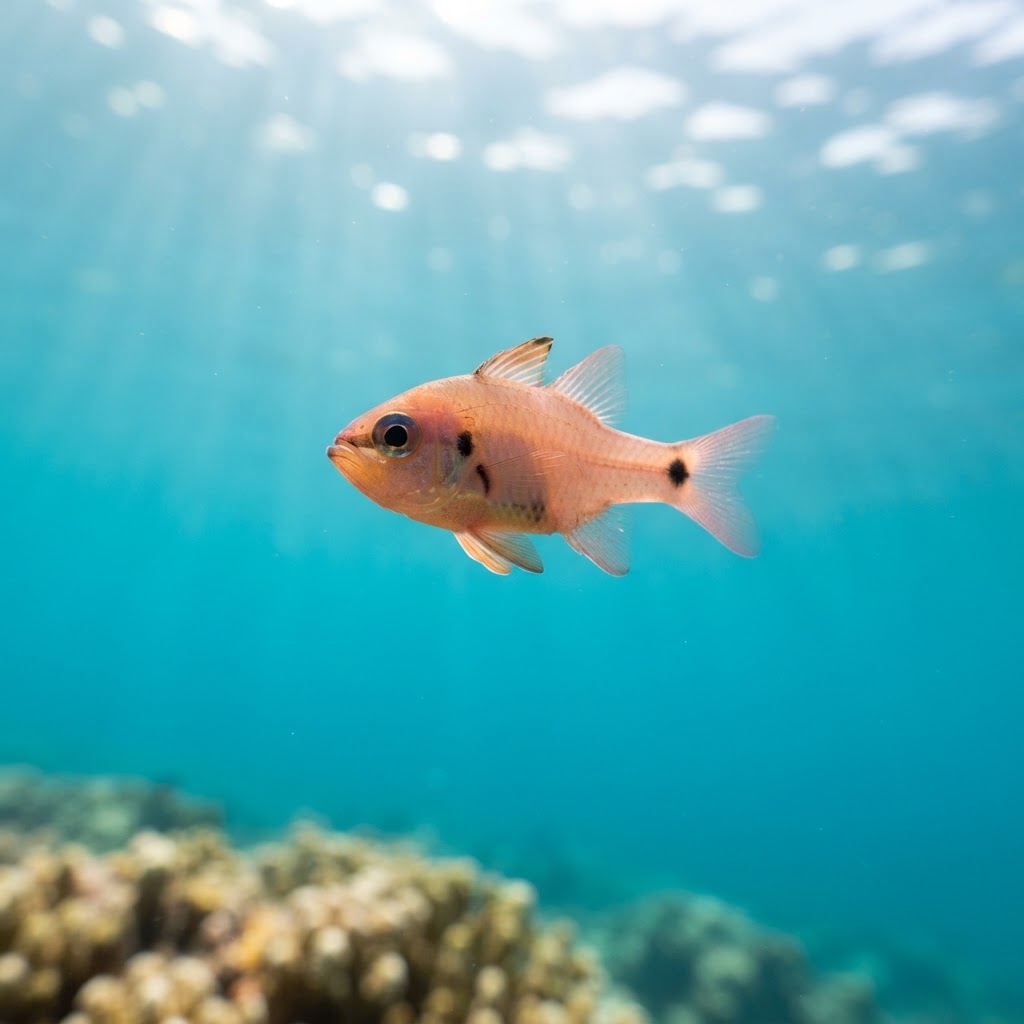
A small, slender fish around 7 cm long with a translucent pinkish-red body and noticeably large, dark eyes typical of the cardinalfish family. It has a compressed, elongated shape with two separate dorsal fins and no strong contrasting stripes or spots that jump out at a distance. Look for it hovering close to shelter rather than out in the open, where its pale pink tone blends into shadowed rock and reef structure.
Divers typically find this cardinalfish tucked into rocky crevices, under ledges, or hovering just above reef structure rather than swimming in open water. Like most cardinalfish it tends to be more active around dusk and at night, retreating to shelter during brighter daylight hours. It is not shy in the sense of darting away fast, but it stays close to cover and rarely lingers in full view for long.
Many cardinalfish species are mouthbrooders, with the male carrying fertilised eggs in his mouth until they hatch, a trait that likely applies to this species given its family.
Sightings show no detectable seasonal pattern, so this is a year-round species. It has been recorded in water from 22.3 to 29.1C, a range that holds across most of the diving calendar in its eastern Pacific range.
Baja California is by far the strongest region for this species, with a solid scatter of sites along Mexico's Pacific Coast as well. It also turns up on Panama's Pacific Coast and has been logged once in Ecuador's Galapagos Islands, making it primarily an eastern Pacific find.
Mapping where Pink Cardinalfish is logged…
Baja California in Mexico is the most reliable region, with additional sightings along Mexico's Pacific Coast, Panama's Pacific Coast, and a single record from the Galapagos Islands in Ecuador.
There's no strong seasonal pattern in the sighting data, so they can be found year-round. Water temperatures where they're logged range from 22.3 to 29.1C, comfortable across most of the year in their eastern Pacific range.
Look for a small, slender fish around 7 cm with a translucent pinkish-red body and large dark eyes, usually hovering near crevices or overhangs rather than out in open water.
They stay small, typically reaching around 7 cm in length, which is consistent with most members of the cardinalfish family.
No, they pose no danger to divers. They're small, reef-associated fish that stay near shelter and have no venomous spines or aggressive behaviour toward divers.
Like many cardinalfish, this species likely practices mouthbrooding, where the male holds fertilised eggs in his mouth until the young hatch, protecting them from predators during development.
Site and sighting data is aggregated from diver logs, iNaturalist and GBIF. For taxonomy and conservation status:
Iridescent Cardinalfish
1,781 sites