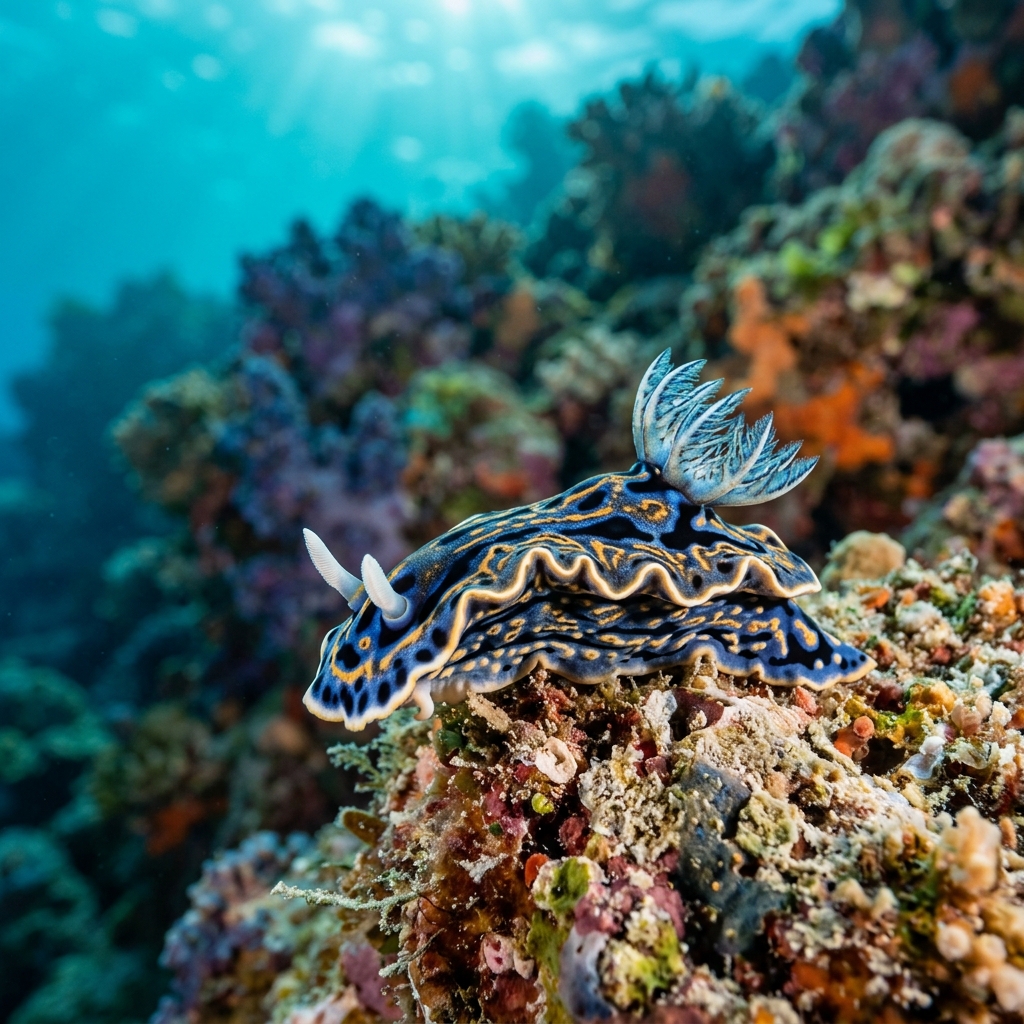
Phyllodesmium parangatum
A rare nudibranch logged uncommonly in Luzon, Philippines, in warm water between 25 and 31C. Here's how to spot it on a dive.
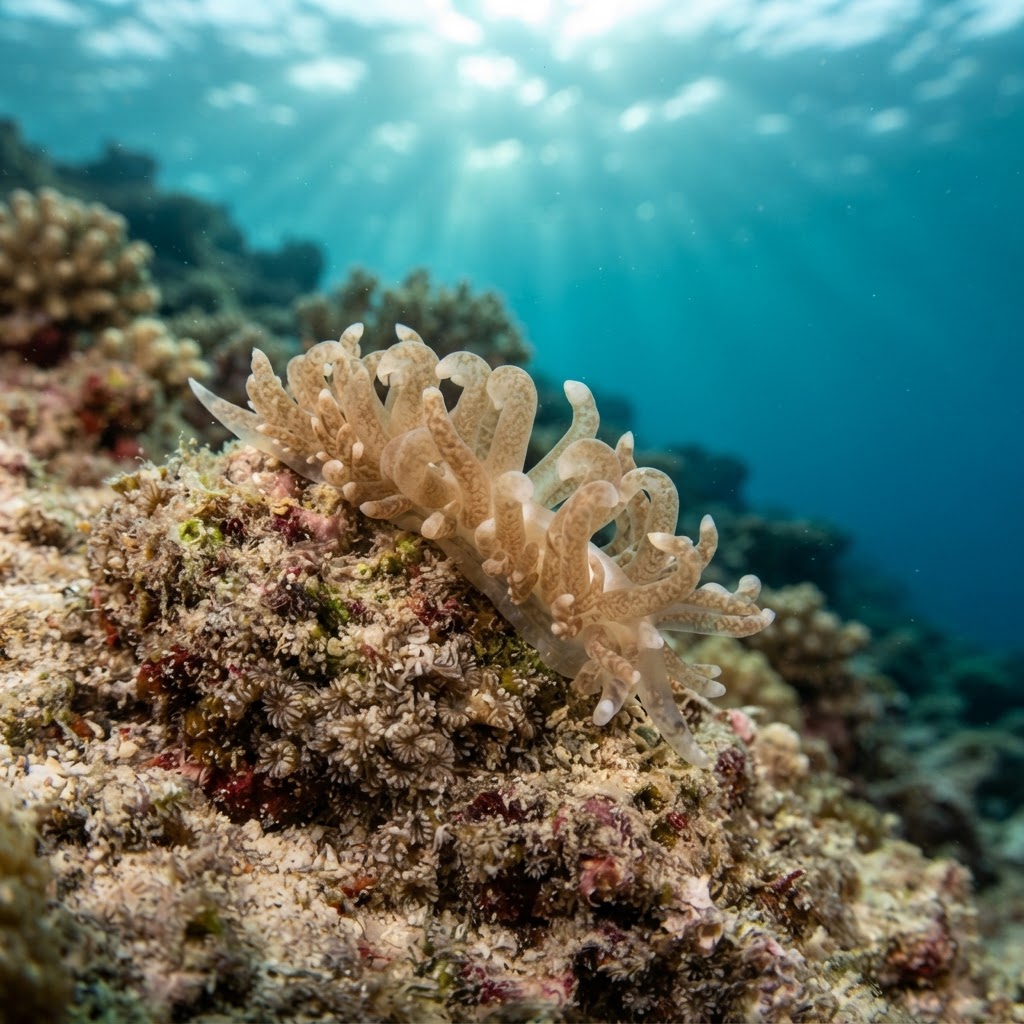
Look for a soft-bodied sea slug with a row of finger-like projections (cerata) running down its back, which in this genus often carry a translucent or mottled look that helps it blend into the soft corals it feeds on. Divers should expect a small, slow-moving animal best spotted by scanning coral colonies closely rather than swimming past. As with most Phyllodesmium species, exact colour and pattern can vary between individuals depending on what it has been feeding on, since some members of this genus incorporate pigments from their coral prey.
Expect to find it moving slowly over the soft coral colonies it likely feeds on, tucked in among branches rather than out in the open. It shows no reaction to divers beyond continuing its slow grazing, so a careful, unhurried look at soft coral heads is the way to spot one. Most logged sightings have been by divers searching macro life close to the reef rather than spotted mid-water.
Many Phyllodesmium species farm or steal pigment and even stinging cells from the soft corals they eat, which is part of why their colour can shift so much from one individual to the next.
Sightings sit at 25.1 to 31.1C, which covers the Philippines' tropical water temperature year-round, and there is no clear seasonal pattern in the data. Plan around good visibility and calm conditions in Luzon rather than a specific month.
The only confirmed sightings logged so far come from Luzon in the Philippines, making it the current place to look if you want a real shot at this species. It has not turned up elsewhere in diver records yet, so treat any Luzon dive site with healthy soft coral growth as your best bet.
Mapping where Phyllodesmium Parangatum is logged…
The only confirmed sightings are from Luzon in the Philippines, so that's currently the region to target if you want to find this species on a dive.
There's no detected season in the data, and it has been logged in water from 25.1 to 31.1C, which matches Luzon's tropical conditions year-round. Any time of year with good visibility should work.
Look for a small, soft-bodied nudibranch with cerata (finger-like projections) along its back, often coloured to blend with the soft coral it sits on. It moves slowly and is easiest to spot by scanning coral colonies closely rather than looking for movement.
Exact size data isn't available for this species, but like most nudibranchs in its family it is a small macro subject, likely only a few centimetres long, best found by close inspection of soft coral.
Species in the Phyllodesmium genus are known for taking on pigments and even defensive cells from the soft corals they graze on, which can make individuals of the same species look quite different from one another.
Site and sighting data is aggregated from diver logs, iNaturalist and GBIF. For taxonomy and conservation status:
Blue Dragon
3,163 sites