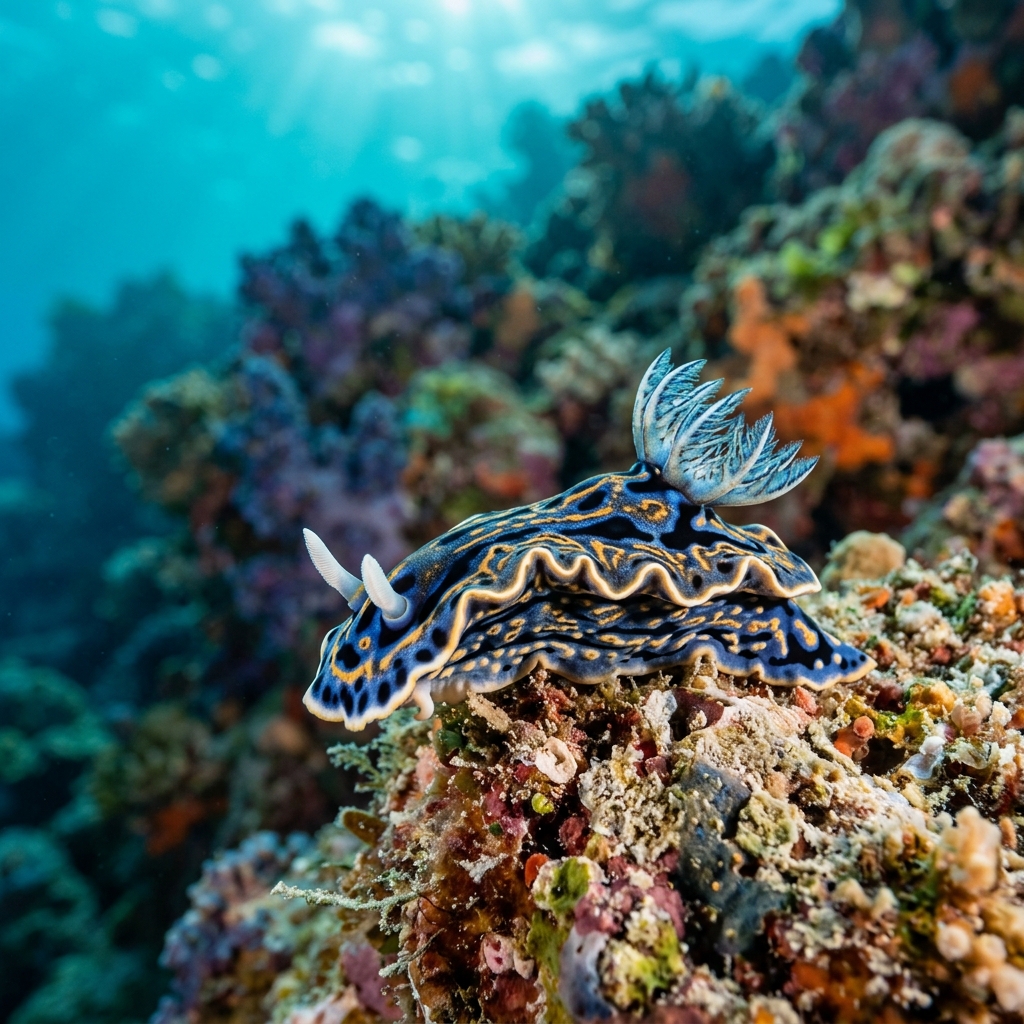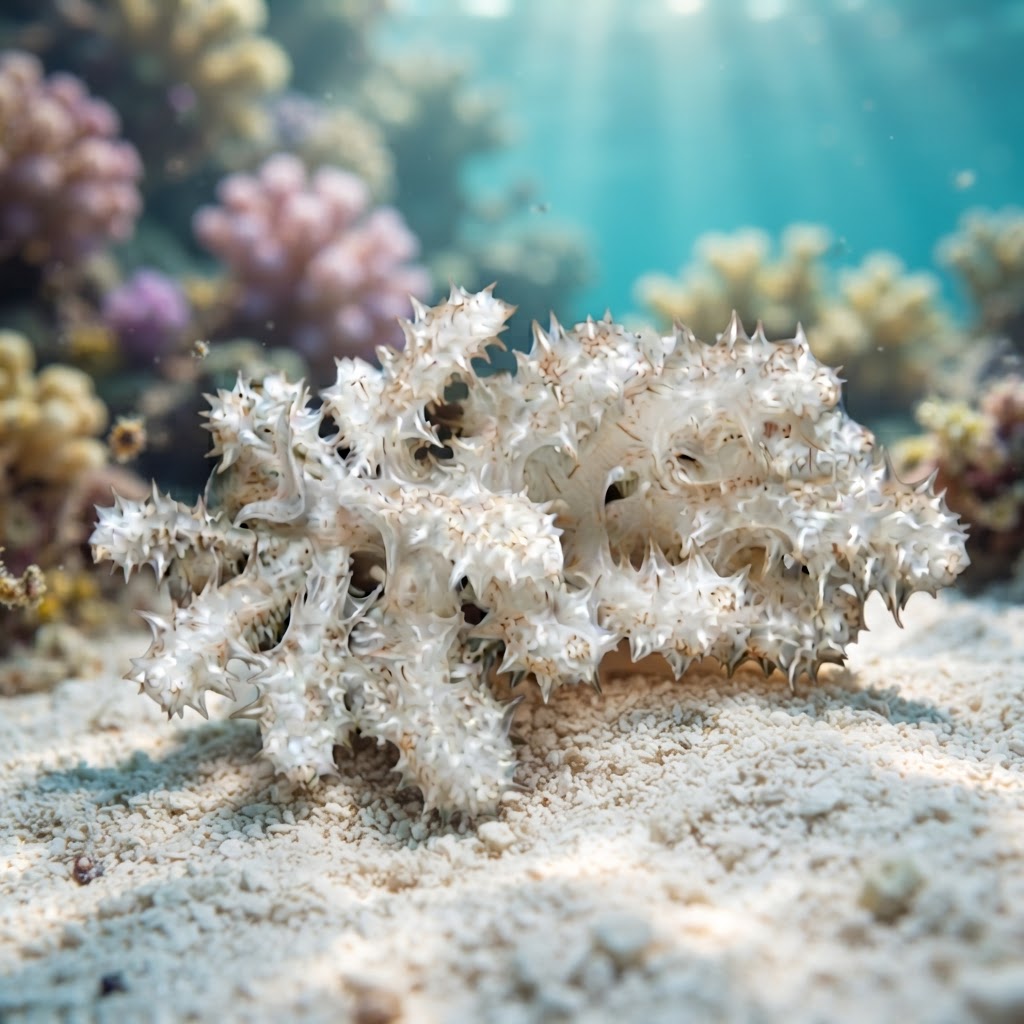
Phyllodesmium koehleri
An uncommon find on Luzon reef muck dives, this soft-coral-feeding nudibranch turns up in warm 25 to 31 C water most of the year.
A soft-bodied slug carrying rows of finger-like projections (cerata) along its back, which are usually translucent to pale brown and can pick up faint colour from whatever soft coral it has been feeding on. The body itself stays slender and low to the substrate rather than raised and showy like many reef nudibranchs. Look closely at the cerata tips and the head, since this species relies on subtle texture and shading rather than bold contrasting colour to stand out.
Divers find it slow-moving and stationary on the reef, grazing on the soft corals and hydroids it depends on for both food and, in many Phyllodesmium species, borrowed colour or chemical defences. It shows no reaction to divers beyond the usual slug indifference, so a slow careful look with a torch or macro lens on a muck or reef-muck site is the way to spot one. Best searched during a dedicated slow macro dive rather than a drift, since it is easy to pass over.
Many Phyllodesmium species, this one likely included, feed on soft corals and can incorporate the coral's own pigments or zooxanthellae into their tissue, letting them blend subtly with their food source rather than relying on bright warning colours.
Sightings show no clear seasonal pattern, and the water temperature range logged (25.3 to 31.3 C) covers pretty much the whole year on Philippine reefs, so it is a year-round possibility rather than a seasonal target.
This one is very much a Philippines specialty in the logged data, with Luzon the strongest region by a wide margin and the Visayas a secondary spot worth checking. Muck and reef sites around these two regions are where divers have actually found it, so if you are hunting this species specifically, plan your trip there.
Mapping where Phyllodesmium Koehleri is logged…
It is most reliably logged around Luzon in the Philippines, with additional sightings in the Visayas region. Outside the Philippines it has not turned up in significant numbers in diver records.
There is no strong season in the sighting data. Water temperatures where it has been found range from 25.3 to 31.3 C, conditions that hold year-round on Philippine reefs, so any month is fair game.
Check for a slender slug body with rows of branching cerata along the back, usually pale or translucent rather than brightly coloured. It sits low against the substrate near soft corals, which it feeds on and sometimes visually resembles.
Exact size data is not confirmed for this species, but like most Phyllodesmium nudibranchs it stays small, typically a couple of centimetres, so a macro lens or close look is needed to appreciate the detail.
As with related Phyllodesmium species, it likely feeds on soft coral tissue and can take up the coral's pigments or symbiotic algae into its own cerata, letting it blend subtly with its food source instead of standing out.
Site and sighting data is aggregated from diver logs, iNaturalist and GBIF. For taxonomy and conservation status:
Blue Dragon
3,163 sites