Phyllodesmium iriomotense
A pale, branching nudibranch logged only in Bali's reefs, comfortable year-round in 25.6 to 31.6C water.
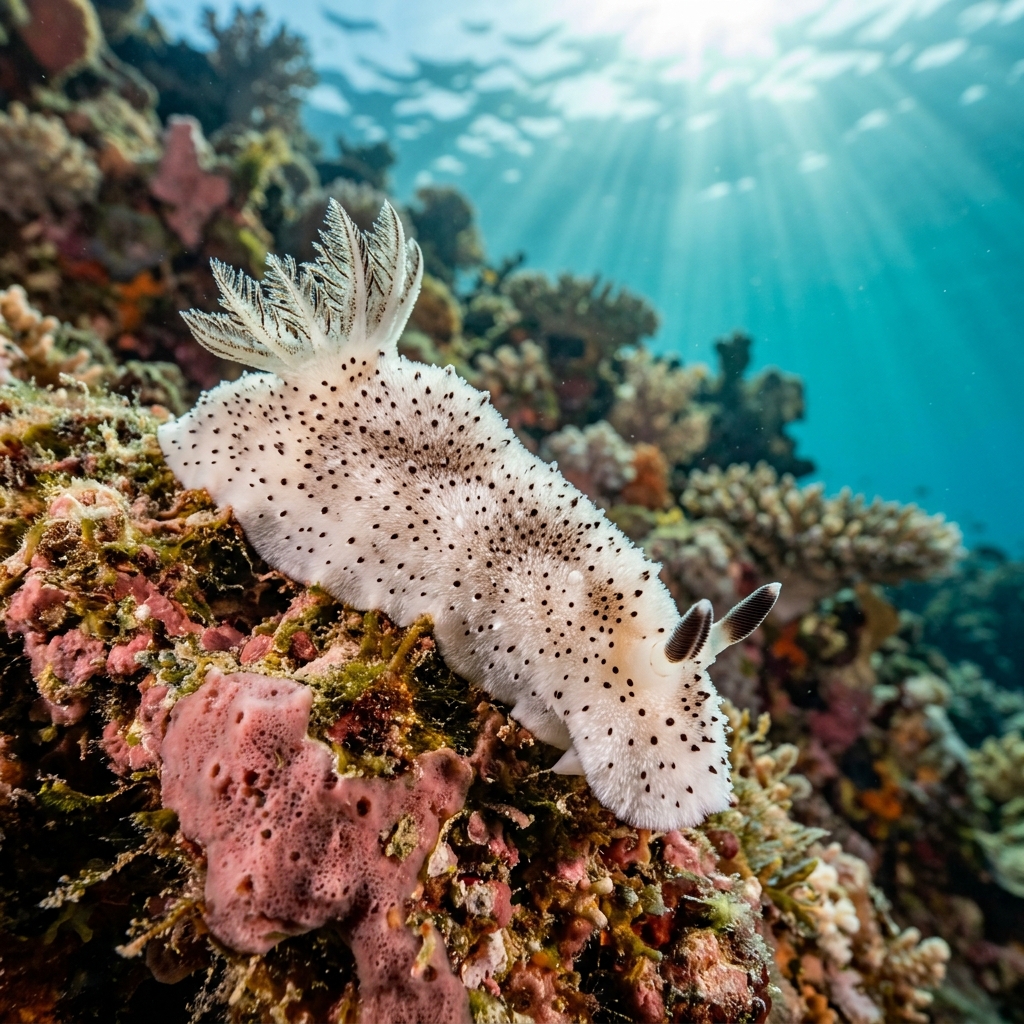
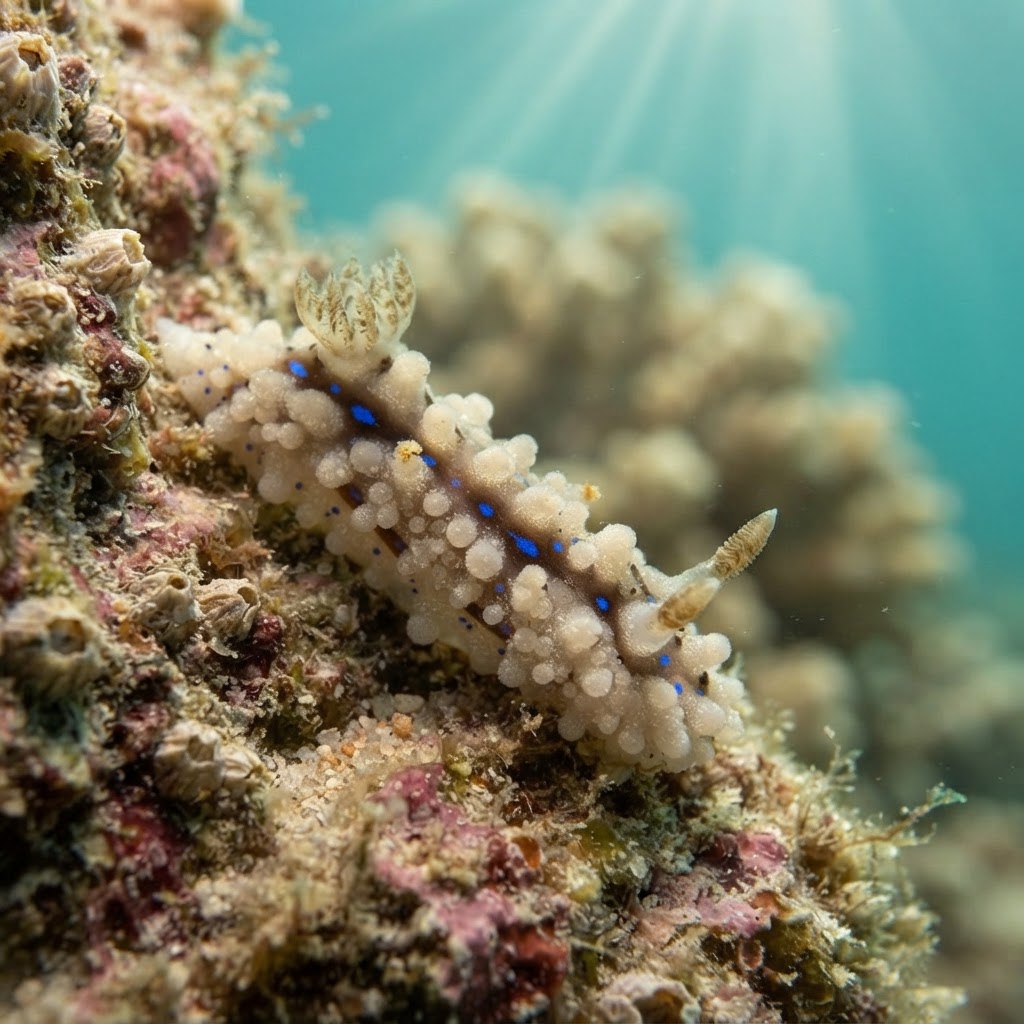
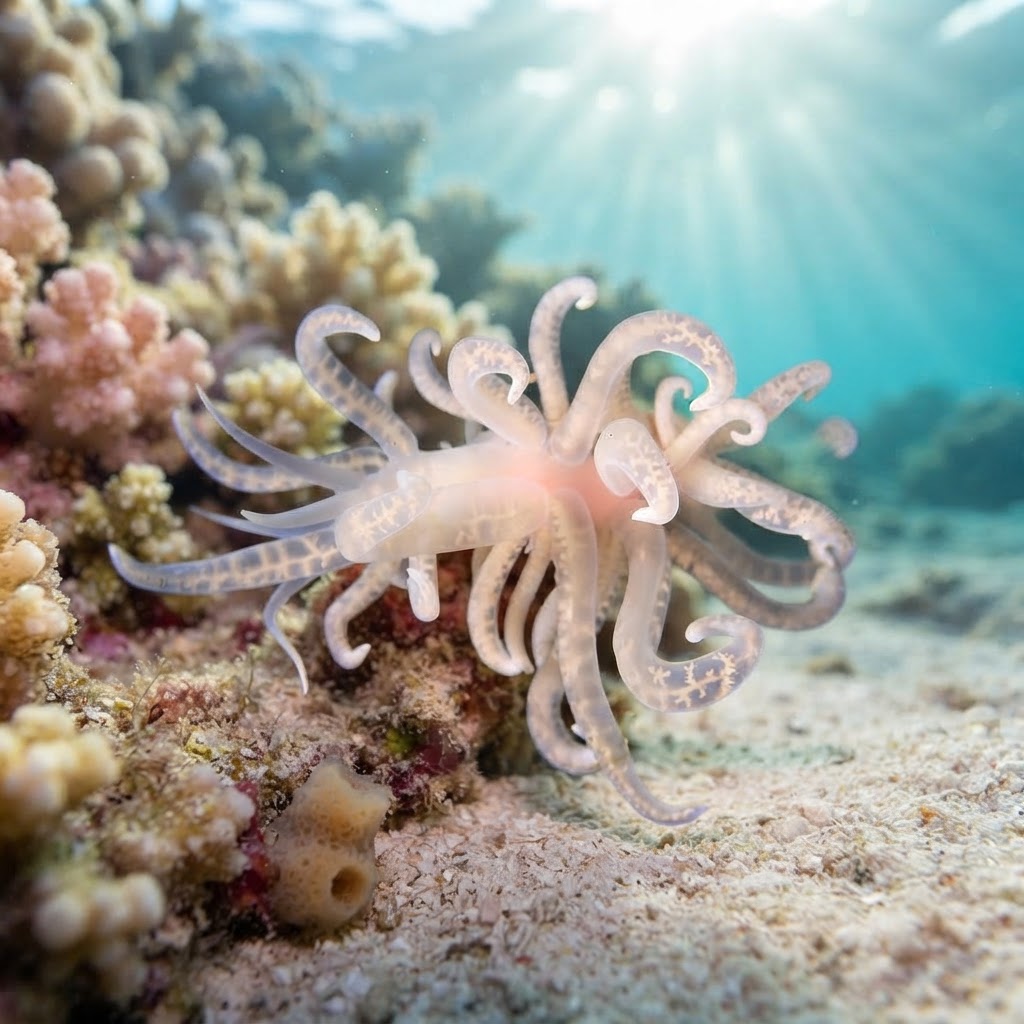
A slender, soft-bodied sea slug with numerous finger-like projections (cerata) branching along its back, giving it a frilly, plant-like silhouette rather than the smooth or ridged look of most reef nudibranchs. Colouration tends toward pale, translucent tones that let it blend into the soft coral or hydroid colonies it feeds near. Look closely along the substrate rather than in open water; this is a small, cryptic animal that relies on stillness and camouflage rather than bold pattern to avoid notice.
Divers find this nudibranch moving slowly over the reef substrate or perched on the soft corals and hydroids it associates with, doing little to react to a diver's presence beyond its usual unhurried crawl. It is a species for slow, close-focus diving rather than a passing glance, best spotted by divers scanning coral heads and rubble patches at a measured pace. Sightings logged at its known sites describe it as common where present, suggesting it is findable with a bit of patience rather than a rare stroke of luck.
Like other members of the Phyllodesmium genus, this species likely feeds on soft corals and can incorporate compounds from its prey into its own tissue, a trait several of its relatives use for camouflage or chemical defence.
There is not enough seasonal data to point to a particular window, and it is best treated as a year-round find. Water temperatures at the sites where it has been logged run from 25.6 to 31.6C, which covers Bali's reef conditions across the whole year.
Every logged sighting of this species so far comes from Bali, Indonesia, making it the only reliable region for divers hoping to find one. Dive operators and macro-focused dive guides on Bali's reefs are your best bet, since it has not yet been reported from other countries in diver observation data.
Mapping where Iriomote Phyllodesmium is logged…
All current diver sightings come from Bali, Indonesia, which is the only region with confirmed logs of this species so far.
There is no detected season, so it is best treated as a year-round find in Bali, where water temperatures at recorded sites sit between 25.6 and 31.6C.
Look for a small, pale, soft-bodied nudibranch with numerous branching, finger-like cerata along its back, giving it a frilly rather than smooth profile. It tends to sit still on or near soft coral and hydroid colonies, relying on camouflage rather than bright colour.
Exact size data is not confirmed, but like most Phyllodesmium species it is a small, easily overlooked slug best spotted with a slow, close-focus search of the reef.
No, it poses no threat to divers and is best simply observed and photographed without handling.
Like related Phyllodesmium species, it likely feeds on soft corals and may retain compounds from its prey in its tissue, a trick some relatives use for camouflage or defence.
Site and sighting data is aggregated from diver logs, iNaturalist and GBIF. For taxonomy and conservation status:
Light-spotted Aegires
3,168 sites