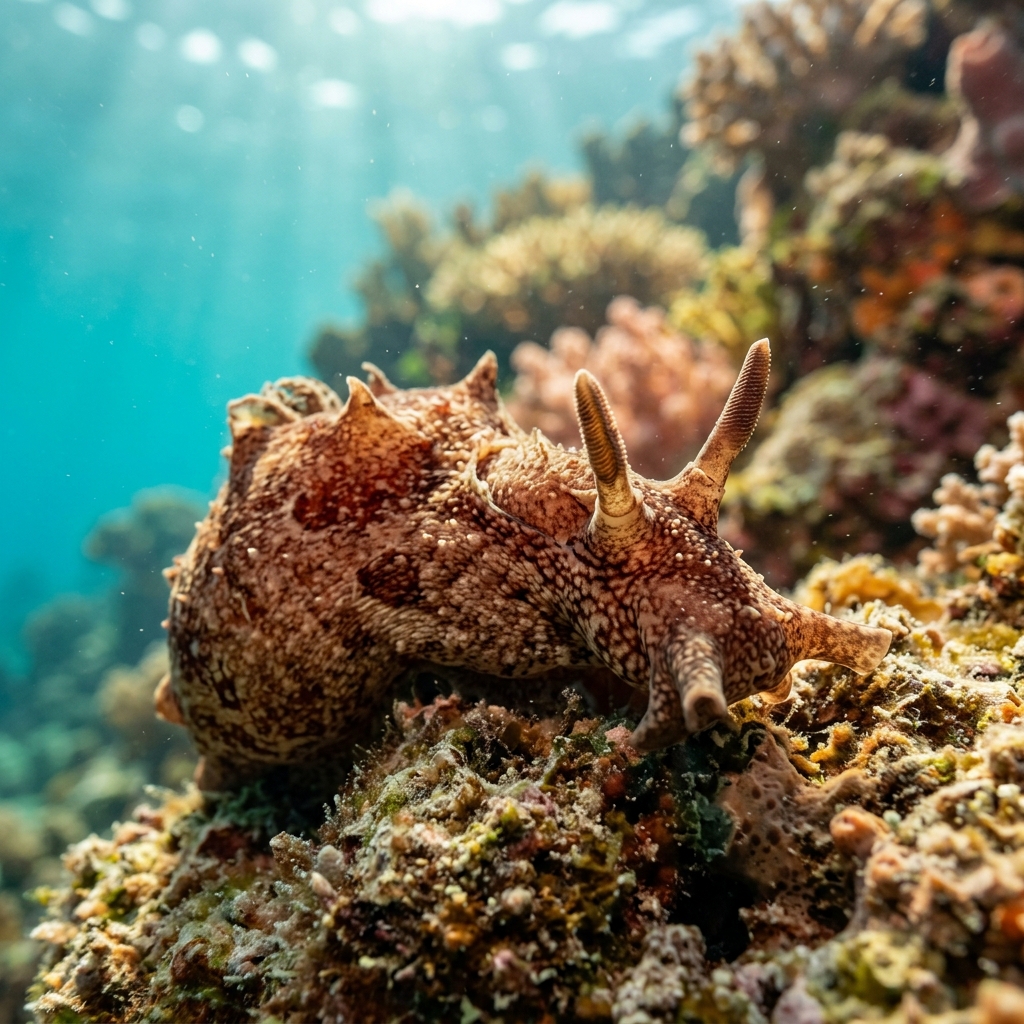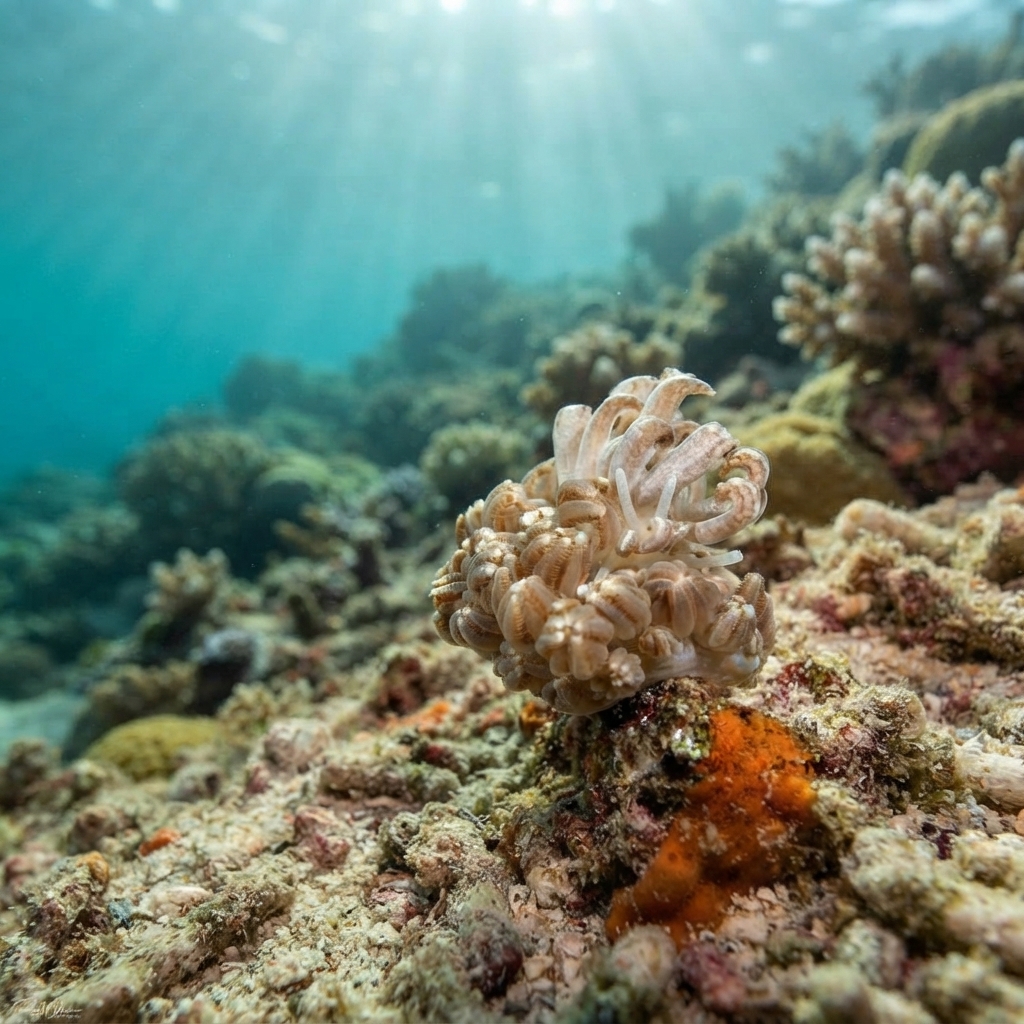
Phyllodesmium hyalinum
An uncommon translucent nudibranch logged across Eilat's Red Sea dive sites year-round in warm 21-27C water.
A small, glassy-bodied nudibranch whose translucent tissue lets internal organs show through faintly, giving it an almost see-through look against the reef. The back is covered in slender, finger-like projections called cerata (the frilly appendages nudibranchs use for both breathing and, in some species, defence), which often carry a pale or faintly greenish tint from symbiotic algae picked up through its soft-coral diet. Its body is elongated and slug-like, low to the substrate, and easy to overlook unless you are scanning slowly with a torch.
Divers find this nudibranch tucked low on the reef, moving slowly over hard and soft coral surfaces where it feeds. It shows no reaction to divers beyond its usual unhurried crawl, making it an easy subject once spotted, though its translucent body and small size mean most divers swim straight past it without noticing.
Like other Phyllodesmium species, it feeds on soft corals and can incorporate the coral's symbiotic algae into its own tissue, which is part of why its cerata sometimes show a faint greenish cast rather than being purely clear.
Sightings show no clear seasonal pattern, and the observed water temperature range of 21.1 to 27.1C spans Eilat's typical year-round conditions, so there is no strong reason to time a trip around a particular month.
Every logged sighting of this species in the data comes from Eilat, Israel, making the northern Red Sea the place to look for it. Within that region it turns up as an uncommon to rare find across a handful of specific sites, so it rewards divers doing slow, methodical macro searches rather than a single lucky reef.
Mapping where Glassy Phyllodesmium is logged…
All recorded sightings come from Eilat in Israel, making the northern Red Sea the known location for this species, where it shows up as an uncommon to rare find at several dive sites.
There is no detected seasonal pattern, and it has been observed across a temperature range of roughly 21 to 27C, so it appears to be a year-round find in Eilat rather than tied to a particular season.
Look for a small, translucent nudibranch with slender cerata covering its back, sometimes tinted faintly green from the algae in its diet. Its see-through body lets you glimpse internal structures, which helps separate it from opaque, brightly patterned nudibranch species on the same reef.
No, this species poses no danger to divers. It is a small, slow-moving reef animal with no venom or defensive behaviour relevant to humans.
It feeds on soft corals, and like related Phyllodesmium species it can retain the coral's algal symbionts within its own tissue, which may explain the subtle green tint sometimes seen in its cerata.
Site and sighting data is aggregated from diver logs, iNaturalist and GBIF. For taxonomy and conservation status:
Light-spotted Aegires
3,168 sites