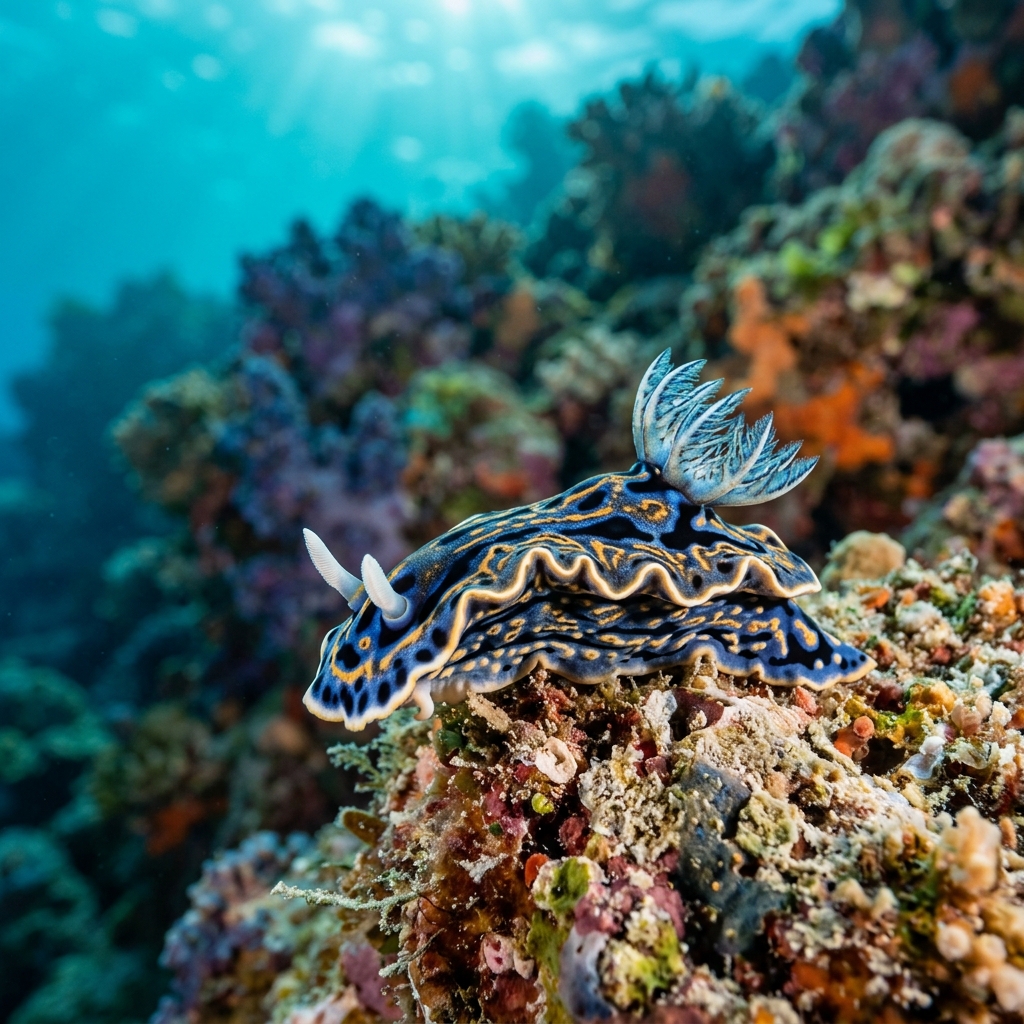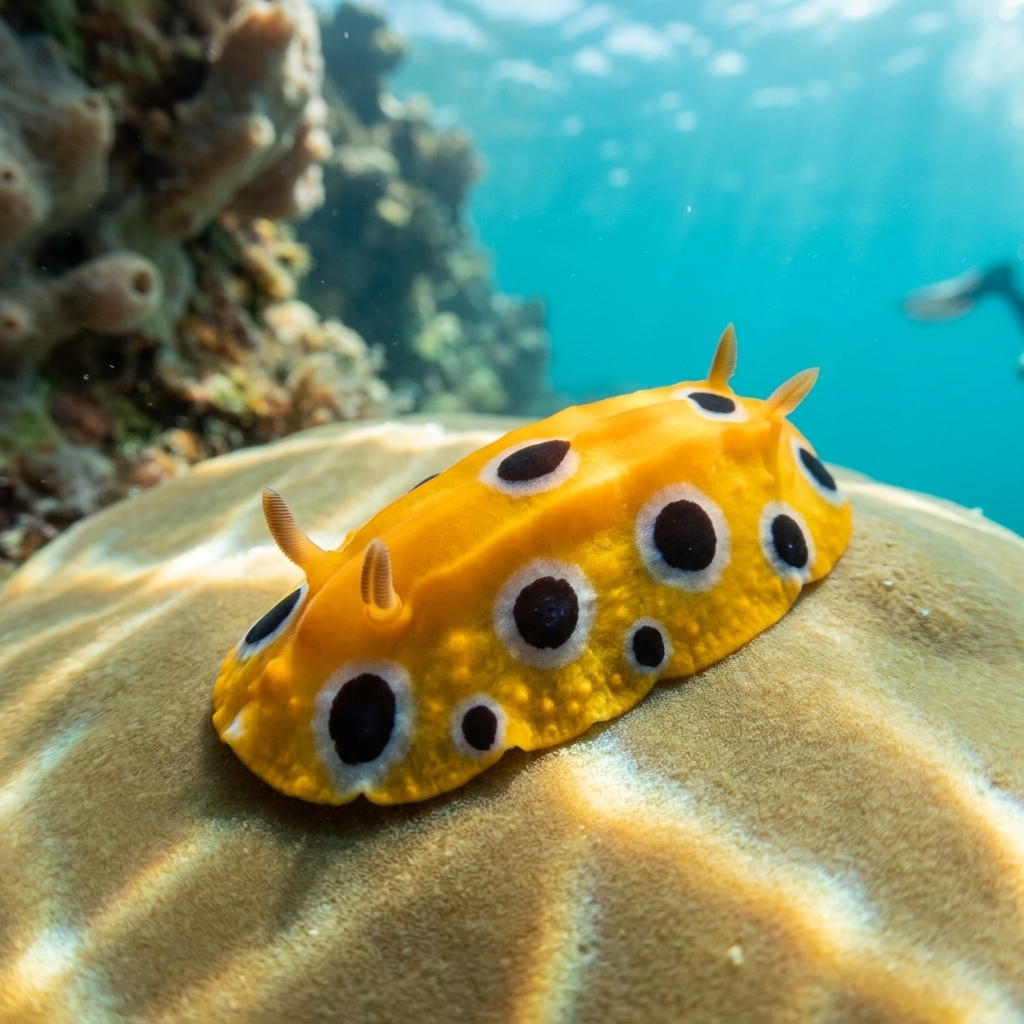
Phyllidia polkadotsa
Spot the Polka-dotted Nudibranch in Hawaii or the Philippines, where water temps hit 24-29°C. Best sightings run May to September.
Look for a pale, flattened body covered in bold, dark circular spots, the polka-dot pattern is the single most reliable field mark at depth. Like all phyllidiids (a family of firm-bodied nudibranchs with no visible gills on the back), it has a rigid, warty dorsal surface rather than the feathery gill plumes you see on other nudibranch groups. It crawls slowly across hard reef and rubble, usually spotted in warm, clear tropical shallows.
You will typically find this nudibranch slowly picking its way across hard coral, rubble, or encrusted rock in relatively shallow reef zones. It does not react dramatically to divers and will simply continue its unhurried crawl if you approach slowly and without disturbing the substrate. Like other phyllidiids, it is a daytime grazer, so day dives give the best chance of a sighting.
Phyllidiid nudibranchs, including this species, are chemically defended: they sequester toxic compounds from their sponge prey and can release them as a deterrent to predators, making them largely untouched by reef fish.
In the Northern Hemisphere, sightings concentrate between May and September, aligning with warmer water periods across both Hawaii and the Philippines. The species is observed in water ranging from around 24 to 29°C, so plan for the warmer half of the year.
Most observations come from Hawaii, where it has been recorded across multiple sites in the islands. It is also logged in Luzon and the northern Philippines, making that a secondary but real destination for anyone targeting it in the Indo-Pacific.
Mapping where Polka-dotted Nudibranch is logged…
Confirmed sightings come from Hawaii and from Luzon in the northern Philippines. Hawaii accounts for the majority of logged sites, making it the strongest destination. The Philippines adds a useful Indo-Pacific option for divers already planning a trip to that region.
Sightings in the Northern Hemisphere cluster between May and September. Both Hawaii and the northern Philippines sit in the tropical warm season during those months, with water temperatures in the 24 to 29°C range where this species is most reliably observed.
The key mark is the pattern of bold, dark circular spots on a pale, firm body, exactly what the name promises. It belongs to the phyllidiid family, so it lacks exposed gill plumes on its back and has a noticeably rigid, warty dorsal surface. Slow movement across hard reef or rubble is typical.
No, they pose no threat to divers whatsoever. Like other phyllidiids they carry chemical defences aimed at predatory fish, but handling them is harmless as long as you avoid touching your face afterwards. Best practice is simply not to handle them at all.
Phyllidiid nudibranchs feed on sponges, rasping tissue from the reef surface as they crawl. They store toxic compounds from the sponges in their own tissues, which is why fish tend to leave them alone. On a dive, you will often find them moving slowly across areas of encrusting sponge.
Site and sighting data is aggregated from diver logs, iNaturalist and GBIF. For taxonomy and conservation status:
Blue Dragon
3,163 sites