Phyllidia exquisita
Spot the Yellow-edged Wart Slug across Queensland, Sipadan, and Northern Taiwan. Uncommon but real, here's how to find and identify it.
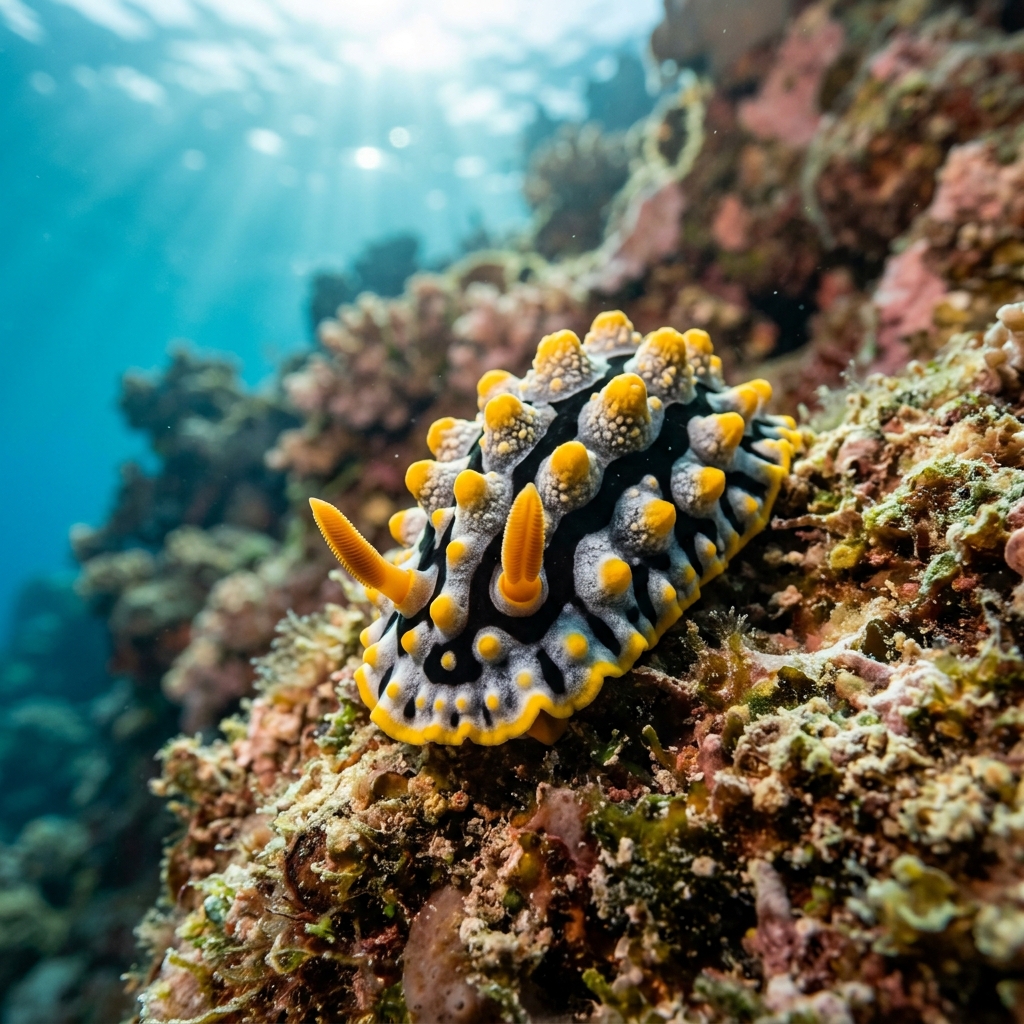
Look for a firm, warty body with a dark (typically black or dark grey) upper surface edged with a distinctive yellow or yellowish margin running around the mantle rim, that contrasting border is the key field mark. Like other members of the Phyllidiidae family (dorid nudibranchs that lack visible gills on their back, instead breathing through a groove under the mantle edge), it has a stiff, rigid feel and moves deliberately across rock and encrusting growth. The bumpy, tubercle-covered dorsum sets it apart from smooth-bodied nudibranchs at a glance.
You will most often find this nudibranch crawling slowly over hard substrate, encrusting sponges, or reef rubble, grazing on the cyanobacteria and sponges that Phyllidiidae members feed on. It shows little reaction to divers and can be approached closely, though its cryptic colouring against algae-covered rock means it is easy to miss if you are not searching carefully. Daylight dives are the norm for sightings, though like most nudibranchs it is likely active at night too.
Phyllidiidae nudibranchs are chemically defended, they sequester toxic compounds from the sponges they eat and can release them as a deterrent to predators, which is why they can afford to wander exposed reef surfaces without hiding.
No clear seasonal peak has emerged from the available data, so treat it as a year-round possibility. Observed water temperatures range from about 23 to 29 °C, fitting the warm tropical and subtropical reefs where it is most consistently logged.
Most sightings come from Australia, particularly Queensland reefs and sites along Western Australia. Sipadan and the wider East Sabah region of Malaysia account for a strong cluster of records, and Northern Taiwan adds a notable concentration of observations. Smaller numbers have been logged in Sulawesi, Indonesia and Sai Kung, Hong Kong.
Mapping where Yellow-edged Wart Slug is logged…
It is most reliably logged across Queensland and Western Australia, the Sipadan and East Sabah area of Malaysia, and Northern Taiwan. A smaller number of sightings have been recorded in Sulawesi, Indonesia and Sai Kung, Hong Kong.
There is no confirmed seasonal window in the data, so it appears to be a year-round possibility on the warm reefs where it lives. Water temperatures at sighting sites run from roughly 23 to 29 °C, pointing to stable tropical and subtropical conditions throughout the year.
The clearest field mark is the bright yellow border running around the edge of the mantle against a dark, warty dorsal surface. Phyllidiidae nudibranchs also lack the exposed gill plume seen on many other dorids, giving the back a clean, bumpy look with no feathery rosette.
It is classed as uncommon at the large majority of sites where it has been recorded, and rare at a handful of others. You will likely need to search carefully, and a knowledgeable local dive guide familiar with nudibranch hunting will greatly improve your odds.
Site and sighting data is aggregated from diver logs, iNaturalist and GBIF. For taxonomy and conservation status:
Blue Dragon
3,163 sites