Phyllidia coelestis
Spot the Heavenly Wart Slug in Malaysia, the Philippines and Indonesia. Year-round in warm tropical waters. ID tips, top regions and dive site data inside.
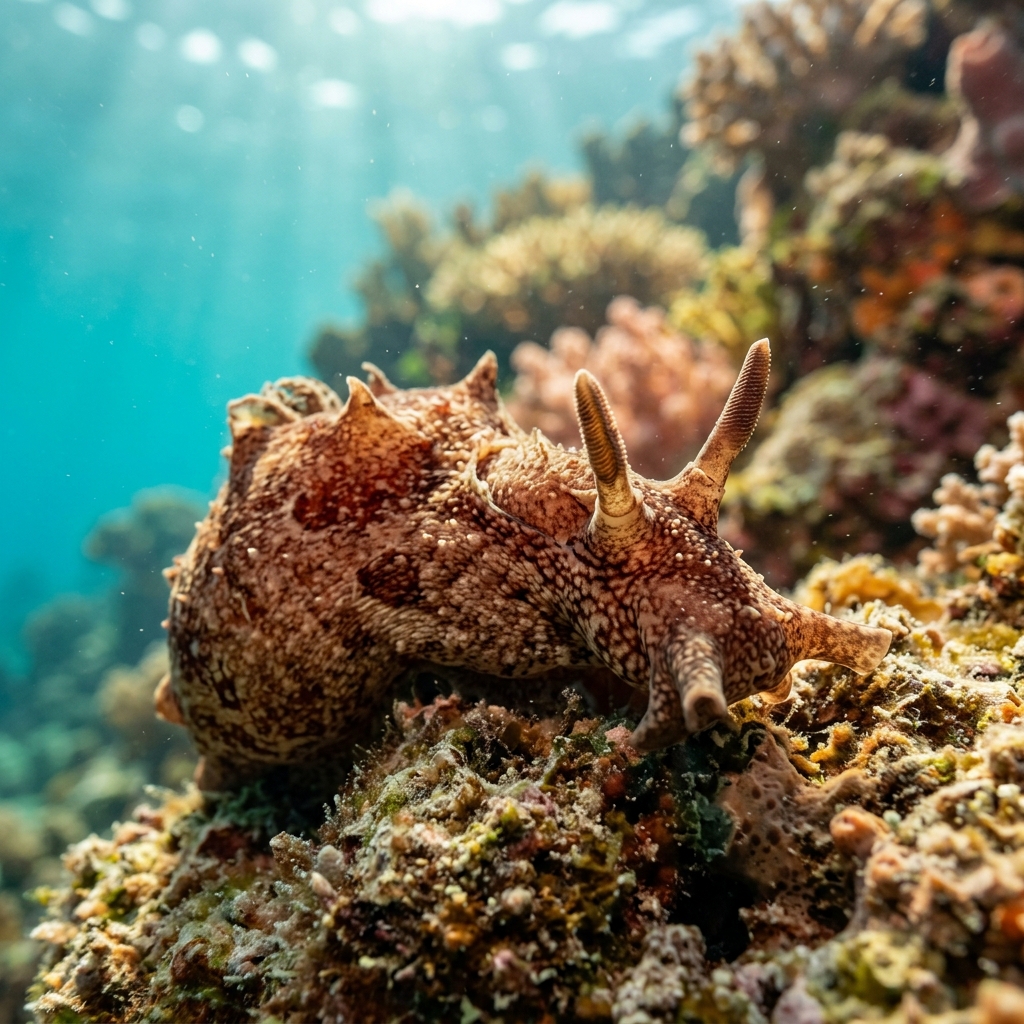
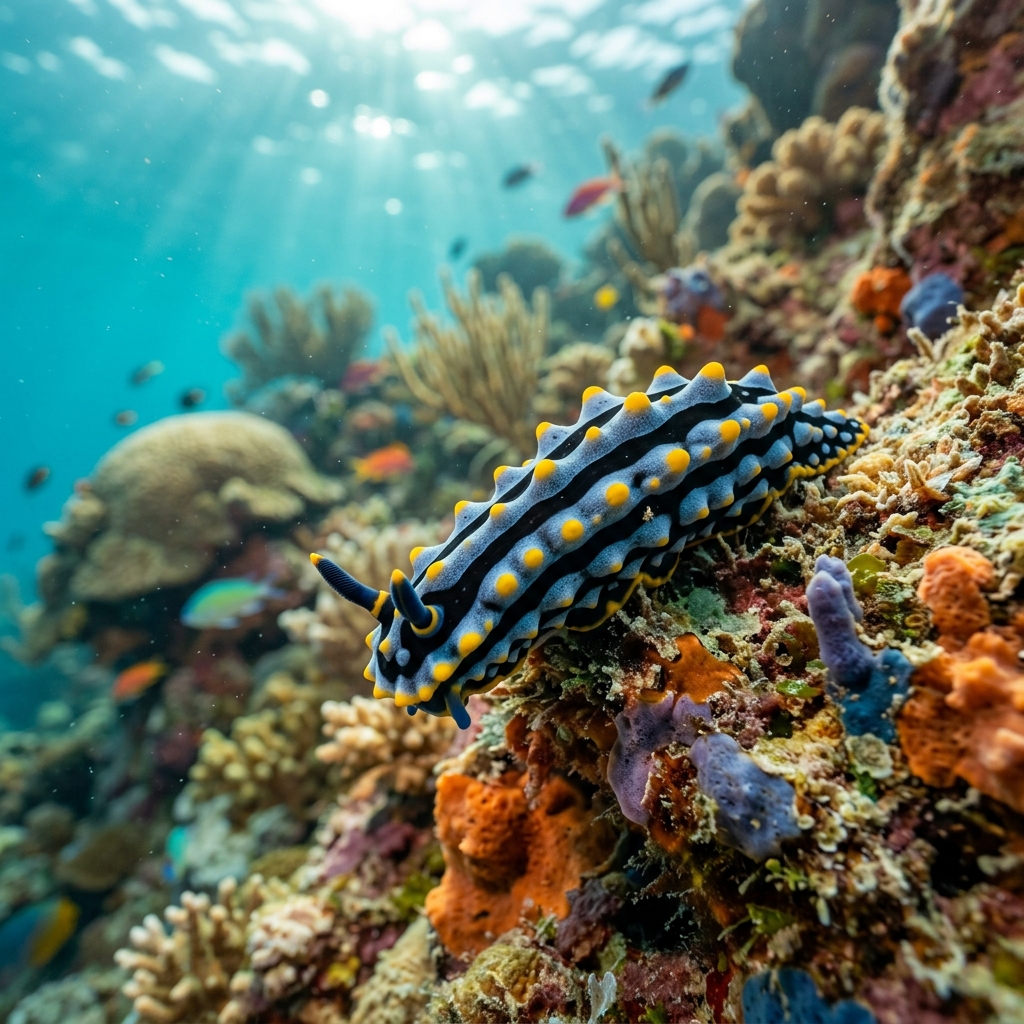
Look for a firm, lumpy body covered in raised tubercles (wart-like bumps) that give the family its distinctive texture. The body is typically pale, cream, or white with contrasting dark tips or markings on each tubercle, making the pattern pop against reef rubble or hard coral. Phyllidiid nudibranchs lack the external gills visible on many other nudibranch families, breathing instead through a groove running along the underside of the body. Size is not well-documented in the field, but like most phyllidiids it sits in the small-to-medium nudibranch range, easy to miss unless you are searching methodically.
You will most often find it moving slowly across hard coral, reef rubble, or encrusting sponges, which phyllidiids typically feed on. It shows little reaction to divers and does not retreat quickly, so a patient, slow approach rewards a close look. Sightings tend to come during the methodical searching that characterises muck and reef macro dives rather than open-water swims.
Phyllidiid nudibranchs like this one sequester toxic compounds from the sponges they eat and can release them into the surrounding water as a chemical defence against predators, making their bright patterning a real warning signal rather than camouflage.
Sightings are recorded year-round with no concentrated season, which fits the species' preference for warm tropical water in the 26 to 29 degrees Celsius range found consistently across its core Indo-Pacific sites.
Malaysia leads the records by a clear margin, with strong sighting clusters around Pulau Tioman, Sipadan and East Sabah, and the Perhentian and Redang islands. The Philippines follow closely, particularly across Luzon and the central Visayas. Indonesia, Japan's Okinawa Islands, and Taiwan also contribute solid numbers, making the Indo-Pacific reef triangle the core range for any diver targeting this species.
Mapping where Heavenly Wart Slug is logged…
The species is most consistently logged across Malaysia, the Philippines, and Indonesia, with top hotspots including Sipadan, Pulau Tioman, the Perhentian Islands, Luzon, the central Visayas, Okinawa, and Bali. It has also been recorded in Taiwan, Australia, Vanuatu, and Niue.
Sightings are spread across all months with no clear peak season. The species favours warm tropical reef water in the 26 to 29 degrees Celsius range, which is available year-round at its core Indo-Pacific sites, so any trip timing can work.
Key in on the pale or cream body studded with dark-tipped tubercles arranged across the dorsal surface. Unlike many nudibranchs, there are no external gills visible on the back. The bumpy texture and contrasting dark markings distinguish it from smoother-bodied nudibranch families on the reef.
At most sites where it appears, it registers as uncommon rather than reliable, though a smaller number of sites record it as common. Slow, methodical macro diving across rubble and hard coral gives you the best chance of a sighting.
No. Like other phyllidiid nudibranchs, it can release toxic secretions into the water if disturbed, but this poses no risk to divers. Simply observe without touching and it will behave normally.
Site and sighting data is aggregated from diver logs, iNaturalist and GBIF. For taxonomy and conservation status:
Light-spotted Aegires
3,168 sites