Pleurobranchus peronii
Warty, mottled sea slug turning up on night dives in Queensland and New South Wales, year-round in warm 19.5 to 29.5C water.
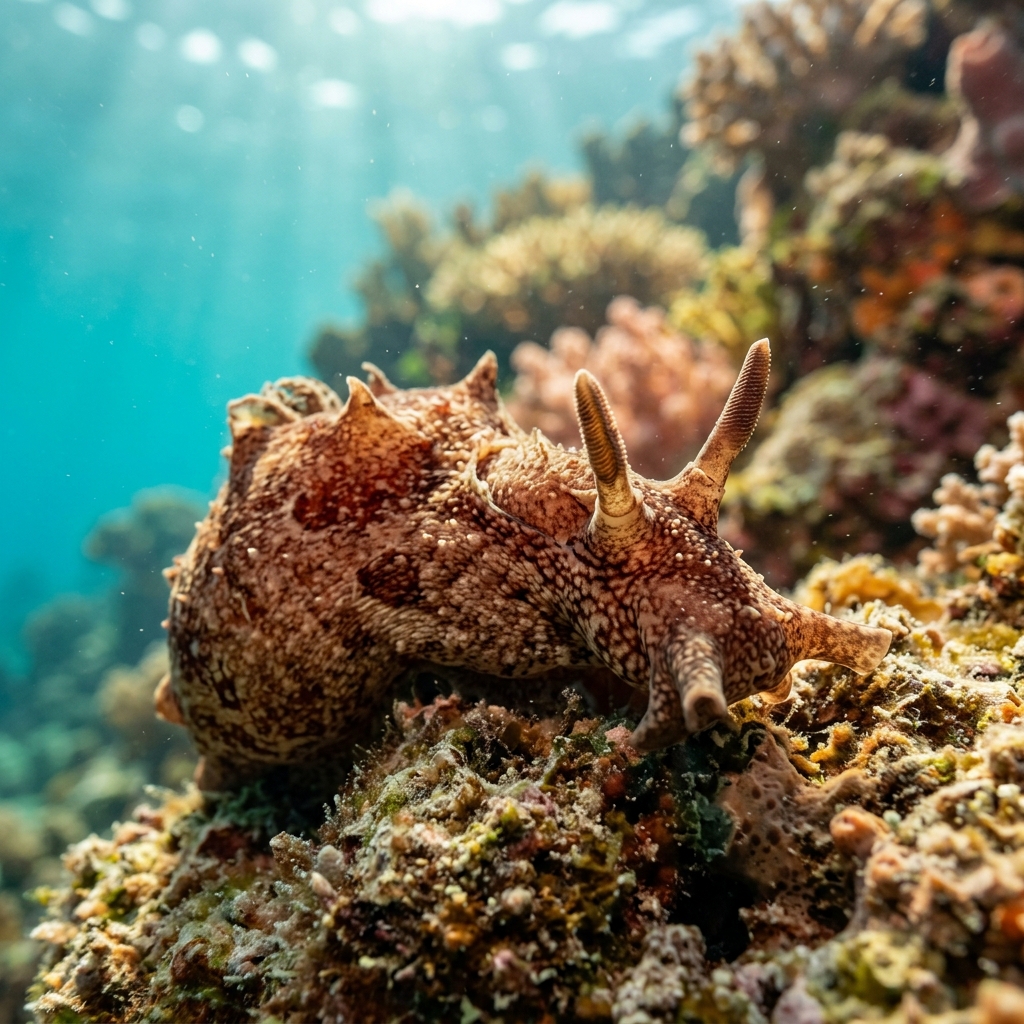
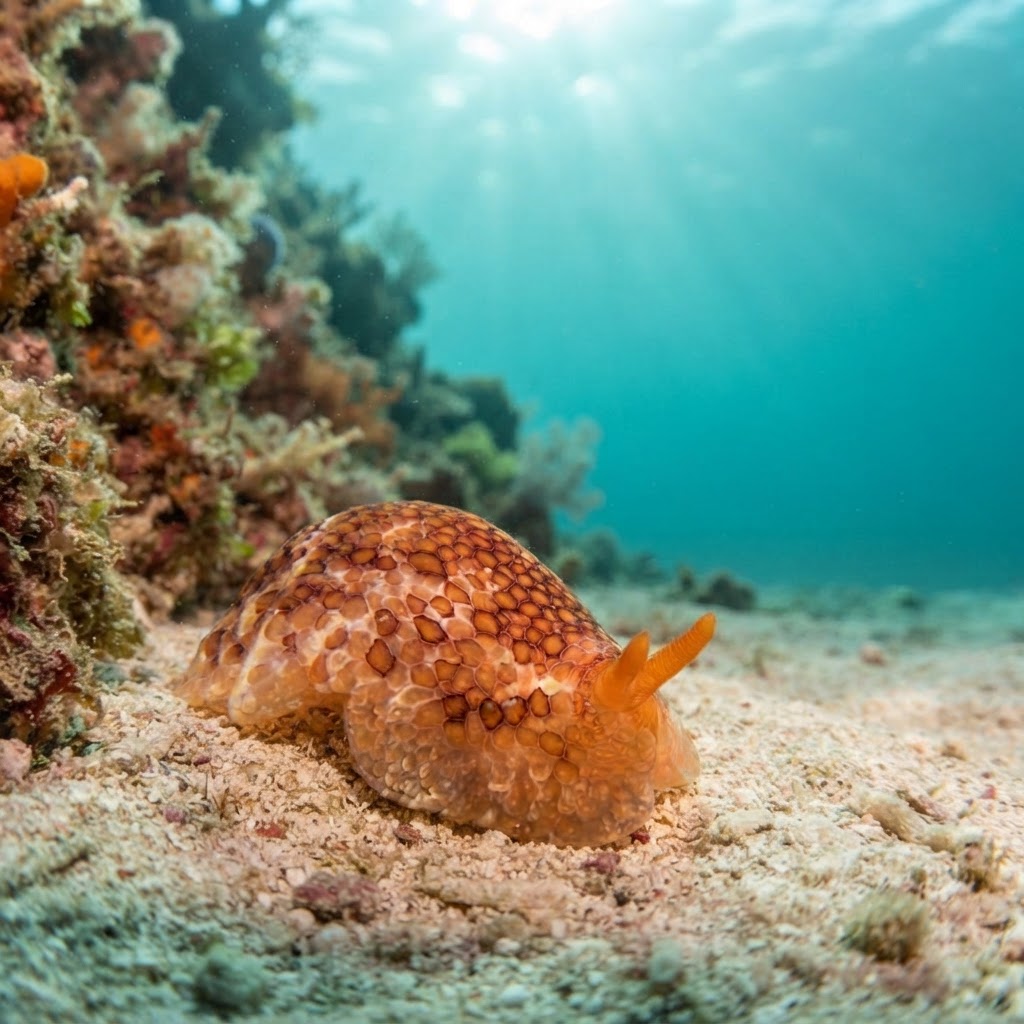
Look for a large, soft-bodied slug with a warty, mottled mantle in shades of brown, cream and tan, often with a marbled or blotchy pattern that breaks up its outline against rubble and sand. The mantle edge is broad and slightly frilled, and the whole animal can look almost sponge-like at rest. Its rhinophores (the small paired sensory horns near the front) are rolled and stick up distinctly, a good giveaway that this is a sidegill and not a true nudibranch.
Divers mostly find this one crawling slowly over sand, rubble or low reef structure, often on night dives when it is more active and easier to spot with a torch. It shows no real reaction to divers, it simply keeps grazing at its own pace, making it an easy subject to photograph up close without disturbing it.
Like other sidegill slugs, it can release a sulphuric acid-based secretion when harassed, a defence that makes most reef predators leave it well alone.
No clear seasonal pattern shows up in the data, and its comfort range of roughly 19.5 to 29.5C spans both temperate and tropical conditions, so it is logged as a year-round find rather than a seasonal one.
Most reliably logged in Australia, particularly Queensland and New South Wales, which together account for the bulk of recorded sightings. Smaller but consistent numbers turn up in the Philippines (Luzon and Visayas) and Central Japan, so it is worth checking rubble and sandy patches on temperate and tropical reefs across all three countries.
Mapping where Peron's Sidegill Slug is logged…
It is most commonly logged in Australia, especially Queensland and New South Wales, with additional sightings in the Philippines (Luzon, Visayas) and Central Japan. Check sandy or rubble patches on reefs rather than open coral.
There is no strong seasonal pattern in sightings, and it tolerates a wide temperature range from about 19.5 to 29.5C, so divers report it year-round rather than in a specific window.
Look for a warty, mottled brown-and-cream mantle with a frilled edge and a soft, almost sponge-like look, usually resting on sand or rubble. Rolled rhinophores standing up near the front help confirm it as a sidegill slug rather than a nudibranch.
No, it poses no threat to divers and can be photographed at close range without any risk. It is slow-moving and does not react defensively unless directly handled.
It can secrete a sulphuric acid-based substance when disturbed, a chemical defence shared by several sidegill slug species that keeps most predators away.
Site and sighting data is aggregated from diver logs, iNaturalist and GBIF. For taxonomy and conservation status:
Light-spotted Aegires
3,168 sites