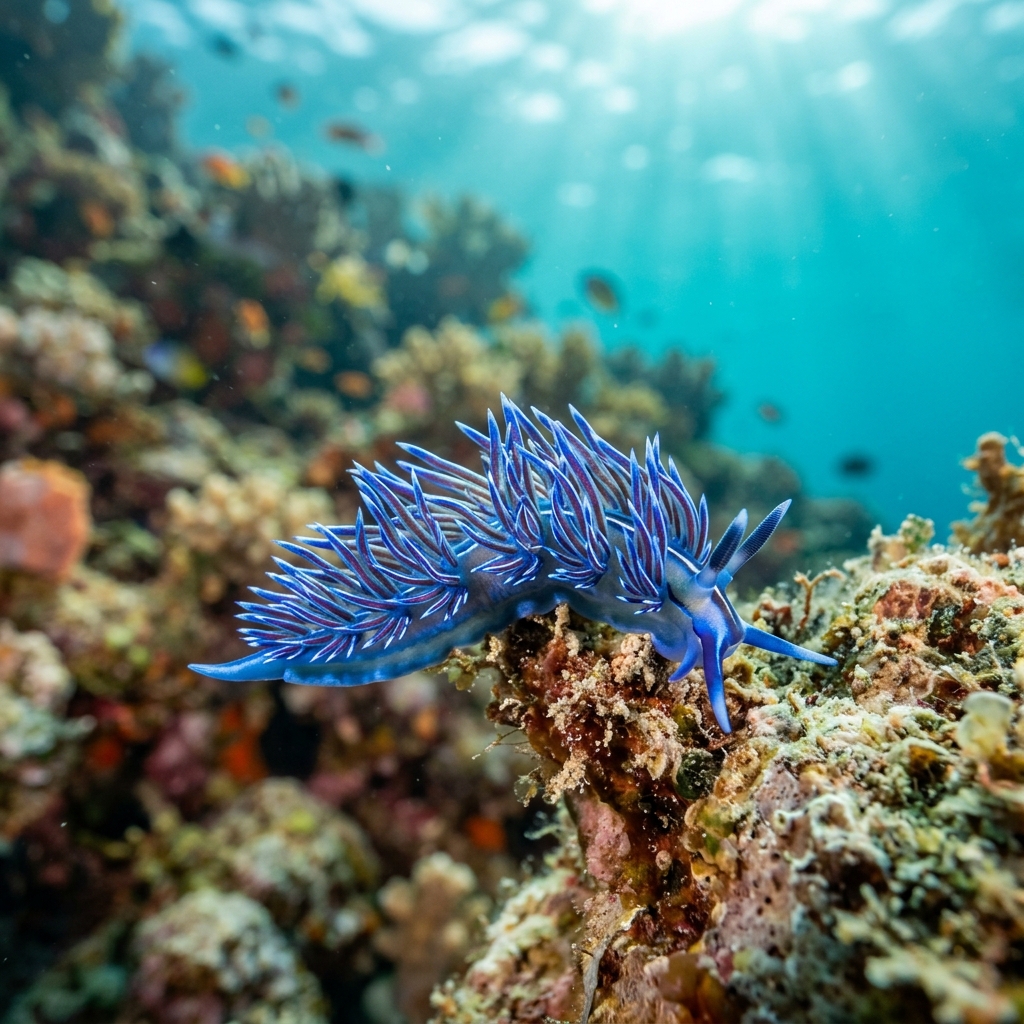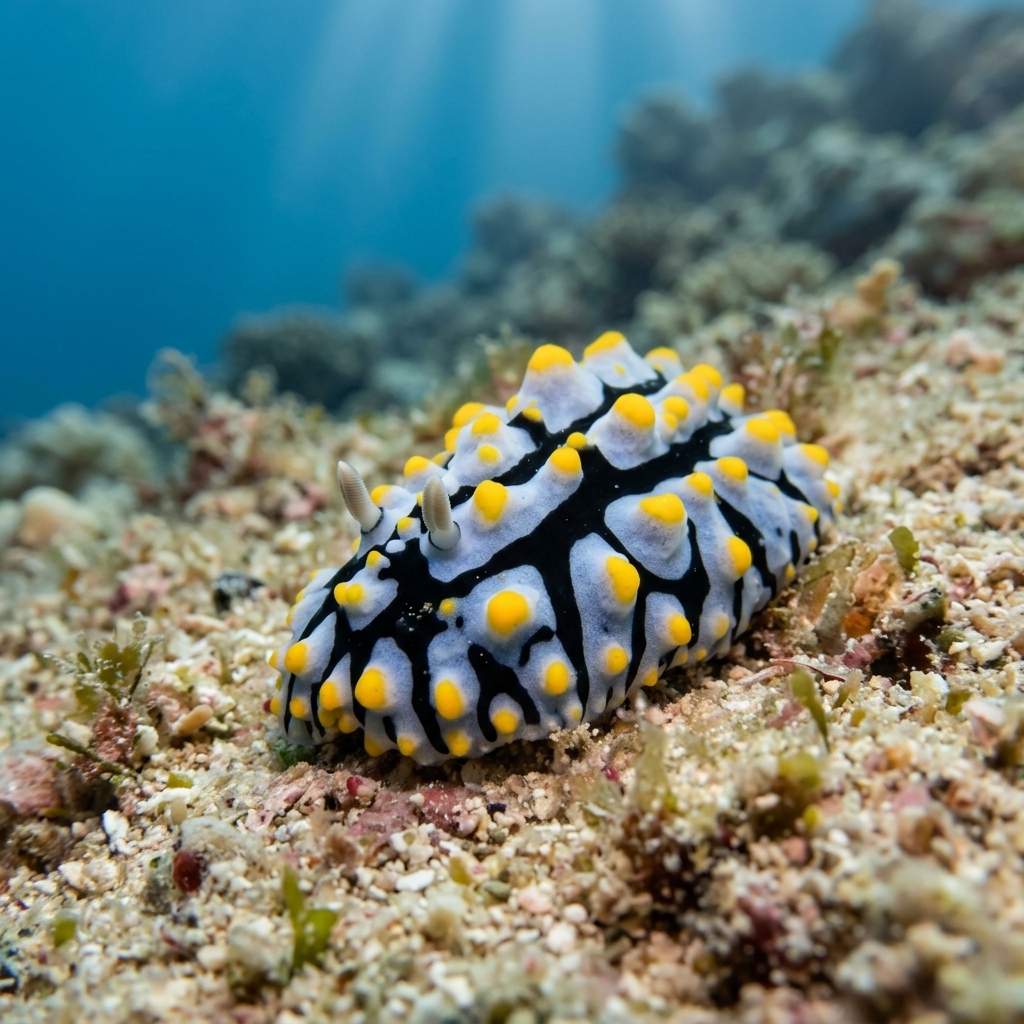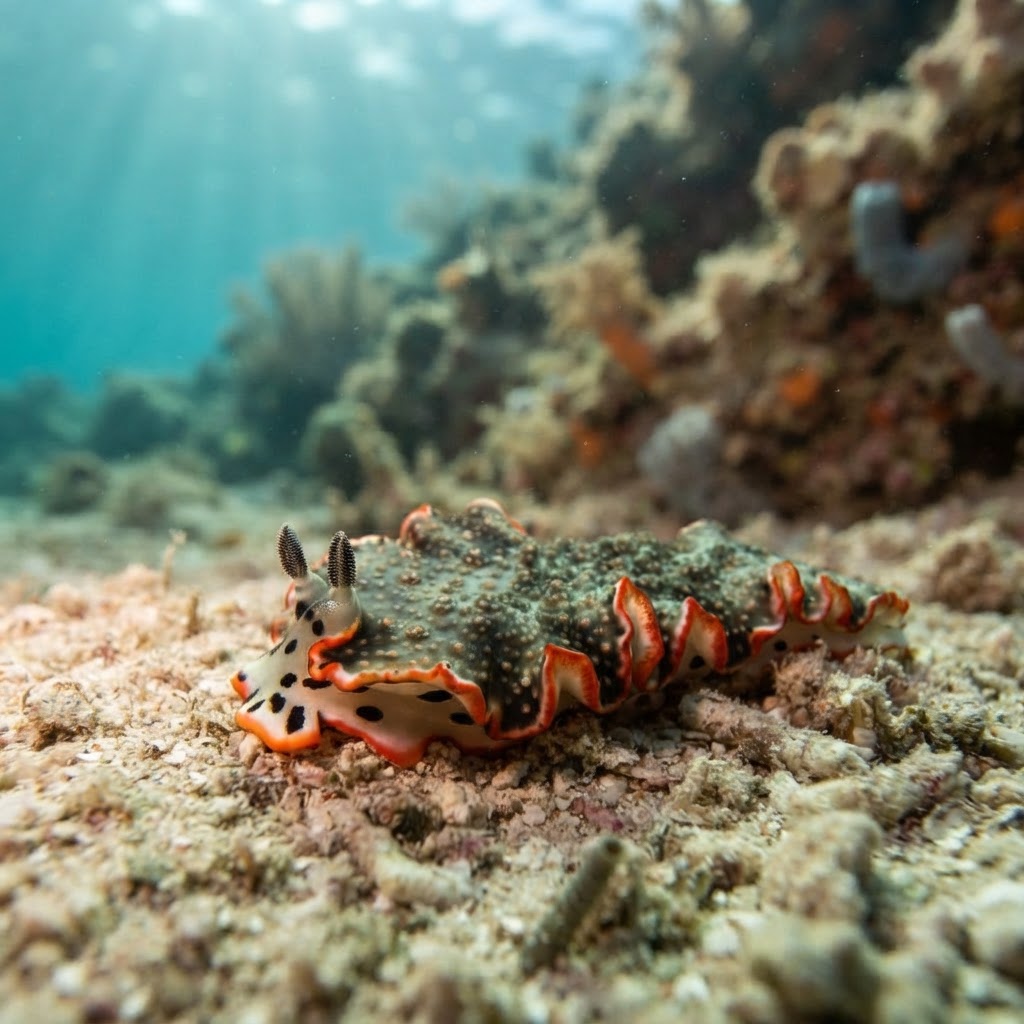
Dermatobranchus ornatus
A small striped nudibranch logged most often on Sumatra's reefs and Oman's Muscat coast, year-round in warm water.
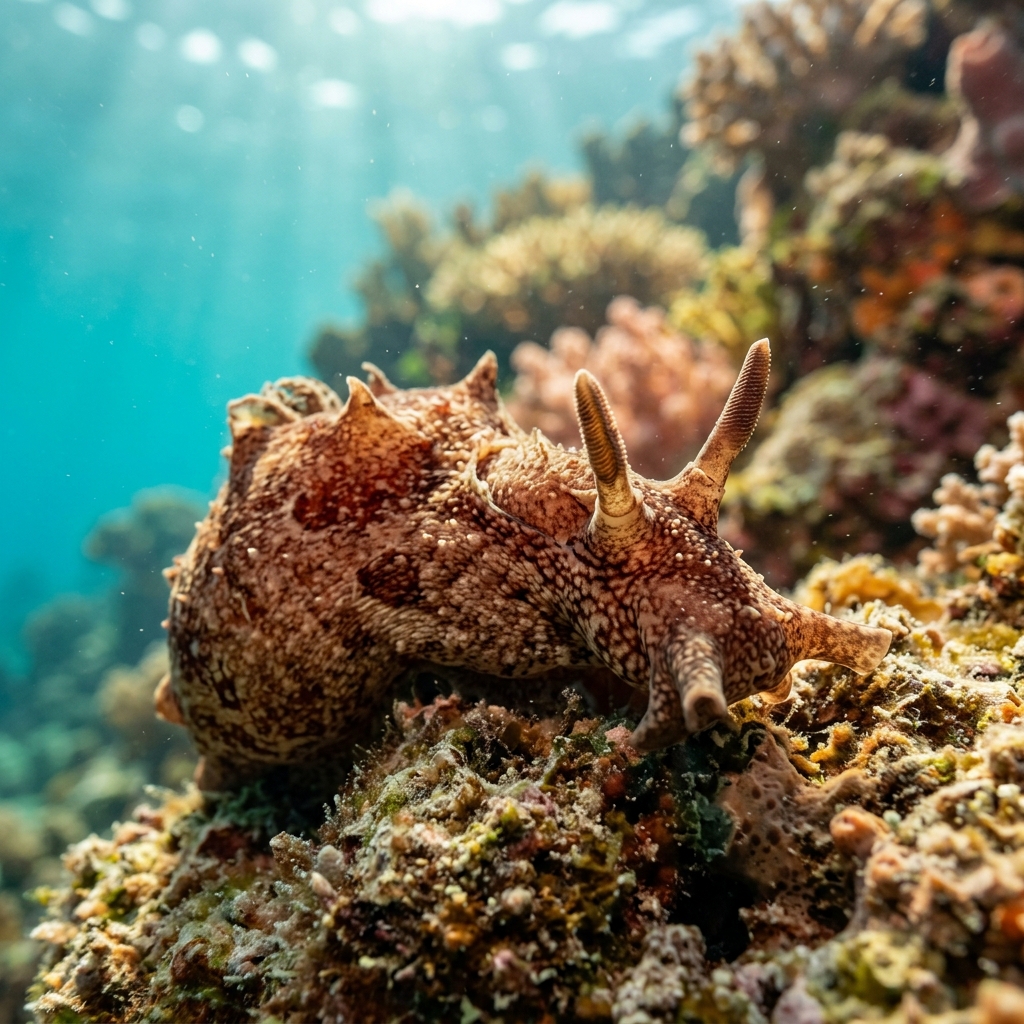
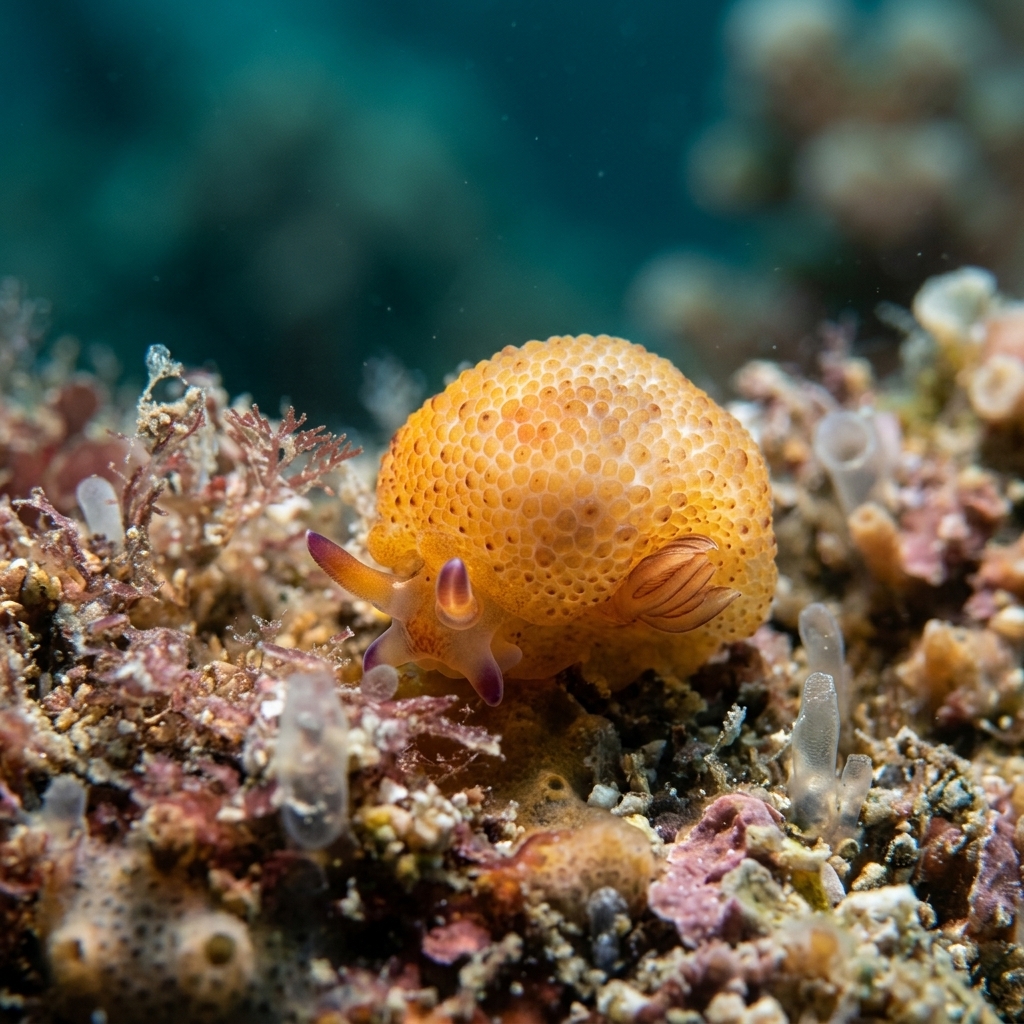
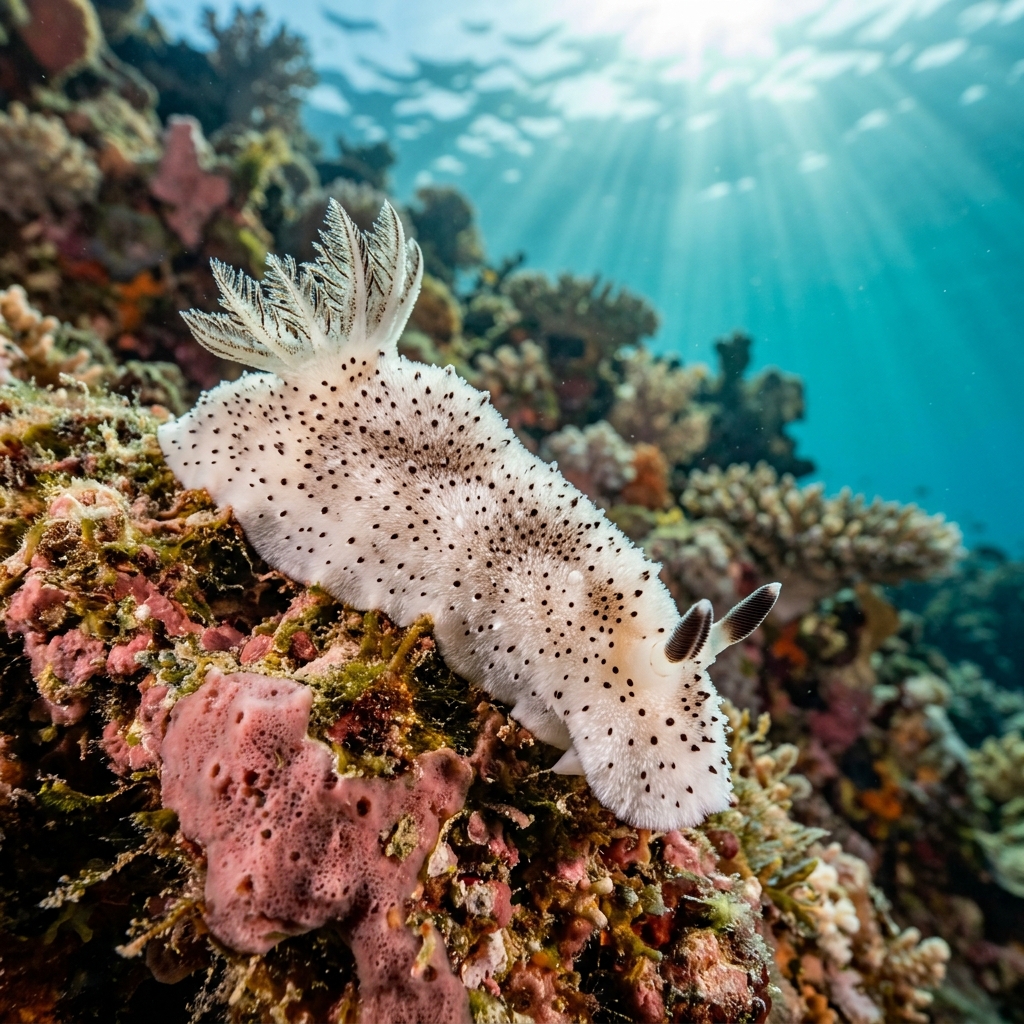
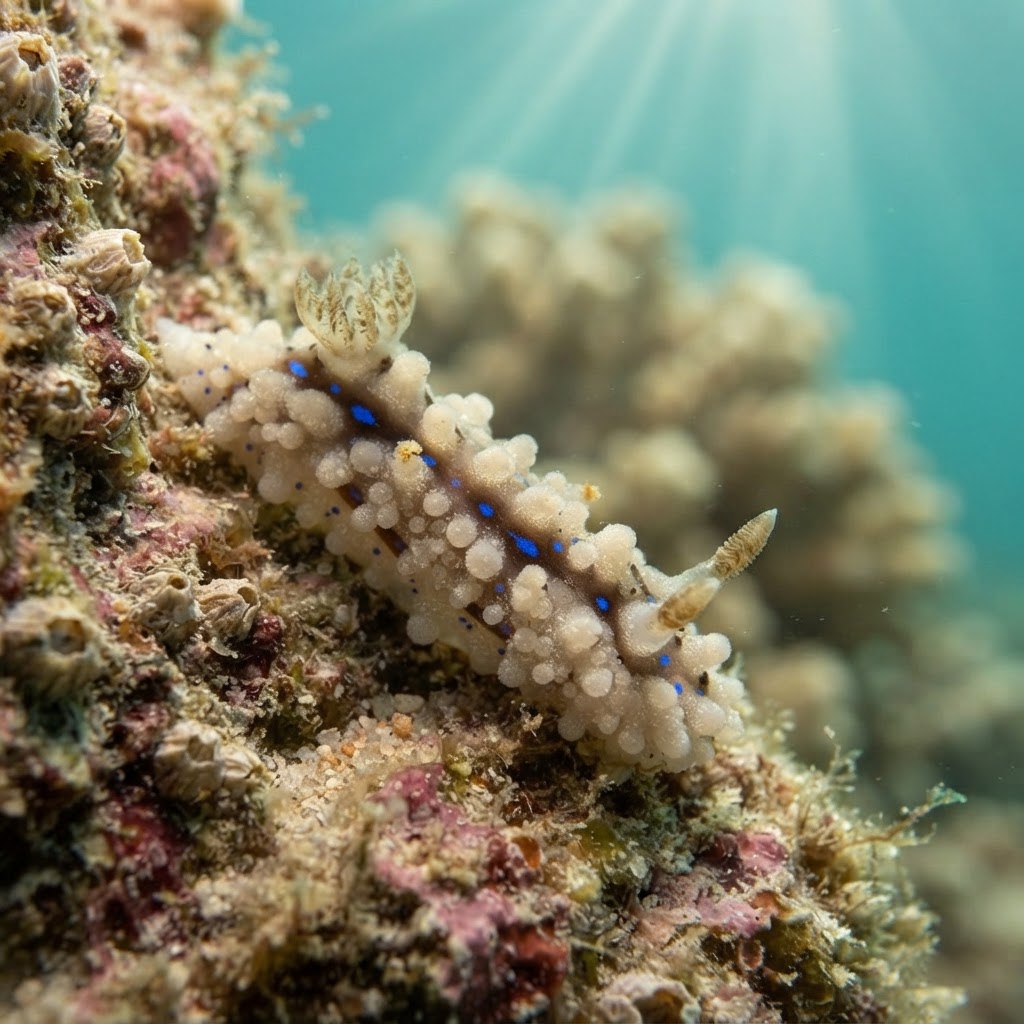
Look for a slender, elongated slug body about 5cm long, running to a pale or cream base colour marked with fine dark pinstripes along its length. The stripes run lengthwise rather than in bands or spots, which is the quickest way to separate it from more blotchy or ringed nudibranchs on the same reef. It sits low and narrow on rubble or algae-covered substrate, with no showy gills or cerata catching the light the way many nudibranchs do.
Divers usually find this one crawling slowly over rubble, algae, or low reef structure rather than out in the open water column. It shows no reaction to divers beyond withdrawing slightly if touched, and like most small nudibranchs it is easiest to spot on a slow macro-focused dive with a torch picking out the contrast of its stripes against the substrate.
Like other members of the family Arminidae, it likely grazes on soft corals or gorgonians, using the same food source many nudibranchs rely on for both nutrition and the toxins that make them unpalatable to predators.
Sightings don't show a clear seasonal pattern, and with a comfortable range of 23.6 to 30.1C it seems to turn up year-round wherever conditions sit in that band. Treat it as a possible find on any dive rather than something tied to a particular month.
Sumatra in Indonesia is the strongest spot for this one, with sightings spread across numerous sites there, and Muscat in Oman is a reliable second location. Smaller numbers turn up around Longdong in Taiwan, Dili in Timor-Leste, and on reefs in Queensland, Australia, so it has a wide but patchy Indo-Pacific and Arabian Sea spread.
Mapping where Ornate Pinstripe is logged…
Sumatra in Indonesia is the most consistent location, with Muscat in Oman a strong second. Smaller numbers have also been logged in Taiwan's Longdong region, Timor-Leste's Dili area, and Queensland, Australia.
There's no detected seasonal pattern for this species, and its observed water-temperature range of 23.6 to 30.1C spans most of the year on the reefs where it's found. It's best treated as a year-round possibility rather than a seasonal target.
Check for a small, slender slug around 5cm long with fine dark stripes running lengthwise along a pale body. It lacks the bold rosettes or gill plumes of many showier nudibranchs, so the linear pinstriping is the main giveaway.
They reach around 5cm in length, putting them among the smaller nudibranchs divers photograph, so a macro lens or a close, patient look is usually needed to appreciate the pattern.
It's logged as uncommon at most sites where it appears, with only a few locations reporting it as common. Finding one usually takes a dedicated muck or macro dive rather than a casual reef swim.
Site and sighting data is aggregated from diver logs, iNaturalist and GBIF. For taxonomy and conservation status:
Light-spotted Aegires
3,168 sites