Cadlinella ornatissima
A 1cm white nudibranch logged across Luzon, Kwajalein Atoll and Longdong reefs, 23.6-29.6°C, uncommon but findable year-round.
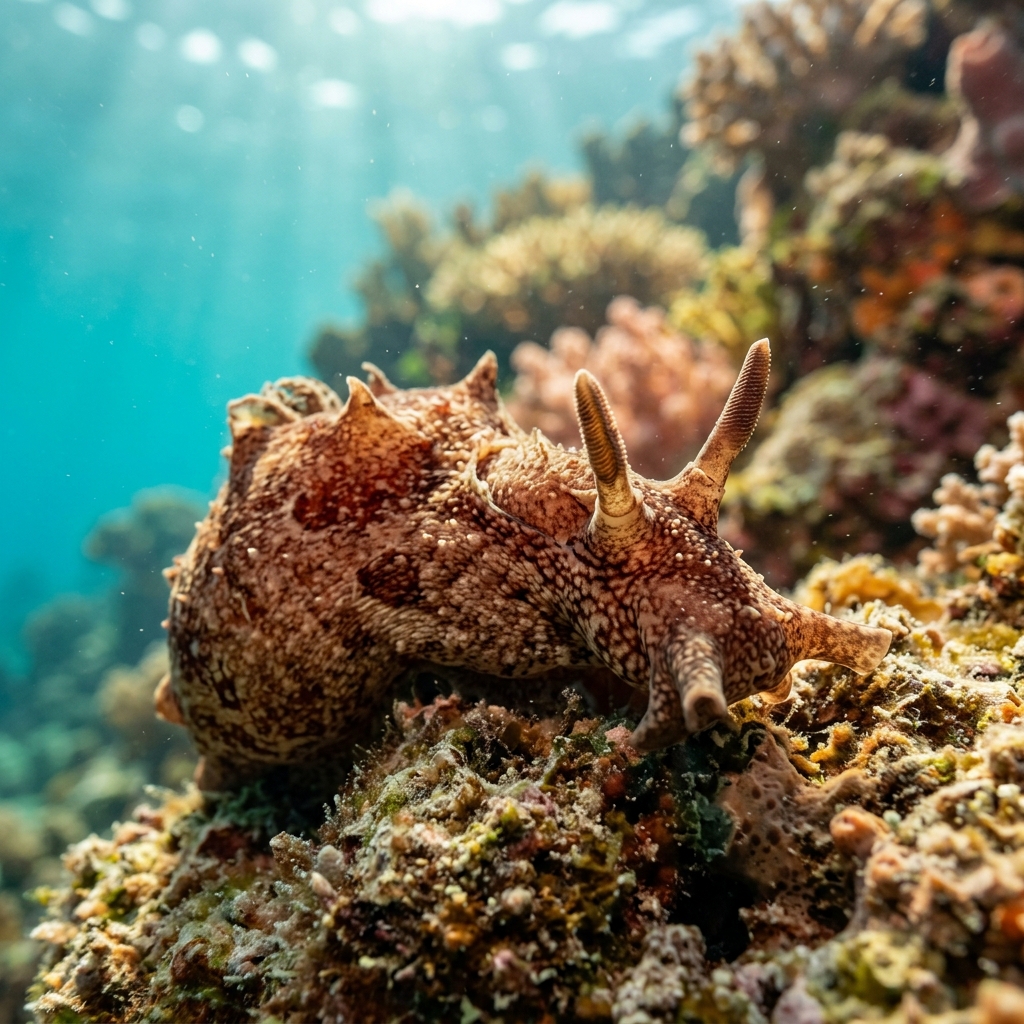
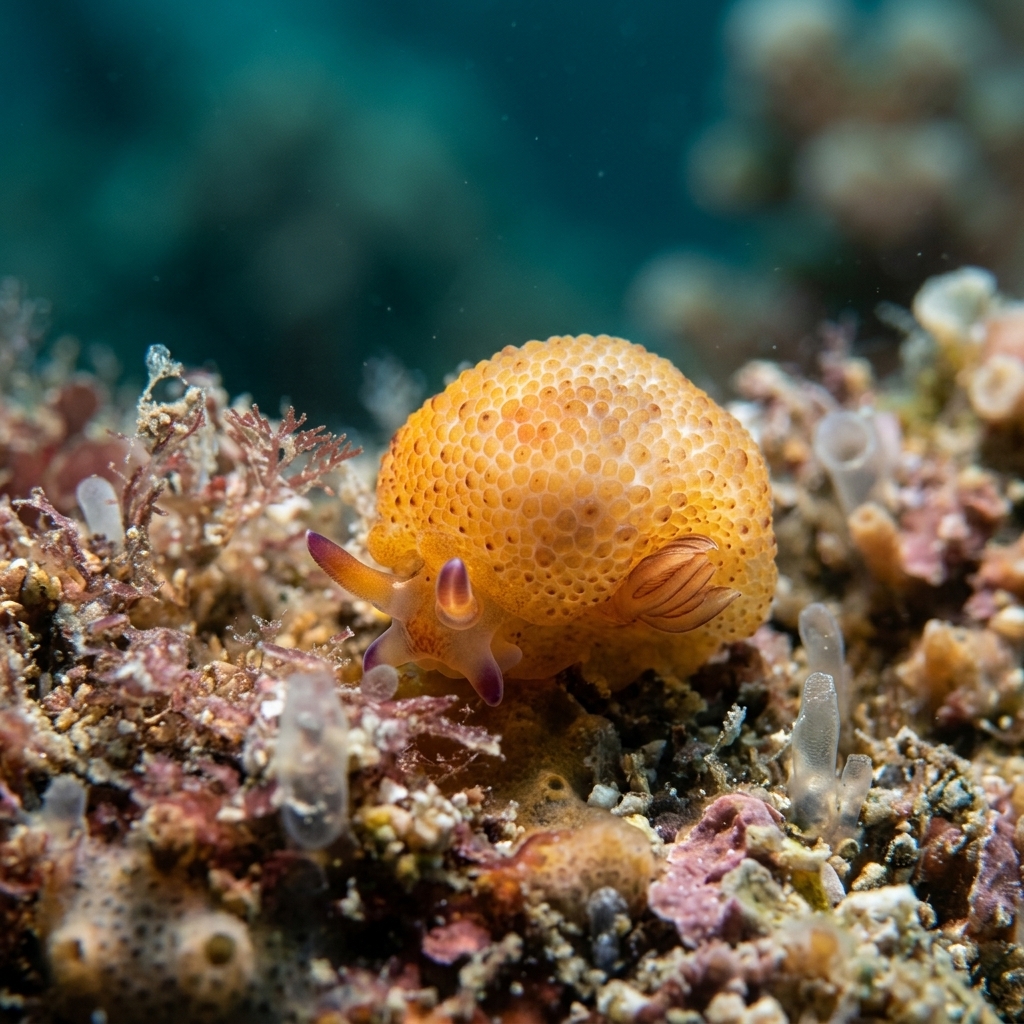
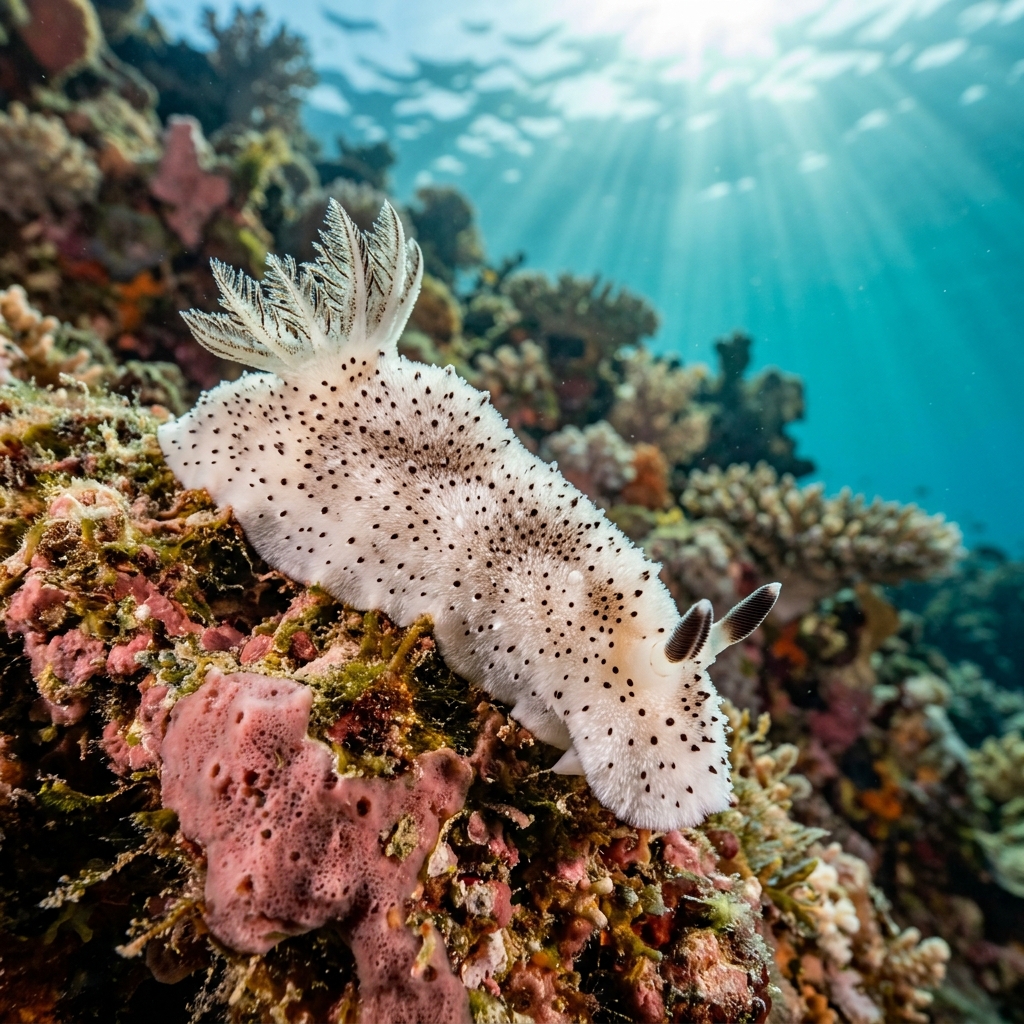
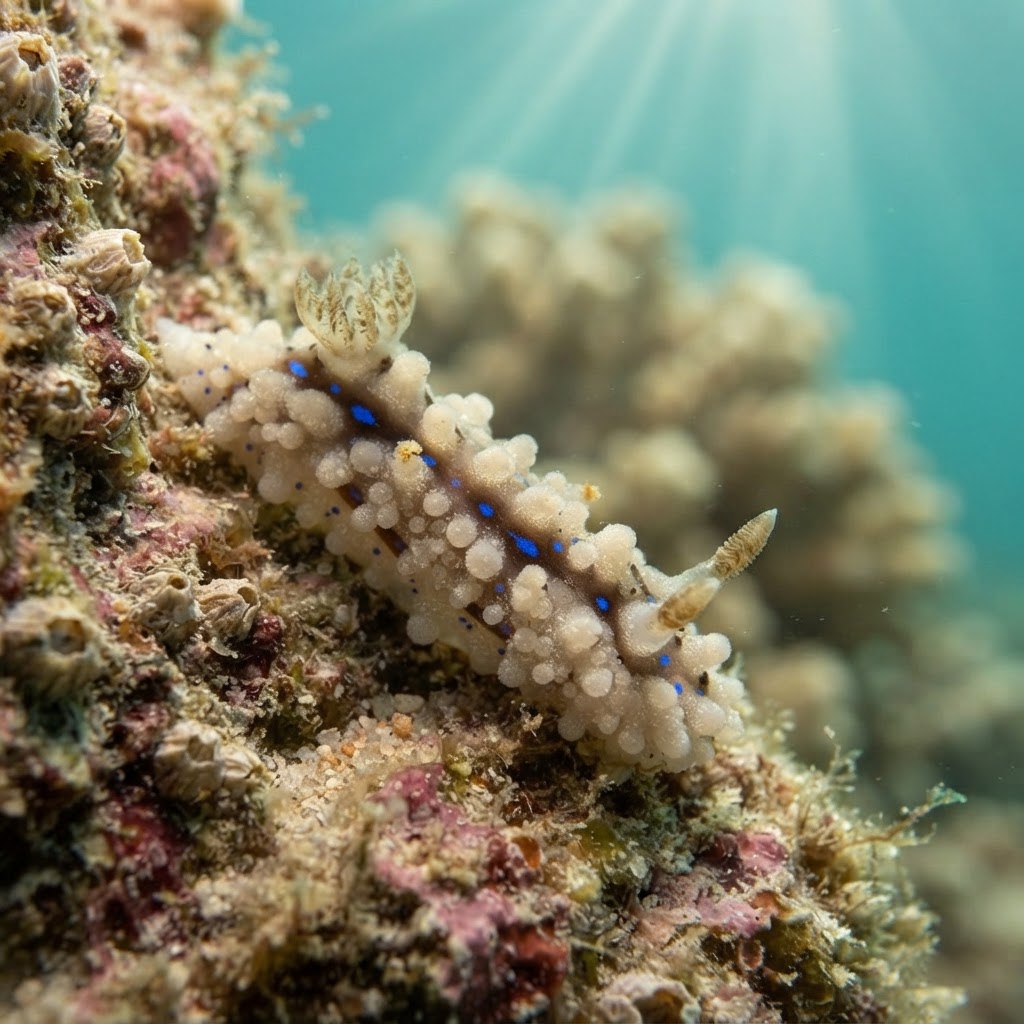
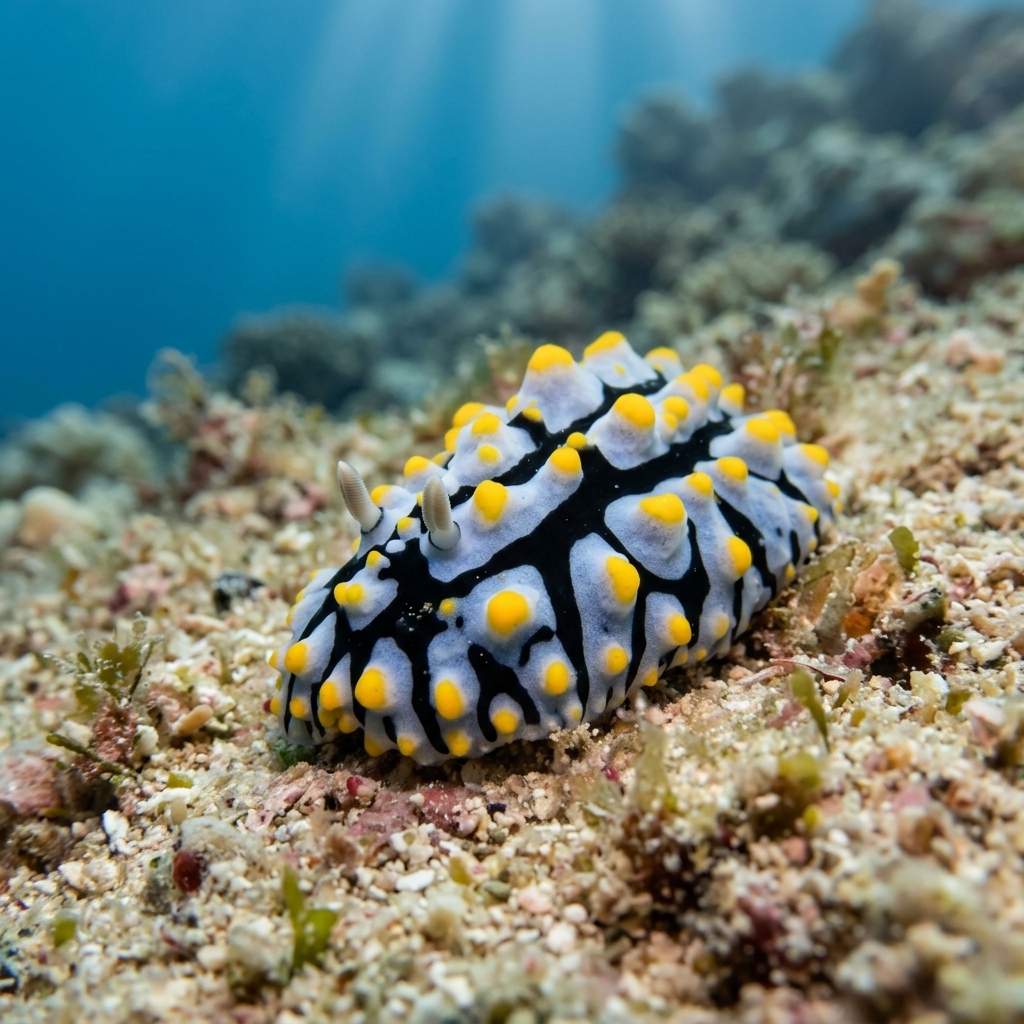
Look for a small white to cream-coloured nudibranch barely a centimetre long, its back covered in raised, warty tubercles that give it a rough, textured look rather than a smooth dorid body. There's no bold colour pattern to key on here, so divers usually spot it by scanning sponge-covered rubble and reef crevices slowly rather than looking for a flash of colour. Its small size means a magnifying lens or macro lens helps confirm the tubercle texture underwater.
This is a slow, sponge-grazing bottom dweller, found tucked into crevices or moving quietly over encrusting sponges and rubble on the reef floor. It shows no reaction to divers beyond simply continuing its crawl, since it has no eyes capable of noticing you and no known escape response. Most sightings come from divers doing deliberate, close-focus searches of the substrate rather than spotting it in open water.
Like other dorid nudibranchs, it likely feeds on sponges, using its diet to accumulate the chemical defences that make many nudibranchs unpalatable to predators despite having no shell for protection.
No clear seasonal pattern shows up in the sighting data, and its comfort range of roughly 23.6 to 29.6°C spans most of the tropical diving calendar, so it's a year-round find rather than a seasonal target. Plan around site access and visibility more than month.
Most reliably logged in the Philippines, especially around Luzon, and in the Marshall Islands at Kwajalein Atoll. Taiwan's Longdong and Xiaoliuqiu sites also produce steady sightings, with smaller but real populations recorded in Oman's Daymaniyat Islands, Singapore's Southern Islands, Saipan in the Northern Mariana Islands, and Okinawa in Japan.
Mapping where Ornate Cadlinella is logged…
The strongest sightings come from Luzon in the Philippines and Kwajalein Atoll in the Marshall Islands, with reliable finds also in Taiwan's Longdong and Xiaoliuqiu, Oman's Daymaniyat Islands, and Singapore's Southern Islands.
There's no detected seasonal pattern in the sightings, and its recorded temperature range of 23.6 to 29.6°C covers most tropical reef conditions year-round, so any month is workable.
It's a tiny white to cream nudibranch, only about a centimetre long, with a distinctive warty, tubercle-covered back rather than smooth skin. Its small size means you need to search close to the substrate on sponge-covered rubble or reef crevices to spot it.
Around 1 centimetre in length, making it one of the smaller nudibranchs divers might encounter and one that's easy to swim past without noticing.
No, it poses no threat to divers. It has no stinging cells or venom of concern, so it's safe to observe and photograph up close without any precautions.
As a carnivorous benthic species, it most likely grazes on sponges, a common food source for dorid nudibranchs, which it also uses to build up chemical defences against predators.
Site and sighting data is aggregated from diver logs, iNaturalist and GBIF. For taxonomy and conservation status:
Light-spotted Aegires
3,168 sites