Acanthodoris lutea
Bright orange 2cm nudibranch found on cold-water reefs from California to British Columbia, uncommon but worth the hunt.
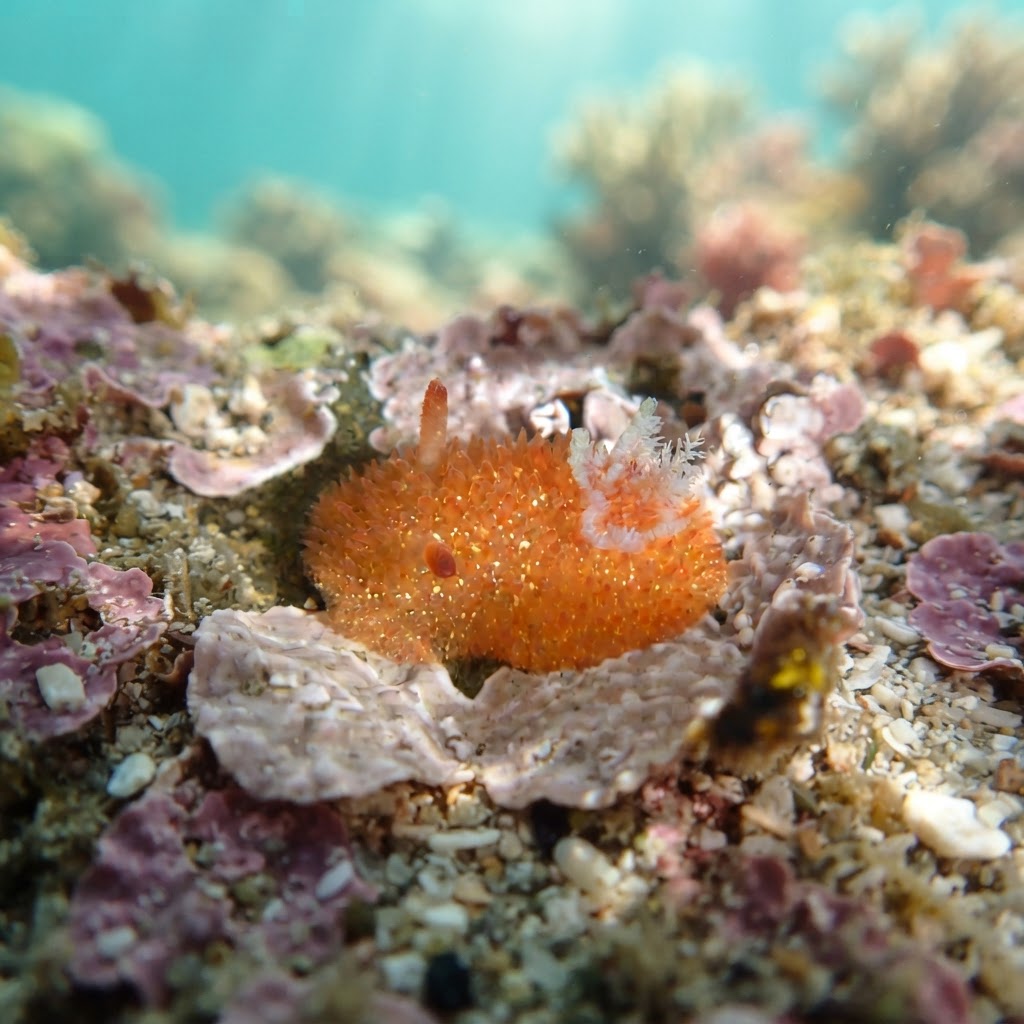
Small orange nudibranch, rarely more than 2 cm, with a soft, warty (tubercled) body that gives it a texture like the peel of the fruit it's named for. Look for the pair of rhinophores (sensory tentacles) at the front and a cluster of feathery gills near the rear, both usually the same solid orange as the body. It has no bold contrast markings, so divers often mistake the whole animal for a bit of orange sponge until it moves.
Divers find these slugs slow-moving over rock and algae, often tucked into cracks or grazing low on the reef where they're easy to swim past without noticing. They show no reaction to divers beyond retracting their gills slightly if disturbed, and are most often spotted by divers doing slow, close-focus macro passes rather than mid-water cruising.
Like other dorid nudibranchs, it likely feeds on sponges, using the diet to help produce the chemical defences that make its soft, exposed body unappealing to predators.
No clear seasonal pattern shows up in the sightings, so treat it as a year-round find on the sites where it occurs. Water temperatures logged with it run 12.1 to 18.9°C, matching the cool coastal water off California and British Columbia in any month.
Almost all logged sightings come from California, with a single record from British Columbia, making the US West Coast the reliable place to look for this species. Within California, cold-water rocky reef and kelp forest sites are where divers have found it.
Mapping where Orange-peel Doris is logged…
California is by far the strongest area for sightings, with a single confirmed record from British Columbia. Look on cold-water rocky reef and kelp habitat rather than tropical coral.
There's no detected seasonal pattern, so sightings are spread across the year. It's found in water between about 12 and 19°C, which covers most months on the California and British Columbia coasts.
It's a small, solid orange nudibranch about 2 cm long with a bumpy, textured body and no contrasting stripes or spots. Check for the rhinophores at the front and gill cluster at the back, both matching the orange body colour.
They stay small, typically around 2 cm in length, so a slow, close look at the reef is usually needed to spot one.
It's logged as uncommon at most sites where it's found and rare at a few others, so it's a nice find rather than a guaranteed sighting. Patient macro divers on California's reefs have the best odds.
Site and sighting data is aggregated from diver logs, iNaturalist and GBIF. For taxonomy and conservation status:
Blue Dragon
3,163 sites