Bornella calcarata
A small, spiky orange-and-white nudibranch logged across Grande-Terre, Guadeloupe, in warm 25-31C water year-round.
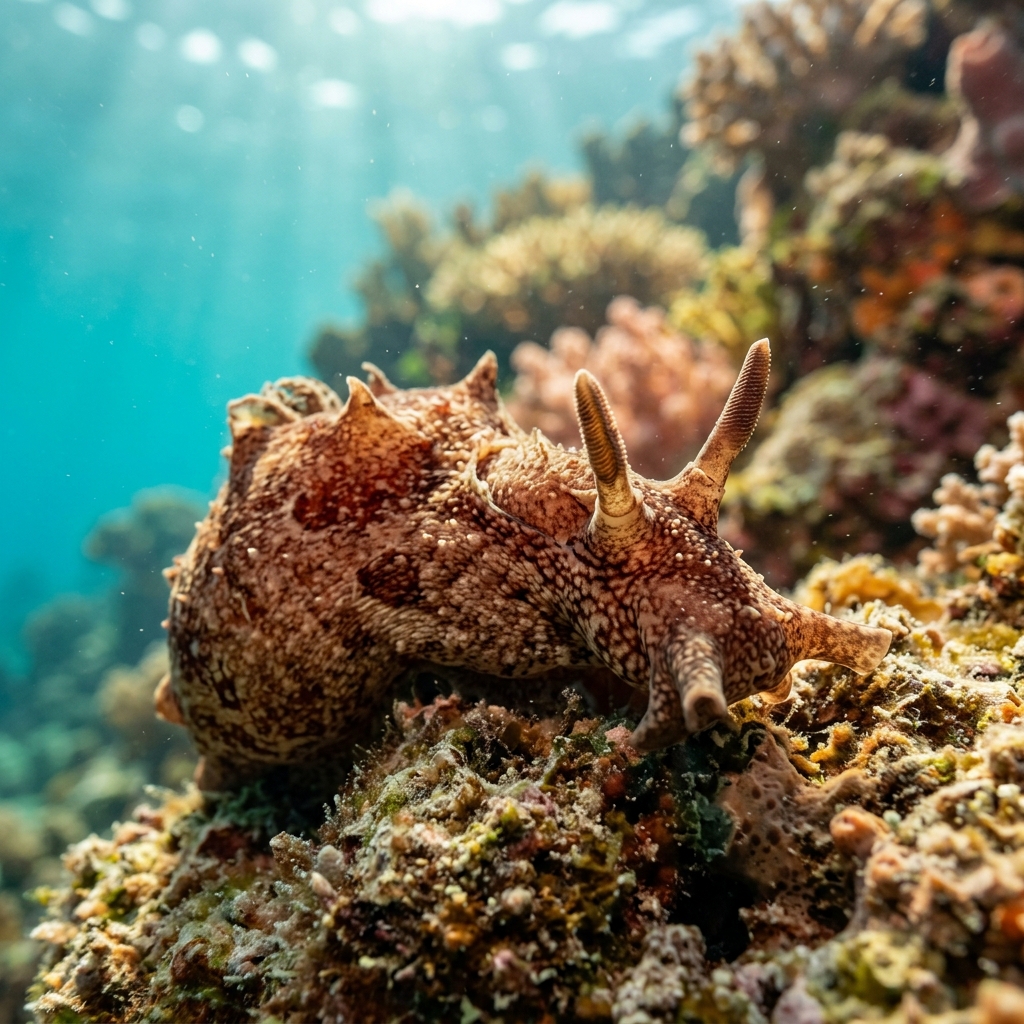
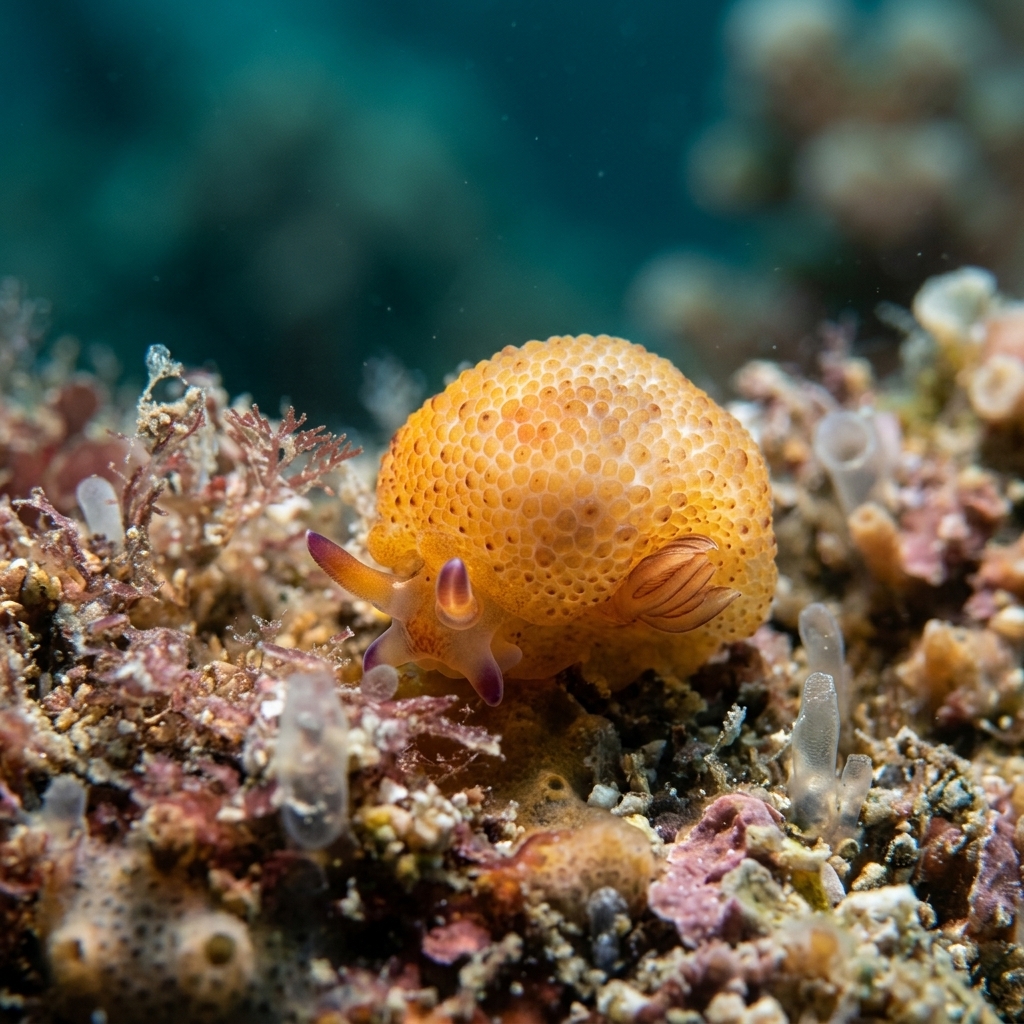
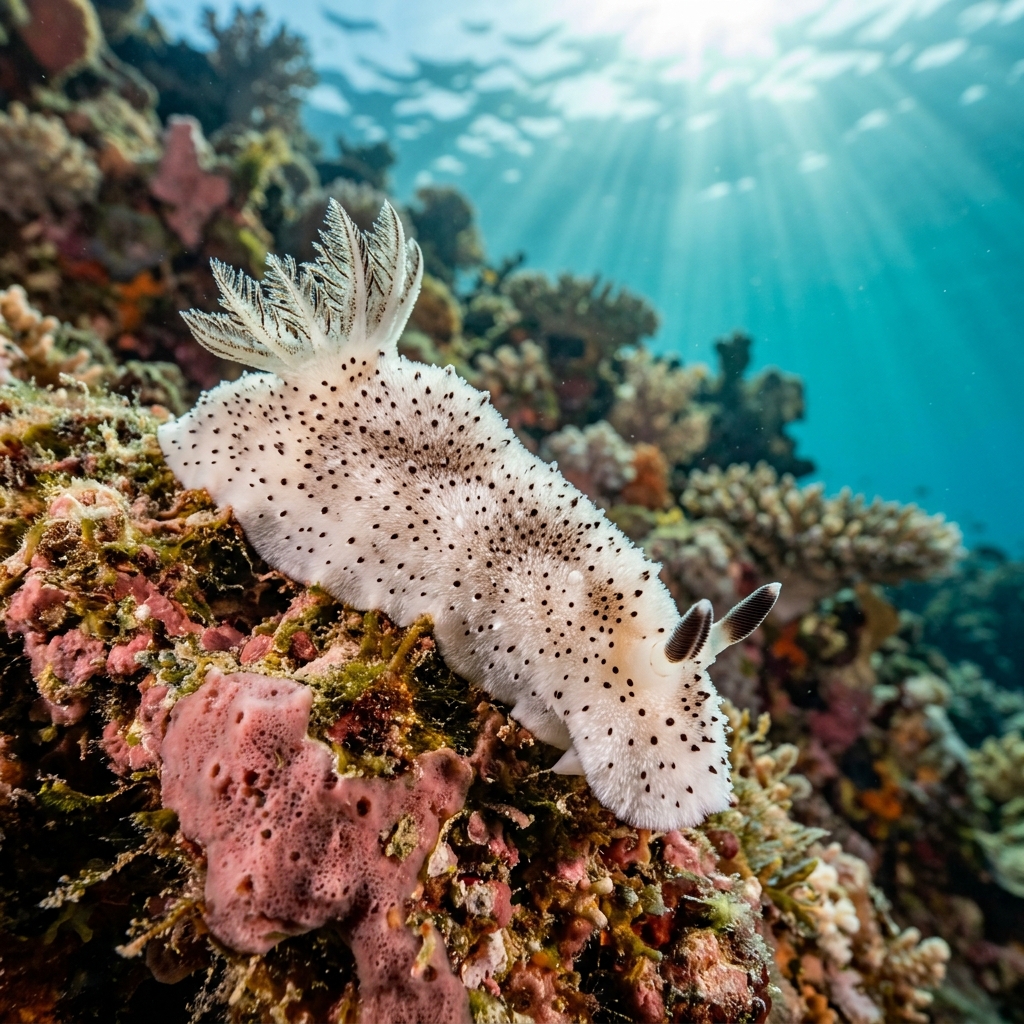
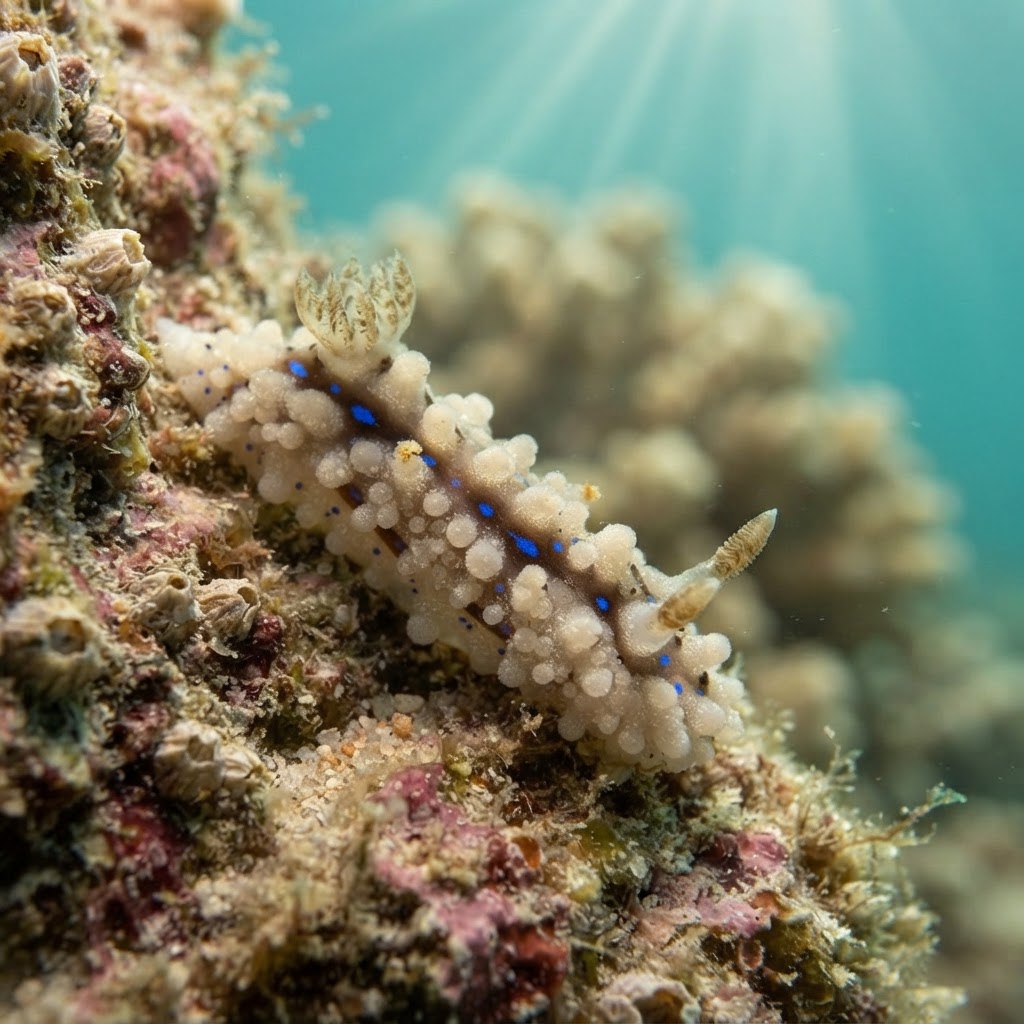
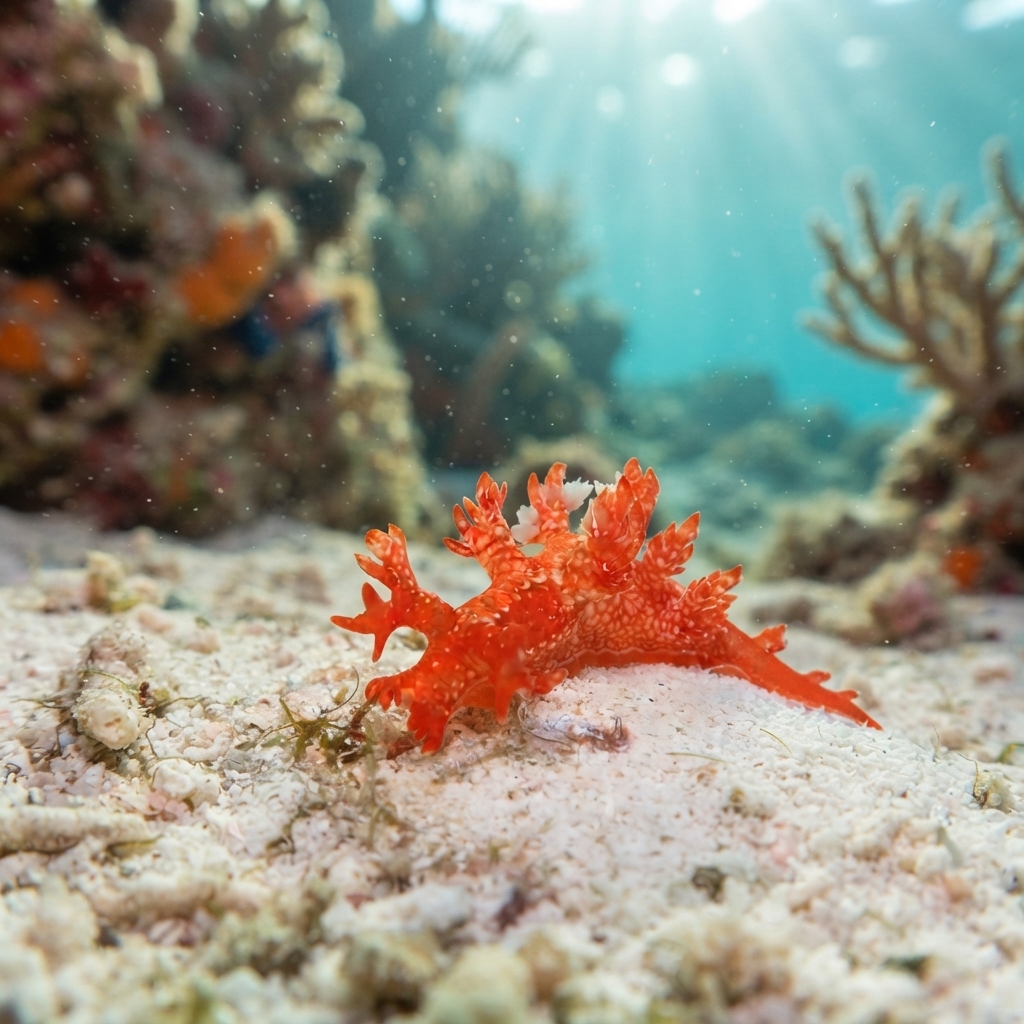
A tiny nudibranch, around 4 cm long, with a slender body covered in branching, finger-like projections (cerata) that give it a spiky, almost feathery outline. Colouring runs orange to reddish-brown with pale white or bluish stripes running along the back, and the cerata often show a paler tip. Look closely on rubble and algae-covered surfaces rather than open sand, since its small size and mottled colour make it easy to swim past.
Divers usually spot this one moving slowly over rubble or low algae, using its cerata to sense the surroundings rather than reacting to a torch or camera. It stays uncommon even at sites where it is known to occur, so most sightings come from divers doing a slow, deliberate macro search rather than a casual reef cruise. It shows no defensive reaction to divers and simply continues grazing when approached carefully.
Like other bornellid nudibranchs, it can shed some of its cerata if grabbed or threatened, a trick that likely helps it escape predators by leaving a decoy behind.
Sightings show no clear seasonal pattern, and with water temperatures in its niche running from 24.7 to 30.7C, conditions stay comfortable for it year-round. Plan around Guadeloupe's typical dive season rather than any specific month for this species.
Nearly every logged sighting comes from Guadeloupe, with Grande-Terre standing out as the strongest area and a scattering of records from Îles des Saintes. If you are diving Caribbean reefs around Guadeloupe and searching rubble patches or weedy substrate, this is where divers most reliably find it.
Mapping where Orange Dragon Slug is logged…
It is most reliably found around Guadeloupe, especially the Grande-Terre region, with additional sightings from Îles des Saintes. Outside Guadeloupe it has not been widely logged by divers.
There is no detected seasonal pattern, and its warm-water niche of roughly 25 to 31C holds year-round on Caribbean reefs, so it can turn up on any dive at the right sites.
Look for a small, roughly 4 cm nudibranch with orange to reddish-brown colouring, pale stripes along the back, and branching, spiky cerata covering the body. It moves slowly over rubble and algae rather than open sand.
They stay small, typically around 4 cm long, which along with their mottled colouring makes them easy to overlook on the reef.
It can shed cerata from its body when threatened, a defensive trick shared with other bornellid nudibranchs that may distract predators while it escapes.
Site and sighting data is aggregated from diver logs, iNaturalist and GBIF. For taxonomy and conservation status:
Light-spotted Aegires
3,168 sites